The Ultimate Gold Coin Necklace Pendant Material Guide
Discover how 10k, 14k, 18k, and 24k gold alloys affect your gold coin necklace pendant. Compare durability, detail retention, and pricing.

Why Metal Composition Matters for Coin Pendants
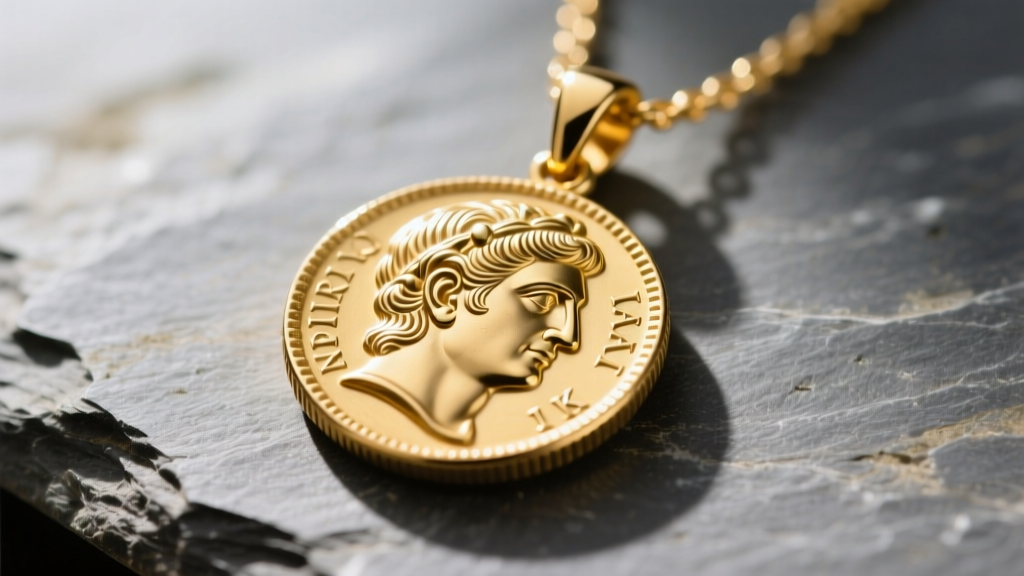
The allure of a gold coin necklace pendant lies in its rich historical resonance, talismanic weight, and intricate high-relief stamping. Whether you are drawn to replicas of ancient Roman denarii, vintage sovereigns, or modern minimalist bullion designs, the material science behind your pendant dictates its longevity. Unlike smooth, cast jewelry pieces, coin pendants rely on sharp edges, precise milling (the ridged outer edges), and deep strike details to convey their aesthetic. When you wear a gold coin necklace pendant daily, it is subjected to continuous friction against clothing, skin oils, and environmental pollutants. Choosing the correct gold alloy is not merely a matter of color preference or budget; it is a critical decision regarding structural integrity and detail retention over time.
According to the Gemological Institute of America (GIA), the alloy metals mixed with pure gold fundamentally alter its crystalline structure, directly impacting its Vickers Hardness (HV) and resistance to abrasion.
The Physics of the Strike: Hardness vs. Detail
To understand material selection, we must examine how coin pendants are manufactured. Authentic numismatic coins and high-quality jewelry replicas are created through a high-pressure stamping process. This 'strike' forces the metal into intricate die cavities. Pure gold is exceptionally malleable—while this makes it easy to stamp, it also means the resulting details are highly susceptible to deformation. A high-relief profile on a soft metal will flatten, and the delicate outer milling will wear smooth within months of daily wear. Therefore, jewelers must balance the prestige and color of high-karat gold with the mechanical necessity of alloy hardness.
Solid Gold Karats: A Metallurgical Breakdown
When shopping for a solid gold coin necklace pendant, you will typically encounter four primary karatages. Each offers a distinct compromise between purity, color, and durability.
10k Gold (41.7% Pure)
10k gold is the most durable option available in the US market. Alloyed heavily with copper, silver, and zinc, it boasts a Vickers Hardness (HV) of roughly 140-160. For a coin pendant with extremely fine micro-engraving or sharp geometric edges, 10k will preserve those details for decades. However, the high copper content means it is prone to oxidation and tarnishing, requiring occasional polishing. Its color is noticeably paler, lacking the deep yellow warmth associated with luxury gold.
14k Gold (58.3% Pure)
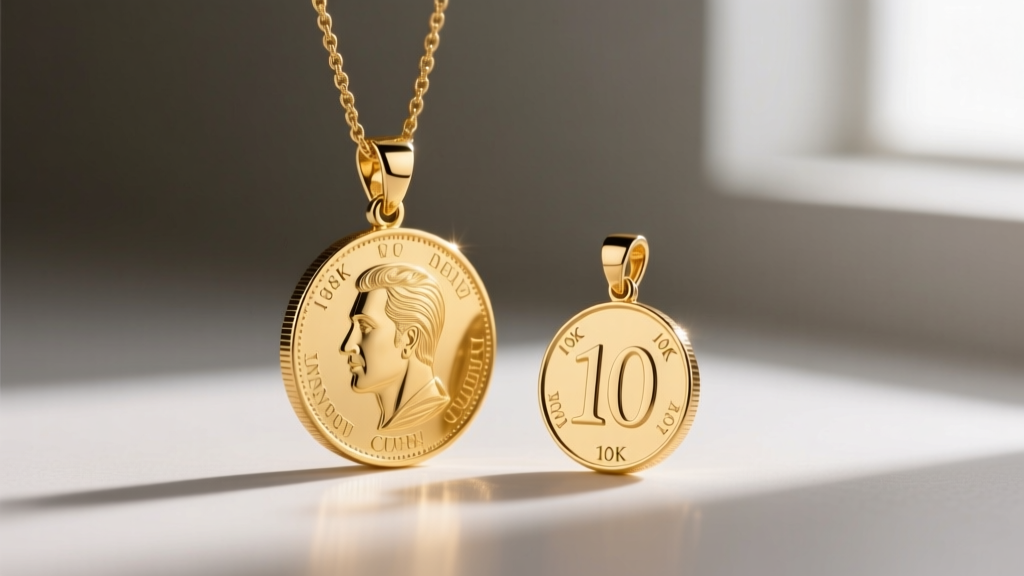
Widely considered the sweet spot for daily wear jewelry, 14k gold (HV ~120-140) offers excellent structural integrity while maintaining a rich, warm hue. For a gold coin necklace pendant worn outside the shirt and exposed to the elements, 14k provides the ideal resistance to scratching and edge-blunting. In the 2026 market, a standard 25mm solid 14k coin pendant typically ranges from $350 to $550, depending on the spot price and artisan premium.
18k Gold (75% Pure)
18k gold delivers the luxurious, buttery yellow color that high-end collectors desire. However, its hardness drops significantly (HV ~90-110). If your 18k gold coin necklace pendant features a raised, high-relief portrait or exposed outer milling, you must be mindful of friction. Over a period of three to five years of daily wear, the highest points of the stamping will begin to show a soft, polished patina as the metal yields to contact. It is best suited for pendants worn over delicate fabrics or kept inside a protective bezel.
22k and 24k Gold (91.6% and 99.9% Pure)
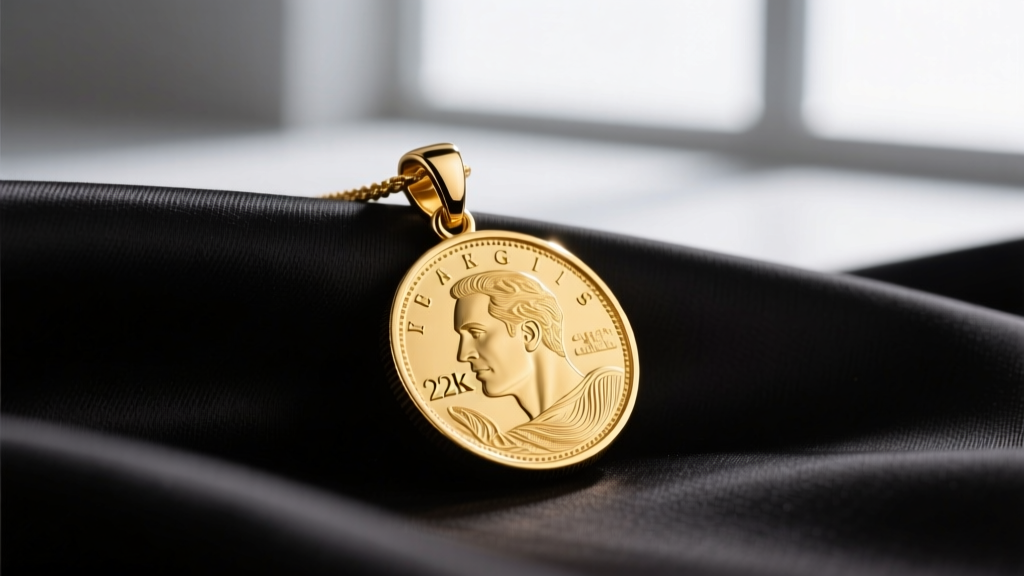
Pure 24k gold is exceptionally soft (HV ~25-30), feeling almost like heavy lead to the touch. The World Gold Council notes that while 24k gold is the standard for investment-grade bullion, it is entirely unsuitable for unprotected, high-friction jewelry applications. A 22k or 24k gold coin necklace pendant should be treated as an investment piece or heirloom. To preserve the intricate details and the coin's numismatic or bullion value, these pendants must be encased in a hard-metal bezel (like 14k gold or platinum) or a clear acrylic capsule to prevent the gold from warping or losing mass to abrasion.
Gold-Filled vs. Vermeil: The Budget Alternatives
If solid gold exceeds your budget, you will encounter overlay alternatives. Understanding the mechanical differences between these overlays is vital for a coin pendant, as the raised ridges of a coin design are the first areas to experience wear.
- Gold Vermeil: By Federal Trade Commission (FTC) standards, vermeil requires a sterling silver base plated with at least 2.5 microns of gold (usually 14k or 18k). While beautiful initially, the raised edges of a coin design will rub against clothing and wear through the 2.5-micron layer relatively quickly, exposing the silver beneath.
- Gold-Filled: This process involves mechanically bonding a thick layer of solid gold (at least 1/20th of the total weight) to a brass core using heat and pressure. Gold-filled coin pendants are vastly superior to vermeil for daily wear, as the gold layer is up to 100 times thicker, ensuring the high-relief details remain golden for decades.
Material Comparison Matrix
Use the following data table to align your material choice with your lifestyle and aesthetic goals.
| Material | Hardness (HV) | Detail Retention | Est. Price Range (25mm) | Best Use Case |
|---|---|---|---|---|
| 10k Solid Gold | 140 - 160 | Exceptional | $150 - $250 | Active lifestyles, sharp geometric coins |
| 14k Solid Gold | 120 - 140 | Very High | $350 - $550 | Daily wear, balanced color and durability |
| 18k Solid Gold | 90 - 110 | Moderate | $600 - $900 | Luxury wear, low-relief or bezel-set coins |
| 22k/24k Solid | 25 - 45 | Poor (Unprotected) | $1,000+ | Investment, heirloom, capsule-protected |
| Gold-Filled | Varies (Core) | High | $60 - $120 | Budget-friendly daily wear |
Chain Pairing: The Hidden Threat of Galvanic Wear
A frequently overlooked aspect of wearing a gold coin necklace pendant is the metallurgical interaction between the pendant and the chain. If you pair a soft 22k gold coin pendant with a rigid, high-karat rope chain, the harder chain will act like a file against the pendant's bail (the loop it hangs from), slowly grinding away the gold. Furthermore, mixing different base alloys (such as a high-copper 10k chain with a high-silver 14k pendant) in the presence of sweat and humidity can create a mild galvanic cell, accelerating localized tarnishing and corrosion at the connection point. Always match your chain's karat and alloy composition as closely as possible to your pendant, or use a protective jump ring to minimize direct metal-on-metal friction.
Care and Patina Management
Unlike smooth bands, the deep crevices of a stamped coin design trap skin oils, lotions, and environmental dust. For lower-karat coins (10k and 14k), the copper and zinc alloys will naturally oxidize in these recesses, creating a dark patina. While some collectors appreciate this 'antiqued' look for vintage-style Roman or Greek coin replicas, those who prefer a brilliant shine should clean their pendants bi-weekly using a mild, phosphate-free dish soap and a soft-bristled baby toothbrush. Avoid ultrasonic cleaners for any gold coin necklace pendant that has been artificially antiqued or features enamel accents, as the high-frequency vibrations can strip the intentional darkening from the crevices, ruining the three-dimensional contrast of the design.


