Gold Disc Pendant Necklace Trends: 2026 Styling Guide
Discover 2026 trends for the gold disc pendant necklace. Expert styling tips, chain pairings, and karat guides to elevate your everyday layered looks.

The Evolution of the Gold Disc Pendant Necklace
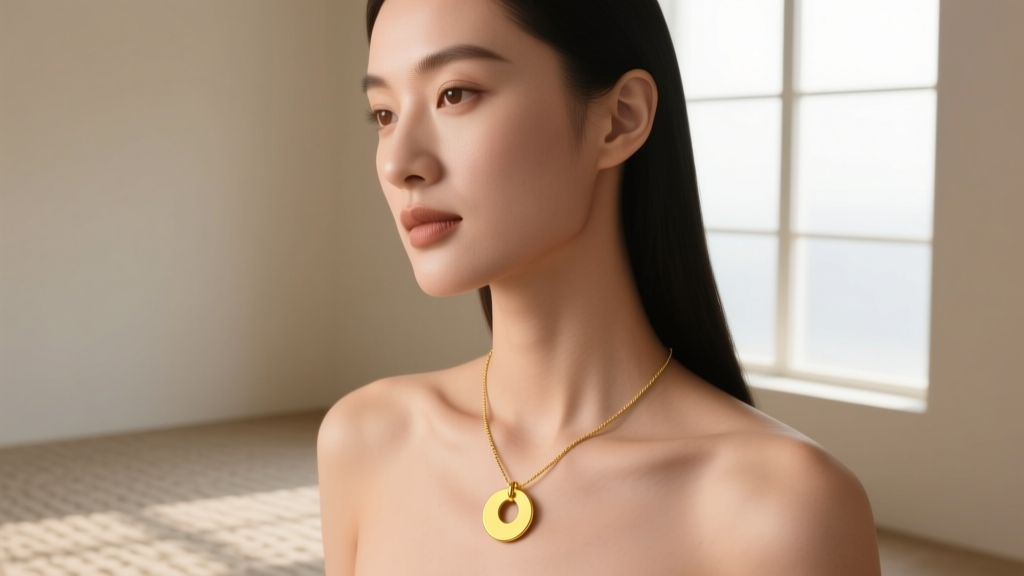
The gold disc pendant necklace has transcended its mid-century dog-tag origins and the ubiquitous 2010s monogram trend to become a cornerstone of 2026's architectural minimalism movement. Unlike the heavily embellished lockets of the past decade, today's iterations rely on precise geometry, metallurgical purity, and intentional negative space. According to trend forecasts highlighted by Vogue, the modern consumer prioritizes structural integrity and versatile layering potential over overt branding. This shift demands a deeper understanding of gauge weights, edge profiling, and alloy compositions when selecting the perfect piece. In 2026, the disc is no longer just a blank canvas for engraving; it is a standalone architectural element that anchors the entire neckline.
Sizing and Proportions: The 2026 Matrix
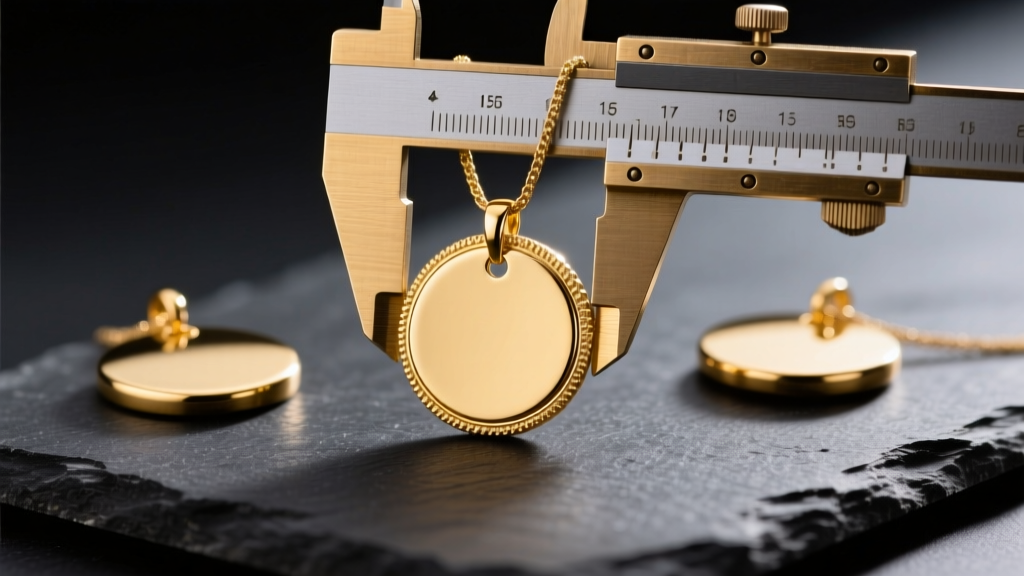
Choosing the correct diameter is critical for achieving the desired visual weight. The market has segmented into three distinct categories, each serving a specific styling purpose.
The Micro-Disc (6mm - 10mm)
Micro-discs are the ultimate exercise in subtlety. Typically measuring between 6mm and 10mm in diameter, these pendants sit flush against the clavicle. They are best paired with ultra-fine 0.8mm to 1.0mm chains. The primary failure mode for micro-discs is losing visual impact when layered with overly bulky companion pieces. To maintain their delicate aesthetic, restrict your layering stack to chains no thicker than 1.2mm. They are ideal for deep V-necks and sheer blouses where heavy metals would overwhelm the fabric.
The Classic Coin (12mm - 18mm)
The 15mm sweet spot remains the most commercially viable and versatile size in 2026. A 15mm disc with a 1.5mm thickness offers enough surface area to catch the light without acting as a pendulum. This size bridges the gap between daytime office wear and evening minimalism. When opting for a classic coin, look for a slightly beveled edge rather than a harsh 90-degree cut; the bevel refracts light dynamically and prevents the sharp edge from catching on delicate knitwear.
The Statement Medallion (20mm - 30mm+)
Statement discs have seen a massive resurgence, driven by the 'quiet luxury' evolution into 'bold geometry.' A 25mm disc commands attention and requires a robust chain—typically a 2.0mm to 3.0mm rope or wheat chain—to support its physical weight. If you pair a 25mm solid gold disc with a fragile 1.0mm box chain, the weight disparity will cause the chain to kink and eventually snap at the solder points. Always match the chain's tensile strength to the pendant's gram weight.
Chain Pairings: Gauge, Texture, and Length
The chain you select fundamentally alters the behavior of your gold disc pendant necklace. In 2026, the interplay between chain texture and disc finish is a primary styling lever.
| Disc Diameter | Recommended Chain Gauge | Optimal Chain Style | Best Neckline Pairing |
|---|---|---|---|
| 6mm - 10mm | 0.8mm - 1.0mm | Cable or Snake | Collared Shirts, Deep V-Necks |
| 12mm - 18mm | 1.2mm - 1.5mm | Box or Mariner | Crew Necks, Scoop Necks |
| 20mm - 30mm | 2.0mm - 3.0mm | Rope or Wheat | Open Button-Downs, Off-Shoulder |
A critical troubleshooting insight: avoid standard spring-ring clasps for any disc pendant over 5 grams. The internal spring mechanism in spring rings is prone to fatigue and failure under the dynamic swinging weight of a heavy medallion. Always upgrade to a solid lobster clasp or a secure barrel clasp to ensure your investment remains safely around your neck.
Metallurgy and Finish Textures
Understanding gold purity is essential for both durability and color depth. As detailed by the Gemological Institute of America (GIA), 14k gold (58.5% pure gold) offers superior hardness due to its higher alloy content, making it highly resistant to scratching and bending. This makes 14k the pragmatic choice for everyday micro and classic discs. Conversely, 18k gold (75% pure gold) provides that rich, buttery yellow hue that collectors covet, but its softer Vickers hardness means larger, heavier 18k discs are more susceptible to warping if dropped or crushed.
Beyond purity, surface finishes have diversified. While the mirror-polished high-shine disc remains a staple, 2026 has introduced a strong preference for hammered and satin-brushed textures. A hammered finish diffuses light, masking micro-scratches and giving the gold an organic, artisanal quality. Satin finishes, achieved through fine wire brushing, offer a muted, contemporary glow that pairs exceptionally well with matte silk and raw denim.
Layering Frameworks for the Gold Disc Pendant Necklace
Mastering the layered look requires strict adherence to spatial distribution. The golden rule of 2026 layering is the 'Two-Inch Drop.' If your choker sits at 14 inches, your gold disc pendant necklace must hang at a minimum of 16 inches to prevent the clasp and bail from tangling with the upper chain.
- The Asymmetrical Stack: Pair a 15mm off-center bail disc on a 16-inch chain with a 10mm centered gemstone drop on an 18-inch chain. This creates visual tension and avoids a cluttered, uniform look.
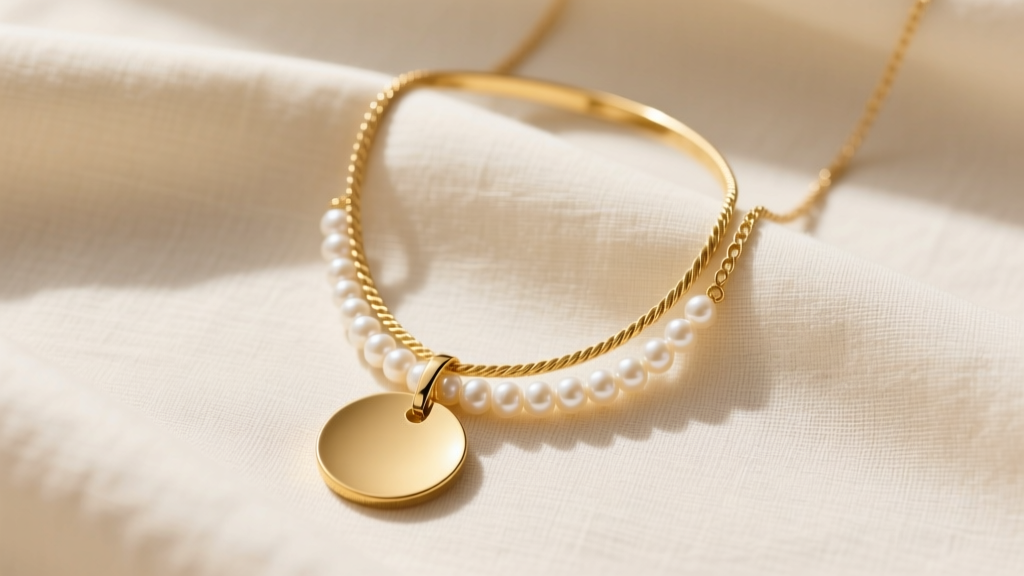
- The Mixed-Metal Anchor: Use a yellow gold disc as the foundational piece on a 17-inch rope chain, flanked by a 15-inch white gold snake chain and a 19-inch rose gold box chain. The yellow disc acts as the visual anchor.
- The Texture Clash: Combine a high-polish gold disc with a matte black onyx bead necklace. The contrast in light reflection elevates both pieces.
"The modern neckline is an exercise in curated tension. A gold disc pendant necklace shouldn't just sit there; it should interact with the collarbone and the surrounding chains to create a deliberate, architectural silhouette." — Elena Rostova, Senior Jewelry Forecaster
Pricing Tiers and Investment Value
With the spot price of gold continuing its upward trajectory, understanding the pricing structure of solid gold jewelry is crucial. According to market analyses by Forbes, gold remains a resilient asset class, but retail jewelry pricing includes significant markups for craftsmanship and brand prestige.
For a standard 15mm solid 14k gold disc pendant (weighing approximately 3.5 grams), expect to pay between $250 and $400 from direct-to-consumer artisan jewelers. Luxury heritage brands will price the exact same material weight between $800 and $1,200, charging for the logo and the retail experience. If you are upgrading to an 18k 25mm statement medallion (weighing upwards of 12 grams), the raw material cost alone pushes the baseline price to $900, with retail prices frequently exceeding $2,200. To maximize investment value, prioritize unbranded, solid-cast pieces from reputable independent goldsmiths who charge based on gram weight plus a transparent making fee, rather than inflated brand premiums.
Final Verdict
The gold disc pendant necklace in 2026 is far from a basic accessory; it is a highly technical styling tool. By carefully selecting the precise diameter, matching it with a structurally sound chain gauge, and choosing the right karat and finish for your lifestyle, you transform a simple circle of metal into a defining element of your personal aesthetic. Whether you are anchoring a minimalist stack with a 15mm satin coin or making a bold statement with a 25mm hammered medallion, the key lies in intentional proportion and metallurgical awareness.


