Gold Envelope Necklace Value Guide 2026: Worth the Price?
Is a gold envelope necklace worth the investment? Our 2026 value guide breaks down pricing, material tiers, and hidden costs to help you buy smart.

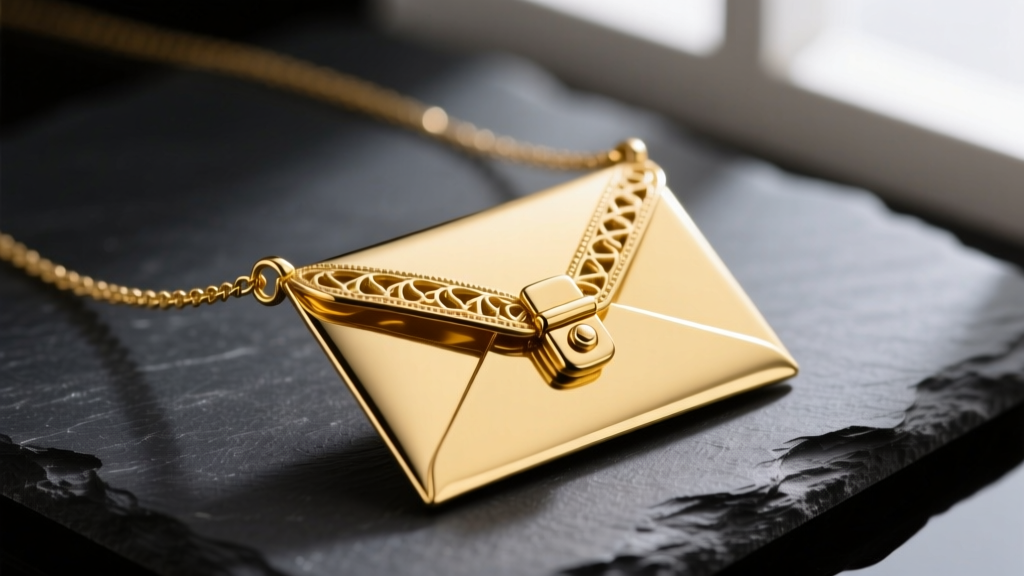
The gold envelope necklace has cemented its status as a modern sentimental staple. Whether designed to hold a microscopic folded letter, a wax seal motif, or simply serve as a solid-cast symbol of communication and love, this specific pendant style is everywhere. But as precious metal markets fluctuate and direct-to-consumer jewelry brands multiply, pricing has become wildly inconsistent. In 2026, you might see a gold envelope necklace listed for $45 on a fast-fashion site, and a nearly identical-looking piece from a boutique jeweler for $650.
How do you determine the actual value? As a jewelry appraiser and style analyst, I look past the marketing copy and examine the metallurgy, the mechanical hardware, and the long-term cost-per-wear. This comprehensive budget and value assessment will teach you exactly what you should be paying for a gold envelope necklace, where brands cut corners, and how to invest your money wisely.
The Anatomy of an Envelope Pendant: What You Are Actually Paying For
Before discussing karats and pricing tiers, we must distinguish between the two primary types of envelope pendants on the market. The manufacturing method drastically dictates the baseline cost.
1. The Solid Cast Motif (Non-Opening)
Most envelope necklaces under the $200 mark are solid cast or die-struck motifs. They look like envelopes but do not open. The value here is entirely dependent on the metal weight (grams) and the finishing details, such as hand-engraved flap lines or an enameled wax seal. Because there are no moving parts, the labor cost is relatively low, making this the most budget-friendly option.
2. The Functional Locket Envelope (Opening)
A true functional envelope locket requires precision micro-jewelry engineering. The pendant must feature a seamless micro-hinge, a friction-based latch to keep it closed, and a hollowed interior cavity. Crafting a reliable latch that will not loosen after a year of daily wear requires skilled bench jewelers. If you are buying an opening gold envelope necklace, expect to pay a 30% to 50% premium over a solid cast motif purely for the mechanical labor.
Material Tiers & 2026 Market Pricing Breakdown
With the spot price of gold remaining historically high into 2026, understanding material grades is non-negotiable. According to the Gemological Institute of America (GIA), the karat weight defines the purity and durability of the piece. Below is the realistic retail pricing matrix for a standard 15mm x 11mm envelope pendant paired with an 18-inch chain.
| Material Grade | Base Metal | Gold Layer / Purity | 2026 Price Range (Pendant + Chain) | Expected Lifespan (Daily Wear) |
|---|---|---|---|---|
| Gold Plated | Brass or Copper | Flash plating (<0.5µm) | $35 - $75 | 3 - 8 Months |
| Gold Vermeil | Sterling Silver | Minimum 2.5µm of 14k/18k | $95 - $180 | 1 - 3 Years |
| 10k Solid Gold | None (Alloy) | 41.7% Pure Gold | $160 - $240 | Lifetime (Generational) |
| 14k Solid Gold | None (Alloy) | 58.3% Pure Gold | $280 - $550 | Lifetime (Generational) |
| 18k Solid Gold | None (Alloy) | 75.0% Pure Gold | $500 - $950+ | Lifetime (Prone to scratching) |
Note: The Federal Trade Commission (FTC) strictly regulates the term 'vermeil'. To be legally sold as vermeil, the piece must have a sterling silver base and a gold plating of at least 2.5 microns. Anything less is simply gold-plated silver.
Hidden Value Killers: Hinges, Clasps, and Chain Gauges
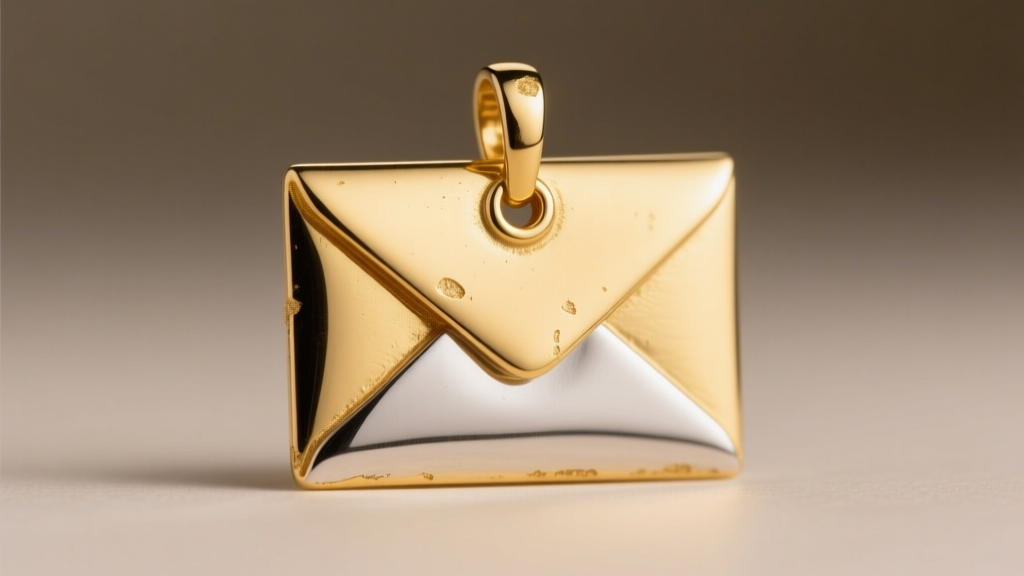
A common trap when assessing the budget for a gold envelope necklace is fixating entirely on the pendant while ignoring the suspension hardware. Brands operating in the $150–$300 'demi-fine' space frequently subsidize the cost of a solid 14k gold pendant by attaching it to a dangerously fragile chain.
The Chain Gauge Problem
The average envelope pendant weighs between 1.5 and 3.0 grams. Many brands pair this weight with a 0.6mm or 0.8mm cable chain to keep overall gold weight (and cost) down. The problem? The jump ring connecting the pendant rubs against the delicate chain links with every movement. Over 12 to 18 months, this friction acts like a microscopic saw, eventually slicing through the chain. Value Rule: For a pendant weighing over 2 grams, insist on a chain gauge of at least 1.0mm to 1.2mm. A 1.2mm rope or box chain provides the necessary tensile strength to prevent catastrophic loss.
Clasp Hardware
Check the clasp type. Spring-ring clasps are cheap, difficult to operate with one hand, and feature internal steel springs that can rust if exposed to moisture, even if the exterior is gold. A high-value gold envelope necklace should feature a solid gold lobster clasp or, ideally, a parrot (trigger) clasp, which offers superior security and mechanical longevity.
Solid Gold vs. Vermeil: The 5-Year Cost-Per-Wear Analysis
Is it ever financially logical to buy vermeil instead of solid gold? Let us run a 5-year cost-per-wear analysis assuming daily use.
The Vermeil Route:
You purchase a high-quality 14k vermeil envelope necklace for $140. After 18 months of daily wear, the gold layer wears off the high-friction areas (the latch and the bail). You must pay a local jeweler $50 to replate it. Over 5 years, you will likely need to replate it three times.
Total 5-Year Cost: $140 + $150 (replating) = $290.
The Solid 14k Gold Route:
You purchase a 14k solid gold envelope necklace (1.2mm chain) for $380. It requires zero replating. It can be polished, slept in, and showered with without degrading the metal integrity.
Total 5-Year Cost: $380.
While the upfront cost of solid gold is higher, the long-term value retention and elimination of maintenance costs make 14k solid gold the undisputed winner for anyone planning to wear the piece more than twice a week. Furthermore, solid gold retains intrinsic scrap value, whereas vermeil does not.
How to Spot Overpriced 'Luxury' Envelope Pendants
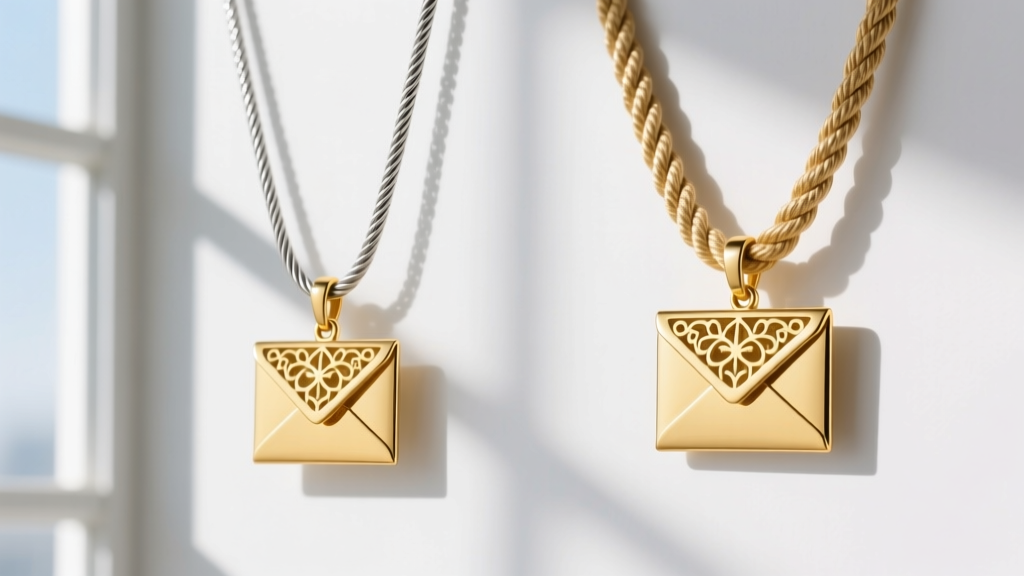
Not all solid gold is created equal, and not all high price tags are justified. When evaluating a gold envelope necklace priced above $400, watch out for these deceptive manufacturing shortcuts:
- Electroformed Hollow Gold: Some brands use electroforming to create massive, 25mm envelope pendants that weigh less than 1 gram. While it is technically solid 14k gold, the walls are paper-thin. If you accidentally drop it on a tile floor or bump it against a doorframe, it will dent irreparably. Always check the gram weight; a standard 15mm pendant should weigh at least 1.5 grams.
- Glued Hinges: On cheaper functional lockets, manufacturers may use industrial epoxy to secure the hinge pin instead of laser-welding or riveting it. Test the hinge gently; if it feels stiff or exhibits lateral wobble, the pin is likely glued and will eventually fail.
- Unstamped Bails: The bail (the loop the chain passes through) experiences the most friction. Ensure the bail is stamped with the karat mark (e.g., 14k) or that the brand explicitly guarantees the bail is solid gold, not just plated base metal.
Final Verdict: Budgeting for Your Envelope Necklace
The gold envelope necklace is a beautiful, enduring design, but its value is entirely dependent on how it is engineered. If you are buying a piece as a fleeting fashion accessory or a temporary placeholder, a $90 gold vermeil piece from a reputable demi-fine brand is a perfectly acceptable choice. Just be prepared for eventual replating costs.
However, if you are purchasing this necklace to commemorate a milestone, to hold a secret note, or to serve as a permanent fixture in your daily jewelry rotation, bypass the plated tiers entirely. Budget between $280 and $450 for a 14k solid gold envelope necklace with a 1.0mm or thicker chain and a secure lobster clasp. By focusing on gram weight, mechanical integrity, and chain gauge rather than brand hype, you will secure a piece that retains both its financial and sentimental value for decades to come.


