Gold Greek Key Necklace Value: Pricing & Buying Guide
Discover the true value of a gold Greek key necklace. We break down pricing by karat, weight, and craftsmanship to help you buy smart and avoid overpaying.

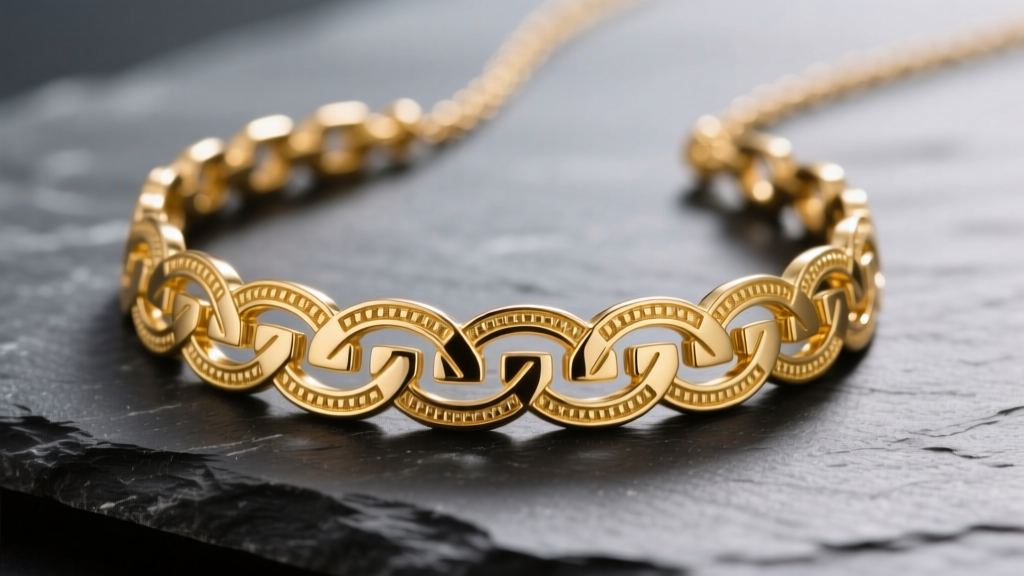
The Enduring Appeal of the Meander Motif
The Greek key, universally recognized as the meander motif, is one of the most historically significant and aesthetically enduring designs in fine jewelry. Named after the Maeander River in present-day Turkey, the continuous, interlocking geometric lines symbolize infinity, unity, and the eternal flow of life. When translated into a gold Greek key necklace, this ancient motif transforms into a powerful statement piece that bridges classical antiquity with modern luxury.
However, the market for these necklaces is notoriously opaque. Prices can range from a mere $45 for gold-plated fashion replicas to upwards of $8,000 for solid, hand-finished 22-karat gold masterworks. As we navigate the precious metals market in 2026, understanding the true value of a gold Greek key necklace requires looking past the brand name and dissecting the piece based on material purity, gram weight, manufacturing techniques, and structural integrity. This comprehensive value assessment will equip you with the exact metrics needed to evaluate pricing and avoid severe retail markups.
Decoding the Price Tag: Solid Gold vs. Alternatives
Before assessing solid gold, it is crucial to establish the baseline for gold alternatives. Many retailers use deceptive terminology to inflate the perceived value of non-solid pieces. A genuine investment in a Greek key necklace requires solid gold, but understanding the lower tiers helps you recognize when you are being overcharged.
- Gold Plated (Brass or Copper Base): Typically priced between $20 and $60. The gold layer is measured in millionths of an inch and will wear off rapidly, especially at the friction points of the meander links.
- Gold Vermeil (Sterling Silver Base): Priced between $60 and $150. Vermeil requires a minimum of 2.5 microns of gold over sterling silver. While a step up, the intricate crevices of the Greek key design trap moisture and skin oils, accelerating the tarnishing of the underlying silver once the gold wears thin.
- Solid Gold (10K, 14K, 18K, 22K): Starting around $250 and scaling into the thousands. This is the only tier that holds intrinsic melt value and offers generational longevity.
14K vs. 18K vs. 22K Gold: Karat Impact on Cost
The karat weight dictates both the color saturation and the structural durability of the necklace. According to the Gemological Institute of America (GIA), the alloy mix fundamentally changes how the metal behaves when formed into sharp, 90-degree geometric angles.
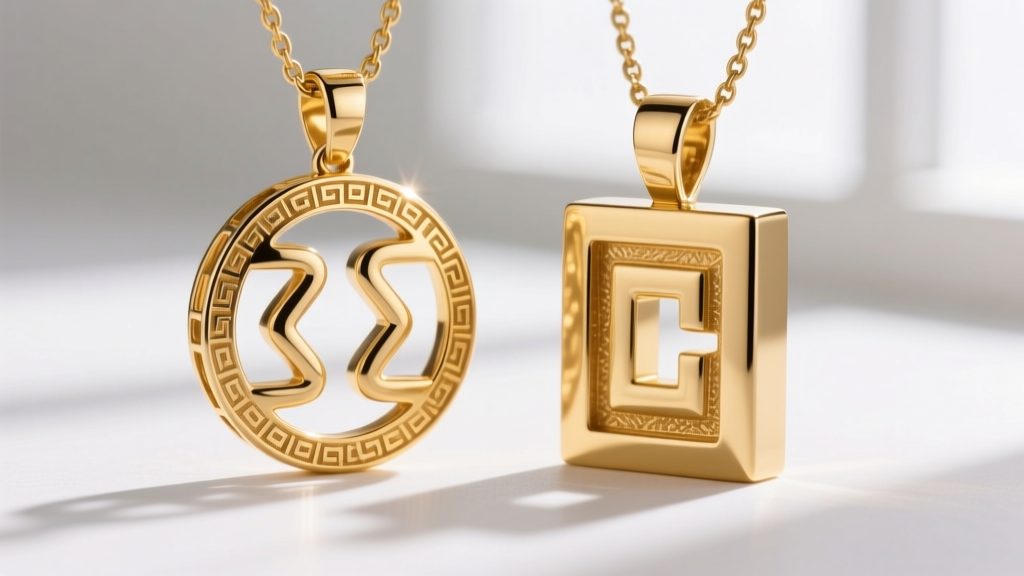
| Karat | Gold Purity | Durability & Use Case | Estimated Retail Premium over Melt |
|---|---|---|---|
| 10K | 41.7% | Highly durable, pale color. Best for budget-friendly, everyday chains. | 1.5x - 2.0x |
| 14K | 58.5% | The industry standard. Excellent balance of rich color and tensile strength. | 1.8x - 2.5x |
| 18K | 75.0% | Deep, warm yellow hue. Softer, requiring thicker links to prevent bending. | 2.2x - 3.0x |
| 22K | 91.6% | Very soft, intense color. Reserved for heavy, rigid collars or pendants. | 2.5x - 4.0x |
Weight, Width, and the Gram Multiplier
The most critical step in assessing the value of a solid gold Greek key necklace is calculating the gram multiplier. Unlike plain cable chains, meander chains require complex link formations, meaning the labor premium (the multiplier applied to the raw melt value of the gold) is inherently higher. However, there is a ceiling to what constitutes a fair markup.
To calculate the baseline value, you must reference the daily spot price of gold. Data from the World Gold Council provides the foundation for melt value. For example, if 24K gold is trading at $65 per gram, 14K gold (58.5% pure) has a melt value of approximately $38 per gram.
If you are evaluating a 20-gram 14K solid gold Greek key chain:
- Raw Melt Value: 20 grams x $38 = $760.
- Fair Retail Multiplier: For intricate, machine-assisted chains, a fair retail multiplier is between 1.8x and 2.5x the melt value.
- Target Price Range: $1,368 to $1,900.
If a boutique attempts to sell this exact 20-gram chain for $4,500, you are paying a 5.9x multiplier, which is purely a brand-name tax. Conversely, if the chain is priced at $800 (below melt value), it is almost certainly hollow, heavily alloyed, or mislabeled.
Craftsmanship Tiers: Stamped, Cast, or Hand-Engraved?
The manufacturing method drastically alters both the price and the lifespan of a Greek key necklace. The sharp corners of the meander design present unique engineering challenges that separate mass-produced jewelry from heirloom-quality pieces.
Die-Stamped and Hollow Chains
Many mid-tier retailers sell die-stamped Greek key chains. These are created by stamping flat sheets of gold and folding them into tubular links. While they offer a large visual footprint for a low gram weight, they are structurally compromised. The sharp 90-degree folds in the meander pattern create severe stress points. If caught on clothing, hollow meander links will crush and dent, and they are virtually impossible for a jeweler to repair without visible scarring.
Solid Cast Links
Higher-end chains utilize lost-wax casting for each individual link before soldering them together. Solid cast links are heavy, durable, and resist crushing. However, poor casting can result in porosity—tiny air bubbles trapped inside the gold. Always inspect solid cast Greek key links under a loupe; if you see microscopic pitting on the surface, the structural integrity is compromised, and the chain is prone to snapping under its own weight.

Hand-Chased and Engraved Masterworks
At the pinnacle of the market are hand-chased or hand-engraved Greek key necklaces. Artisans use specialized gravers to carve the meander pattern directly into solid gold links. This technique work-hardens the surface of the gold, making it incredibly resistant to scratches while providing a crisp, razor-sharp geometric contrast that machines cannot replicate. Expect to pay a 4x to 6x melt multiplier for genuine hand-finished work, justified by the dozens of hours of skilled labor required.
Common Failure Modes to Inspect Before Buying
When evaluating a vintage or new Greek key necklace, perform these specific stress checks:
- Solder Joint Fatigue: The continuous loop of the Greek key requires multiple solder points per link. Inspect the corners; excess solder blobbing indicates hasty mass production and creates brittle weak points.
- Clasp Inadequacy: A heavy solid gold meander chain (over 25 grams) will easily destroy a standard spring-ring clasp. Ensure the piece is fitted with a heavy-duty lobster clasp or, ideally, a box clasp with a figure-eight safety catch.
- Link Torsion: Hold the chain taut and gently twist. The links should articulate smoothly. If the rectangular meander links bind or scrape against one another, the tolerances are too tight, leading to premature wear at the friction points.
The Verdict: How Much Should You Actually Pay?
Ultimately, the value of a gold Greek key necklace is an equation of intrinsic metal weight plus a justified labor premium. For an everyday, durable 14K solid gold meander chain weighing between 10 and 15 grams, a fair market price sits between $800 and $1,400. For an 18K or 22K statement piece featuring solid cast or hand-chased links weighing upwards of 40 grams, budgets should realistically scale from $3,500 to $7,000.
By demanding transparency regarding the exact gram weight, karat purity, and manufacturing method, you can confidently navigate the market. Avoid the trap of paying luxury markups for hollow, die-stamped imitations, and focus your investment on solid, meticulously crafted pieces that honor the eternal legacy of the meander motif.
Sources consulted for precious metal standards and market data: Gemological Institute of America (GIA), World Gold Council.


