How to Choose a Gold Heart Necklace With Diamond in the Middle
Discover how to choose the perfect gold heart necklace with diamond in the middle. Learn about gold karats, diamond clarity, and pricing tiers.

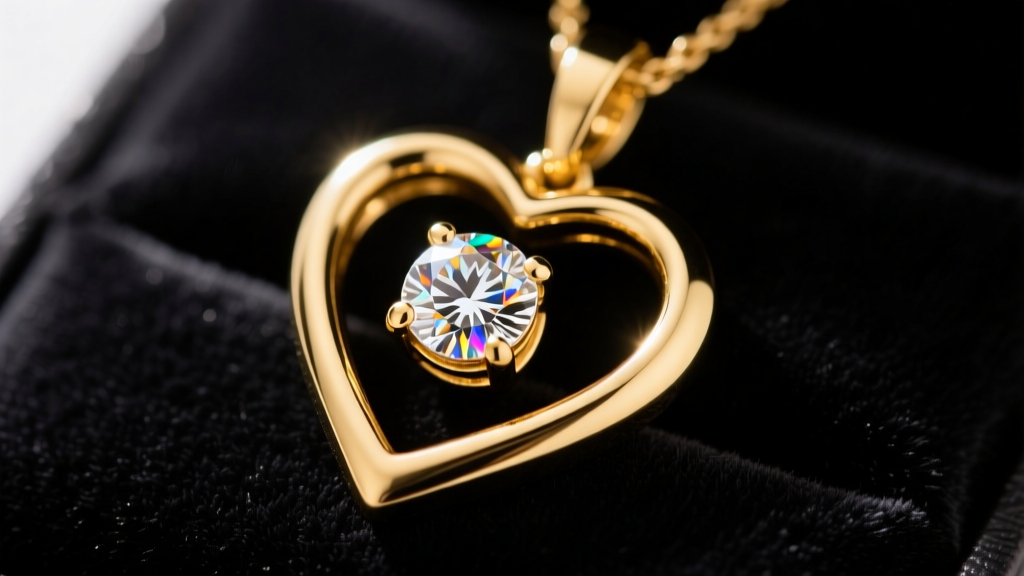
The search for the perfect gold heart necklace with diamond in the middle is a journey through both romantic symbolism and precise metallurgy. While the heart motif remains a timeless staple in jewelry boxes worldwide, the market is flooded with varying qualities of gold casting and diamond grading. As a buyer in 2026, you must look beyond the initial sparkle and evaluate the structural integrity of the pendant, the authenticity of the center stone, and the long-term durability of the chain pairing. This comprehensive buying guide breaks down the exact specifications, material grades, and pricing metrics you need to make an informed investment.
The Anatomy of a High-Quality Heart Pendant
Not all heart pendants are cast equally. The structural weak point of any heart-shaped jewelry is the "cleft"—the inner curve at the top center where the two lobes meet. In poorly manufactured pieces, this area is cast too thinly, leading to micro-fractures and eventual snapping under the weight of a chain.
The Bail and Jump Ring Connection
The bail is the loop that connects the pendant to the chain. For a gold heart necklace with diamond in the middle, you want a solid, soldered bail rather than a hollow, stamped one. Furthermore, inspect the jump ring (the small circle linking the bail to the chain). It should be fully soldered shut. If you can see a visible seam that can be pulled apart with a fingernail, the pendant is a snag hazard waiting to happen. Look for a jump ring wire thickness of at least 0.8mm (roughly 20-gauge) to ensure it can withstand daily wear without warping.
Decoding the Center Stone: Solitaire vs. Illusion Settings
The diamond in the middle of the heart pendant dictates both the price and the visual impact. Jewelers typically use one of three setting styles for this specific design:
- Bezel Setting: A rim of gold completely encircles the diamond's girdle. This is the most secure option, protecting the stone's edges from chipping, though it slightly reduces the diamond's visible surface area and light return.
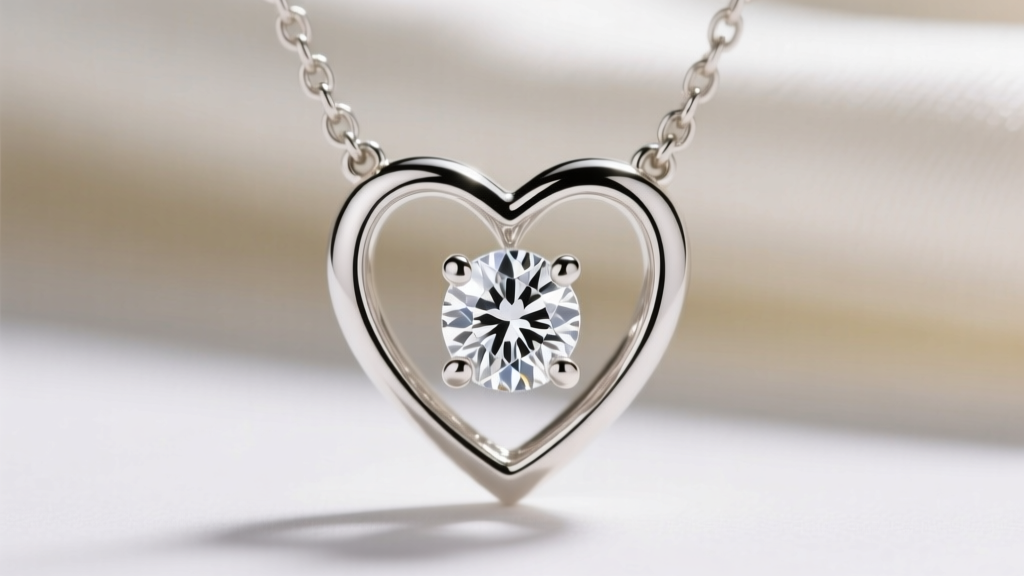
- Prong Setting (3 or 4 prongs): Allows maximum light exposure. For a heart pendant, a 4-prong setting is standard. Ensure the prongs are V-tipped or rounded and sit flush against the crown of the diamond.
- Illusion Setting: A common technique where the gold surrounding a small melee diamond (usually under 0.10 carats) is cut with faceted patterns to mimic the look of a larger stone. While cost-effective, illusion settings can trap oils and lotions, requiring frequent ultrasonic cleaning.
Diamond Quality Metrics for Pendants
Because pendant diamonds are viewed from a distance (typically 12 to 18 inches away), you do not need to pay a premium for flawless clarity. According to GIA's 4Cs of Diamond Quality, an SI1 or SI2 (Slightly Included) clarity grade is perfectly acceptable for stones under 0.50 carats, as inclusions will be invisible to the naked eye at a conversational distance. For color, aim for G to J grades; anything lower may show a noticeable yellow tint against white gold, though it can blend beautifully with warm yellow or rose gold.
Gold Purity and Chain Pairing Matrix
Selecting the right gold karat and chain style is critical for balancing durability with aesthetic appeal. Below is a matrix to help you match the gold purity with the ideal chain type for a heart pendant.
| Gold Karat | Durability & Color | Best Chain Pairing | Ideal Pendant Weight |
|---|---|---|---|
| 10k Gold | Highest durability, pale yellow hue, prone to tarnishing if alloyed with high copper. | Cable or Box Chain (18-gauge) | Lightweight (1.5g - 2.5g) |
| 14k Gold | Industry standard. Excellent balance of rich color and scratch resistance. | Box or Rope Chain (20-gauge) | Medium (2.5g - 4.0g) |
| 18k Gold | Deep, luxurious yellow color. Softer metal, more prone to scratching and bending. | Wheat or Snake Chain (18-gauge) | Heavy/Solid (4.0g+) |
Expert Tip: Avoid pairing heavy 18k gold heart pendants with delicate 22-gauge chains. The weight disparity will cause the chain links to stretch and eventually snap at the clasp.
2026 Pricing Tiers: What You Should Actually Pay
Understanding the fair market value prevents you from overpaying for brand markups or underpaying for counterfeit goods. Here is the current pricing landscape for a genuine gold heart necklace with diamond in the middle:
Entry-Level ($150 – $350): Features 10k gold, hollow-cast or lightweight solid construction (under 2 grams), and a single melee diamond (0.03ct - 0.08ct) in an illusion setting.
Mid-Range ($400 – $950): The sweet spot for quality. Includes 14k solid gold (2.5 to 4 grams), a genuine solitaire diamond (0.10ct - 0.25ct) in a prong or bezel setting, and a sturdy box chain.
Luxury ($1,200 – $3,000+): Crafted in 18k gold with substantial weight (5+ grams), featuring a high-clarity (VS1/VS2) diamond of 0.50ct or larger, often accompanied by designer branding or intricate pavé halos.
Quality Control: Red Flags to Avoid
When evaluating a piece in-store or upon delivery, conduct a thorough inspection. The FTC Jewelry Guides mandate strict disclosures regarding metal purity and gemstone treatments. Watch out for these common manufacturing flaws and deceptive practices:

1. Casting Porosity
Use a 10x jeweler's loupe to examine the back and sides of the heart pendant. If you see tiny pits, bubbles, or a grainy texture, the piece suffers from casting porosity. This occurs when gas is trapped in the molten gold during manufacturing. Porous gold is structurally compromised and cannot be easily resized or repaired if it cracks.
2. Undisclosed Diamond Enhancements
Some manufacturers use fracture-filled or laser-drilled diamonds to improve the apparent clarity of low-grade stones. While not inherently bad, these treatments must be disclosed. Fracture-filled diamonds can be destroyed by the heat of a jeweler's torch during routine repairs, and they require special care to avoid clouding.
3. Missing or Incorrect Hallmarks
Every genuine gold piece must bear a quality mark (e.g., 14K, 585, 18K, 750) and, ideally, a maker's mark. If the pendant only says "Gold" or lacks a stamp entirely on the bail or back plate, walk away. Electroplated items (like HGE or RGP) will eventually wear through, revealing the base metal beneath and potentially causing skin irritation.
Final Authentication Steps
Ultimately, buying a gold heart necklace with diamond in the middle is an exercise in verifying details. Always request a grading report from a reputable lab (like GIA or IGI) if the center diamond is 0.30 carats or larger. For smaller stones, ensure the retailer provides a detailed invoice specifying the exact gold weight, karat purity, and estimated diamond carat weight. By prioritizing structural integrity, appropriate gold alloys, and transparent diamond grading, you will secure a pendant that remains both physically durable and emotionally significant for decades to come.


