How to Fix and Clean a Butterfly Necklace with Pearls
Is your butterfly necklace with pearls tarnished or broken? Discover expert troubleshooting tips for restringing, cleaning nacre, and fixing clasps.

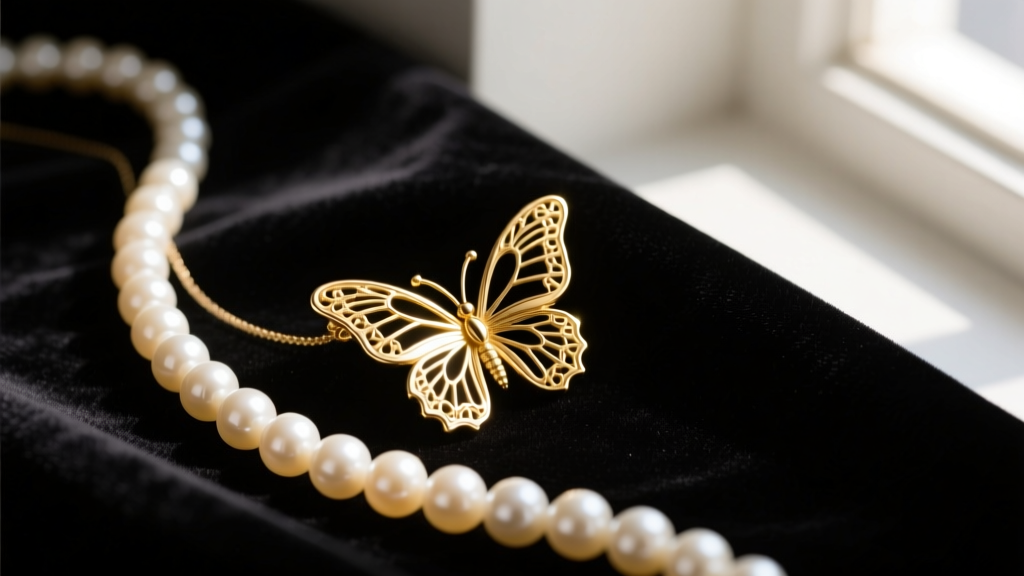
The Unique Vulnerabilities of Pearl and Butterfly Jewelry
A butterfly necklace with pearls is a masterclass in contrasting textures: the organic, iridescent luster of nacre paired with the intricate, often enameled or gem-set metallic wings of a butterfly motif. However, from a bench jeweler's perspective, this combination presents a distinct set of structural and chemical vulnerabilities. Pearls are exceptionally soft, ranking between 2.5 and 3.0 on the Mohs hardness scale, while the metallic findings, enamel wings, and spring-ring clasps require aggressive polishing or ultrasonic cleaning methods that would instantly destroy the pearls.
Troubleshooting this specific type of necklace requires a bifurcated approach: treating the organic gems with extreme chemical caution while addressing the mechanical wear-and-tear of the butterfly pendant's jump rings, prongs, and enamel work. Below is a comprehensive, bench-level guide to diagnosing, cleaning, and repairing your pearl and butterfly jewelry.
Diagnosing Common Pearl & Pendant Failures
Nacre Peeling vs. Cosmetic Buildup
Before attempting any restoration, you must determine if your pearls are suffering from structural failure or mere surface contamination. According to the Gemological Institute of America (GIA), nacre is composed of microscopic aragonite platelets held together by conchiolin, an organic protein. When exposed to acidic sweat, chlorine, or alcohol-based perfumes, the conchiolin degrades, leading to 'crazing' (micro-fractures) or outright peeling.
- The Fingernail Test: Gently run your fingernail across a discolored spot. If it feels gritty and leaves a chalky residue, the nacre is actively degrading. If it feels smooth but looks dull, it is likely a layer of sebum and cosmetic buildup.
- The Luster Check: Hold the pearl under a direct LED light. A healthy pearl will show a sharp, distinct reflection of the light source. A compromised pearl will appear milky or chalky, indicating deep chemical etching that cannot be polished out.
Butterfly Enamel Chipping and Prong Loosening
Butterfly pendants frequently feature plique-à-jour or cold enamel wings. Because enamel is essentially glass (Mohs 5-6), it is highly susceptible to micro-fractures when the necklace is dropped or stored loosely. Furthermore, the delicate prongs holding accent stones (like tiny diamonds or sapphires) on the butterfly's thorax can catch on silk clothing, bending outward and risking stone loss.
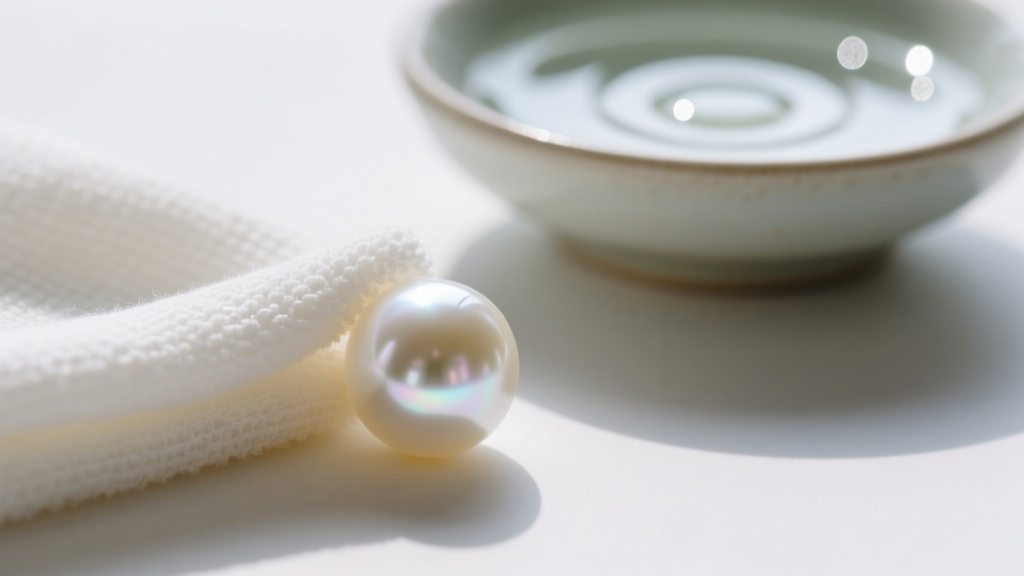
The Step-by-Step Pearl Cleaning Protocol
Never use ultrasonic cleaners, steamers, or commercial silver dips on a butterfly necklace with pearls. The high-frequency vibrations of an ultrasonic cleaner will shatter the nacre, while the ammonia in silver dips will permanently bleach the pearls. Follow this bench-safe protocol:
- Prepare a Two-Bowl System: Fill one bowl with distilled water (tap water contains chlorine and heavy metals) and a single drop of unscented, pH-neutral castile soap. Fill the second bowl with pure distilled water for rinsing.
- Isolate the Butterfly Pendant: If the butterfly pendant features porous gemstones like turquoise or opals alongside the pearls, wrap the pendant in a dry microfiber cloth to prevent water from getting trapped behind the settings.
- The Wipe-Down Method: Do not submerge the necklace if it is strung on silk. Submerging silk causes it to stretch and rot from the inside out. Instead, dip a lint-free microfiber cloth into the soapy water, wring it out until it is barely damp, and gently wipe each pearl individually.
- Dry and Rest: Lay the necklace flat on a dry cotton towel. Never hang a wet pearl necklace, as the weight of the water will permanently stretch the stringing material.
Jeweler's Note: If your pearls have lost their luster due to mild acid etching, a professional jeweler can sometimes perform a very light 'pearl peel'—removing the outermost damaged layer of nacre. This is only possible with thick-nacre pearls like high-grade Freshwater or South Sea pearls, never with thin-nacre Akoya pearls.
Restringing & Wire Integrity: When to Intervene
If you notice gaps between the pearls, or if the butterfly pendant sits lower on the chest than it used to, the stringing material has stretched or degraded. A standard rule of thumb is to restring pearl necklaces every 18 to 24 months if worn weekly. When restringing a piece with a heavy metallic butterfly pendant, choosing the right core material is critical.
| Stringing Material | Best Application | Pros | Cons |
|---|---|---|---|
| Griffin Silk (Size D or F) | Traditional knotted strands | Classic drape, protects nacre from bead-on-bead friction | Stretches over time, degrades with moisture and sweat |
| Nylon (Power Pro) | Heavy butterfly pendants | Zero stretch, high tensile strength, rot-resistant | Stiffer drape, requires specialized surgeon's knots |
| Soft Flex Wire (0.014") | Modern, unknotted designs | Kink-resistant, extremely durable, supports heavy metalwork | Cannot be knotted, requires crimp beads which can scratch pearls |
When restringing, always use French wire (bullion) at the ends where the silk loops through the clasp jump ring. This coiled metal protects the silk from fraying against the metal hardware, a common failure point in vintage butterfly necklaces.
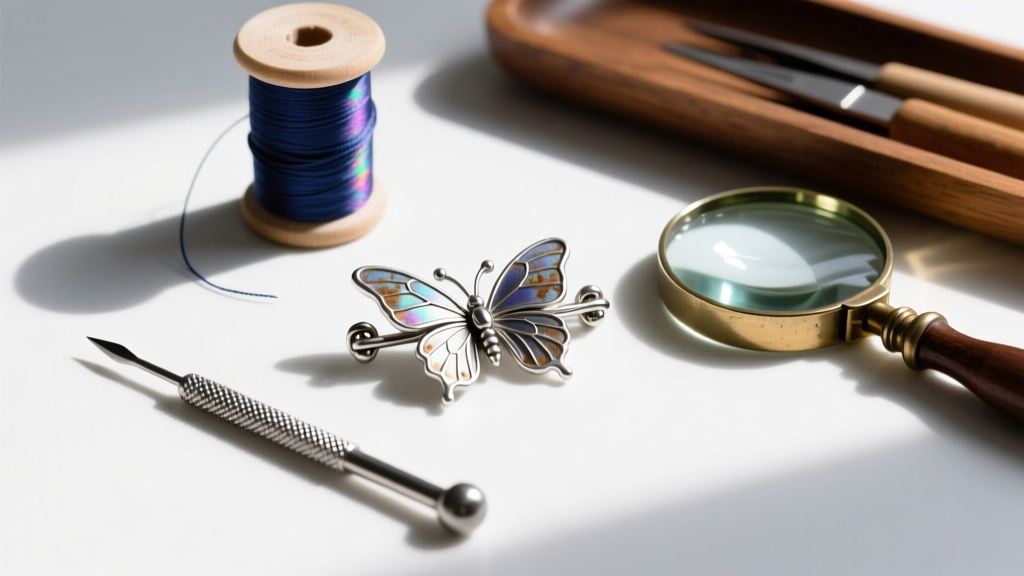
Fixing the Butterfly Clasp and Jump Rings
The hardware connecting the butterfly pendant to the pearl strand is a frequent point of mechanical failure. Here is how to troubleshoot the most common clasp issues:
1. The Stuck Spring Ring
Spring rings (the circular clasps with a tiny trigger) often seize up due to lotion buildup or a bent internal spring. Do not use WD-40 or oil. Instead, use a wooden toothpick dipped in isopropyl alcohol to gently clean the crevice around the trigger. If the spring is internally broken, the clasp must be cut off and replaced with a lobster clasp, which offers superior security for the weight of a butterfly pendant.
2. Jump Ring Distortion
The jump ring connecting the butterfly pendant to the chain or pearl strand should be soldered closed. If it is an open jump ring, it can easily pull apart, resulting in the loss of the pendant. Use two pairs of flat-nose pliers to twist the jump ring open laterally (never pull it apart outward, which distorts the circle). For a permanent fix, have a jeweler laser-weld or solder the jump ring shut.
Preventative Storage & Wear Rules
To prevent future troubleshooting, implement these strict storage and wear protocols:
- The 'Last On, First Off' Rule: Pearls are highly reactive to the chemicals in hairspray, perfume, and lotions. Always put your butterfly necklace on after your cosmetics have fully dried, and remove it immediately upon returning home.
- Flat Storage Only: Never hang a pearl necklace on a jewelry tree. Gravity will stretch the silk thread over time, creating unsightly gaps between the pearls and the butterfly bail.
- Isolate from Harder Gems: Store the necklace in a soft chamois pouch. If stored in a communal jewelry box, the metallic wings of the butterfly or adjacent diamond jewelry will easily scratch the soft nacre of the pearls.
By understanding the distinct material properties of both the organic pearls and the metallic butterfly components, you can effectively troubleshoot, repair, and preserve your necklace for decades of wear. For further reading on organic gemstone care, consult the GIA's official pearl care guidelines.


