Safe Infant Teething Necklace Alternatives: 2026 Gift Guide
Discover safe infant teething necklace alternatives for 2026 baby showers. Expert jewelry picks for moms that keep babies soothed and secure.


The Great Teething Jewelry Debate: Safety First
When searching for the perfect baby shower or first birthday gift, well-meaning friends and family often stumble upon the concept of an infant teething necklace. The premise is undeniably appealing: a natural, stylish accessory that soothes a fussy baby’s aching gums. However, as we navigate the jewelry trends of 2026, it is critical to address a massive elephant in the room regarding infant safety. The traditional practice of placing beaded or amber necklaces directly around a baby's neck has been universally condemned by pediatric and regulatory experts.
According to the U.S. Food and Drug Administration (FDA), necklaces placed on infants pose severe, life-threatening risks, primarily strangulation and choking. As expert gift-givers and jewelry enthusiasts, our responsibility is to pivot away from hazardous trends and toward innovative, safe alternatives. This guide explores the modern evolution of teething jewelry, focusing on caregiver-worn sensory necklaces and high-grade material alternatives that provide the soothing benefits without the catastrophic failure modes.
Why Traditional Amber & Bead Necklaces Fail the Safety Test
For years, Baltic amber teething necklaces were marketed as a natural remedy, claiming that body heat releases succinic acid into the skin to act as a mild analgesic. However, scientific consensus and pediatric authorities, including the American Academy of Pediatrics (AAP), have found no clinical evidence to support these claims. More importantly, the structural engineering of these necklaces is fundamentally incompatible with infant behavior.
Critical Failure Modes in Infant-Worn Jewelry
- Cord Degradation: Saliva is highly enzymatic and acidic. Over time, it degrades cotton and silk cords, leading to sudden snapping.
- Choking Hazards: If a strand breaks, 4mm to 6mm beads are released. These specific dimensions are the exact size of the infant airway, creating a severe aspiration risk.
- Clasp Entanglement: Standard jewelry clasps do not yield under pressure. If the necklace catches on a crib slat or car seat harness, the lack of a release mechanism leads to immediate strangulation.
The 2026 Gift Guide: Safe Wearable Teething Jewelry
The modern solution to the infant teething necklace dilemma is caregiver-worn sensory jewelry. Often referred to as nursing necklaces or mom-worn teething pendants, these pieces are designed to drape safely around the adult's neck, resting at the baby's eye and mouth level during feeding or cuddling. This allows the infant to chew and play safely while the adult maintains full control of the environment.
1. The Geometric Silicone Pendant
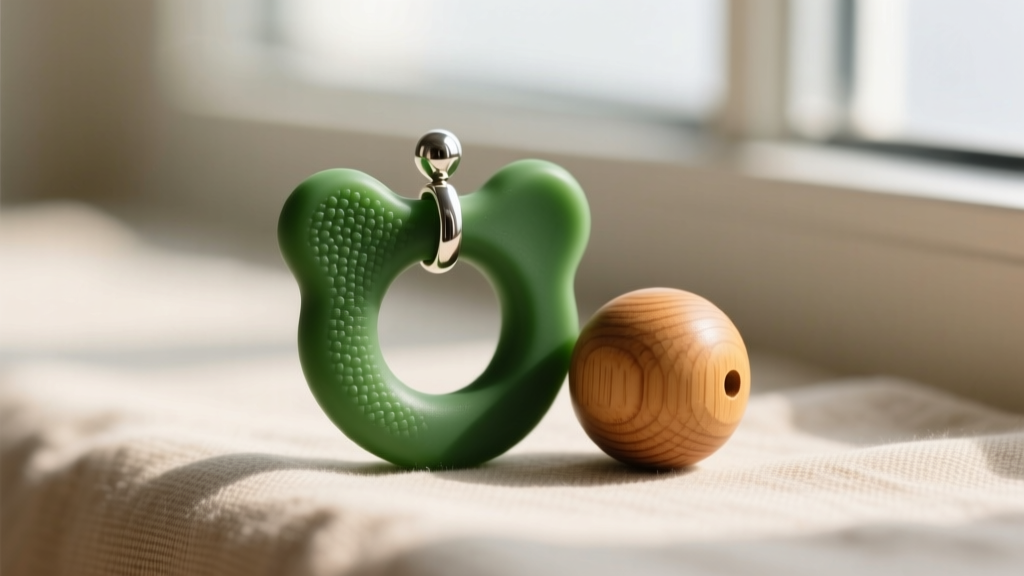
For the minimalist, modern mother, a single, chunky geometric pendant made from 100% platinum-cured silicone is the ultimate 2026 gift. Unlike tin-cured silicone, platinum-cured silicone is medical-grade, completely free of BPA, phthalates, and heavy metals, and does not leach chemicals when exposed to the enzymes in human saliva. Look for pendants with a matte finish, which provides better tactile friction for sore gums than high-gloss finishes.
2. The Hardwood & Cotton Macramé Nursing Necklace
For a bohemian or eco-conscious aesthetic, necklaces crafted from untreated, unvarnished hardwoods (like organic beech or maple) threaded on heavy-duty, breakaway cotton cords are excellent. The wood must be completely unfinished—no polyurethane, no chemical dyes, and no toxic sealants. The natural grain of the wood provides a firm, satisfying resistance for teething babies, while the cotton cord offers a soft, washable base.
Material & Hardware Deep-Dive: What to Look For
When purchasing a caregiver-worn teething necklace as a gift, you must audit the hardware. The most critical component is the breakaway clasp. A true safety breakaway clasp utilizes a friction-fit or magnetic release mechanism calibrated to separate under 3 to 5 Newtons of force (roughly 1 to 1.5 pounds of pressure). If an infant grabs the necklace and pulls violently, or if it becomes caught in a stroller mechanism, the clasp must pop open instantly.
| Feature | Standard Fashion Jewelry | Safe Sensory / Nursing Jewelry |
|---|---|---|
| Clasp Type | Lobster or Spring Ring (Rigid) | Friction-fit Breakaway or Magnetic Release |
| Cord Material | Thin chain, silk, or nylon | Thick, multi-strand braided cotton or Kevlar-core |
| Bead Security | Strung continuously | Individually knotted between every single bead |
| Material Grade | Acrylic, treated wood, resin | Food-grade platinum silicone, raw organic hardwood |
Occasion Matching: Gifting Strategies
Matching the specific style of teething jewelry to the occasion ensures your gift is both practical and deeply appreciated.
The Baby Shower: The 'Sensory Distraction' Gift
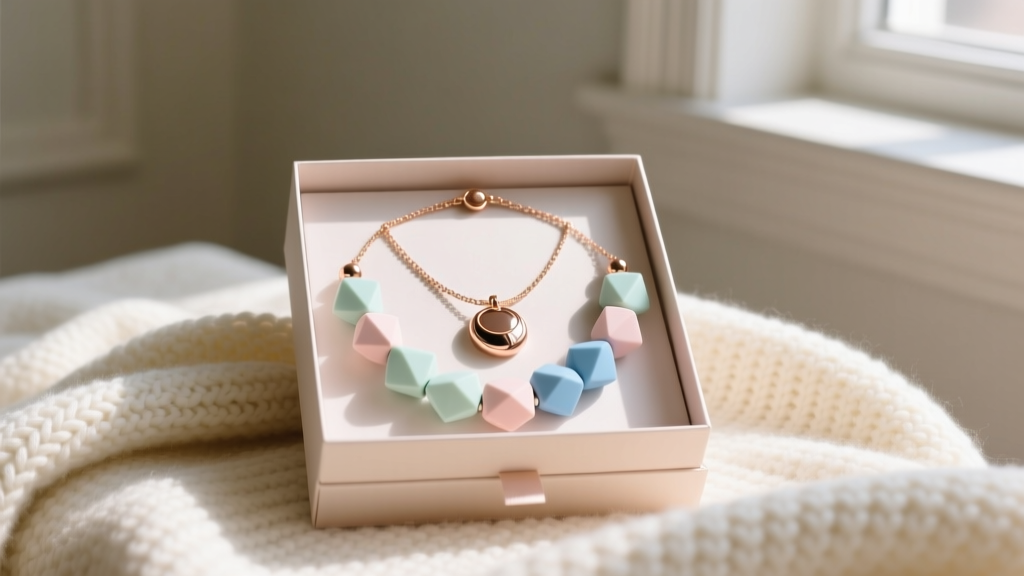
At a baby shower, the focus is on preparing the mother for the newborn stage. Newborns don't teeth immediately, but they do have a grasping reflex and tend to pull on hair or chains while nursing. Gift a multi-strand silicone bead necklace in neutral, nursery-matching tones (like sage, terracotta, or slate). This serves as a 'nursing necklace' to keep the baby's hands occupied and focused during feeding sessions from day one, long before the first tooth erupts.
The First Birthday: The 'Heavy Chewer' Pendant
By the first birthday, the infant is likely actively teething and possesses a strong bite force. This is the time to gift a dense, solid-core silicone pendant or a thick, polished maple wood ring on a breakaway cord. These materials can withstand the intense jaw pressure of a one-year-old without degrading, cracking, or shedding micro-particles.
The 'Return to Work' Push Present
For mothers transitioning back to the office, traditional bright, chunky teething beads might clash with professional attire. The 2026 trend in corporate-friendly sensory jewelry features sleek, metallic-looking silicone pendants (colored with safe, food-grade mica powders to mimic rose gold or brushed silver) or dark, polished ebony-safe wood beads. These look like high-end artisan jewelry but double as a soothing tool for the baby during daycare drop-offs or evening cuddles.
Care, Cleaning, and Maintenance
A major advantage of high-quality caregiver-worn teething jewelry is the ease of sanitation. When gifting, include a beautifully printed care card detailing the maintenance routine:
- For Silicone Pendants: Platinum-cured silicone is highly heat resistant. It can be removed from the cord and boiled in water for 3-5 minutes, or placed on the top rack of a dishwasher for complete sterilization.
- For Hardwood Beads: Never boil or soak untreated wood, as it will raise the grain and cause splintering. Instead, wipe it down with a damp cloth and a mild, baby-safe castile soap. Once a month, condition the wood with a 50/50 mix of organic beeswax and food-grade mineral oil to prevent drying and cracking.
- For Cotton Cords: Hand wash the cord in warm soapy water and lay it flat to dry. Inspect the cord for fraying every 30 days; if the core fibers become visible, it is time to replace the cord.
Final Verdict for Gift Givers
The search for an infant teething necklace should always end with a pivot toward safety and modern design. By avoiding the dangerous trend of placing jewelry directly on a baby's neck, and instead gifting beautifully crafted, rigorously tested caregiver-worn sensory jewelry, you provide a gift that is both deeply practical and profoundly safe. Whether you choose a sleek silicone pendant for the boardroom or a knotted macramé wood piece for the weekend, ensuring the presence of a calibrated breakaway clasp and non-toxic materials will make your 2026 baby shower gift a masterclass in thoughtful, expert gifting.


