How to Choose and Style a Gold K Initial Necklace
Discover how to choose, style, and care for a gold K initial necklace. Learn about karats, chain types, and layering techniques for everyday wear.

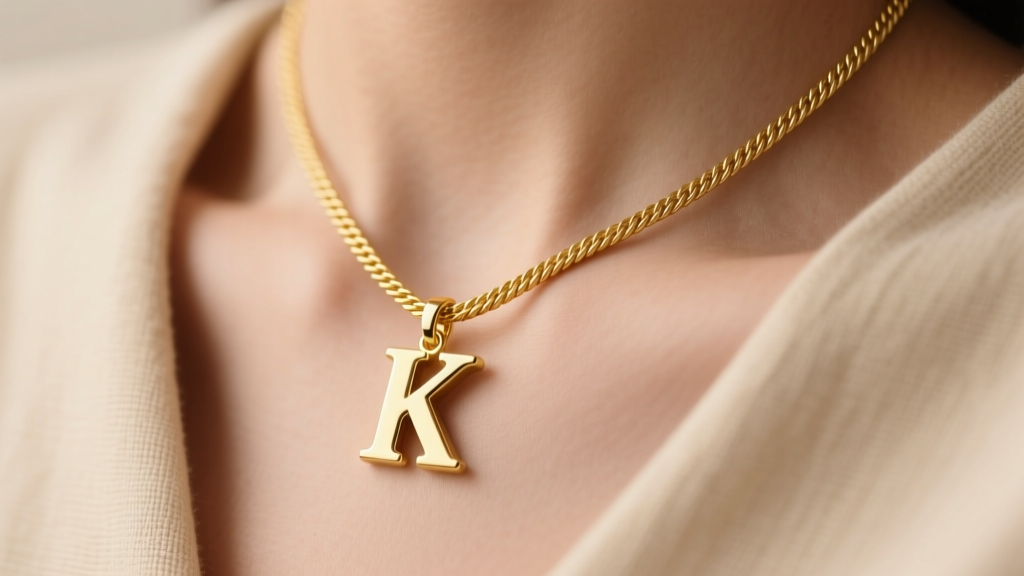
The Enduring Appeal of the Letter 'K'
Initial jewelry has transcended fleeting trends to become a permanent staple in modern fine jewelry collections. Among the alphabet, the letter 'K' holds a unique visual balance. Its sharp diagonals and strong vertical spine make it an exceptionally striking candidate for a pendant. Whether it represents your first name, a child's initial, or a meaningful surname, a gold K initial necklace offers a deeply personal touch that remains effortlessly elegant.
For beginners navigating the fine jewelry market, the sheer volume of options can be overwhelming. From karat weights and chain weaves to font styles and clasp mechanisms, every detail impacts the necklace's longevity, price, and aesthetic. This comprehensive guide breaks down the exact specifications you need to know to invest in a piece you will wear for decades.
Decoding Gold Purity: 10K vs. 14K vs. 18K
The most critical decision when purchasing your necklace is selecting the right gold purity. Pure gold (24K) is too soft for everyday pendants, so it is alloyed with metals like copper, silver, and zinc to increase durability. According to the Gemological Institute of America (GIA), the karat system measures this ratio of pure gold to alloy metals.
| Karat | Gold Content | Durability | Color Profile | Avg. Price Range |
|---|---|---|---|---|
| 10K | 41.7% | Excellent (Highly scratch-resistant) | Pale yellow, slightly muted | $80 - $150 |
| 14K | 58.3% | Very Good (Industry standard) | Warm, classic yellow | $150 - $350 |
| 18K | 75.0% | Good (Prone to micro-scratches) | Rich, deep buttery yellow | $300 - $600+ |
Expert Recommendation: For a daily-wear initial pendant, 14K gold is the optimal choice. It provides the perfect equilibrium between a rich gold color and the structural integrity needed to prevent the delicate points of the letter 'K' from bending or snapping.
A Warning on Gold Vermeil and Plated Options
While budget-friendly options like gold vermeil (a thick layer of gold over sterling silver) or gold-plated brass are tempting, they are not recommended for heirloom-quality initial necklaces. The friction from daily wear will eventually wear through the plating, exposing the base metal and causing tarnishing. If you want a lifelong piece, stick to solid gold.
Selecting the Ideal Chain Architecture
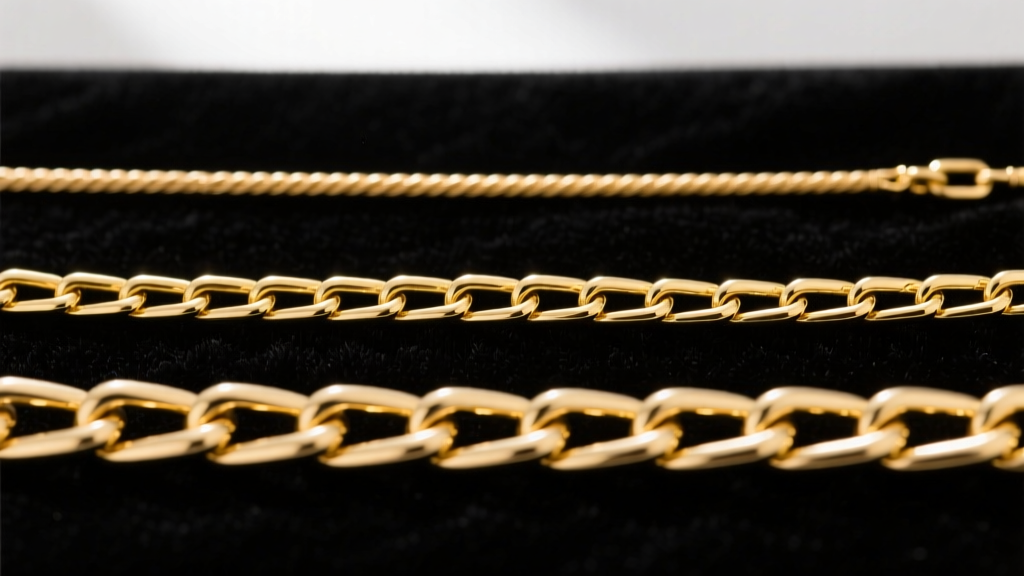
The chain is not merely a vehicle for the pendant; it dictates the overall drape, durability, and style of the necklace. The letter 'K' features sharp angles, so it pairs best with chains that offer a clean, unobtrusive backdrop.
Top Chain Styles for Initial Pendants
- Cable Chain (0.8mm - 1.2mm): The traditional choice. Its uniform oval links provide a delicate, classic look that allows the 'K' pendant to take center stage. Opt for a 1.0mm thickness for the best balance of delicacy and strength.
- Box Chain (1.0mm - 1.5mm): Composed of square links woven together, box chains are incredibly strong and resist kinking. They offer a slightly more modern, geometric aesthetic that complements the straight lines of the letter 'K'.
- Paperclip Chain (2.0mm - 3.0mm): A contemporary favorite. The elongated rectangular links add texture and visual weight. This works best if your 'K' pendant is slightly oversized or features diamond accents.
Clasp Mechanics Matter
Do not overlook the clasp. Avoid spring ring clasps, which are notoriously difficult to operate and prone to internal spring failure. Always look for a lobster clasp, which features a secure, spring-loaded lever mechanism that will keep your gold K initial necklace safely around your neck.
Font, Finish, and Embellishments
The typography of your initial pendant completely changes its vibe. Jewelers generally offer three main categories of font styles:
'Serif fonts with diamond accents evoke vintage heirloom elegance, while sleek sans-serif block letters project a minimalist, modern aesthetic.' - FTC Jewelry Guides Context on Advertising Styles
Diamond Melee Specifications
If you opt for a diamond-encrusted 'K', pay attention to the quality of the melee (small) diamonds. Reputable jewelers will use diamonds in the G-H color range and SI1-SI2 clarity. Because the stones are typically under 0.03 carats each, higher grades like VVS or D-color will not offer a visible difference to the naked eye but will drastically inflate the price.
Enamel and Gemstone Inlays
For a pop of color, consider cold enamel inlays. Deep navy, emerald green, or classic black enamel inside a gold 'K' creates striking contrast. Ensure the jeweler uses high-quality, chip-resistant enamel rather than painted resin, which will peel over time.
The Beginner's Framework for Layering
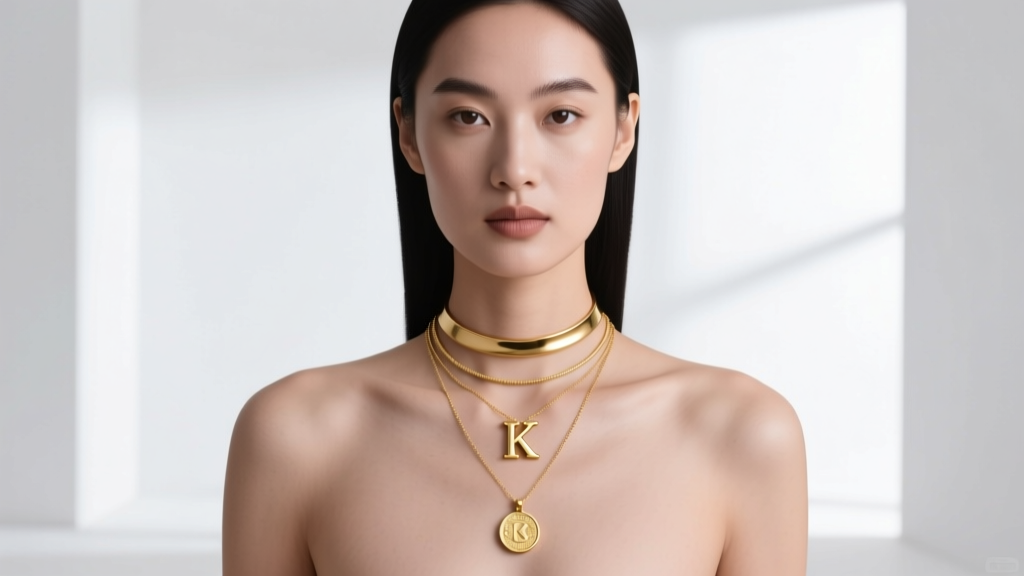
A gold K initial necklace is a phenomenal anchor piece for a layered stack. The golden rule of layering is maintaining a minimum 2-inch length difference between each chain to prevent tangling and ensure each piece is visible.
The Perfect 3-Piece Stack Recipe
- The Base (14 - 15 inches): Start with a simple gold herringbone or snake chain choker that sits snugly on the collarbone.
- The Anchor (16 - 17 inches): This is where your gold K initial necklace lives. A 16-inch cable chain with a 10mm to 15mm 'K' pendant rests perfectly in the hollow of the neck.
- The Statement (18 - 20 inches): Finish with a heavier chain, such as a 3mm paperclip or Figaro chain, featuring a larger geometric shape, a gold hoop, or a vintage coin pendant.
Pro Tip: If you are mixing metals, keep the initial pendant in yellow gold, but feel free to introduce white gold or rose gold in the supporting chains for a mixed-metal, curated look.
Long-Term Care and Maintenance
Even solid 14K gold requires proper maintenance to retain its luster, especially when worn close to the skin where it is exposed to natural oils, lotions, and perfumes.
- Daily Wiping: Keep a untreated microfiber cloth on your nightstand. Give the 'K' pendant a quick 5-second wipe before bed to remove daily sebum and lotion buildup.
- Deep Cleaning: Once a month, soak the necklace in a bowl of warm water with a few drops of mild, phosphate-free dish soap. Use an extra-soft baby toothbrush to gently agitate the crevices of the letter 'K', then rinse with distilled water and pat dry.
- Ultrasonic Warnings: Never put a diamond-accented initial pendant in an ultrasonic cleaner unless you are certain the stones are prong-set. Diamonds set with adhesive or in tension settings can be shaken loose by the high-frequency vibrations.
By understanding the nuances of gold purity, chain architecture, and proper styling proportions, you can confidently select a gold K initial necklace that serves as a beautiful, enduring reflection of your personal story.


