Long Seashell Necklace Troubleshooting and Repair Guide
Fix common issues with your long seashell necklace. Learn how to prevent tangling, repair broken drill holes, and choose stringing materials.

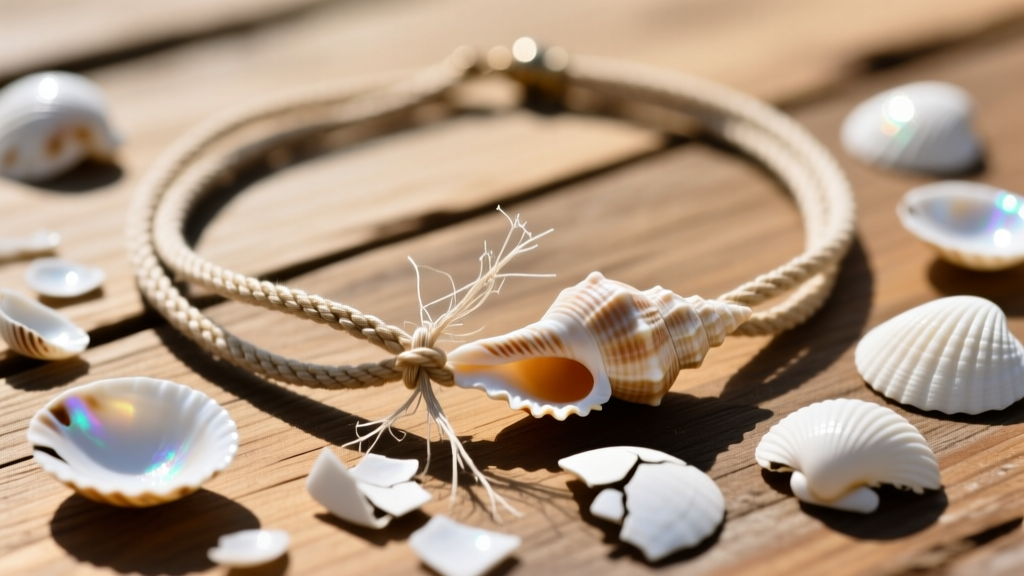
The long seashell necklace is a staple of coastal, bohemian, and resort-style wardrobes. Whether strung with delicate puka shells, polished cowries, or statement queen conch slices, these pieces offer an organic elegance that synthetic materials cannot replicate. However, their natural composition makes them uniquely vulnerable to structural failure. Real seashells are primarily composed of calcium carbonate, registering a mere 3 to 4 on the Mohs hardness scale. This makes them brittle, porous, and highly susceptible to friction, chemical etching, and tension-based breakage.
If your favorite piece has snapped, tangled, or lost its luster, do not discard it. This comprehensive troubleshooting guide will walk you through the exact material science and jewelry repair techniques required to restore and fortify your shell jewelry.
The Anatomy of Stringing Failures
The most common point of failure in a long seashell necklace is the stringing material. Because these necklaces often exceed 30 inches in length and carry significant weight, the cord is subjected to continuous kinetic friction against the sharp inner edges of the shell drill holes. Over time, this acts like a microscopic saw, severing the cord.
Material Comparison and Selection
Choosing the correct stringing medium is critical. Silk thread, while traditional, rots when exposed to sweat and saltwater. Nylon stretches and degrades under UV exposure. For heavy shells, multi-strand beading wire is the industry standard, but it must be used correctly to prevent the wire from slicing through the shell itself.
| Stringing Material | Tensile Strength | Best Shell Type | Primary Failure Mode |
|---|---|---|---|
| Silk Thread (Size F) | Low (approx. 12 lbs) | Lightweight Puka, Heishe | Biodegradation from sweat/salt |
| Nylon Cord (1mm) | Medium (approx. 25 lbs) | Medium Cowrie, Conus | Stretching and UV degradation |
| 49-Strand Beading Wire (.018") | High (approx. 20 lbs) | Heavy Conch, Abalone Slices | Cutting through unlined drill holes |
| 49-Strand Beading Wire (.024") | Very High (approx. 34 lbs) | Massive Statement Shells | Crimp bead slippage if improperly crushed |
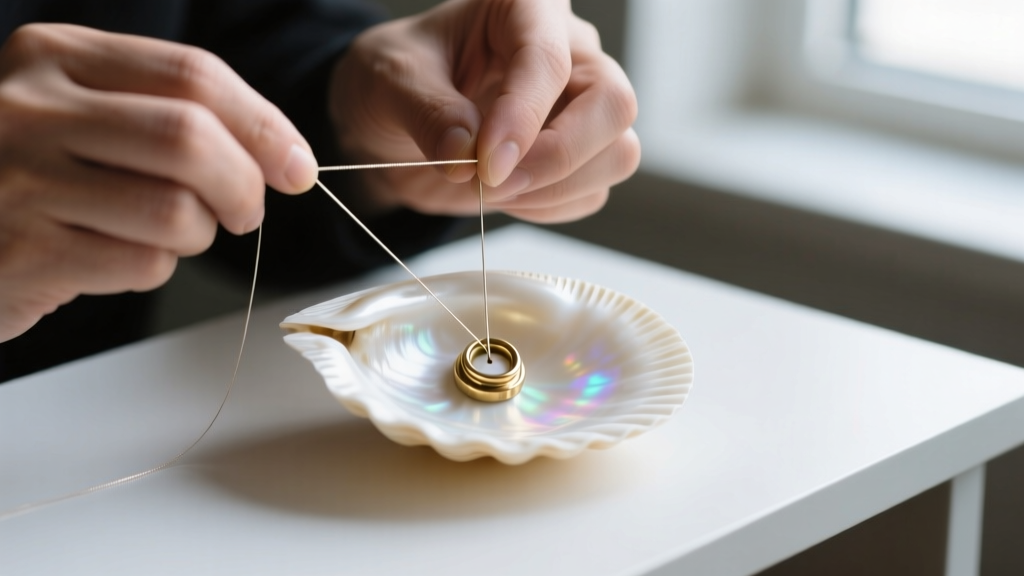
According to the Soft Flex Company, a 49-strand micro beading wire offers the best drape and kink-resistance for heavy organic beads. However, you must never pass bare steel wire directly through a calcium carbonate shell. The steel (Mohs 7.0) will effortlessly grind away the shell (Mohs 3.5). Always line the drill hole with a microscopic coating of cyanoacrylate glue or use a French wire (bullion) guard.
Solving the Tangle and Catch Problem
Long necklaces are notorious for self-knotting, a phenomenon driven by the physics of flexible chains in motion. When shells are strung tightly together, their irregular, jagged edges act as barbs that catch on one another, on clothing, and on hair.
The Spacer and Knotting Framework
To eliminate tangling, you must introduce physical separation and smooth transition points between the shells:
- Silicone Spacer Beads: Thread 2mm clear silicone or rubber spacer beads between every shell. These absorb kinetic shock and prevent the sharp edges of adjacent shells from grinding against each other.
- Traditional Pearl Knotting: If using nylon or silk, tie a hand-knot between every single shell. This not only prevents tangling but ensures that if the cord snaps, you only lose one shell rather than the entire necklace.
- Magnetic Breakaway Clasps: For necklaces over 36 inches, install a high-grade neodymium magnetic clasp at the nape of the neck. This allows you to easily detach the necklace rather than pulling it over your head, which is the primary cause of mid-wear cord stretching and hair-pulling.
Repairing Cracked or Blown-Out Drill Holes
A "blown-out" hole occurs when the tension of the cord cracks the calcium carbonate lip around the drill site, causing the shell to slide right off the wire. This is highly common in thin-lipped shells like the Cypraea moneta (cowrie). You can rebuild the structural integrity of the hole using a jeweler's composite technique.
Pro-Tip: Never use standard super glue from a hardware store for shell repair. It lacks the capillary action needed to penetrate micro-fissures. Use a professional-grade, water-thin cyanoacrylate (CA) glue like Starbond EM-02.
Step-by-Step Hole Reconstruction
- Clean the Area: Wipe the cracked drill hole with isopropyl alcohol to remove skin oils and sunscreen residue.
- Apply the Catalyst: Pack a tiny amount of baking soda (sodium bicarbonate) into and around the cracked fissure of the drill hole.
- Apply the CA Glue: Use a micro-applicator tip to drop the thin CA glue onto the baking soda. The two substances will react instantly, creating a rock-hard, acrylic-like resin ring that fuses with the calcium carbonate.
- Re-Drill: Once cured (about 60 seconds), use a 0.8mm diamond core twist drill bit in a rotary tool at low RPM to carefully bore a new, clean hole through the hardened resin center.
Restoring Chalky or Discolored Shells
Seashells are highly porous. When worn against the skin, they absorb lactic acid from sweat, chemical UV filters (like avobenzone) from sunscreen, and salt from ocean water. This chemical assault dissolves the outer polish of the shell, leaving it chalky, dull, and prone to yellowing.
The Neutralization and Polishing Protocol
To reverse chemical etching, you must first neutralize the acids and then restore the surface luster. The Gemological Institute of America (GIA) advises extreme caution when cleaning organic gem materials, as ultrasonic cleaners and harsh commercial jewelry dips will instantly dissolve the nacreous layers of a shell.
- Neutralize: Create a mild paste of baking soda and distilled water. Gently rub the chalky shells with a soft-bristled baby toothbrush. This neutralizes lingering acids without scratching the surface.
- Rinse and Dry: Rinse thoroughly with distilled water (tap water contains chlorine and heavy minerals that can stain) and pat dry with a microfiber cloth.
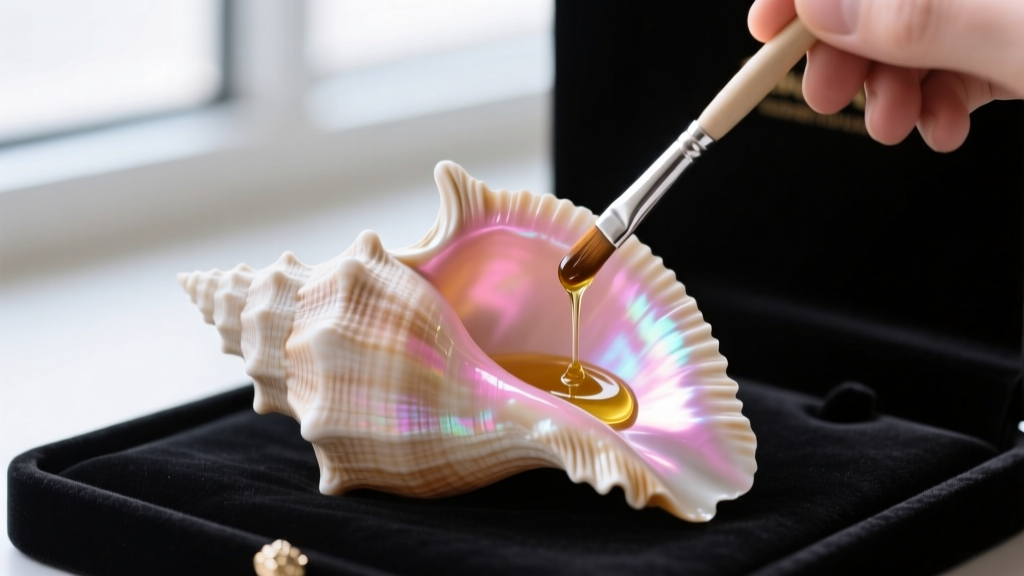
- Rehydrate and Seal: Apply a single drop of food-grade mineral oil or a microcrystalline wax (such as Renaissance Wax) to a cotton pad. Buff the shell vigorously. The oil penetrates the micro-pores, instantly restoring the shell's natural translucency and iridescent luster while creating a hydrophobic barrier against future sweat and sunscreen damage.
Expert Storage and Maintenance Rules
How you store your long seashell necklace dictates its lifespan. Gravity is the enemy of heavy, strung jewelry. Never hang a long, heavy shell necklace on a jewelry stand or hook. The constant downward pull will permanently stretch nylon cords and place continuous stress on the topmost drill holes, eventually causing them to fracture.
Always store the necklace laid perfectly flat in a shallow drawer or box. Line the storage area with acid-free, unbuffered tissue paper. Avoid standard cardboard boxes or PVC-lined plastic bags, as the off-gassing from these materials can cause the shells to yellow and degrade over time. By respecting the material science of calcium carbonate and utilizing proper stringing and maintenance techniques, your coastal jewelry will remain structurally sound and visually stunning for decades.


