Meaningful Necklaces for Guys: Metal Properties & Engraving Guide
Discover the best metals for meaningful necklaces for guys. Compare gold, silver, and titanium properties, engraving limits, and chain gauges.

The Intersection of Sentiment and Metallurgy
When selecting meaningful necklaces for guys—whether it is a memorial pendant containing a fingerprint, a milestone signet, or a set of military-style dog tags—the emotional weight of the piece must be matched by its physical resilience. A truly meaningful necklace is an artifact meant to be worn daily, subjected to sweat, friction, and the elements. Consequently, understanding the metallurgical properties of the pendant and its chain is not just a matter of aesthetics; it is a matter of preservation.
The jewelry industry often markets metals based on color and price, but for men's sentimental jewelry, the critical metrics are Vickers hardness (HV), tensile strength, and engraving compatibility. A material that cannot hold a deep, legible engraving or one that degrades under the friction of a heavy bail will ultimately fail its purpose. Below, we dissect the exact material grades and mechanical properties required to create a lasting heirloom.
Precious Metals: Heirloom Grade & Engraving Depth
Precious metals remain the gold standard for meaningful necklaces for guys due to their intrinsic value, malleability, and ability to be repaired or resized by a traditional jeweler. However, purity dictates durability.
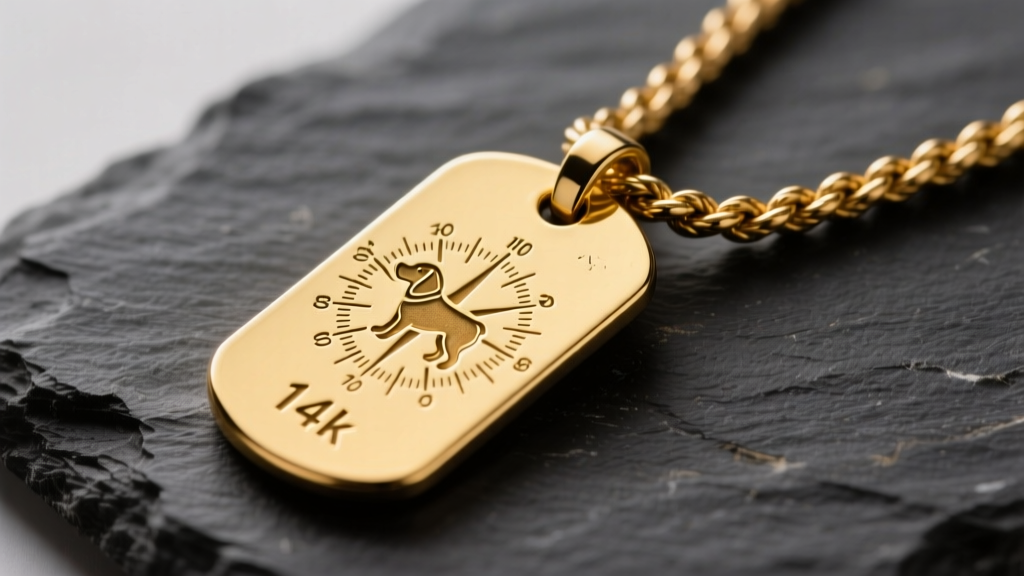
14k vs. 18k Gold: The Durability Compromise
While 18k gold (75% pure gold) offers a richer, warmer hue, it is significantly softer than 14k gold (58.5% pure gold). According to the Gemological Institute of America (GIA), the alloy metals in 14k gold (typically copper, silver, and zinc) increase its Vickers hardness to approximately 140 HV, compared to just 125 HV for 18k gold. For a heavy dog tag or signet pendant that requires deep hand-engraving, 14k gold is vastly superior. The harder alloy prevents the metal from warping or denting during the intense pressure of a traditional push-graver, ensuring that coordinates, names, or crests remain sharp for decades.
925 Sterling Silver & The Patina of Time
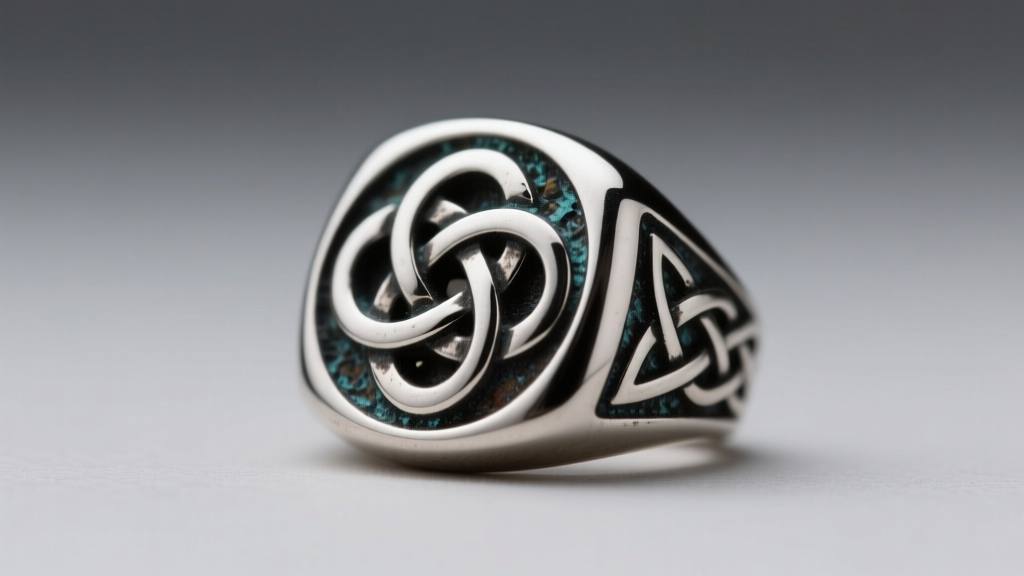
Sterling silver (92.5% silver, 7.5% copper) is a highly popular choice for rugged, meaningful pieces. The copper content provides necessary structural integrity, but it also introduces a unique characteristic: oxidation. When exposed to sulfur in the air and the natural oils of the skin, sterling silver develops a dark patina. For many men, this tarnishing is a feature, not a bug. It settles into the recesses of hand-engraved lines, providing natural contrast that makes the sentimental text or imagery pop. If a pristine look is preferred, a rhodium flash can be applied, though this will eventually wear away on high-friction areas.
Alternative & Industrial Metals: Rugged Longevity
For men who work with their hands or prefer a utilitarian aesthetic, alternative metals offer extreme scratch resistance. However, these materials come with strict limitations regarding engraving and repair.
Titanium: Grade 2 vs. Grade 5 (Aerospace)
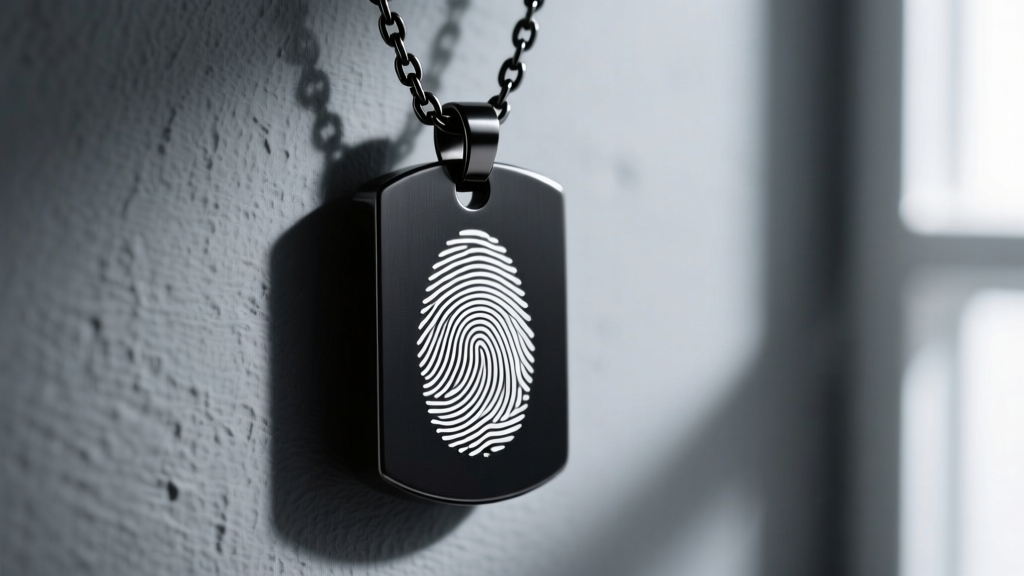
Titanium is celebrated for its hypoallergenic properties and exceptional strength-to-weight ratio. However, not all titanium is created equal. Commercially pure Grade 2 titanium is relatively soft and can be hand-engraved. In contrast, Grade 5 titanium (Ti-6Al-4V), an aerospace-grade alloy containing aluminum and vanadium, is exceptionally hard. Traditional hand engraving will destroy the cutting tools. Meaningful Grade 5 pendants must be engraved using a rotary fiber laser, which vaporizes the metal to create high-contrast, permanent markings. Laser engraving is the only reliable method for capturing complex sentimental data, such as a loved one's fingerprint or a halftone photograph, onto a titanium surface.
Tungsten Carbide & The Brittle Reality
Tungsten carbide is heavily marketed in men's jewelry for its Mohs hardness of 8.5 to 9, making it virtually scratch-proof. However, this extreme hardness comes at the cost of high brittleness.
"While tungsten will not scratch, it lacks tensile flexibility. A sudden blunt impact—such as dropping a heavy tungsten pendant onto a concrete garage floor—can cause it to shatter like glass."For a deeply meaningful memorial piece that is intended to last a lifetime, tungsten's shatter risk makes it a secondary choice compared to the impact-resistant nature of Grade 5 titanium or 316L stainless steel.
316L Surgical Stainless Steel
316L stainless steel contains molybdenum, which drastically increases its resistance to chlorides and industrial solvents. It is an excellent, budget-friendly option for meaningful necklaces for guys who spend time in the ocean or work in corrosive environments. The trade-off is that stainless steel cannot be traditionally soldered. If the chain breaks or the bail snaps, a standard jeweler cannot easily weld it back together, often requiring a complete replacement of the chain hardware.
Material Comparison Matrix for Men's Pendants
Use the following matrix to align your lifestyle and engraving needs with the correct metallurgical choice.
| Material Grade | Hardness / Durability | Engraving Method | Best Sentimental Use | Avg. Pendant Price |
|---|---|---|---|---|
| 14k Yellow Gold | ~140 HV (Durable) | Hand Push, CNC, Laser | Heirloom signets, deep text | $400 - $1,200+ |
| 925 Sterling Silver | ~65 HV (Soft, Malleable) | Hand Push, Stamping | Rustic coordinates, living patina | $80 - $250 |
| Grade 5 Titanium | ~350 HV (Extremely Hard) | Rotary Fiber Laser ONLY | Fingerprints, medical alerts | $120 - $350 |
| 316L Stainless Steel | ~150 HV (Tough, Corrosion-Resistant) | Laser, Diamond Drag | Active lifestyle dog tags | $40 - $120 |
| Tungsten Carbide | ~1500 HV (Scratch-proof, Brittle) | Laser ONLY | Minimalist dates, geometric symbols | $60 - $150 |
Chain Gauges and Clasp Mechanics for Heavy Pendants
A meaningful pendant is only as secure as the chain that holds it. The most common failure point in men's jewelry is bail friction—the gradual sawing effect the pendant's bail (the loop that connects to the chain) has on the chain links. Over months of daily wear, a heavy solid gold or steel pendant can literally cut through a thin chain.
Matching Gauge to Weight
To prevent catastrophic loss of a sentimental piece, follow these gauge rules based on pendant weight:
- Under 10 grams: A 2.0mm to 2.5mm curb or box chain is sufficient.
- 10 to 25 grams (Standard Dog Tags/Signets): Require a minimum 3.0mm to 4.0mm rope or Figaro chain. The twisted links of a rope chain provide multiple friction points, distributing the weight and resisting localized wear.
- Over 25 grams (Oversized Medallions): Demand a 5.0mm+ solid Cuban link chain with reinforced, soldered end links.
Clasp Integrity
Avoid spring-ring clasps for any pendant over 15 grams. The internal spring mechanism is prone to failure, and the thin wire can easily bend open under the pendulum swing of a heavy pendant. Instead, opt for a solid cast lobster clasp or a box clasp with a double safety latch. According to Jewelers of America, regularly inspecting the clasp jump ring—the small circle connecting the clasp to the chain—is the single most effective way to prevent jewelry loss, as these rings often pull apart when snagged on clothing.
Care and Preservation of Sentimental Pieces
Preserving the legibility of engravings requires specific care protocols. For deep hand-engraved gold or silver pieces, avoid ultrasonic cleaners if the piece has been treated with an oxidizing agent (like liver of sulfur) to darken the text. Ultrasonic waves and harsh chemical baths will strip the intentional patina from the recesses, leaving the engraving flat and difficult to read. Instead, use a soft-bristled toothbrush with mild dish soap and warm water, gently brushing across the grain of the engraving to remove dead skin cells and sebum that can dull the metal over time. By respecting the metallurgical boundaries of your chosen material, your meaningful necklace will remain an intact, legible testament to your personal history for generations.


