Ultimate Cleaning Guide for Various Types of Necklace Chain Links
Learn how to safely clean and maintain all types of necklace chain links. Expert tips for rope, snake, box, and curb chains to prevent damage.

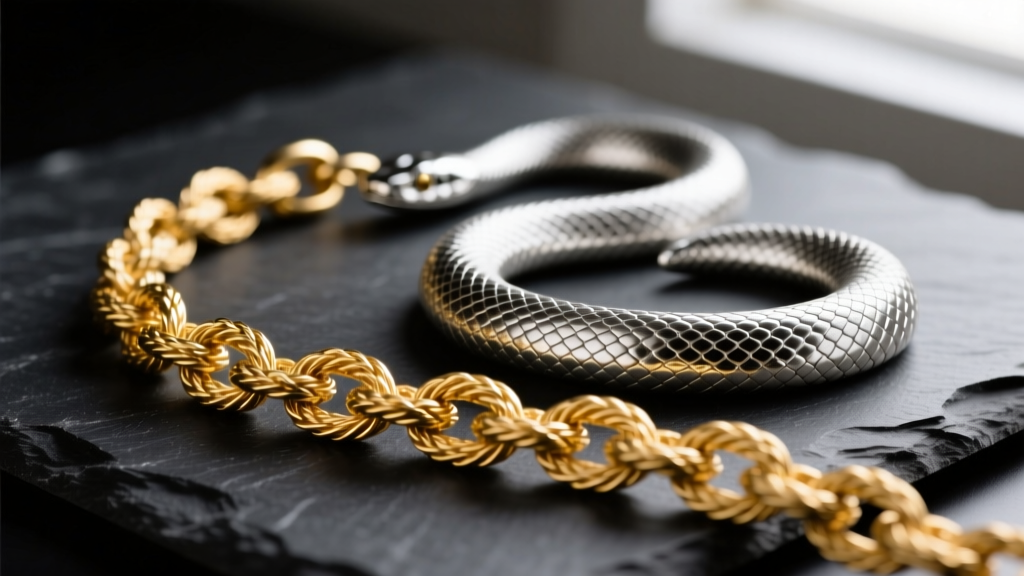
The Anatomy of Chain Tarnish and Dirt Accumulation
Understanding the structural nuances of different types of necklace chain links is the first step in proper jewelry maintenance. A chain is not merely a string of metal; it is a complex mechanical assembly. The surface area, crevice depth, and solder points of each link type dictate how it interacts with environmental pollutants, cosmetic powders, and human sebum. When evaluating how to clean your jewelry, you must first identify the link architecture, as a method that safely restores a curb chain could permanently ruin a delicate snake chain.
Tarnish is primarily a chemical reaction. In gold alloys (like 14k and 18k), the non-gold metals—typically copper, silver, and zinc—react with sulfur compounds in the air and human sweat. Sterling silver (92.5% silver, 7.5% copper) is even more susceptible. However, the physical trapping of dead skin cells, lotions, and talc-based powders creates a biological sludge that accelerates this chemical reaction while dulling the metal's refractive properties. According to the Gemological Institute of America (GIA), regular removal of these organic deposits is critical to preventing long-term structural degradation of the links.
Link-Specific Cleaning Protocols
Because the geometry of the chain dictates where dirt hides, a one-size-fits-all approach to jewelry cleaning is a recipe for disaster. Below are the specialized protocols for the most common chain link families.
Cable and Curb Chains: The Open-Link Standard
Cable and curb chains feature relatively flat, open oval links. Their primary advantage is that they lack deep internal crevices, making them the easiest to clean. However, the solder points on each link are vulnerable to stress corrosion cracking if exposed to harsh chemicals like chlorine.
- The Cleaning Solution: Use a pH-neutral mild dish soap (like Dawn) mixed with warm distilled water. Avoid tap water, as dissolved minerals and chlorine can leave micro-deposits.
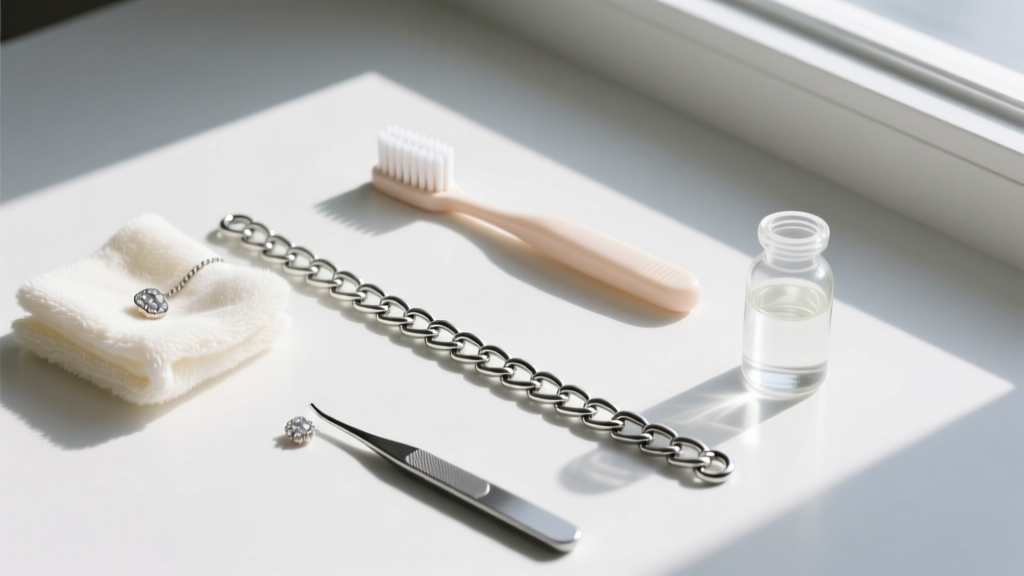
- The Tool: A soft baby toothbrush with a bristle diameter of roughly 0.1mm to 0.12mm. Stiffer adult brushes can cause micro-scratches on high-polish 18k gold or rhodium-plated silver.
- The Technique: Lay the chain flat on a microfiber cloth. Gently agitate the links in a circular motion, paying special attention to the clasp and jump rings where tension and dirt accumulate most heavily.
Rope and Figaro Chains: The Dirt Traps
Rope chains are constructed by twisting multiple smaller links into a spiral, mimicking the look of a woven rope. Figaro chains alternate between elongated and short links. Both styles are notorious for trapping cosmetic powders and sebum deep within their twisted junctions. This trapped debris not only dulls the sparkle but acts as an abrasive paste that slowly wears down the metal from the inside out.
- The Cleaning Solution: An ammonia-free, enzymatic jewelry cleaner is highly effective here. Enzymes break down the protein structures in dead skin and sweat that bind the dirt to the metal.
- The Technique: Submerge the chain in the solution for 10 to 15 minutes. Do not use stiff brushes, as they will fray the delicate twists of a rope chain. Instead, gently massage the chain between your thumb and forefinger while submerged to force the solution through the spirals.
- Drying: Rope chains retain water. Use a hair dryer on the 'cool' setting to blow out trapped moisture from the deep crevices before storing.
Box and Snake Chains: The Delicate and Kink-Prone
Box chains are made of square, interlocking links that create a smooth, geometric surface. Snake chains are tubular, featuring tightly joined rings that form a flexible, continuous metal tube. These are the most high-maintenance types of necklace chain links.
Snake chains, in particular, are incredibly prone to kinking and internal corrosion. Because they are essentially hollow tubes, liquid, sweat, and perfume seep inside the core. If not properly dried, this trapped moisture causes internal oxidation, leading to the dreaded 'green neck' effect and eventual structural snapping.
- The 'Straw Method' for Snake Chains: To clean the interior, thread the chain through a flexible plastic straw. Submerge the straw and chain in a mild soapy solution, then use a syringe to gently flush the soapy water through the straw, effectively power-washing the inside of the tubular chain.
- Box Chain Dents: Box chains dent easily. Never use ultrasonic cleaners on box chains, as the high-frequency vibrations can cause the sharp 90-degree corners of the links to batter against one another, rounding off the edges and ruining the geometric aesthetic.
Ultrasonic vs. Chemical: What Each Link Type Can Handle
Professional jewelers often rely on ultrasonic cleaners, which use high-frequency sound waves to create microscopic cavitation bubbles that blast dirt from metal surfaces. However, this aggressive method is not universally safe. The Jewelers of America warns that ultrasonic vibrations can loosen solder joints and fracture delicate link structures. Use the matrix below to determine the safest cleaning methodology for your specific chain.
| Chain Link Type | Ultrasonic Safe? | Steam Safe? | Best Cleaning Tool | Primary Vulnerability |
|---|---|---|---|---|
| Cable / Curb | Yes (Low Power) | Yes | Soft Baby Toothbrush | Solder point corrosion |
| Rope | No | Yes | Enzymatic Soak & Massage | Unraveling of twisted links |
| Figaro | Yes (Low Power) | Yes | Soft Brush & Soak | Snagging on fabrics |
| Box | No | Yes | Microfiber Cloth | Denting of square edges |
| Snake (Tubular) | No | No | Straw Flush Method | Internal moisture trapping & kinking |
| Wheat (Spiga) | No | Yes | Soft Bristle Agitation | Dirt trapped in woven braids |

Daily Maintenance and Storage Frameworks
Cleaning is reactive; maintenance is proactive. Implementing a structured storage and wear framework will reduce the frequency of deep cleanings required for your chains.
The Anti-Tarnish Storage Protocol
Oxidation requires oxygen and sulfur. To halt this process, store your chains in individual, airtight polyethylene ziplock bags. For added protection, place a 3M anti-tarnish strip or a small packet of silica gel desiccant inside each bag. Silica gel controls humidity, which is a catalyst for the tarnishing of copper alloys found in 14k gold and sterling silver. Never store multiple chains in the same bag; the friction between different link types (e.g., a sharp box chain rubbing against a soft snake chain) will cause micro-abrasions.
The 'Last On, First Off' Rule
Chains should be the last item you put on when dressing and the first item you take off. Hairsprays, perfumes, and lotions contain alcohols and volatile organic compounds (VOCs) that strip the natural luster from metals and degrade the protective rhodium plating often found on white gold and silver chains. Applying perfume to your pulse points and allowing it to dry completely before clasping your necklace will extend the time between necessary cleanings by months.
Expert Troubleshooting: Kinks, Snags, and Clasp Failures
Even with meticulous care, mechanical failures occur. Here is how to address the most common issues associated with specific chain links without causing further damage.
- Fixing Snake Chain Kinks: If a tubular snake chain kinks, do not pull it. Lay the chain flat on a hard surface. Using two flat-head precision screwdrivers (or the edges of two coins), gently apply opposing pressure on either side of the kink, rolling the metal back into its tubular shape. Alternatively, threading the chain through a stiff needle and gently pulling it through can sometimes realign the internal mesh.
- Unsnagging Rope Chains: Rope chains frequently catch on knitwear. When a snag occurs, the small links pull outward, creating a 'hairy' appearance. Do not snip these protruding links with scissors. Instead, use a specialized jewelry burnishing tool or the smooth back of a ceramic spoon to gently rub the frayed area, compressing the lifted links back into the spiral pattern.
- Lobster Clasp Spring Failure: The spring mechanism inside a standard lobster clasp is the most common point of failure across all chain types. If the clasp becomes stiff, apply a microscopic drop of synthetic watch oil (like Moebius 9010) to the hinge pin using a fine needle. Avoid standard WD-40, which contains solvents that attract dust and eventually gum up the tiny internal spring.
Final Thoughts on Chain Longevity
Mastering the care of the various types of necklace chain links requires shifting your perspective from treating jewelry as a solid object to treating it as a delicate mechanical system. By matching your cleaning agents, tools, and storage methods to the specific geometry and alloy composition of your chain, you ensure that the piece retains both its structural integrity and its optical brilliance for decades. When in doubt regarding a highly intricate or antique chain link, bypass home remedies entirely and consult a certified bench jeweler who can assess the solder integrity under magnification before applying any chemical or ultrasonic treatments.


