How Do You Clean a Necklace? A Buyer's Material Guide
Wondering how do you clean a necklace before you buy? Discover which metals, gemstones, and chain weaves offer the easiest long-term maintenance.


The Hidden Cost of Jewelry: Maintenance by Material
When shopping for fine jewelry, most buyers focus entirely on aesthetics, carat weight, and price. However, the true cost of a necklace includes its lifecycle maintenance. If you have ever found yourself frustrated, asking "how do you clean a necklace" without damaging it, you have likely purchased a piece without considering its material science. The cleanability of a necklace is dictated by its metallurgical composition, gemstone porosity, and even the geometric structure of its chain weave.
As a buyer in 2026, you have access to advanced alloys and modern manufacturing techniques that drastically reduce maintenance. This guide bridges the gap between jewelry care and purchasing decisions, ensuring you select pieces that align with your lifestyle and cleaning tolerance. According to the Gemological Institute of America (GIA), understanding the specific chemical vulnerabilities of your jewelry is the first step in preserving its longevity.
Metal Alloys and the Tarnish Factor
The base metal of your necklace dictates the cleaning agents you can safely use. What works for platinum will destroy oxidized silver.
Sterling Silver (925) vs. Argentium Silver
Traditional sterling silver is an alloy of 92.5% silver and 7.5% copper. The copper is the culprit behind tarnish; it reacts with sulfur in the air and skin oils to form silver sulfide, that dull black layer. Cleaning it requires chemical dips or abrasive polishing cloths, which slowly wear away the metal over decades.
The Buyer's Alternative: Look for Argentium Silver (typically 93.5% or 96% silver). Argentium replaces some of the copper with germanium. Germanium forms a transparent, self-healing oxide layer that virtually eliminates tarnish. If you want a silver necklace that only requires a simple wipe with warm soapy water, Argentium is the superior investment.
Karat Gold and the Rhodium Trap
Pure 24k gold is entirely hypoallergenic and immune to tarnish, but it is too soft for daily wear chains. Buyers usually opt for 14k (58.5% gold) or 18k (75% gold). While yellow and rose gold are relatively low-maintenance, white gold comes with a hidden maintenance burden.
White gold is naturally yellowish-gray. To achieve a bright white finish, it is plated with rhodium (usually 0.75 to 1.0 microns thick). Frequent cleaning with harsh chemicals, or even the friction of daily polishing cloths, will strip this plating, requiring professional re-dipping every 1 to 3 years. If you want a white metal necklace with zero plating maintenance, buy Platinum (950 Pt) or Palladium instead.
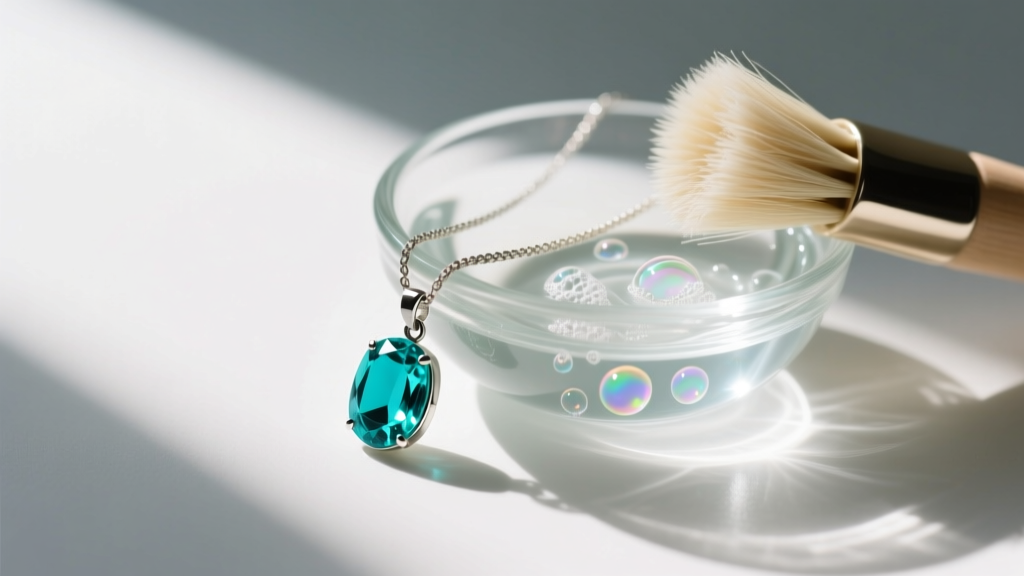
Gemstone Porosity: The Ultrasonic Trap
Many buyers purchase ultrasonic cleaners (which use 40 kHz high-frequency sound waves to create cavitation bubbles) assuming they are safe for all jewelry. This is a catastrophic mistake for certain gemstones. The Jewelers of America warns that porosity and internal fracture filling are far more critical than the Mohs hardness scale when determining cleanability.
| Gemstone | Mohs Hardness | Porosity / Treatment | Ultrasonic Safe? | Recommended Cleaning Method |
|---|---|---|---|---|
| Diamond | 10 | None (but has cleavage planes) | Yes (if no major inclusions) | Ultrasonic or mild soap + soft brush |
| Sapphire / Ruby | 9 | Often heat-treated | Generally Yes | Warm soapy water, ultrasonic okay |
| Emerald | 7.5 - 8 | Highly included, oil/resin filled | NO | Damp microfiber cloth only |
| Opal / Pearl | 5.5 - 6.5 / 2.5 - 4.5 | Highly porous, water-sensitive | NO | Dry, soft cloth. Never soak. |
| Turquoise | 5 - 6 | Porous, often stabilized with epoxy | NO | Damp cloth, avoid all chemicals |
Expert Insight: Never put fracture-filled emeralds or porous organics (pearls, coral) in an ultrasonic cleaner. The cavitation process will either strip the cedar oils from emeralds, leaving them cloudy and heavily fractured, or it will vibrate the microscopic layers of a pearl right off its nucleus.
Chain Weaves and the "Grime Trap" Factor
When evaluating how do you clean a necklace chain, the physical geometry of the links is just as important as the metal. Dead skin cells, lotions, and soap scum accumulate differently depending on the weave.
- Snake Chains: These feature tightly joined, smooth metal rings that create a flexible, tubular chain. While sleek, the microscopic gaps between the rings act as a vacuum for skin oils and lotions. Once a snake chain turns black with grime, it is notoriously difficult to clean without professional steam.
- Box Chains: Made of square, open links connected by small jump rings. The open geometry allows cleaning solutions to flow freely, making them incredibly easy to maintain at home with a simple soak and a soft-bristled baby toothbrush.
- Rope Chains: Twisted links that mimic the look of a rope. They offer a middle ground; they trap more debris than box chains but are easier to clean than snake chains. However, if a link breaks, the complex twisting makes them difficult to repair.
- Cable Chains: The classic oval link. Easy to clean, easy to repair, and highly durable for pendants.
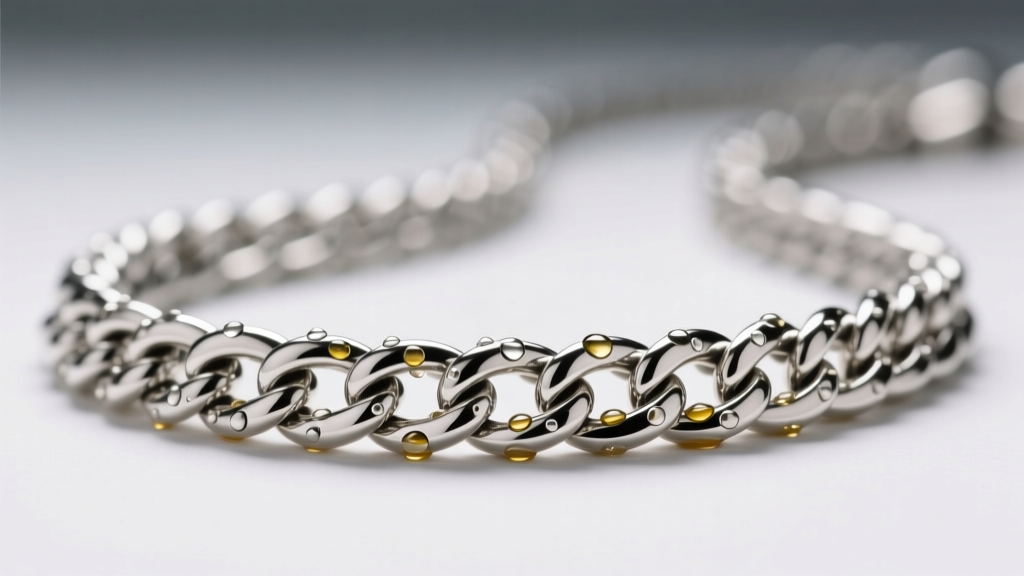
PVD Coatings: The Modern Alternative
If you are buying fashion or demi-fine jewelry, look for PVD (Physical Vapor Deposition) coatings rather than traditional electroplating. PVD involves vaporizing a metal (like titanium nitride or real gold) in a vacuum chamber, bonding it to a stainless steel base at the molecular level. PVD-coated necklaces are highly resistant to tarnish, sweat, and perfume. You can clean them with standard glass cleaner or soap and water without fear of rubbing the finish away, a common failure mode with cheap flash-plated brass necklaces.
The Buyer's Checklist: Questions to Ask Before Checkout
Before adding a necklace to your cart, run it through this maintenance-focused checklist to ensure it fits your lifestyle:
- Is the silver traditional or Argentium? If you hate polishing, seek out Argentium or platinum.
- Is the white gold rhodium-plated? Factor in the $50-$100 replating cost every few years.
- Are the gemstones porous or fracture-filled? If yes, ensure you are willing to clean them gently by hand.
- What is the chain weave? Avoid snake chains if you wear heavy body lotions or work in dusty environments.
- Is the clasp easy to disassemble? Lobster clasps can trap debris in the spring mechanism; ensure you can access it with a soft brush.
Ultimately, knowing how do you clean a necklace starts long before you bring it home. By selecting the right alloys, respecting gemstone porosity, and choosing practical chain weaves, you ensure your jewelry remains brilliant with minimal effort for decades to come.


