How to Style 22 Inch Necklaces: 2026 Trend Guide
Discover why 22 inch necklaces are dominating 2026 trends. Learn precise layering rules, chain weights, neckline pairings, and matinee styling frameworks.


The Shift to the Matinee: Why 22 Inches Dominates 2026
For the better part of a decade, the jewelry industry was locked in a chokehold by the 16-inch choker and the 18-inch princess length. However, as we analyze the 2026 jewelry landscape, a definitive shift toward relaxed elegance has occurred. The 22-inch necklace—firmly planted in the "matinee" category—has emerged as the ultimate focal point for modern styling. Sitting precisely on the sternum, this length draws the eye downward, elongating the neck and torso while providing a broader canvas for both solo statements and complex layering stacks.
According to trend forecasts analyzed by Vogue Jewelry Trends, the move away from skin-tight necklaces reflects a broader cultural pivot toward effortless, unrestrictive luxury. A 22-inch chain avoids the collarbone friction associated with shorter lengths, making it an ideal everyday staple that transitions seamlessly from unbuttoned office shirts to evening silk slips.
Anatomy of the Perfect 22-Inch Chain
Not all chain lengths are created equal. When you extend a necklace to 22 inches, the physics of the jewelry change. The wider arc creates more lateral pull and increases the surface area for friction, particularly at the nape of the neck. To ensure longevity, you must pay attention to specific structural metrics.
Width and Tensile Strength
At 22 inches, ultra-delicate chains (under 1.2mm) are highly prone to tangling and snapping due to the increased leverage applied when caught on clothing. The optimal width for a daily-wear 22-inch chain is between 2.0mm and 3.5mm. This provides enough visual weight to anchor the chest without feeling like armor. For solid 14k gold, a 2.5mm cable or paperclip chain at this length will weigh approximately 7 to 10 grams, offering a premium, substantial drape.
Clasp Engineering
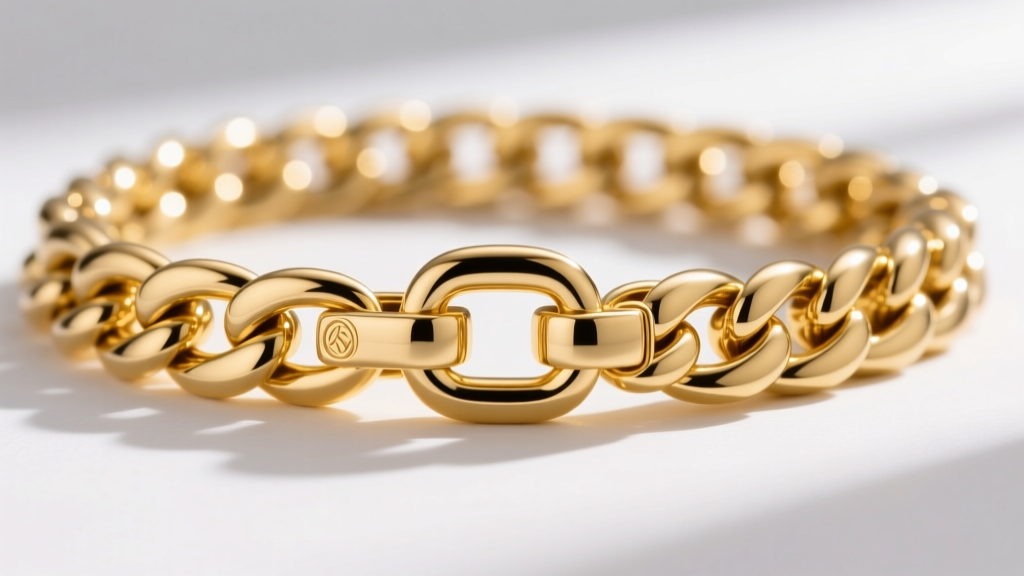
A common failure point in longer necklaces is the clasp. Standard 5mm spring rings are entirely inadequate for chains exceeding 8 grams; the tension mechanism will eventually warp. For a 22-inch chain, always look for a 10mm or 12mm lobster clasp. If you are investing in heavy vermeil or solid gold, ensure the clasp is soldered directly to the end link rather than attached via an unsoldered jump ring.
"When evaluating gold chains over 20 inches, the structural integrity of the clasp and the soldering of the links are just as critical as the karat purity of the metal itself." — Gemological Institute of America (GIA)
Neckline Pairings: A Structural Guide
The 22-inch drop is remarkably versatile, but its interaction with fabric requires strategic planning. Below is a framework for pairing matinee lengths with standard necklines to maximize visual impact.
| Neckline Type | Ideal 22" Chain Style | Styling Strategy |
|---|---|---|
| Deep V-Neck | 2.5mm Rope or Box Chain | Let the chain mirror the V-shape of the fabric. Add a 15mm-20mm geometric pendant to anchor the point of the V. |
| Crew Neck (Cotton) | 4mm+ Curb or Cuban Link | Wear the chain entirely over the fabric. The contrast of heavy metal against casual cotton defines the 2026 high-low aesthetic. |
| Button-Down Shirt | 1.5mm-2.0mm Snake Chain | Wear under the collar with the top two buttons undone. The snake chain's fluid drape prevents it from flipping out awkwardly. |
| Scoop or Boat Neck | Paperclip Station Chain | Allow the chain to rest directly on the skin, parallel to the neckline, creating a framing effect for the upper chest. |
Layering Frameworks: Integrating 22" into a Stack
Layering is no longer about throwing on three random chains and hoping they don't tangle. The 2026 approach to stacking relies on strict mathematical spacing to ensure each piece is visible and functional. The golden rule of layering is the 4-inch minimum gap between chain lengths.
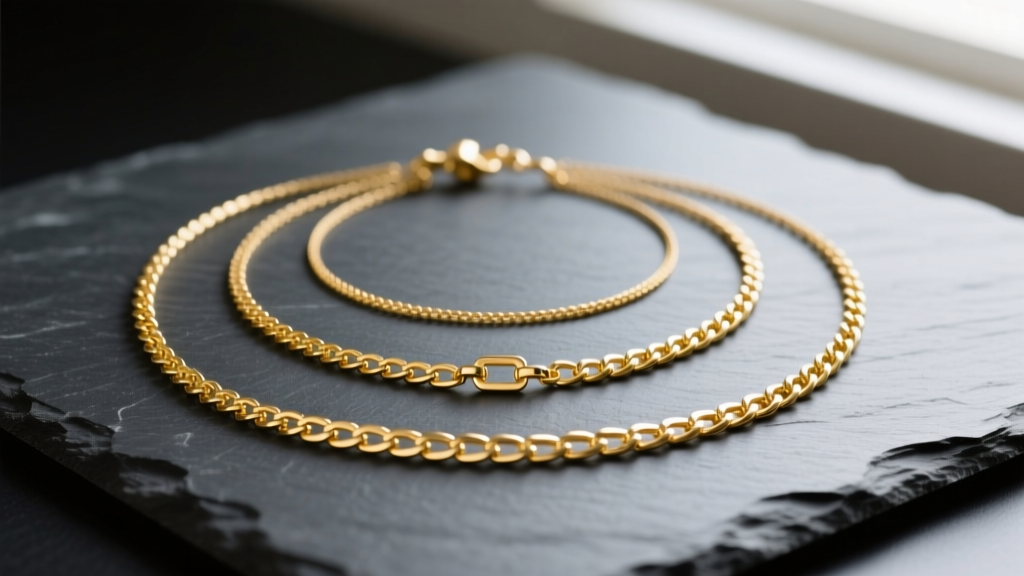
The Ultimate 3-Piece Matinee Stack
- Layer 1 (14 inches): A rigid collar or tight choker. This anchors the top of the neck and prevents the longer chains from pulling the entire visual weight downward.
- Layer 2 (18 inches): A mid-weight princess chain, ideally featuring a small horizontal bar or coin pendant. This bridges the gap between the collarbone and the sternum.
- Layer 3 (22 inches): Your anchor piece. Use a textured chain (like a twisted rope or beaded chain) to differentiate it from the 18-inch layer. Avoid placing heavy pendants on both the 18" and 22" layers, as they will cluster together and tangle.
By adhering to this 14-18-22 framework, you eliminate the friction points that cause chains to knot, a common issue when stacking 16, 18, and 20-inch pieces together. For more on precise measurements, Brilliant Earth's Necklace Length Guide offers excellent visual mapping for these intervals.
Material Realities and Investment Tiers
Because a 22-inch necklace requires more raw material, the price gap between base metals, vermeil, and solid gold widens significantly. Understanding these tiers is crucial for smart purchasing.
Gold Vermeil vs. PVD Coating
If you are buying gold vermeil (gold plated over sterling silver), standard 1-micron plating will wear off at the nape of the neck within three months due to the friction of a 22-inch chain swinging against the skin and hair. For matinee lengths, demand 2.5-micron to 3-micron vermeil. Alternatively, look for PVD (Physical Vapor Deposition) coated stainless steel, which offers superior scratch and sweat resistance for longer chains that are more likely to be caught or pulled.
Solid Gold Pricing Expectations
For a 22-inch solid 14k gold chain at a wearable 2.5mm width, expect to pay between $650 and $950 in 2026, depending on the complexity of the link (e.g., hand-soldered curb chains command a premium over machine-made cable chains). Upgrading to 18k gold will increase the price by roughly 40% and result in a slightly softer metal, making 14k the superior choice for the tensile demands of a 22-inch drop.
Troubleshooting the 22-Inch Drop
Even perfectly crafted matinee necklaces present unique styling challenges. Here is how to solve the most common issues associated with this specific length.
The "Back-Flip" Problem
Because 22 inches is long enough to swing freely, lightweight chains often flip behind the neck, hiding the clasp and pendant in the back. The Fix: You must introduce a counterweight. Adding a pendant that weighs at least 3 to 5 grams will anchor the front of the chain to your sternum, utilizing gravity to keep the clasp at the nape.
Pendant Bail Sizing
Many collectors buy 22-inch chains and separate pendants, only to find the pendant's bail (the loop that slides over the chain) is too small. A standard 3mm chain requires a bail with an inner diameter of at least 4.5mm to slide smoothly without catching. If your favorite pendant has a tight bail, take it to a jeweler to have a European-style hanger or an adapter jump ring installed, which opens up the threading space without compromising the pendant's structural integrity.


