The Complete Necklace Sizing Mens Guide: Budget & Fit
Discover the ultimate necklace sizing mens guide. Learn how to choose the perfect chain length, width, and material while maximizing your jewelry budget.


Finding the perfect chain is a balancing act between proportion, comfort, and cost. When it comes to necklace sizing mens styles, a few millimeters in width or a single inch in length can completely change how a piece sits on your chest—and how much it drains from your wallet. In 2026, with precious metal markets experiencing continued volatility, understanding the intersection of fit and financial value is more critical than ever. Buying a chain that is too tight looks restrictive and uncomfortable, while one that is too long can easily get caught on clothing or snap under its own pendulum-like weight. This guide breaks down the exact metrics of men's necklace sizing, material grades, and how to allocate your budget for maximum longevity and style.
The Anatomy of Men's Chain Sizing: Length vs. Width
Unlike women's jewelry, which often relies on delicate layering, men's chains usually serve as standalone statement pieces or subtle anchors for pendants. The two critical dimensions are length (measured in inches) and width (measured in millimeters). Together, they dictate the chain's gram weight, which is the primary driver of cost for solid metals.
The Length Matrix
- 18 Inches (Collar): Sits tightly at the base of the neck. Best for men with smaller neck circumferences (under 15 inches). Rarely recommended for thick chains, as they can feel like a chokehold.
- 20 Inches (Collarbone): The undisputed standard for men's jewelry. It rests perfectly at the collarbone, accommodating most pendant sizes and suiting 90% of male body types.
- 22 Inches (Upper Chest): Drops just below the collarbone. Ideal for larger men or for wearing over crewneck t-shirts.
- 24+ Inches (Mid-Chest): A bold, hip-hop-inspired length. Best reserved for wider chains (6mm+) or specific streetwear aesthetics.
The Width & Weight Correlation
Width directly impacts the gold or steel required to manufacture the chain. A 20-inch chain at 2mm width might weigh 5 grams, while the exact same length at 8mm could weigh 45 grams. According to the Gemological Institute of America (GIA), understanding gram weight is essential for evaluating the intrinsic value of precious metals, ensuring you aren't overpaying for inflated retail markups on lightweight pieces.
Budget Breakdown: What to Expect at Every Price Tier
Your budget dictates not just the material, but the expected lifespan of the necklace. Here is how to assess value across three distinct pricing tiers in the current market.
Tier 1: The Daily Beaters (Under $150)
At this price point, avoid gold plating over brass or copper, which will oxidize and turn your skin green within months. Instead, look for 316L Surgical Stainless Steel with PVD (Physical Vapor Deposition) gold coating. PVD bonds the color at a molecular level, offering 3 to 5 years of fade resistance even with daily showering and sweat exposure. Brands like Jaxxon or localized Etsy steel-smiths offer excellent 3mm-5mm PVD chains in the $60–$120 range.
Tier 2: The Entry-Level Solid ($300 - $800)
If you want real gold, this tier introduces 10k solid gold (41.7% pure gold) or heavy Gold Vermeil (a thick layer of 14k gold over sterling silver). 10k gold is highly durable, scratch-resistant, and perfect for everyday wear. A 20-inch, 3mm 10k Cuban link will typically fall in the $400–$600 range, offering genuine precious metal value retention.
Tier 3: The Investment Pieces ($1,000+)
This tier is reserved for 14k and 18k solid gold with substantial gram weights. A 14k gold chain (58.3% pure) offers the perfect compromise between rich color and structural integrity. Pricing here is heavily tied to the daily spot price of gold plus the jeweler's fabrication fee (usually 10% to 20% over melt value).
| Material Grade | Avg. Price Range (20-inch) | Durability Score (1-10) | Value Retention |
|---|---|---|---|
| 316L Steel (PVD Coated) | $50 - $150 | 9/10 | Zero (Fashion only) |
| Sterling Silver (925) | $80 - $250 | 6/10 | Low (Melt value) |
| 10k Solid Gold | $350 - $700 | 8/10 | Moderate |
| 14k Solid Gold | $800 - $2,500+ | 7/10 | High (Tracks gold spot) |
How to Measure for the Perfect Fit (Without Guessing)

Ordering a chain online without measuring is the fastest way to waste your budget on return shipping fees. Do not rely on visual estimates from product photos. Instead, use the String and Tape Method:
- Cut a piece of non-stretchable string or use an existing necklace that fits you well.
- Wrap it around your neck, adjusting it to the exact drop length you desire.
- Mark the meeting point with a pen, then lay the string flat against a standard tape measure.
- The Two-Finger Rule: Ensure you can comfortably slide two fingers between the string and your neck. This accounts for natural neck swelling throughout the day and prevents the clasp from digging into your nape.
For comprehensive educational resources on how chain links behave at different lengths, Blue Nile's Gold Education Guide provides excellent visual references for how different link styles drape across the chest.
The Clasp Factor: Where Budget Chains Fail
A chain is only as strong as its weakest link, which is almost always the clasp. If you are buying a chain wider than 3mm or heavier than 15 grams, never accept a spring-ring clasp. Spring rings are designed for lightweight, delicate chains and will snap under the pendulum force of a heavier men's chain. Insist on a lobster clasp for chains up to 6mm, and a box clasp with a safety latch for wide Cuban or Franco links over 8mm. Factoring in the cost of upgrading a clasp ($30-$50) is a vital part of your initial budget assessment.
Maximizing Value: Chain Styles That Won't Break the Bank
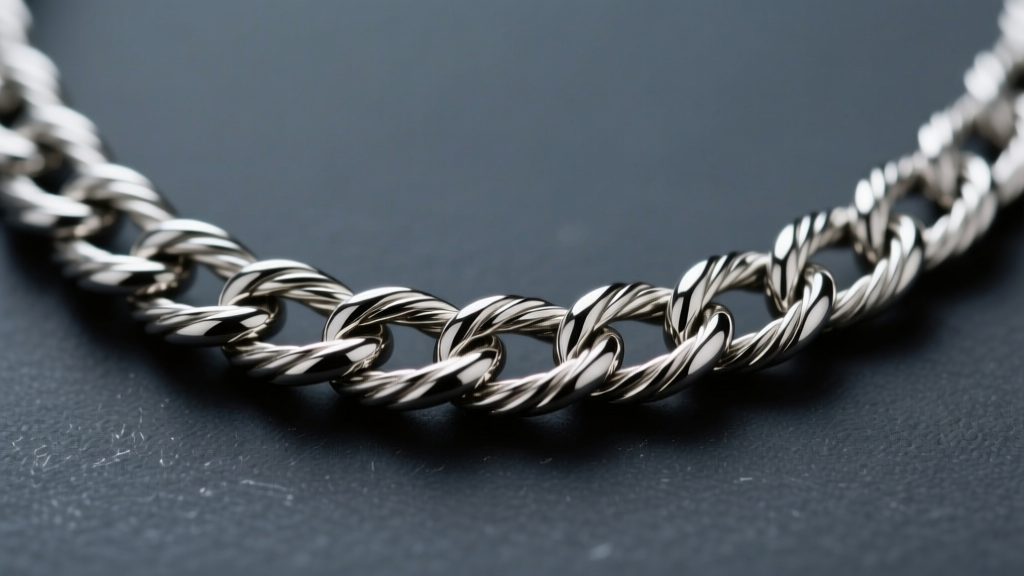
Not all chain links are created equal when it comes to manufacturing costs and structural integrity. If you are on a strict budget but want a chain that looks substantial and resists breaking, choose your link style wisely.
- Rope Chains: The twisted links reflect light brilliantly, making a 3mm rope chain look as visually substantial as a 5mm curb chain. They are highly durable and offer excellent visual bang for your buck.
- Box Chains: Made of square, interlocking links, box chains are incredibly strong and rarely kink. They are also relatively inexpensive to manufacture in stainless steel or 10k gold, making them a high-value budget choice.
- The Hollow Chain Trap: Avoid "semi-solid" or hollow gold chains at all costs. While they allow you to buy a massive 10mm chain for the price of a 4mm solid chain, hollow chains are notoriously fragile. A single snag on a door handle will dent, crush, or snap a hollow link, rendering it virtually unrepairable. Always prioritize a smaller, solid chain over a large, hollow one.
Final Verdict: Where to Allocate Your Budget
Mastering necklace sizing mens styles is ultimately about respecting geometry and material science. If your budget is under $150, allocate your funds toward a high-quality 316L stainless steel chain with PVD coating in a versatile 20-inch, 4mm width. If you are crossing the $500 threshold, shift your focus entirely to solid 10k or 14k gold, prioritizing gram weight and structural link styles like the Franco or Cuban over flashy, fragile designs. By measuring accurately, demanding the correct clasp hardware, and avoiding the hollow-chain trap, you ensure that every dollar spent translates directly into lasting wear and enduring style.


