Peacock Necklace Gold: Expert Guide to Enamel & Gem Settings
Master the technical details of a peacock necklace gold design. Explore plique-à-jour enamel, 18k alloy specs, and gemstone mapping.

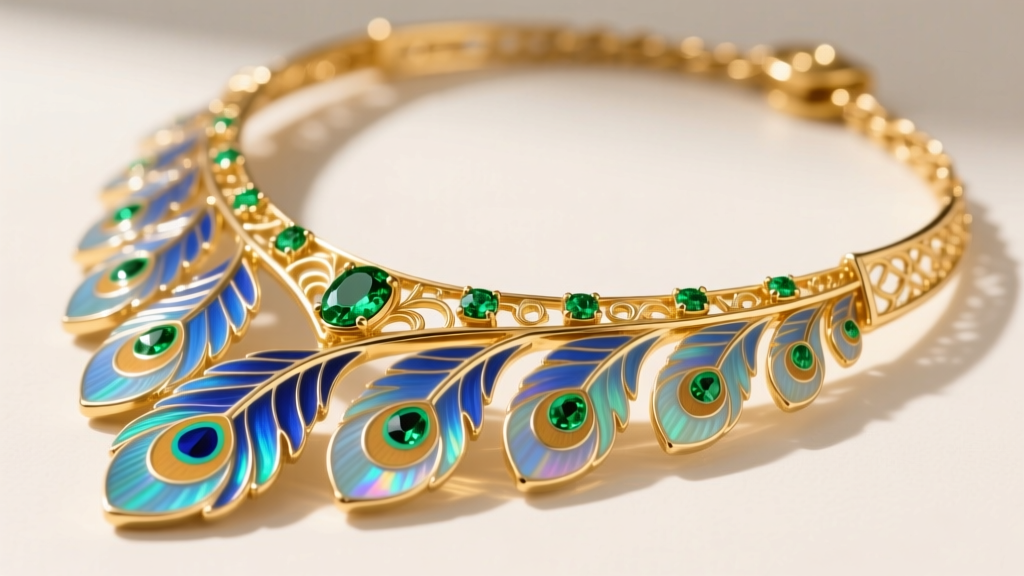
A masterfully crafted peacock necklace gold pendant is not merely a decorative item; it is a feat of micro-engineering, metallurgical precision, and gemological artistry. Recreating the iridescent complexity of a peacock feather in precious metals requires a deep understanding of vitreous enamel dynamics, gold alloy coefficients, and precise gemstone mapping. As of 2026, advanced laser-welding and micro-pavé techniques have elevated these pieces, but the foundational principles of haute joaillerie remain unchanged. This expert deep dive explores the technical anatomy, material grades, and structural failure modes inherent in fine avian-inspired jewelry.
Metallurgy: Why 18k Gold is the Standard for Enamel
When sourcing a bespoke peacock necklace gold framework, the choice of alloy is dictated by the Coefficient of Thermal Expansion (CTE). Vitreous enamel is essentially crushed glass (silica, soda ash, and potash) that melts between 1,380°F and 1,560°F (750°C - 850°C). For the enamel to fuse permanently without cracking or flaking, the gold substrate must expand and contract at a nearly identical rate to the glass during the kiln cooling process.
Standard 14k gold (58.5% pure gold) contains too high a percentage of copper and silver, which oxidizes rapidly at enameling temperatures, causing 'fire-scale' that blooms through transparent enamel as a murky gray shadow. Therefore, master enamelists exclusively use specific 18k yellow gold alloys (75% pure gold). The remaining 25% is carefully calibrated—often utilizing a higher silver-to-copper ratio, or introducing trace amounts of zinc—to suppress oxidation and ensure a pristine, reflective canvas for translucent enamel. According to the Lang Antiques University, the precise annealing of this 18k gold prior to enameling is critical to relieve internal stresses that could later warp the delicate feather framework.
Enamel Techniques: Plique-à-Jour vs. Champlevé
The iridescent 'eye' and sweeping barbs of a peacock feather are typically rendered using one of two advanced enameling techniques, each presenting unique structural challenges.
Plique-à-Jour (The Translucent Standard)
Translating to 'letting in daylight,' plique-à-jour is the pinnacle of enamel work. It involves creating a pierced 18k gold framework (cloisons) resembling a stained-glass window. The enamel is suspended within these cells without a metal backing. Historically, this required a temporary mica or copper backing that was dissolved in nitric acid after firing. Modern 2026 techniques sometimes rely purely on the surface tension of the enamel frit within micro-cells during kiln firing. The result is a peacock feather that glows with transmitted light, perfectly mimicking the translucency of real plumage. However, it is inherently fragile; a single drop onto a hard surface will shatter the glass cells.
Champlevé (The Durable Alternative)
For everyday wear, champlevé is preferred. The jeweler carves or etches deep troughs into a solid sheet of 18k gold, leaving raised walls. These troughs are packed with wet enamel powder and fired. The raised gold walls not only separate the colors (e.g., deep sapphire blue transitioning into emerald green) but also provide a protective bumper against impact. While it lacks the stained-glass backlighting of plique-à-jour, champlevé offers vastly superior structural integrity for a heavy gold pendant.
Gemstone Mapping: Recreating the Ocellus (Eye)
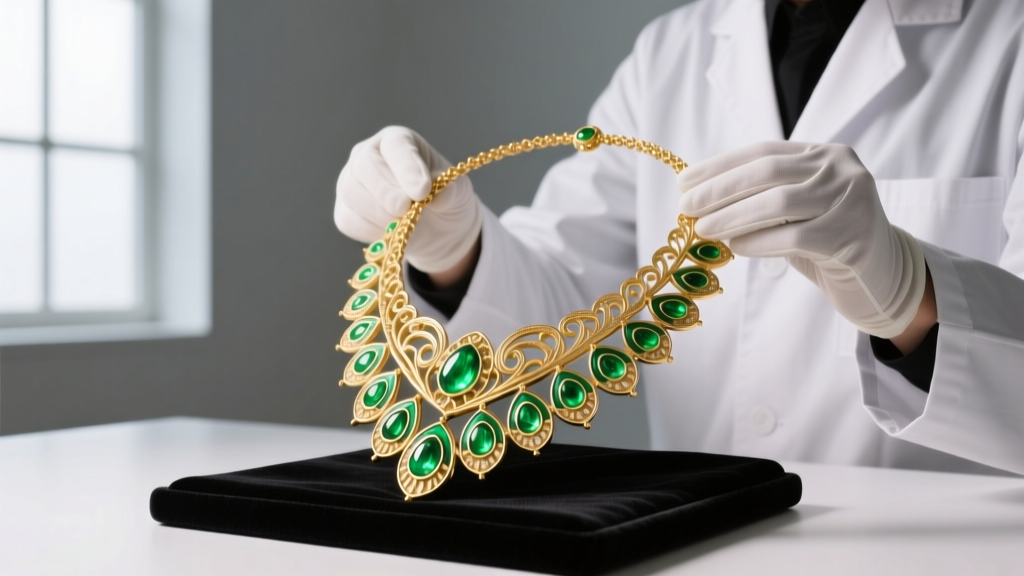
The 'ocellus' is the striking eye-spot on a peacock feather. Recreating this optical illusion requires precise gemstone mapping based on refractive index (RI) and dispersion. A master jeweler will not rely on a single green stone; instead, they layer gemstones to create depth.
The center of the ocellus is typically anchored by a 2mm to 3mm round brilliant-cut blue sapphire (RI 1.76-1.77), providing a deep, velvety core. This is immediately surrounded by a micro-pavé halo of tsavorite garnets. Tsavorite (RI 1.74) is chosen over emerald because its higher dispersion and lack of inherent inclusions (jardin) allow for tighter, safer bead-settings without the risk of fracturing during the burnishing process. The outer fringe of the feather often utilizes marquise-cut demantoid garnets, whose exceptional RI (1.88) and horsetail inclusions catch the light, mimicking the iridescent, shimmering edges of the feather.
| Gemstone | Mohs Hardness | Refractive Index | Role in Ocellus Mapping |
|---|---|---|---|
| Blue Sapphire | 9.0 | 1.76 - 1.77 | Deep blue ocellus center anchor |
| Tsavorite Garnet | 7.0 - 7.5 | 1.74 | Vivid green micro-pavé mid-feather |
| Demantoid Garnet | 6.5 - 7.0 | 1.88 | Iridescent outer fringe marquises |
| Diamond | 10.0 | 2.42 | Structural brilliance / feather spine |
For a comprehensive breakdown of tsavorite's optical properties and why it dominates modern high-jewelry green palettes, refer to the Gemological Institute of America (GIA) research archives.
Technical Failure Modes & Maintenance Protocols
Evaluating a vintage peacock necklace gold artifact requires a stringent inspection for specific failure modes. The most common is 'crazing'—a network of hairline fractures within the enamel. Crazing occurs when the gold alloy's CTE was improperly matched to the enamel frit, or when the piece was quenched too rapidly in water after firing, inducing thermal shock. Over decades, microscopic flexing of the gold pendant against the wearer's chest can exacerbate these micro-fractures, eventually causing the enamel to pop out of the cloison.

Another critical failure point is the micro-pavé setting. Peacock necklaces often feature hundreds of sub-1mm gemstones held by microscopic gold beads. Routine exposure to lotions, cosmetics, and ultrasonic cleaners will erode these beads or vibrate the stones loose. Furthermore, the GIA strictly warns against ultrasonic and steam cleaning for any enameled jewelry, as the high-frequency vibrations shatter plique-à-jour cells, and the sudden heat of steam causes immediate thermal shock to champlevé glass.
Expert Maintenance Protocol
- Cleaning: Use only lukewarm distilled water and a drop of pH-neutral surfactant. Agitate gently with a baby-soft goat-hair brush.
- Drying: Never rub the enamel. Use compressed air or a microfiber cloth to pat dry, avoiding snagging on micro-pavé prongs.
- Storage: Store flat in a climate-controlled environment. Suspended storage can cause the heavy gold bail to stress-solder the top cloisons over time.
Sourcing & Appraisal Metrics
When appraising or sourcing a high-end peacock necklace gold piece, look beyond the mere carat weight of the gold. True value lies in the provenance of the enamel work and the precision of the gemstone calibration. Mass-produced pieces will feature opaque, painted cold-enamel (epoxy resin) which yellows and degrades within five years. Genuine haute joaillerie pieces will exhibit the glassy depth, microscopic bubbles, and light-transmission properties of kiln-fired vitreous enamel. Always demand a gemological report detailing the origin and treatment of the sapphires and tsavorites, as untreated stones command a significant premium in the secondary collector's market.


