The Gold Ladybird Necklace: 2026 Trend & Style Guide
Discover why the gold ladybird necklace is the defining whimsical jewellery trend of 2026. Explore enamel techniques, styling, and buying guides.

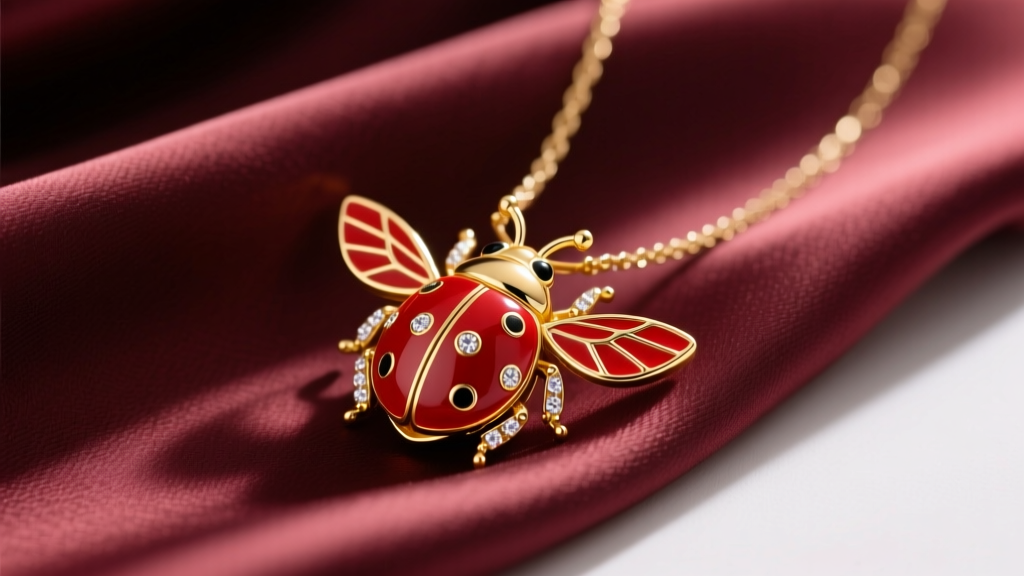
The Resurgence of Whimsy: Why the Gold Ladybird Necklace Dominates 2026
In the ever-evolving landscape of fine jewellery, the pendulum has officially swung away from the austere minimalism of the early 2020s. As we navigate 2026, the industry is embracing 'curated eclecticism'—a trend that merges high-end craftsmanship with nostalgic, nature-inspired motifs. At the absolute forefront of this movement is the gold ladybird necklace. While often referred to as a ladybug in North America, the ladybird has deep-rooted symbolism in European folklore, representing luck, protection, and the arrival of spring. Today, it serves as the perfect talismanic centrepiece for modern necklace stacks.
The surge in popularity is not merely aesthetic; it is a rebellion against mass-produced uniformity. Collectors and style enthusiasts are seeking pieces that tell a story, and the intricate anatomy of a well-crafted ladybird pendant offers a canvas for masterful goldsmithing and enamelling. According to trend forecasts highlighted by Vogue, nature-inspired talismans are leading the fine jewellery market, with entomological designs seeing a 40% year-over-year increase in bespoke commissions.
Anatomy of a High-Quality Gold Ladybird Pendant
Not all ladybird pendants are created equal. The distinction between a fast-fashion trinket and an heirloom-quality piece lies in the structural anatomy and the gold purity used to cast it. A premium pendant will feature distinct articulation or highly detailed carving across three main sections: the pronotum (the head shield), the elytra (the wing cases), and the legs.
Gold Purity and Chain Pairings
The choice of gold karat heavily influences both the colour of the piece and its structural integrity. Because ladybird pendants often feature delicate prongs or enamel inlays, the hardness of the gold alloy is a critical consideration.
| Gold Purity | Composition & Hardness | Best Chain Pairing | Ideal Use Case |
|---|---|---|---|
| 14k Gold (58.5%) | Higher alloy content (Vickers hardness ~140). Highly durable, resists scratching and warping. | 1.2mm - 1.5mm Cable or Box Chain | Daily wear, active lifestyles, intricate prong-set enamel. |
| 18k Gold (75%) | Rich, buttery yellow hue (Vickers hardness ~125). Softer, more prone to micro-scratches. | 1.8mm - 2.5mm Paperclip or Curb Chain | Occasional wear, luxury collector pieces, deep colour contrast. |
| Gold Vermeil | Sterling silver base with 2.5 microns of 14k/18k gold plating. Prone to eventual wear. | 1.0mm Snake Chain | Trend-driven styling, budget-conscious layering. |
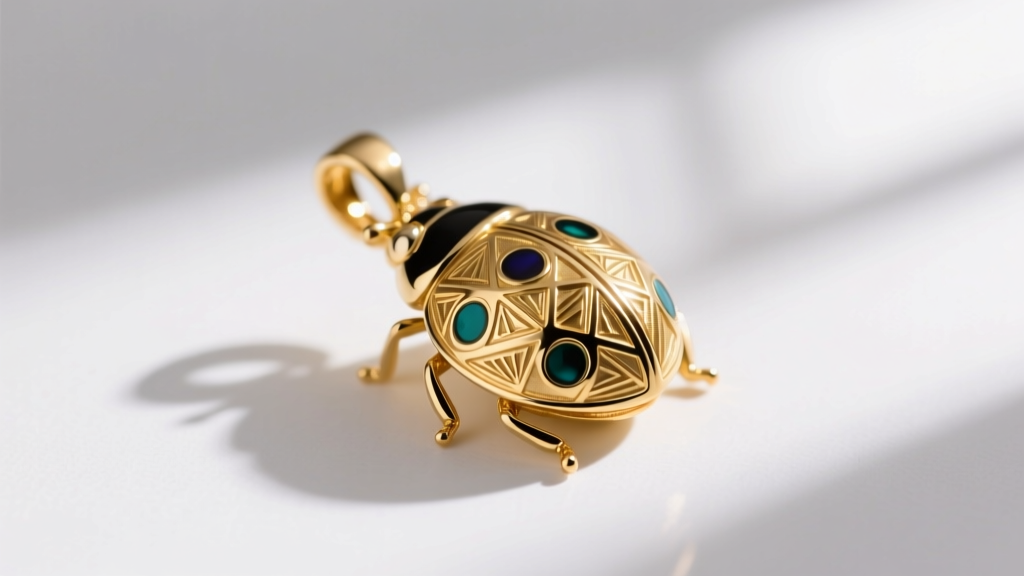
Enamel Techniques: From Mass Market to Masterpiece
The vibrant red or orange carapace of the ladybird is almost universally achieved through enamelling. However, the methodology used to apply this colour dictates the necklace's longevity, value, and visual depth. Understanding these techniques is vital for any serious buyer.
Vitreous vs. Cold Enamel
Mass-market jewellery typically relies on cold enamel (an epoxy-based resin). While cheap to produce, cold enamel lacks refractive depth, scratches easily, and will inevitably yellow or peel when exposed to UV light and cosmetics over a few years. Conversely, high-end gold ladybird necklaces utilise vitreous enamel—a glass-like substance fused to the gold at temperatures exceeding 800°C. As detailed in the historical and technical archives of Britannica's guide to enamelwork, vitreous enamel is impervious to water, retains its brilliant colour indefinitely, and possesses a gem-like lustre that resin simply cannot mimic.
Advanced Artisan Methods
- Champlevé: The goldsmith carves troughs into the solid gold base before packing them with enamel powder. This creates a beautifully flush surface where the gold veins separate the red wing cases.
- Guilloché: A master-level technique where the gold beneath the translucent red enamel is engine-turned with intricate geometric patterns. The light catches the engraved gold through the glass, giving the ladybird's wings a mesmerising, three-dimensional shimmer.
- Plique-à-jour: Often called 'stained glass' enamel, this involves suspending the enamel within the gold framework with no metal backing. It is incredibly rare in ladybird designs due to the fragility of the wings, but when executed correctly, it yields a translucent, breathtaking effect.
Styling Frameworks: Integrating the Ladybird into Your Stack
The beauty of the gold ladybird necklace lies in its versatility. It bridges the gap between playful charm jewellery and sophisticated fine accessories. To style it effectively in 2026, you must master the art of the layered stack, ensuring the ladybird remains the focal point without tangling.
The Rule of Three for Layering
When building a necklace stack around a detailed pendant, adhere to a minimum two-inch gap between chain lengths to prevent friction and knotting. Consider this proven framework:
- The Base (14-15 inches): A delicate, non-pendant chain or a small freshwater pearl choker. This frames the collarbone and draws the eye upward.
- The Centrepiece (17-18 inches): Your gold ladybird necklace. An 18-inch cable chain allows the pendant to rest perfectly in the hollow of the décolletage, catching the light.
- The Anchor (20-22 inches): A heavier, textured chain (such as a 3mm rope or wheat chain) or a simple gold medallion. This adds visual weight to the bottom of the stack and balances the whimsical nature of the ladybird.
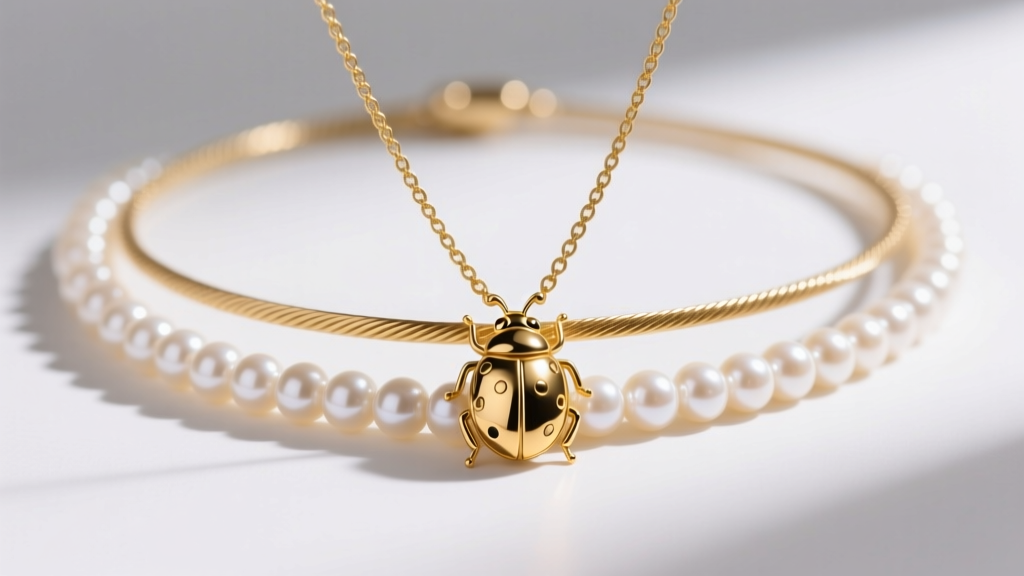
Investment vs. Fast Fashion: Pricing and Value Retention
Because the gold ladybird necklace spans multiple tiers of the jewellery market, understanding the pricing matrix is essential to ensure you are paying for actual craftsmanship rather than just brand markup. The data below reflects current 2026 market averages for authentic pieces.
| Tier | Materials & Technique | Estimated Price Range (GBP) | Value Retention |
|---|---|---|---|
| Entry / Trend | Gold vermeil, cold enamel, cast legs. | £80 - £150 | Low (plating will wear) |
| Mid-Range / Fine | 14k solid gold, champlevé vitreous enamel, diamond accent on the head. | £450 - £900 | Moderate (holds scrap + artisan value) |
| High / Artisan | 18k gold, guilloché or plique-à-jour enamel, articulated legs, hidden bale. | £1,800 - £4,500+ | High (collector and heirloom value) |
Care and Maintenance of Enamelled Gold Jewellery
A common and catastrophic mistake made by new collectors is placing vitreous enamel jewellery into an ultrasonic cleaner. The high-frequency vibrations can easily shatter the glass-like enamel or cause it to fracture away from the gold setting. Furthermore, the Gemological Institute of America (GIA) consistently warns against using harsh chemical dips on any treated or enamelled surfaces.
The Correct Cleaning Protocol:
- Mix a few drops of mild, phosphate-free dish soap into a bowl of lukewarm (never hot) water.
- Submerge the gold ladybird necklace for no more than three minutes.
- Gently agitate the water. If debris is trapped near the bail or the legs, use a baby-soft toothbrush to lightly sweep the area—avoid scrubbing the enamel directly.
- Rinse under a gentle stream of distilled water to prevent hard water spots.
- Pat dry with a microfibre cloth, ensuring no lint is caught on the pendant's clasp or jump ring.
Final Thoughts on the 2026 Talismanic Trend
The gold ladybird necklace is far more than a fleeting seasonal fad; it is a celebration of artisanal heritage meeting modern styling. Whether you opt for a robust 14k champlevé piece for everyday layering or invest in an 18k guilloché masterpiece for your permanent collection, understanding the metallurgy and enamel techniques ensures your chosen talisman will endure for generations. As we continue through 2026, embracing these whimsical yet meticulously crafted motifs offers a refreshing, joyful approach to personal adornment.


