Gold Necklace T Bar Trends: 2026 Style & Layering Analysis
Discover how the gold necklace t bar evolved from a simple clasp to a 2026 statement piece. Explore styling, karat grades, and layering techniques.

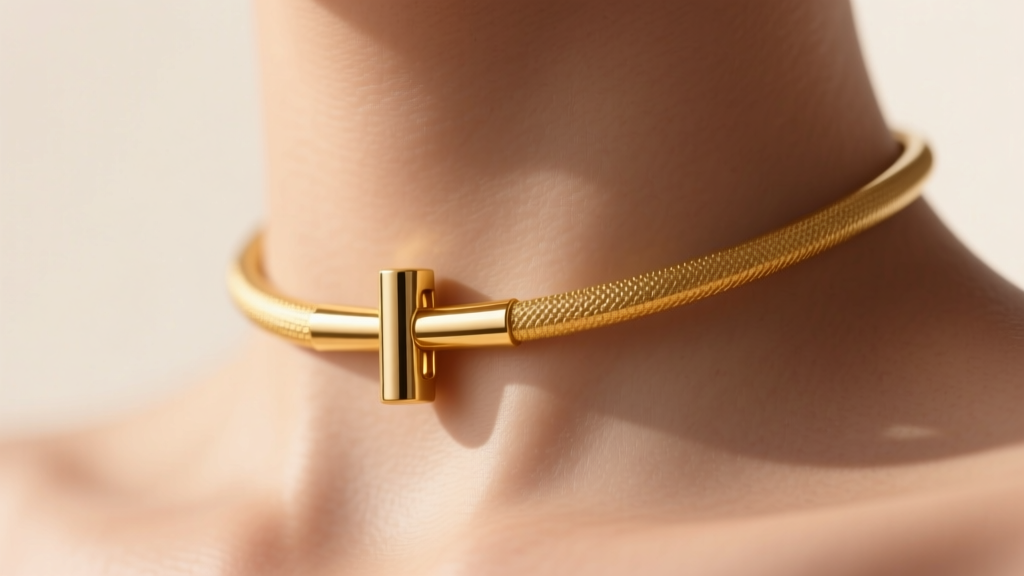
The Evolution of the T-Bar: From Hardware to Hero Piece
For decades, the toggle clasp was relegated to the back of the neck—a purely functional, often hidden mechanism designed to keep heavy chains secure. However, the 2026 jewelry landscape has completely inverted this paradigm. Today, the gold necklace t bar is no longer just a fastener; it is the focal point of the design. Driven by the "quiet luxury" movement and a broader appreciation for industrial-chic hardware, designers are now placing the T-bar front and center, transforming it into a sculptural element that defines the entire silhouette of the necklace.
This shift represents a broader trend in modern jewelry where mechanical components are celebrated rather than concealed. According to trend forecasts analyzed by JCK Online, consumers in 2026 are increasingly drawn to pieces that showcase their own structural anatomy. The T-bar, with its stark geometric contrast between the horizontal cylinder and the vertical loop, perfectly satisfies this desire for architectural elegance.
Metallurgy & Karat Selection: Choosing the Right Gold
When investing in a statement T-bar necklace, understanding the metallurgy of gold is critical. The T-bar mechanism endures significant lateral torque and friction every time it is fastened or subjected to dynamic movement. Therefore, the karat weight you choose directly impacts the longevity of the clasp.
While 22k and 24k gold offer a rich, buttery yellow hue, they are far too soft for toggle mechanisms. A 22k gold bar will easily bend under the weight of a heavy chain, rendering the clasp insecure. As detailed by the Gemological Institute of America (GIA), alloying gold with metals like copper, silver, and zinc increases its Vickers Hardness (HV), making lower karats vastly superior for structural hardware.
| Gold Karat | Vickers Hardness (HV) | Best Use Case for T-Bar | Avg. Price Tier (18" 3mm Chain) |
|---|---|---|---|
| 10k Gold | ~135 HV | High-stress, everyday toggle loops | $350 - $500 |
| 14k Gold | ~115 HV | Standard front-clasp necklaces | $600 - $950 |
| 18k Gold | ~90 HV | Luxury statement pieces, thicker gauges | $1,100 - $1,800 |
| 22k Gold | ~65 HV | Avoid for T-bar mechanisms (too soft) | $1,900+ |
For the optimal balance of rich color and structural integrity, 14k and 18k gold remain the industry standards for T-bar necklaces. If you prefer the deeper saturation of 18k gold, ensure the jeweler has cast the T-bar components with a thicker gauge to compensate for the softer alloy.
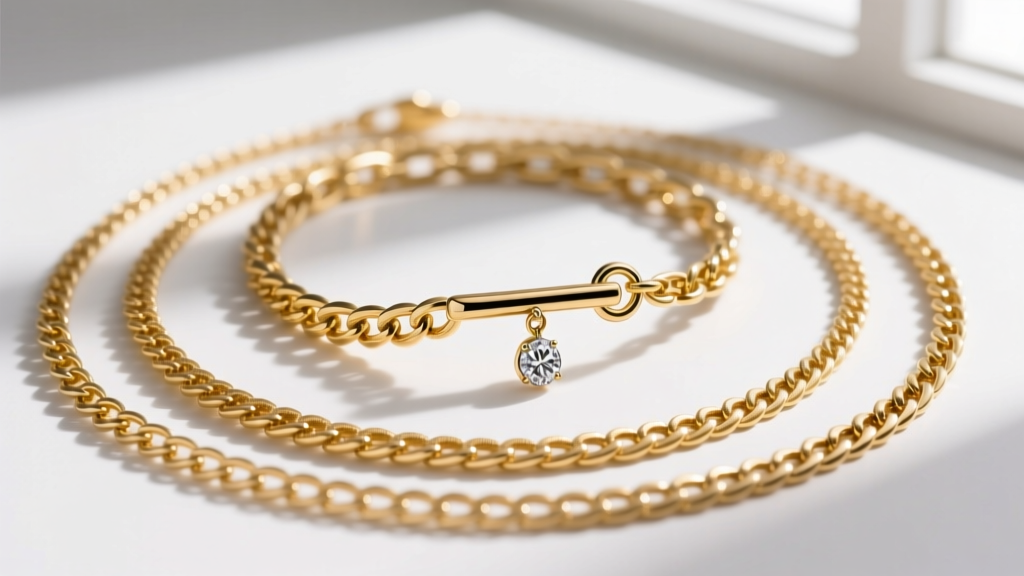
The Physics of a Secure Toggle Mechanism
A common failure mode in poorly manufactured toggle necklaces is the bar slipping through the loop during wear. This is rarely a defect in the gold itself, but rather a failure in geometric proportion. To ensure your gold necklace t bar remains secure, you must evaluate the bar-to-loop ratio.
The 1.6x Rule
According to jewelry engineering standards, the horizontal bar must measure at least 1.6 times the interior diameter of the receiving loop. For example, if the interior of the circular loop measures 12mm across, the bar must be no shorter than 19.2mm. This ratio ensures that even when the chain is pulled taut, the bar rests diagonally across the loop's interior, making it physically impossible to slip through without manual manipulation.
Gauge Thickness and Torque
The wire gauge used to forge the loop must withstand lateral torque. A 14k gold loop should be cast or forged at a minimum of 2.0mm thickness. The bar itself requires a 1.5mm to 1.8mm gauge to prevent bending under the weight of heavy chain styles, such as a 5mm Cuban link or a dense rope chain.
2026 Design Variations and Placement Trends
The modern T-bar is defined by its placement. Designers are experimenting with asymmetry and negative space to create highly personalized silhouettes. Here are the dominant placement trends defining the current market:
- The Front-Center Anchor: The most popular iteration. The T-bar rests directly in the hollow of the collarbone. This style often features a textured, hammered, or fluted bar to catch the light, acting as a minimalist pendant.
- The Side-Swept Lariat: The loop is positioned on one side of the chain, while the bar feeds through and drops down vertically, mimicking the aesthetic of a Y-necklace or lariat. This creates an elongating effect on the neckline.
- The Asymmetric Multi-Chain: A thicker chain on the left transitions into a T-bar, which connects to a finer, more delicate chain on the right. This plays with visual weight and is a staple of avant-garde 2026 styling.
"The T-bar is the ultimate intersection of utility and art. When we moved it from the nape of the neck to the clavicle, we didn't just change the clasp; we changed the entire focal point of the wearer's outfit." — Lead Hardware Designer, Contemporary Jewelry Collective
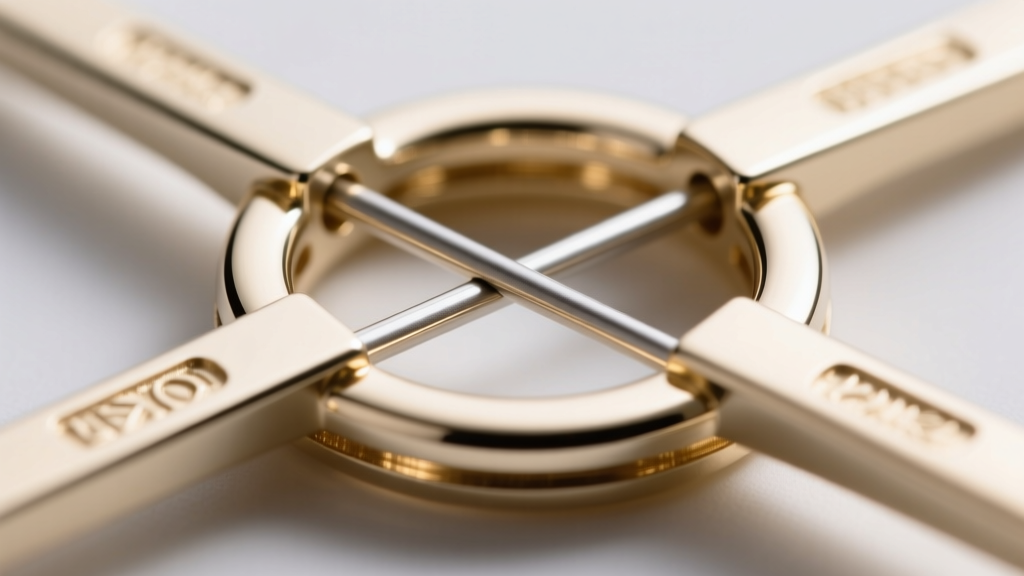
Layering Frameworks: Integrating the T-Bar into a Stack
Layering a T-bar necklace requires strategic planning. The protruding bar can easily catch on adjacent chains, leading to frustrating tangles and potential damage to softer links. To master the T-bar stack in 2026, follow this three-tier framework:
- The Base Layer (14-16 inches): Start with a lightweight, flush-fitting chain like a 1.5mm cable or box chain. This sits high on the neck and provides a subtle metallic frame without interfering with the T-bar.
- The Focal T-Bar (18-20 inches): Your gold necklace t bar should sit at least two inches below the base layer. Opt for a medium-weight chain (like a 3.0mm paperclip or Figaro) that has enough rigidity to keep the T-bar resting flat against the chest.
- The Anchor Layer (24+ inches): Finish with a long, heavy chain featuring a solid pendant. The weight of the bottom layer pulls the entire stack downward, creating tension that keeps the middle T-bar layer perfectly centered and prevents the bar from flipping upside down.
Care, Maintenance, and Ethical Sourcing
Because the T-bar relies on precise physical tolerances, maintenance is key to its longevity. Over time, the interior of the receiving loop can accumulate skin oils, lotions, and environmental dust, creating a slippery surface that increases the risk of the bar sliding out. Clean the interior of the loop monthly using a soft-bristled brush and a mild dish soap solution.
Furthermore, as consumers become more conscious of their purchases, verifying the provenance of your gold is essential. Look for brands that adhere to the standards set by the Responsible Jewellery Council (RJC), ensuring that the gold used in your T-bar necklace is sourced ethically, with full chain-of-custody transparency from mine to market.
By understanding the engineering, metallurgy, and styling nuances of the T-bar, you can confidently select a piece that is not only a stunning 2026 trend statement but a structurally sound heirloom built to last.


