Gold Pen Necklace: Technical Guide to Writer's Motif Jewelry
Discover the technical details of the gold pen necklace. We analyze 14k vs 18k alloys, chain gauges, and clasp mechanics for writer's motif jewelry.

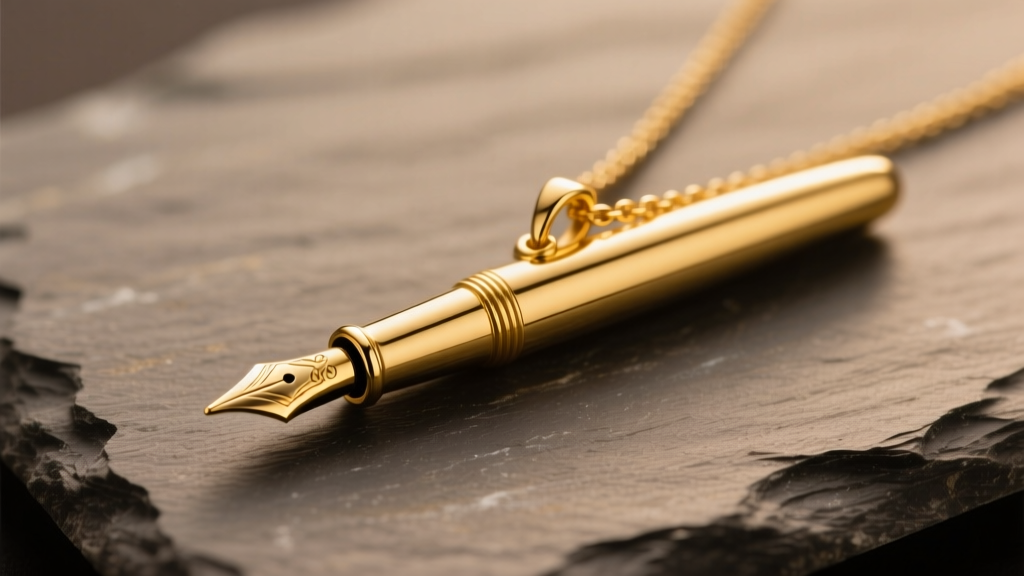
Occupational and motif jewelry has experienced a significant renaissance in the fine jewelry sector, with the gold pen necklace emerging as a highly sought-after piece for authors, journalists, calligraphers, and academics. Unlike generic pendants, a pen necklace requires specialized engineering to address its unique asymmetrical weight distribution, intricate surface detailing, and, in some rare cases, functional miniature mechanics. This expert deep dive explores the metallurgy, casting techniques, chain pairings, and structural considerations necessary to evaluate, design, or purchase a high-quality gold pen pendant.
The Anatomy of a Gold Pen Necklace: Motif vs. Functional
When analyzing the market, gold pen necklaces generally fall into two distinct categories: decorative motifs and functional miniatures. Understanding the manufacturing differences between the two is critical for assessing durability and value.
Decorative Motif Pendants
The vast majority of gold pen pendants are decorative motifs, typically depicting a fountain pen or a classic quill. These are manufactured using the lost-wax casting method. A master model is carved from wax, encased in investment plaster, and burned out in a kiln before molten gold is injected via centrifugal force. High-quality motif pendants weigh between 6 and 12 grams. Expert jewelers will look for the removal of the 'sprue mark' (the point where the molten gold entered the mold), usually located at the top of the pen cap or the base of the barrel. Poorly finished castings will leave a visible bump or porosity (tiny pits) near the clip detailing.
Functional Miniature Pens
Rare and highly specialized, functional miniature gold pens actually write. These require CNC (Computer Numerical Control) machining rather than casting, as the internal screw threads for the cap and the precise tolerances for the ink reservoir demand sub-millimeter accuracy. These pieces often weigh 14 to 22 grams and feature a functional iridium-tipped nib. Because of the mechanical stress placed on the threads during capping and uncapping, functional pens are almost exclusively milled from harder gold alloys or reinforced with steel internal sleeves.
Metallurgy and Alloy Selection: 14k vs. 18k Gold
The choice of gold purity drastically affects the longevity of a gold pen necklace, particularly regarding the fine detailing on the pen's nib and the structural integrity of the pen clip. According to the Gemological Institute of America (GIA), the alloying metals mixed with pure gold dictate both the color and the physical hardness of the final piece.
- 18k Gold (75% Pure Gold): Offers a rich, buttery yellow hue and superior hypoallergenic properties. However, 18k gold has a Vickers Hardness (HV) of approximately 110-125 HV. This relative softness means that the intricate engravings on the pen nib and the delicate pocket clip are highly susceptible to micro-scratching and deformation if the pendant rubs against zippers or desks.
- 14k Gold (58.5% Pure Gold): Alloyed with higher percentages of copper, silver, and zinc, 14k gold achieves a Vickers Hardness of 140-160 HV. For a gold pen necklace—especially one with a protruding clip or functional threads—14k is the metallurgical sweet spot. It provides a 25% increase in scratch resistance while maintaining a warm, luxurious color profile.
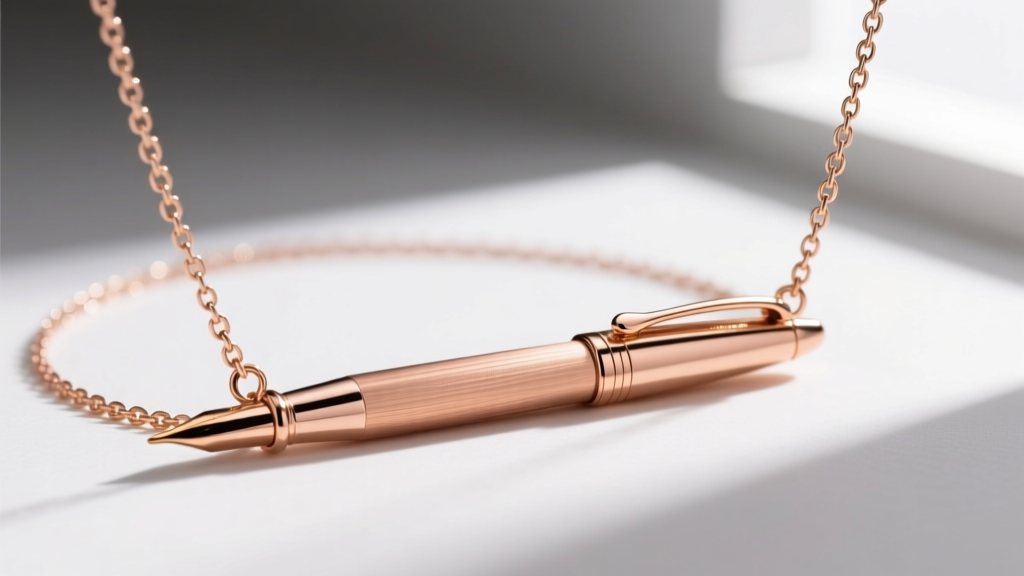
For rose gold variations, the copper content is increased (up to 22.5% in 14k rose gold), which not only provides the pinkish hue but also yields the highest tensile strength among standard gold jewelry alloys, making it ideal for the fragile pen clip component.
Chain Mechanics: Gauge, Weave, and Weight Distribution
The most common failure point in styling a gold pen necklace is chain migration. A pen pendant is highly asymmetrical; the barrel is significantly heavier and wider than the nib. If strung on a standard, low-friction chain, the pendant will inevitably slide off-center, resting awkwardly near the collarbone rather than hanging plumb at the sternum.
To counteract this, the chain must provide adequate surface friction and structural rigidity. We recommend a minimum chain width of 1.8mm to 2.2mm. Anything thinner (such as a 1.0mm cable chain) risks kinking under the pendulum-like swinging motion of the heavy barrel.
| Chain Weave Type | Friction Coefficient | Migration Risk | Recommended Gauge | Best For |
|---|---|---|---|---|
| Standard Cable | Low | High | 1.5mm - 2.0mm | Lightweight, hollow electroformed pens |
| Box Chain | Medium-High | Low | 1.8mm - 2.5mm | Solid cast motifs (8-12g) |
| Wheat (Spiga) | High | Very Low | 1.5mm - 2.0mm | Heavy functional miniatures (15g+) |
| Rope Chain | Medium | Medium | 2.0mm - 3.0mm | Thicker, stylized quill pendants |
Clasp Engineering for Asymmetrical Pendants
The clasp on a gold pen necklace must endure dynamic load stress. When the wearer bends over, the heavy pen barrel swings outward, placing sudden kinetic tension on the clasp mechanism.
Spring ring clasps are generally inadequate for pen pendants weighing over 8 grams. The internal coil spring in a standard 5mm spring ring lacks the tension to keep the lever fully seated against the jump ring during sudden movements, leading to accidental unclasping. Furthermore, the thin wire of the jump ring can easily warp into an oval shape under the pendulum weight of the pen.
Instead, opt for a solid-cast lobster clasp (minimum 7mm or 9mm). Lobster clasps feature a robust, dual-spring internal mechanism and a thicker closure lip that physically locks over the jump ring. For ultimate security on heavy functional pen necklaces, a fold-over safety clasp with a secondary figure-eight safety catch is the professional standard, ensuring the necklace remains secure even if the primary latch is snagged on clothing.
Proportions and Sternum Placement
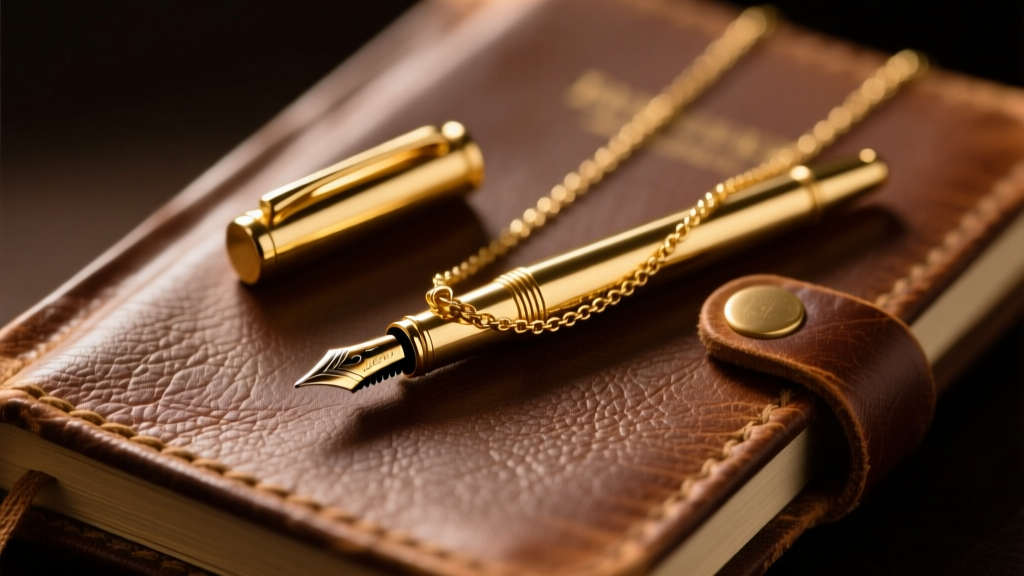
The visual impact of a pen pendant relies heavily on chain length. Because the pen is a vertical, linear object, it mimics the drop of a pocket watch chain or a tie tack. Wearing a gold pen necklace on a short 16-inch choker chain forces the pen to lie horizontally across the clavicle, destroying the visual motif.
The ideal length is 20 to 24 inches. A 22-inch chain allows the pen to rest precisely at the sternum or solar plexus. This length ensures the pendant hangs perfectly vertical, allowing light to catch the polished barrel and the engraved nib. For functional miniature pens, a 24-inch length is often preferred, as it allows the wearer to unclasp the pendant and bring it to eye level or paper level without straining the chain.
Hallmarking and Authenticity Verification
Due to the cylindrical and often tapered shape of a pen barrel, traditional stamped hallmarks (which require a flat anvil surface) are difficult to apply without warping the metal. Consequently, high-end gold pen necklaces frequently utilize laser hallmarking. Laser hallmarks are microscopically etched into the gold, usually hidden inside the pen cap or along the flat edge of the pocket clip. When authenticating a vintage or artisan gold pen necklace, use a 10x jeweler's loupe to inspect these recessed areas for the maker's mark and the purity stamp (e.g., 585 for 14k, 750 for 18k).
Maintenance and Ultrasonic Cleaning Protocols
Cleaning a gold pen necklace requires specific precautions. While solid gold can withstand harsh chemicals, the intricate crevices of the pen nib and the gap beneath the pocket clip trap skin oils, lotion, and environmental dust.
According to guidelines from Jewelers of America, ultrasonic cleaners are highly effective for plain gold jewelry. However, never place a functional gold pen or a motif pen with resin/acrylic inlays in an ultrasonic cleaner. The high-frequency sound waves (typically 40-45 kHz) will shatter resin inlays, degrade rubber O-rings in functional pens, and can even loosen the microscopic iridium tipping on a functional nib.
For safe maintenance, prepare a solution of warm distilled water and a few drops of non-phosphate, ammonia-free dish detergent. Submerge the necklace for 15 minutes to loosen debris, then gently agitate the crevices around the nib and clip using a soft, natural horsehair brush. Rinse thoroughly with distilled water to prevent hard water spotting on the high-polish barrel, and dry with a lint-free microfiber cloth. Store the necklace flat or hung vertically to prevent the chain from wrapping around the pen clip and bending it out of alignment.


