How to Choose the Perfect Gold Puffy Heart Necklace
Discover everything about the gold puffy heart necklace. Learn the differences between solid and hollow, karat weights, and styling tips for beginners.

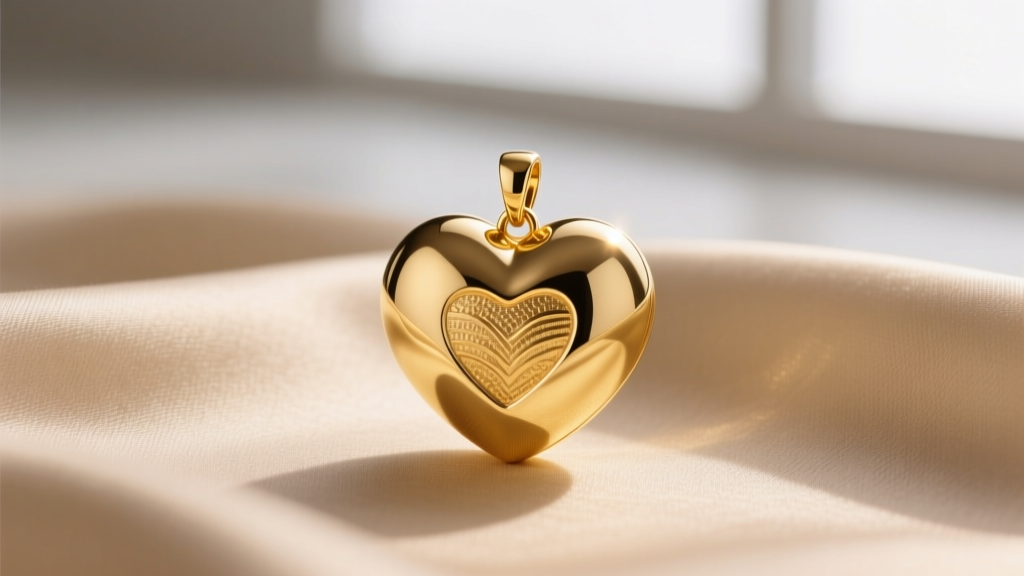
The gold puffy heart necklace is a masterclass in dimensional jewelry design. Often referred to as a 'blown-up' or 3D heart, this pendant style has transcended its 1980s and Y2K roots to become a permanent fixture in modern fine jewelry collections. But for beginners, navigating the market can be surprisingly complex. Why do two identically sized puffy hearts have a $400 price difference? The answer lies in manufacturing techniques, karat weights, and structural integrity.
What Exactly is a Gold Puffy Heart Necklace?
Unlike flat, stamped heart charms, a puffy heart is fully three-dimensional. The face of the heart is domed and convex, catching light from multiple angles to create a bold, high-impact visual. The back is typically flat or slightly concave to sit flush against the collarbone. This volumetric design gives the illusion of a massive, heavy piece of gold, but the actual weight—and therefore the price—depends entirely on how the interior is constructed.
Solid vs. Hollow: The Biggest Decision You Will Make
When shopping for a gold puffy heart necklace, the most critical specification is whether the charm is solid or hollow. This single factor dictates the piece's longevity, price, and daily wearability.
The Hollow Construction
Hollow puffy hearts are created using one of two methods: electroforming or soldering. In the soldering method, two thin sheets of gold are stamped into domed heart shapes and laser-welded together at the seams. Electroforming involves depositing gold over a wax or resin mold, which is later melted out, leaving a microscopic shell of gold. While these techniques keep the price accessible and the visual size large, they introduce a major vulnerability: denting.
The Solid Construction
Solid puffy hearts are crafted using traditional lost-wax casting. A 3D model is printed or carved in wax, encased in plaster, and burned out in a kiln. Molten gold is then injected into the void. The result is a dense, heavy, and virtually indestructible pendant that will survive decades of daily wear without collapsing under pressure.
| Feature | Hollow Puffy Heart | Solid Puffy Heart |
|---|---|---|
| Manufacturing | Electroformed or Soldered Halves | Lost-Wax Casting |
| Weight (15mm size) | 0.8g - 1.5g | 3.5g - 5.0g |
| Average Price (14K) | $120 - $250 | $450 - $800+ |
| Durability | Low (Prone to dents/crushing) | High (Impact resistant) |
| Repairability | Very Difficult | Easy (Standard soldering) |
Decoding Karat Weights: 10K, 14K, or 18K?
Gold purity fundamentally changes the color, hardness, and value of your necklace. According to the Gemological Institute of America (GIA), pure 24K gold is too soft for functional jewelry, meaning it must be alloyed with metals like copper, silver, and zinc.
- 10K Gold (41.7% Pure): The most durable and affordable option. It has a slightly paler yellow hue and is highly resistant to scratching. However, the high alloy content makes it more prone to tarnishing over time and can cause skin reactions in those with nickel sensitivities.
- 14K Gold (58.3% Pure): The undisputed sweet spot for a gold puffy heart necklace. It offers a rich, warm yellow color while maintaining enough structural hardness to resist daily scratches. If you are buying a solid heart, 14K is the industry standard for balancing heirloom quality with everyday resilience.
- 18K Gold (75% Pure): Prized for its deep, luxurious, buttery yellow tone. Because it is softer, 18K is generally not recommended for large hollow hearts (they will dent incredibly easily). For small, solid 10mm puffy hearts, however, 18K is a stunning, high-end choice.
Real-World Sizing: Millimeters Matter
Beginners often buy based on generic terms like 'dainty' or 'chunky,' which leads to disappointment. Always check the exact millimeter (mm) dimensions.
- 8mm - 10mm (Micro/Dainty): Barely larger than a standard pencil eraser. Ideal for delicate layering or minimalist aesthetics. Usually solid due to the low gold weight required.
- 12mm - 15mm (The Standard): The most versatile size. It reads clearly as a statement piece when worn alone on a collarbone-length chain, but isn't so massive that it overpowers a V-neck blouse.
- 18mm - 25mm+ (Bold Statement): True Y2K revival territory. At this size, a solid gold heart will weigh upwards of 8 to 12 grams and require a heavy-duty chain. Hollow construction is common here to keep the price under $500.
Chain Pairings: Matching the Right Gold Chain
A common beginner mistake is hanging a heavy, solid puffy heart on a flimsy chain. The bail (the loop connecting the heart to the chain) acts as a friction point. If the chain is too thin, the weight of the 3D heart will act like a saw, eventually snapping the chain links.
Best Chain Types for Puffy Hearts
- Rope Chain: The twisted links distribute weight evenly and provide a beautiful textural contrast to the smooth, polished surface of the puffy heart.
- Box Chain: Exceptional tensile strength. The square, interlocking links lay flat and resist pulling apart, making them perfect for solid 15mm+ hearts.
- Figaro Chain: Offers a vintage, masculine-leaning aesthetic that pairs brilliantly with the nostalgic vibe of the puffy heart.
Pro Tip: Avoid standard cable chains or bead chains for any solid heart weighing over 3 grams. They simply lack the structural integrity to support the pendant's pendulum-like movement.
Care and Maintenance: Preventing Dents and Tarnish
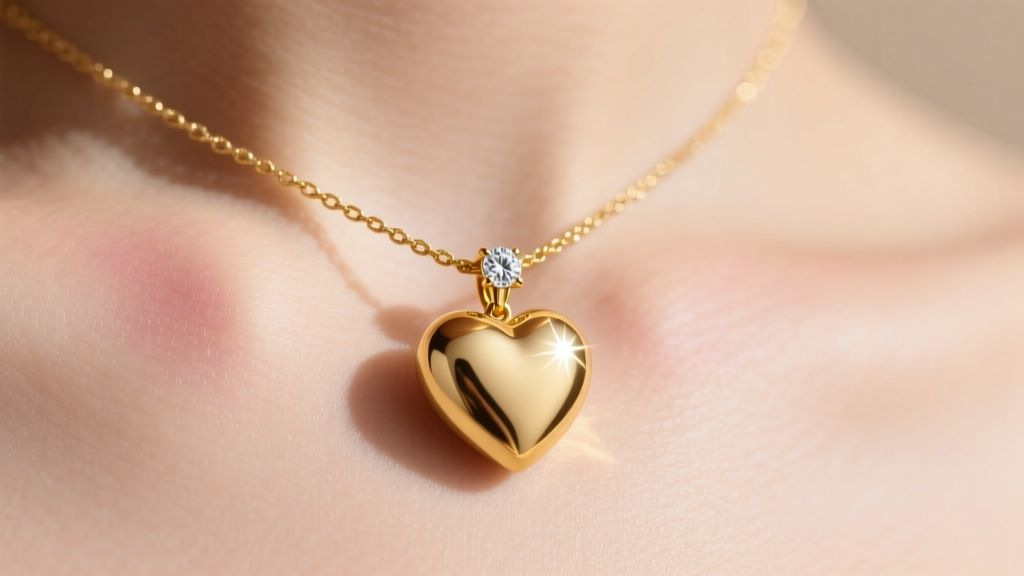
Maintaining your gold puffy heart necklace requires an understanding of its structural vulnerabilities. If you own a hollow piece, you must treat it like a delicate glass ornament. Sleeping in a hollow puffy heart is the number one cause of catastrophic denting, as the pressure of your body weight against a mattress can easily crush the thin gold shell.
Expert Cleaning Tip: Never use ultrasonic cleaners on hollow or electroformed gold jewelry. The high-frequency vibrations can shake the microscopic solder seams apart or cause internal structural collapse. Stick to warm water, a drop of mild dish soap, and a soft baby toothbrush, as recommended by Jewelers of America.
For solid hearts, maintenance is straightforward. Polish them occasionally with a jeweler's cloth to remove body oils and environmental tarnish. Store them in a soft microfiber pouch to prevent the polished dome from getting scratched by harder gemstones in your jewelry box.
Final Verdict for Beginners
The gold puffy heart necklace is a brilliant investment in dimensional styling. If your budget allows, always prioritize a solid 14K gold construction in the 12mm to 15mm range. It provides the perfect intersection of visual impact, lifelong durability, and intrinsic gold value. If you are strictly buying for a trendy, short-term fashion statement, a hollow 10K or 14K piece will give you the exact same silhouette for a fraction of the cost—just remember to take it off before you go to sleep.


