Choosing a Gold Rosary Necklace Women: Alloy & Karat Guide
Discover how to choose a durable gold rosary necklace women will love. Compare 10k, 14k, 18k, and gold-filled alloys for lasting faith jewelry.

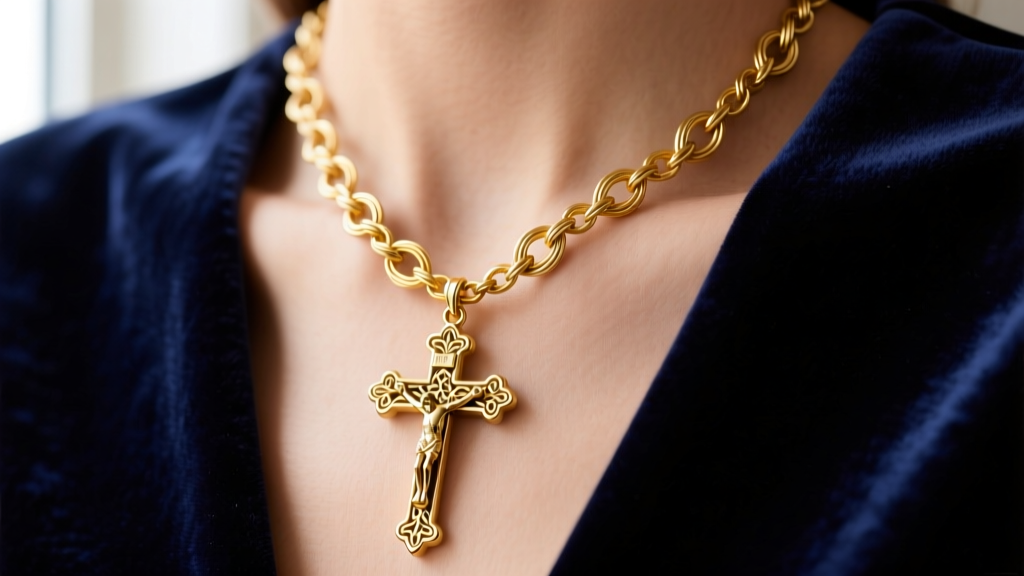
The Mechanics of Rosary Wear: Why Alloy Matters
A rosary is far more than a static piece of jewelry; it is a tactile instrument of faith designed for repetitive, daily handling. When searching for the perfect gold rosary necklace women often prioritize the aesthetic beauty of the crucifix or the color of the gemstone beads. However, the metallurgical integrity of the chain links is what ultimately determines whether the piece will survive years of prayer or snap under the stress of daily use.
Rosary chains are typically constructed using wire-wrapping techniques, where individual loops are twisted and closed to connect beads. This process work-hardens the metal, but it also creates micro-stress points at the base of each loop. If the gold alloy is too soft, the weight of heavy gemstone beads—like onyx, lapis lazuli, or glass—will cause the loops to elongate and eventually pull open. Conversely, if the alloy is too brittle, the repetitive friction of the beads rubbing against the links can cause micro-fractures. Understanding the specific properties of gold alloys is critical for selecting a rosary that balances spiritual significance with structural longevity.
Solid Gold Karats Compared: 10K vs 14K vs 18K
Pure gold (24K) is exceptionally malleable, registering a mere 25 on the Vickers hardness scale (HV). It is entirely unsuitable for rosary chains, as even the gentle pull of prayer would stretch the links beyond repair. Therefore, gold must be alloyed with other metals like copper, silver, and zinc to increase its tensile strength. According to the Gemological Institute of America (GIA), the karat system dictates the ratio of pure gold to alloy metals, directly impacting the chain's durability and color.
10K Gold: Maximum Durability for Heavy Beads
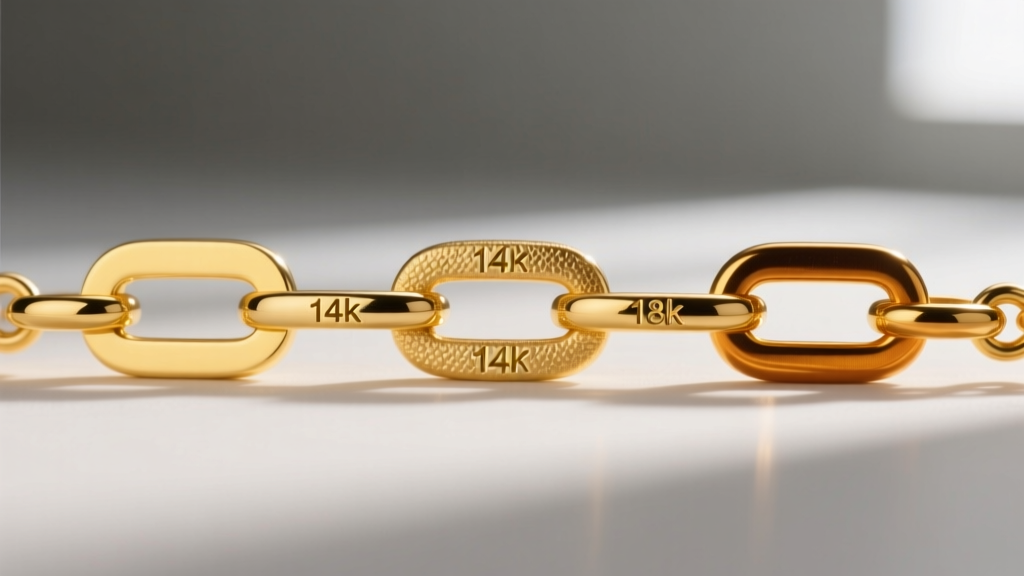
Comprising 41.7% pure gold, 10K gold is the most durable option available in the solid gold family. With a Vickers hardness often exceeding 170 HV, 10K wire can be drawn to a fine 22-gauge thickness while still maintaining enough tensile strength to support heavy stone beads without the loops deforming. The trade-off is a noticeably paler yellow hue and a higher copper content, which can cause the metal to tarnish if exposed to sweat and environmental sulfur. For women who work with their hands or prefer a heavier, gemstone-dense rosary, 10K is the most pragmatic choice.
14K Gold: The Industry Standard for Balance
At 58.3% pure gold, 14K gold offers the optimal intersection of workability, strength, and rich color. Registering around 150 HV, it is soft enough for artisans to easily wire-wrap intricate links and secure delicate centerpieces, yet hard enough to resist everyday stretching. 14K yellow gold is typically alloyed with a balanced mix of silver and copper, giving it a warm, classic tone that resists tarnishing far better than 10K. It remains the most highly recommended material for a premium, heirloom-quality rosary chain.
18K Gold: Luxury and Richness with Caveats
Containing 75% pure gold, 18K gold boasts a deeply saturated, luxurious yellow color. However, its hardness drops to approximately 130 HV. To use 18K gold for a rosary necklace, jewelers must increase the wire gauge—usually stepping up to 19-gauge or 18-gauge wire—to compensate for the softer alloy. This results in a slightly thicker, heavier chain. 18K is best reserved for rosaries featuring lightweight beads, such as freshwater pearls or olive wood, where the tensile load on the links is minimal.
Gold-Filled vs. Gold Vermeil: The Budget Alternatives
For those seeking the look of gold without the solid gold price tag, gold-filled and gold vermeil are common alternatives, though they behave very differently in a rosary application.
Gold-Filled (1/20 14K): Gold-filled wire consists of a brass core mechanically bonded with a thick layer of 14K gold (comprising at least 5% of the total weight). It is highly resistant to tarnish and excellent for straight chain segments. However, the wire-wrapping process used to create rosary links involves sharp bends and twisting. This mechanical stress can sometimes micro-fracture the gold layer at the loop joints, exposing the brass core and leading to localized green tarnish over time.
Gold Vermeil: Vermeil features a sterling silver base plated with a minimum of 2.5 microns of gold, as defined by Federal Trade Commission (FTC) guidelines. While vermeil is hypoallergenic and beautiful, the constant friction of rosary beads sliding against the links will rapidly wear away the gold plating, exposing the silver beneath. Vermeil is strictly discouraged for the main chain of a daily-use rosary.
Material Properties Data Table
| Material | Gold Content | Hardness (HV) | Ideal Wire Gauge | Best Bead Pairing | Est. Price Range |
|---|---|---|---|---|---|
| 10K Solid Gold | 41.7% | ~170 | 22g - 24g | Heavy Onyx, Glass, Agate | $150 - $350 |
| 14K Solid Gold | 58.3% | ~150 | 20g - 22g | Gemstones, Crystal, Wood | $450 - $900 |
| 18K Solid Gold | 75.0% | ~130 | 18g - 19g | Pearls, Olive Wood, Coral | $1,200 - $2,500+ |
| 14K Gold-Filled | 5% (Surface) | ~110 (Core) | 20g | Lightweight Glass, Resin | $60 - $120 |
Bead and Centerpiece Compatibility
The material of your chain must be matched to the density and weight of the beads. A common failure mode in poorly designed rosaries is the use of 18K gold wire with heavy, high-density stones like hematite or large lapis lazuli beads. The sheer gravitational pull, combined with the kinetic energy of the beads swinging during the Hail Mary prayers, will cause the softer 18K loops to stretch into ovals and eventually unhook.
If you desire the rich color of 18K gold but prefer heavy stone beads, look for rosaries where the beads are separated by knotting (using silk or synthetic cord) rather than wire-wrapped links, reserving the gold chain solely for the lower decades and the crucifix drop. For the centerpiece and crucifix, cast solid 14K or 18K gold is ideal, as casting eliminates the weak points inherent in wire loops.

Care and Tarnish Prevention for Daily Prayer
The natural oils from your hands, combined with environmental humidity, will affect the alloy metals in your rosary. Because 10K and 14K gold contain copper and silver, they are susceptible to oxidation.
Pro-Tip for Rosary Maintenance: Never store your rosary in a damp bathroom or leave it exposed to direct sunlight and humidity. Store it in a soft, anti-tarnish cloth pouch. If the links begin to look dull, a gentle wash in warm water with a drop of mild dish soap, followed by a thorough drying with a microfiber cloth, will restore the luster without the need for harsh chemical dips that can degrade the wire over time.
Final Verdict: Which Gold Type Should You Choose?
Selecting the right metal for a gold rosary necklace women will cherish for decades requires balancing budget, bead weight, and aesthetic preference. For an everyday, heavy-duty rosary that will survive a lifetime of active use, 14K solid gold remains the undisputed champion, offering the perfect metallurgical balance of tensile strength and timeless beauty. If budget constraints are a primary factor, a 14K gold-filled chain is an acceptable compromise, provided the beads are lightweight and the wire-wrapped loops are crafted with care to avoid exposing the brass core. Avoid vermeil for the main chain, and never use pure 24K gold for any structural component of the rosary.


