The Complete Gold Swan Necklace Buying Guide & Style Tips
Discover how to choose the perfect gold swan necklace. Compare 14k vs 18k gold, explore ballet and minimalist designs, and learn expert quality checks.

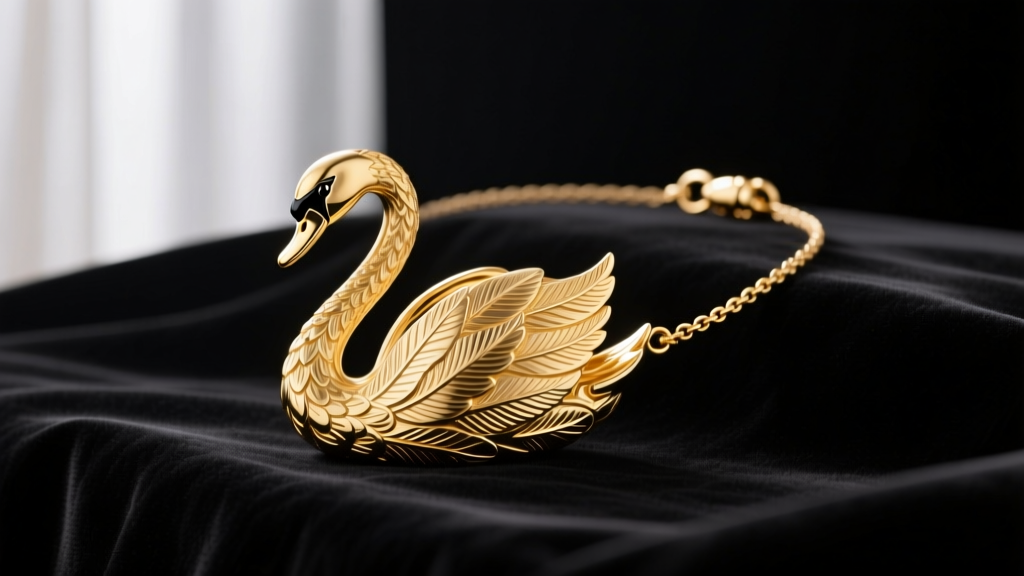
The Allure of the Swan Motif in Fine Jewelry
The swan has long been a universal symbol of grace, fidelity, and transformation. In jewelry design, a gold swan necklace transcends fleeting trends, offering a timeless silhouette that bridges the gap between vintage romance and modern minimalism. Whether you are drawn to the dramatic flair of a ballet-inspired tutu design or the sleek, geometric lines of a contemporary abstract swan, selecting the right piece requires an understanding of metallurgy, structural integrity, and proportional balance. This comprehensive buying guide will equip you with the exact specifications and expert insights needed to invest in a gold swan pendant that will last a lifetime.
Decoding Gold Purity: Solid vs. Plated Swan Pendants
When shopping for a gold swan necklace, the karatage and manufacturing method dictate not only the price but also the pendant's longevity and resistance to wear. According to the Gemological Institute of America (GIA), pure 24k gold is too soft for intricate animal motifs; the delicate wings and elongated neck of a swan would easily bend or warp. Therefore, alloying is essential.
| Material Grade | Gold Purity | Durability & Wear | Average Price Range (2026) | Best Use Case |
|---|---|---|---|---|
| 10k Solid Gold | 41.7% | Highly durable, prone to dulling over time | $120 - $250 | Everyday wear, tight budgets |
| 14k Solid Gold | 58.5% | Excellent balance of hardness and rich color | $300 - $650 | Lifelong daily wear, heirloom pieces |
| 18k Solid Gold | 75.0% | Softer, richer yellow hue, scratches easier | $700 - $1,800+ | Special occasion, luxury investment |
| Gold Vermeil | Sterling Silver Base | Moderate, requires careful maintenance | $60 - $140 | Trend-driven styling, layered looks |
Expert Insight: If you opt for vermeil, ensure it meets the Federal Trade Commission (FTC) standards, which require a sterling silver base plated with at least 2.5 microns of 10k or higher gold. Anything less is considered standard gold plating and will quickly wear away on the high-friction edges of the swan's wings.
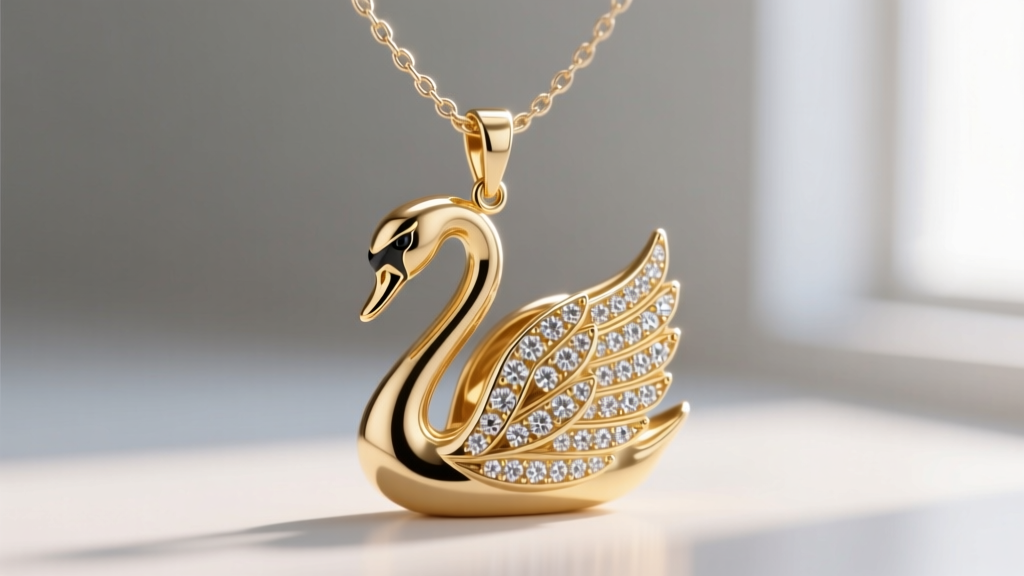
Design Variations: Finding Your Signature Silhouette
The swan motif is remarkably versatile. In 2026, jewelers are pushing the boundaries of traditional casting techniques, offering distinct stylistic categories to suit different wardrobes.
The Ballet Swan
Inspired by Tchaikovsky’s Swan Lake, these pendants feature the swan’s body stylized as a ballerina’s tutu. Look for pieces that utilize milgrain detailing along the feather edges to create a lace-like texture. High-end versions often incorporate pave-set lab-grown diamonds along the wing tips, adding brilliance without the ethical concerns or steep premiums of mined stones.
Abstract and Geometric Minimalism
For a modern aesthetic, abstract swan necklaces rely on negative space and Art Deco-inspired linear geometry. These designs often feature a single, continuous gold wire that loops to form the swan's neck and body. Because they lack heavy casting weight, these minimalist pieces are best paired with lightweight 14k gold chains and sit beautifully at a 16-inch choker length.
The Black Swan (Oxidized & Two-Tone)
Utilizing black rhodium plating or deliberate oxidation, the 'Black Swan' variation highlights the intricate engraving of the feathers by creating high contrast in the recesses of the metal. This technique is particularly striking in 14k rose gold, where the warm pinkish-copper tones contrast sharply with the darkened wing crevices.
Chain Selection and Proportions for Swan Pendants
A common failure point in animal-motif jewelry is the chain-to-pendant ratio. Swans are inherently top-heavy due to their long necks and wide wingspans. If suspended on a flimsy chain, the pendant will constantly flip upside down, resting awkwardly against the collarbone.
- The Bail: Inspect the bail (the loop connecting the pendant to the chain). A soldered, fixed bail is vastly superior to a pinched or jump-ring bail for a swan pendant, as it restricts excessive spinning and keeps the motif upright.
- Chain Type: Avoid delicate serpentine or thin cable chains for solid 14k or 18k gold swans weighing over 3 grams. Instead, opt for a 1.2mm to 1.5mm Wheat (Spiga) chain or a Box chain. These weaves offer multidimensional structural support and resist kinking when the heavy pendant shifts.
- Length: An 18-inch chain allows a medium-sized swan pendant (approx. 20mm x 15mm) to rest perfectly at the hollow of the throat, while a 20-inch length is better suited for larger, statement-sized swan lockets worn over sweaters or blouses.
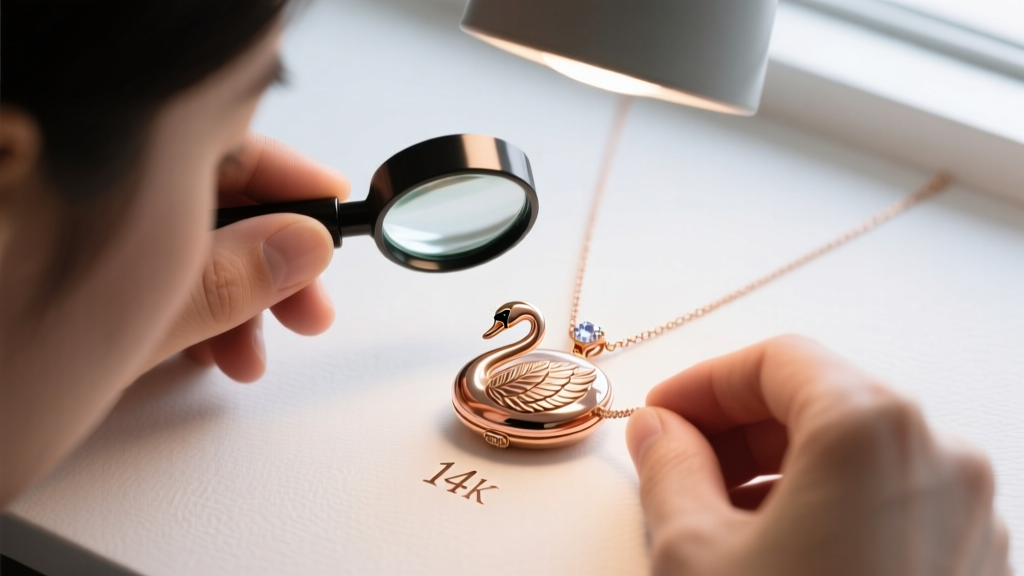
What to Inspect Before You Buy: A Quality Checklist
Whether you are purchasing from a heritage luxury brand or an independent artisan on a bespoke jewelry platform, run the piece through this rigorous quality control checklist:
- Hallmark Verification: Use a jeweler's loupe to locate the stamp. A legitimate 14k piece will be stamped '14k', '585', or '14KP' (the 'P' stands for Plumb, guaranteeing it is exactly 58.5% pure gold, not a fraction less).
- Casting Porosity: Examine the smooth surfaces of the swan's neck and back under bright light. Cheap mass-produced castings often reveal tiny pits or pores (porosity) where gas bubbles were trapped in the molten gold. High-quality pieces will have a flawless, mirror-like polish in these areas.
- Stone Security (If Applicable): If your swan features a gemstone eye or diamond wings, check the prongs. They should be smooth, rounded, and flush against the stone. Avoid pieces where the prongs look snagged or overly thin, as the swan's wings will frequently catch on knitwear.
- Locket Hinge Tension: If buying a gold swan locket, open and close it multiple times. The hinge should offer firm resistance, and the closure should produce a crisp, audible 'snap'. A loose hinge will inevitably stretch over time, causing the locket to pop open and risk losing the photos inside.
Caring for Your Gold Swan Necklace
Maintaining the intricate details of a swan pendant requires specific care routines. Never use ultrasonic cleaners on swan necklaces that feature pave diamonds or black rhodium accents; the high-frequency vibrations can loosen the adhesive or settings in the delicate wing feathers. Instead, use a soft-bristled baby toothbrush dipped in a solution of warm water and a few drops of mild, phosphate-free dish soap. Gently brush along the grain of the engraved feathers to lift trapped skin oils and lotions, rinse thoroughly, and pat dry with a lint-free microfiber cloth. Store the necklace flat or hanging to prevent the chain from tangling in the swan's beak or wingtips.


