The Necklace by Guy de Maupassant Story: Jewelry Guide
Learn from The Necklace by Guy de Maupassant story. Our 2026 buying guide reveals how to spot real diamonds vs. paste and buy smart.

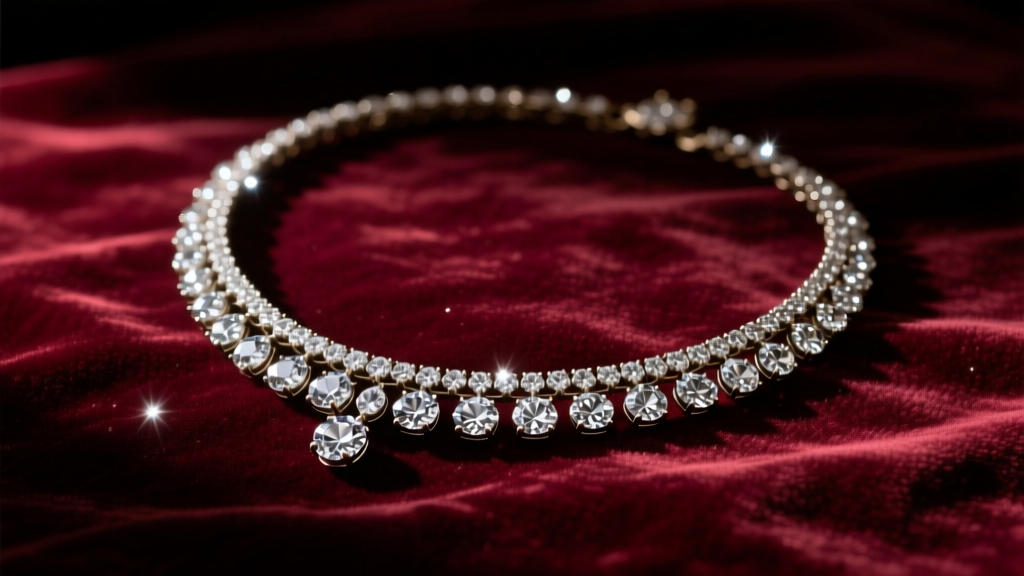
The Fatal Flaw: A 19th-Century Jewelry Mistake
In The Necklace by Guy de Maupassant story, the protagonist Mathilde Loisel commits a catastrophic error that costs her a decade of grueling poverty. She borrows what she believes to be a priceless diamond necklace from her wealthy friend, Madame Forestier, only to lose it after a lavish ball. Rather than confessing the loss, Mathilde and her husband secretly purchase a replacement for 36,000 francs—a ruinous sum that plunges them into debt. Ten years later, after aging herself with hard labor to pay off the loans, Mathilde learns the devastating truth: the original necklace was 'paste' (costume jewelry), worth at most 500 francs.
While Maupassant’s tale is a masterclass in irony and the dangers of vanity, for modern jewelry buyers, it serves as a profound cautionary tale about gemological illiteracy and financial recklessness. In the 2026 jewelry market, the line between natural diamonds, lab-grown alternatives, and high-end simulants is more nuanced than ever. Understanding what you are buying—and how to verify it—is the only way to avoid your own 'Mathilde Loisel trap.'
Historical 'Paste' vs. Modern Simulants
In the 1880s, 'paste' referred to strass, a type of high-lead glass invented by Georges Frédéric Strass. Leaded glass had a high refractive index (around 1.7 to 1.8), giving it a brilliant sparkle that could easily fool the naked eye in the dim, gas-lit ballrooms of 19th-century Paris. However, it was soft—ranking only a 5.5 on the Mohs hardness scale—meaning it scratched and clouded quickly.
Today, the concept of 'paste' has evolved into highly sophisticated simulants. If Madame Forestier were shopping today, her faux necklace might be crafted from one of the following materials:
Cubic Zirconia (CZ)
Synthesized from zirconium dioxide, CZ is the most common diamond simulant. With a Mohs hardness of 8.5 and a refractive index of 2.15, it offers exceptional brilliance. However, CZ has a higher specific gravity than diamond, making it noticeably heavier, and it tends to attract oils, causing it to look cloudy over time without regular ultrasonic cleaning.
Moissanite
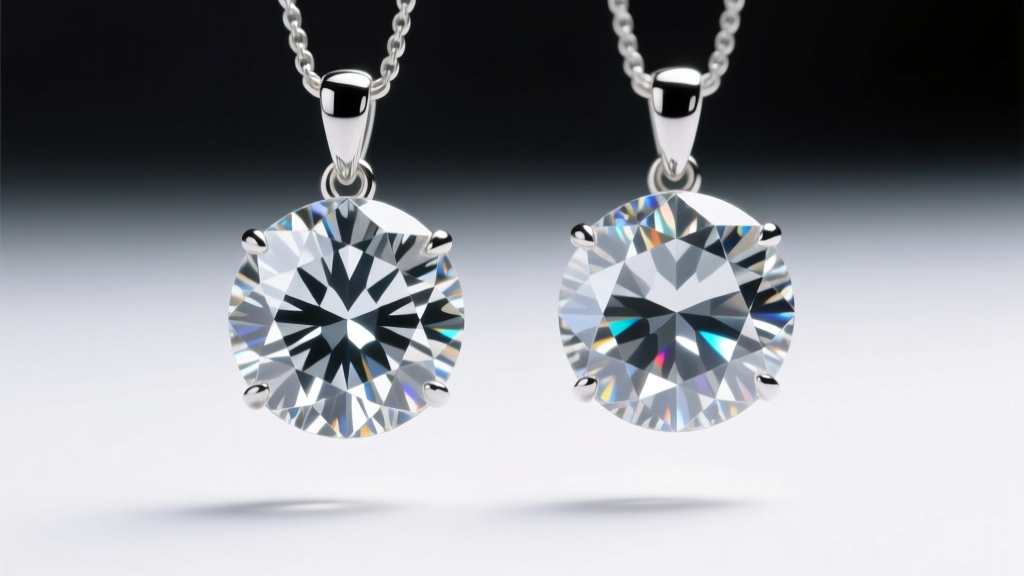
Composed of silicon carbide, moissanite is a powerhouse simulant. It ranks at 9.25 on the Mohs scale, making it highly durable for everyday wear. Its refractive index (2.65) is actually higher than that of a natural diamond (2.42), resulting in a 'disco-ball' effect with intense rainbow dispersion. While beautiful, this extreme fire is a dead giveaway to a trained gemologist that the stone is not a diamond.
Lab-Grown Diamonds: The Modern Dilemma
Unlike CZ or moissanite, Lab-Grown Diamonds (LGDs) are not simulants. According to the Gemological Institute of America (GIA), lab-grown diamonds possess the exact same chemical, physical, and optical properties as mined diamonds. They are pure crystallized carbon, ranking a perfect 10 on the Mohs scale.
In the 2026 market, LGDs have disrupted the traditional diamond pricing model. A 5-carat total weight (ctw) natural diamond riviere necklace that would have cost $45,000 in 2015 might now retail for $30,000, while the identical lab-grown version can be acquired for under $4,000. This price democratization allows buyers to achieve the 'Mathilde look' without the predatory debt that ruined the Loisel family.
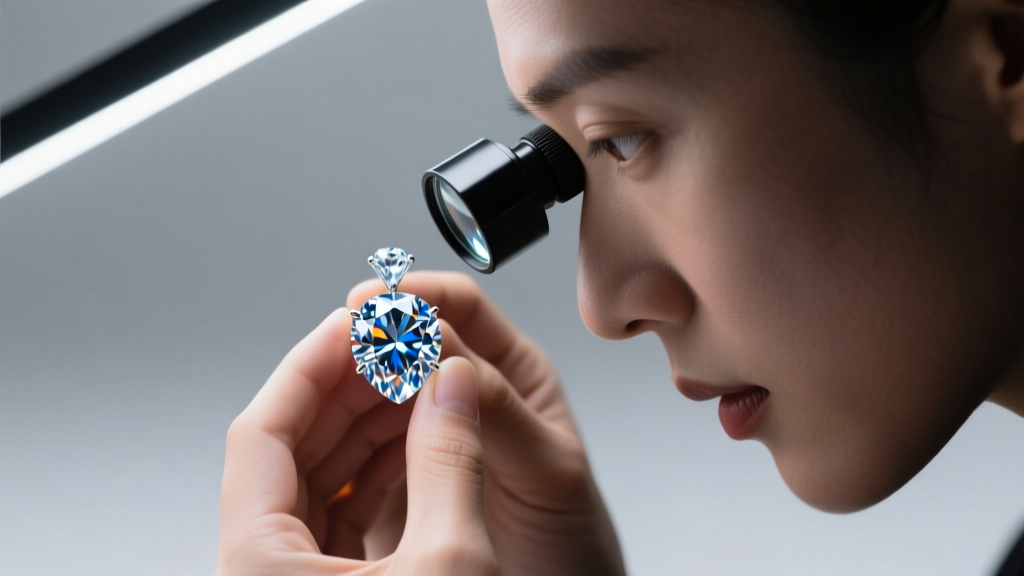
How to Verify Authenticity: Never Trust the Naked Eye
Mathilde’s fatal mistake was assuming that because her friend was wealthy, the jewelry must be real. In today’s market, you must rely on science, not assumptions. If you are purchasing a high-value diamond pendant or chain necklace, follow this strict verification protocol:
- Demand a Grading Report: Never buy a natural diamond over 0.50 carats without a report from a top-tier laboratory like the GIA or AGS. For lab-grown diamonds, IGI and GCAL are industry standards.
- Check the Laser Inscription: Use a 10x triplet loupe or a digital microscope to verify the laser-inscribed report number on the stone's girdle. This ensures the stone matches the paperwork.
- Use Dual-Mode Testers: Basic thermal conductivity testers will accurately identify CZ and glass. However, moissanite conducts heat similarly to diamond and will pass a standard thermal test. You must use a tester that also measures electrical conductivity to differentiate between diamond and moissanite.
- Examine Inclusions: Natural diamonds typically contain microscopic feathers, crystals, or pinpoints. Lab-grown diamonds created via High Pressure High Temperature (HPHT) may contain metallic flux inclusions, while Chemical Vapor Deposition (CVD) stones might show strain patterns. Simulants like CZ are often entirely flawless or contain spherical gas bubbles.
The 2026 Diamond Necklace Pricing Matrix
To avoid overpaying, it is crucial to understand the current pricing landscape. The table below compares the average retail costs for a classic 2.00 ctw diamond solitaire pendant (VS1 clarity, G color) across different materials in 2026.
| Material | Mohs Hardness | Refractive Index | Avg. Retail Price (2.00 ct) | Resale Value |
|---|---|---|---|---|
| Natural Diamond | 10 | 2.42 | $12,000 - $16,000 | 20% - 40% |
| Lab-Grown Diamond | 10 | 2.42 | $1,200 - $2,500 | 5% - 10% |
| Moissanite | 9.25 | 2.65 | $400 - $800 | Negligible |
| Cubic Zirconia | 8.5 | 2.15 | $30 - $100 | None |
| Lead Glass (Paste) | 5.5 | 1.70 | $10 - $50 | None |
'How strange life is, and how full of surprises! How little it takes to ruin you or save you!' — Guy de Maupassant, The Necklace
Budgeting Without the Ruin: A Modern Buying Framework
The ultimate lesson of The Necklace by Guy de Maupassant story is not merely about gemology; it is about financial boundaries. Mathilde and her husband signed notes at usurious rates, compromising their entire future for a piece of jewelry. When buying fine necklaces today, apply the 'Anti-Loisel Framework':
1. Define the Purpose and Material Accordingly
If you are buying a necklace for daily wear or a single high-profile event where you want maximum carat weight, a lab-grown diamond or high-grade moissanite set in 14k or 18k solid gold is the most financially sound choice. You get the exact visual impact without tying up capital that could be invested elsewhere.
2. Avoid the 'Sunk Cost' of Unbranded Luxury
Resale values for fine jewelry are notoriously low. Unless you are purchasing signed pieces from heritage houses like Cartier or Van Cleef & Arpels, view a diamond necklace as a consumption purchase, not an investment. Never take on high-interest debt to finance it.
3. The Confession Rule
Had Mathilde simply told her friend the truth immediately, she would have learned the necklace was faux and replaced it for a few hundred francs. In the modern era, always buy from jewelers who offer transparent, written return and upgrade policies. If a deal feels too good to be true, or a seller pressures you to bypass third-party grading, walk away.
Final Thoughts
Maupassant’s literary masterpiece remains a staple in classrooms worldwide, but its core themes are deeply relevant to the modern jewelry buyer. Whether you are investing in a natural diamond heirloom, opting for a sustainable lab-grown pendant, or choosing a brilliant moissanite choker, knowledge is your greatest asset. By understanding material properties, demanding verifiable certifications, and maintaining strict financial discipline, you can enjoy the brilliance of fine jewelry without the tragic irony of the Loisel legacy.


