Rosary Beads Necklace Buying Guide: What to Look For
Discover what to look for in a rosary beads necklace. Our expert buying guide covers materials, bead sizes, construction methods, and pricing tiers.

The Evolution of the Rosary Beads Necklace in Modern Jewelry
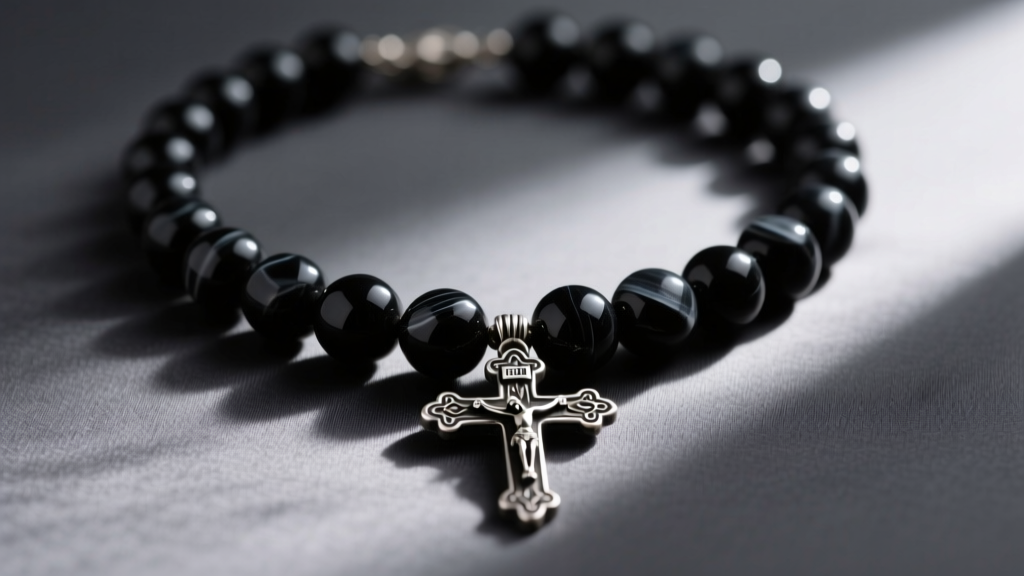
Once strictly confined to religious devotion, the rosary beads necklace has undergone a massive stylistic renaissance. As we move through 2026, this silhouette is a cornerstone of dark academia, streetwear, and elevated grunge aesthetics. However, the surge in popularity has flooded the market with varying quality levels. Buying a rosary beads necklace today requires a keen eye for construction, material integrity, and hardware durability. Whether you are seeking a delicate 4mm crystal strand for layering or a heavy, oxidized metal piece for a standalone statement, understanding the anatomy of these necklaces is crucial to making a smart investment.
Bead Material Matrix: Glass, Gemstone, and Metal
The core of any rosary beads necklace lies in its beads. The material dictates not only the visual weight and light refraction but also the long-term durability of the piece. When shopping, always verify the exact material rather than relying on vague terms like 'black stone' or 'crystal.'
| Material | Mohs Hardness | Pros | Cons & Care | Price Tier |
|---|---|---|---|---|
| Genuine Onyx | 7.0 | Deep black color, highly durable, takes a high polish. | Can chip if dropped on hard surfaces. | Mid to High |
| Swarovski Crystal | 6.0 - 7.0 | Unmatched faceting and light refraction, consistent sizing. | Prone to scratching if stored loose with harder gems. | Mid |
| Dyed Howlite | 3.5 | Affordable, lightweight, mimics turquoise or onyx. | Dye can fade with sun exposure; very soft and scratches easily. | Low |
| Sterling Silver (Solid) | 2.5 - 3.0 | Hypoallergenic, high intrinsic value, develops a patina. | Requires polishing; heavy metal beads can stretch cord over time. | High |
For gemstone beads, always consult resources like the GIA Gem Encyclopedia to understand the specific treatments applied to the stones. Many cheap 'onyx' beads are actually dyed agate or howlite, which will reveal white streaks as the dye wears off from skin oils and friction.
Construction Methods: Wire-Wrapped vs. Strung
This is the most critical factor in determining the lifespan of your rosary beads necklace. There are two primary methods of assembly, and they perform vastly differently under daily wear.
Wire-Wrapped Links
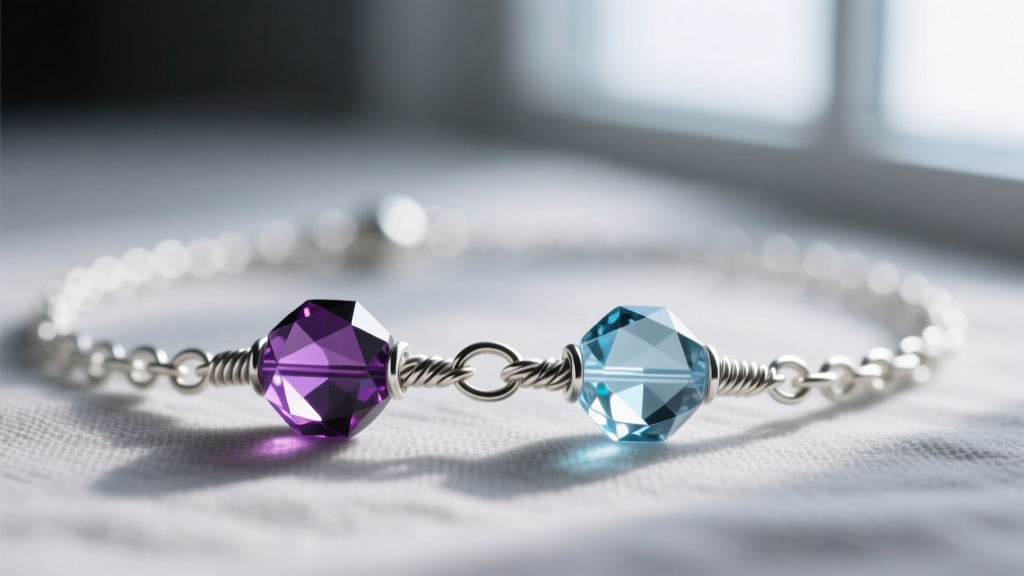
In this method, each bead is individually wrapped with wire (typically 24-gauge or 26-gauge dead-soft or half-hard wire) to form a continuous chain. According to jewelry fabrication standards outlined by suppliers like Rio Grande, half-hard wire offers the best balance of malleability during assembly and rigidity during wear. Wire-wrapped rosaries are incredibly durable. If a link bends, it can be bent back; if it breaks, only one bead is lost.
Strung on Beading Wire
Strung necklaces use a nylon-coated stainless steel cable (often 0.015" or 0.018" in diameter) threaded through the beads, separated by small metal crimp beads. While this allows for a more fluid, fabric-like drape, it introduces significant failure points. If the nylon coating frays near the clasp, the steel core will snap unexpectedly, sending beads scattering.
Identifying Failure Points and How to Avoid Them
- The Crimp Bead Crush: On strung necklaces, inspect the metal crimp bead that secures the clasp. If it is flattened completely with sharp edges, it will eventually slice through the nylon coating. Look for 'crimp covers' or properly folded crimps.
- Wire Link Pull-Apart: On wire-wrapped pieces, gently tug the links. If the wire loops are not completely closed or if the wire is too thin (28-gauge or higher), the links will pull open under the weight of a pendant.
- Drill Hole Fraying: Glass and crystal beads can have sharp edges inside their drill holes. High-end makers use a micro-reamer to smooth these holes; cheap manufacturers do not, leading to internal cord shredding.
Bead Sizing and Drape Dynamics
The millimeter (mm) size of the beads drastically alters how the rosary beads necklace sits on the chest and how it layers with other pieces.
4mm Beads (The Layering Standard)
At 4mm, the beads are small enough to mimic a standard chain from a distance. These are lightweight, flexible, and ideal for wearing in stacks of three or four alongside snake chains or pearl strands. They typically feature a 0.5mm to 0.6mm drill hole.
6mm Beads (The Versatile Middleweight)
The 6mm size is the industry standard for a classic rosary silhouette. It offers substantial visual weight without feeling like a heavy chainmail collar. This size perfectly frames the collarbone on a standard 18-inch or 20-inch length and supports medium-weight pendants like a standard crucifix or evil eye motif.
8mm to 10mm Beads (The Statement Piece)
Beads in this range are heavy and rigid. An 8mm gemstone rosary will not drape fluidly; it will sit in a structured, geometric arc. These are best worn as standalone pieces over t-shirts or turtlenecks. Ensure the clasp hardware is upsized to handle the increased tensile stress.
Hardware, Pendants, and Clasps
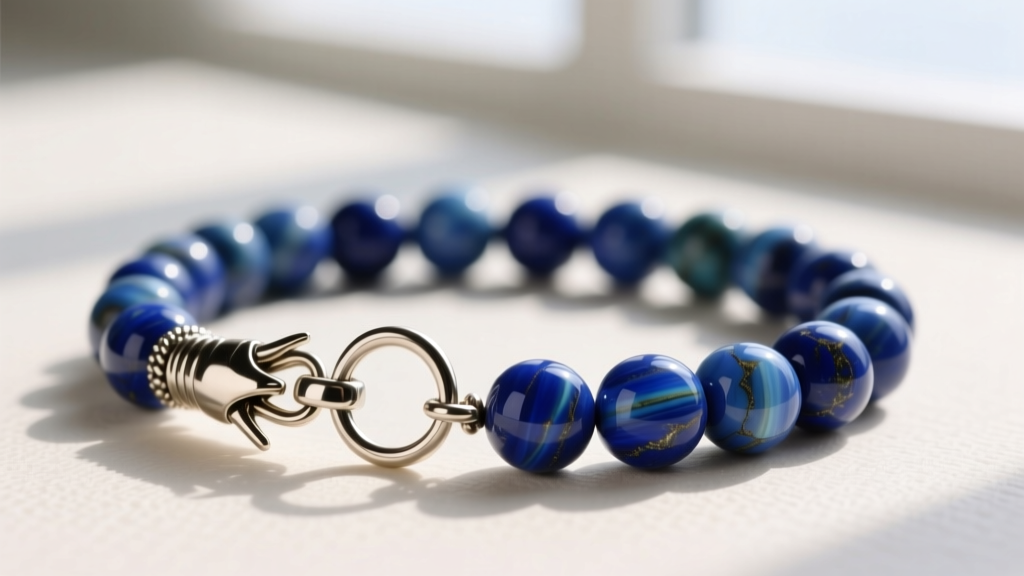
A rosary beads necklace is only as strong as its weakest link, which is almost always the clasp assembly. Avoid spring-ring clasps on any beaded necklace; the internal spring mechanism is prone to failure, and the tiny lip is difficult to operate. Instead, insist on a lobster clasp or a toggle clasp.
Furthermore, examine the jump ring connecting the clasp to the bead strand. If the jump ring is simply bent closed (a split ring), the heavy beads will eventually pull it open. You must look for a soldered jump ring on at least one side of the clasp assembly to ensure the necklace remains a continuous, unbreakable loop at the connection point.
Expert Styling Tip: When layering a rosary beads necklace with standard metal chains, ensure there is at least a 2-inch length difference between the pieces. A 16-inch beaded rosary layered perfectly over an 18-inch oxidized silver Cuban link creates a textured, tiered aesthetic without the clasps tangling at the nape of the neck.
Pricing Tiers: What Should You Actually Pay?
Understanding the fair market value prevents you from overpaying for mass-produced goods or falling for 'luxury' markups on basic materials.
- Budget ($15 - $35): Expect dyed howlite or glass beads, strung on basic nylon cord with alloy (zinc/brass) clasps that will tarnish within a month. The wire links, if present, will be thin and prone to bending.
- Mid-Range ($45 - $120): The sweet spot for quality. You will find genuine semi-precious stones (onyx, lapis, turquoise), precision-cut crystal, and 24-gauge wire-wrapping using stainless steel or silver-plated brass. Hardware will feature secure lobster clasps and soldered rings.
- Premium / Designer ($150 - $400+): Solid 925 sterling silver wire-wrapping, high-grade Swarovski or precision-cut gemstones, and custom-cast pendants. At this tier, you are paying for the labor of hand-wrapping hundreds of individual links and the intrinsic value of the precious metals.
Final Verdict on Choosing Your Piece
The modern rosary beads necklace is a masterclass in texture and rhythm. By prioritizing wire-wrapped construction over strung cord, verifying the Mohs hardness of your chosen gemstones, and demanding soldered hardware, you secure a piece that will outlast fleeting trends. Whether you opt for the moody elegance of matte black onyx or the sharp refraction of faceted crystal, applying these technical buying criteria ensures your investment remains intact, stylish, and structurally sound for years to come.


