How to Choose the Perfect Eucharist Necklace for First Communion
Learn how to choose, size, and style a meaningful eucharist necklace for First Communion. Expert tips on metals, chain lengths, and pendant care.

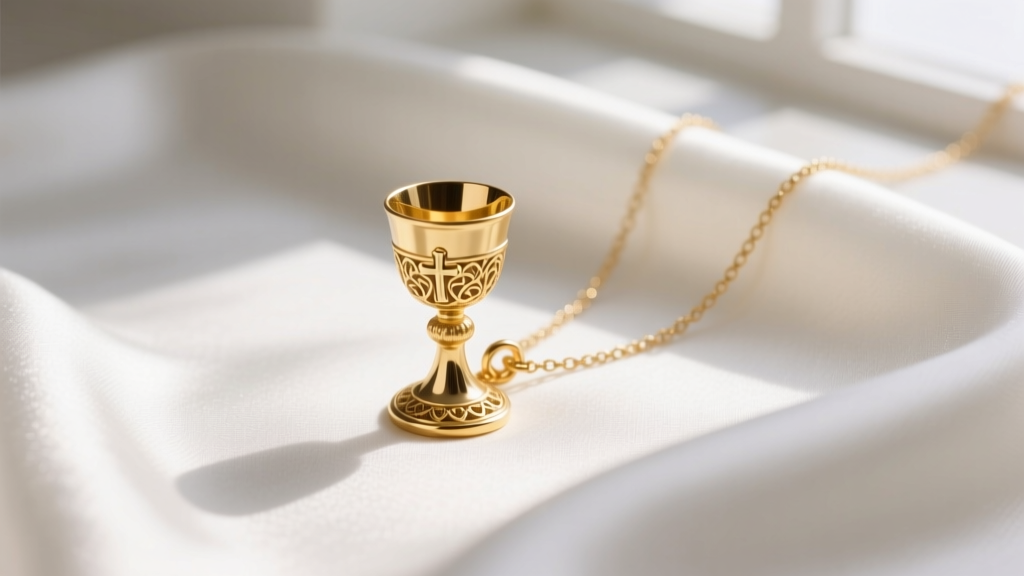
A First Communion is a profound spiritual milestone, and the jewelry chosen to commemorate it should be equally meaningful and enduring. The eucharist necklace serves as a tangible reminder of this sacrament, blending deep liturgical symbolism with wearable elegance. However, selecting the right piece requires navigating a complex landscape of metallurgy, child-safe manufacturing standards, and precise proportions. As we look at jewelry trends in 2026, there is a definitive shift away from mass-produced, disposable trinkets toward heirloom-quality pieces designed to last a lifetime. This comprehensive guide will walk you through the exact steps to choose, size, and care for a eucharist necklace that honors the sanctity of the occasion while standing up to the realities of daily wear.
Step 1: Decoding Eucharistic Motifs and Symbolism
The term 'eucharist necklace' encompasses a variety of specific liturgical designs. Understanding the theological weight of these motifs will help you select a pendant that resonates with the wearer's spiritual journey. The most traditional and recognizable motifs include:
- The Chalice and Host: The most direct representation of the Eucharist, featuring a communion cup (chalice) often overlaid with or supporting the Sacred Host. This design emphasizes the Real Presence.
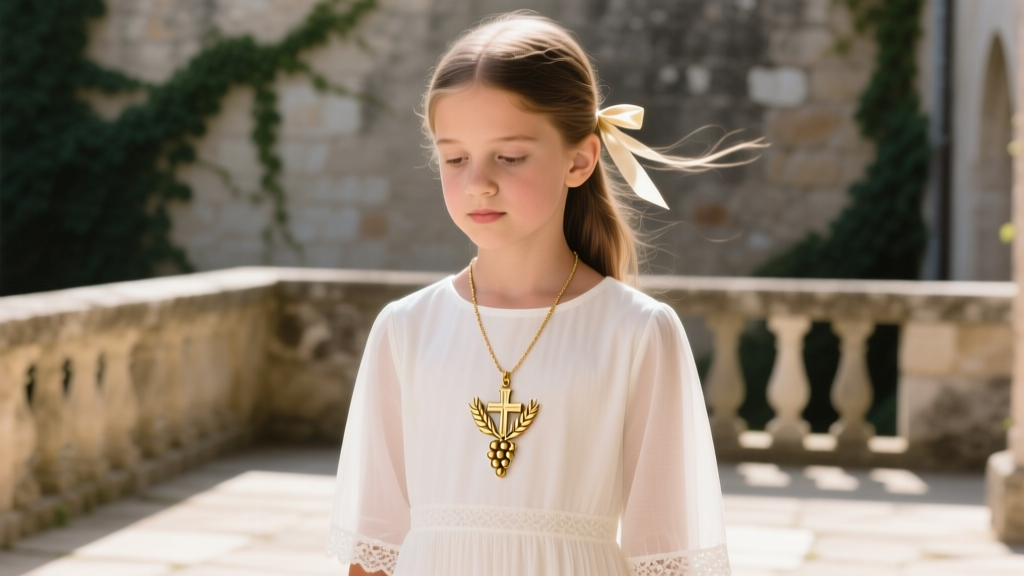
- Wheat and Grapes: Representing the bread and wine used in the sacrament. A pendant featuring a intertwined wheat sheaf and grape cluster is a subtle, nature-inspired nod to the Eucharistic elements.
- The Pelican in Her Piety: An ancient Christian symbol of a pelican piercing her own breast to feed her young with her blood, symbolizing Christ's sacrifice and the Eucharistic meal.
- The Ciborium: Similar to a chalice but with a domed lid, used to hold the consecrated hosts. This is a slightly more architectural and ornate choice for a pendant.
When selecting a motif, consider the age and personal style of the recipient. The chalice and host is universally understood and highly traditional, while the wheat and grape motif offers a more delicate, botanical aesthetic that appeals to modern sensibilities.
Step 2: Navigating Metallurgy and Hypoallergenic Standards
Children's skin is significantly more sensitive and prone to contact dermatitis than adult skin. Therefore, the metallurgical composition of the eucharist necklace is paramount. According to the Consumer Product Safety Commission (CPSC), children's jewelry must strictly adhere to limits on lead and cadmium. Beyond heavy metal toxicity, nickel allergies are a primary concern.
Always verify that the piece is compliant with ASTM F2923-14 (the standard specification for consumer product safety for children's jewelry) and is explicitly labeled as nickel-free. Below is a comparative breakdown of the most suitable metals for a First Communion necklace.
| Metal Type | Durability & Tensile Strength | Hypoallergenic Profile | Ideal Use Case |
|---|---|---|---|
| 14k Yellow/White Gold | High (58.5% pure gold alloyed with copper/zinc or palladium) | Excellent (if alloyed without nickel) | Heirloom pieces, everyday wear |
| 18k Yellow Gold | Moderate (75% pure gold, softer and more prone to scratching) | Superior (higher pure gold content) | Ceremony-only wear, luxury gifts |
| 925 Sterling Silver | Moderate (92.5% silver, 7.5% copper; tarnishes over time) | Good (ensure copper alloy, not nickel) | Budget-friendly, traditional keepsakes |
| Implant-Grade Titanium | Extremely High (lightweight, scratch-resistant) | Unmatched (100% biocompatible) | Highly active children, severe allergies |
For a balance of durability, prestige, and skin safety, 14k gold remains the gold standard for First Communion jewelry. The Gemological Institute of America (GIA) notes that 14k gold provides the necessary tensile strength to prevent thin chains from stretching or snapping under the minor stresses of a child's daily activities.
Step 3: Precision Sizing for Chain Lengths and Extenders
A necklace that is too tight will cause discomfort, while one that is too long risks catching on clothing or playground equipment. The ideal eucharist necklace for a child aged 7 to 10 should sit just below the collarbone.
The Golden Rule of Sizing
Never buy a fixed-length chain for a growing child. Instead, opt for a 14-inch base chain with a 2-inch extender. This configuration allows the necklace to fit perfectly on the day of the ceremony and provides enough adjustability to accommodate growth spurts over the next three to four years. For older teens or adults receiving a eucharist necklace as a confirmation or adult-initiation gift, a 16-inch or 18-inch chain with a 2-inch extender is the standard.
Step 4: Selecting the Optimal Chain Link Architecture
The style of the chain dictates not only the aesthetic of the necklace but also its functional durability and comfort. Avoid snake chains or herringbone chains at all costs for children; their flat, interlocking scales are notorious for catching and pulling fine hair, and they kink irreparably if bent. Instead, focus on these structural links:
- Box Chain: Composed of square, interlocking links that lie flat and are highly resistant to kinking. This is the most durable option for an active child.
- Rolo Chain: Featuring uniform, round links that are thick and robust. Rolo chains have a classic, slightly heavier appearance that pairs beautifully with detailed chalice pendants.
- Cable Chain: The traditional oval-link chain. While classic, ensure the links are soldered closed to prevent them from pulling apart if tugged.
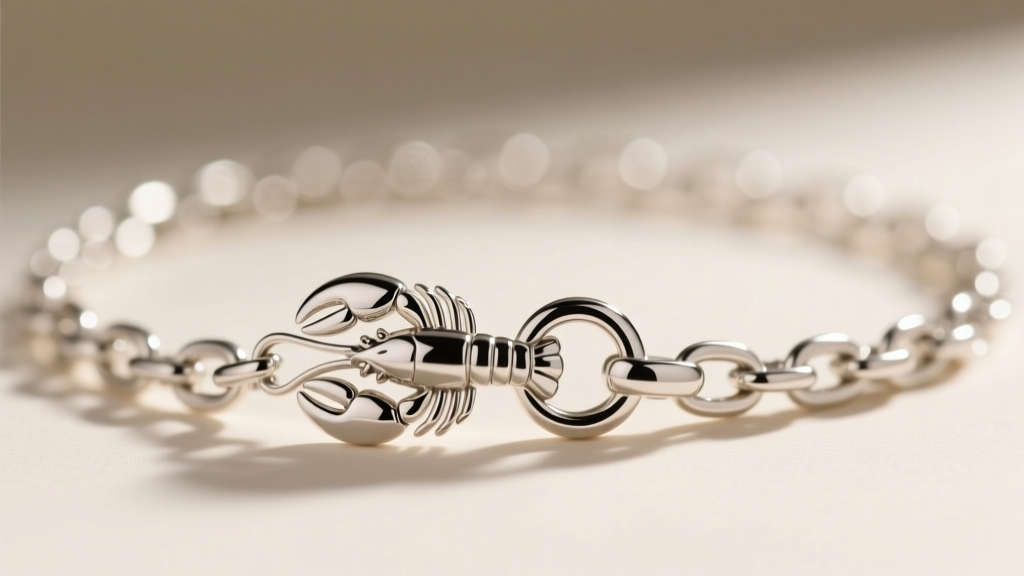
Always ensure the clasp is a lobster clasp rather than a spring-ring clasp. Lobster clasps offer a more secure locking mechanism and are easier for small hands to manipulate when taking the necklace on and off.
Step 5: Pendant Proportions and Engraving Limitations
A common mistake when purchasing religious jewelry is selecting a pendant that is disproportionately large for the wearer's frame. A massive pendant will weigh down a delicate 14k chain, causing it to snap over time, and will look overwhelming on a child.
Proportion Guidelines by Age
- Ages 5-8: 10mm to 12mm pendant diameter. (Approximately the size of a small green pea).
- Ages 9-12: 13mm to 16mm pendant diameter. (Approximately the size of a standard pearl).
- Teens and Adults: 18mm to 25mm pendant diameter.
If you wish to personalize the piece with engraving, space is your primary constraint. On a 15mm chalice pendant, the reverse side typically accommodates a maximum of 10 to 12 characters, including spaces. Opt for a significant date (e.g., '5.12.2026') or a short initial. Use a classic serif or block font; script fonts become illegible when scaled down to microscopic sizes on small pendants.
Step 6: Styling for the Ceremony and Everyday Wear
On the day of the First Communion, the eucharist necklace will be paired with a formal white dress or suit. For traditional dresses with high necklines, Peter Pan collars, or intricate lace bodices, a shorter 14-inch chain ensures the pendant rests visibly in the hollow of the throat, avoiding visual clutter with the dress's embellishments. If the dress features a deep scoop or bateau neckline, utilizing the 2-inch extender to drop the pendant slightly lower will create a more balanced silhouette.
For everyday wear post-ceremony, the eucharist necklace is designed to be a standalone, subtle piece. It should not be layered with bulky secular pendants or charm bracelets, as this diminishes its spiritual significance and increases the risk of the chains tangling and breaking.
Step 7: Heirloom Care and Maintenance Protocols
To ensure the eucharist necklace survives to become a multi-generational heirloom, establish a strict care routine. Sterling silver will naturally oxidize and tarnish when exposed to sulfur in the air and moisture. 14k gold, while highly resistant to tarnish, will accumulate a film of sebum, lotions, and dead skin cells that dulls its brilliance.
Expert Maintenance Tip: Never use ultrasonic cleaners or harsh chemical dips on religious pendants that feature enamel detailing or micro-pave gemstones. The high-frequency vibrations can shatter delicate enamel work, and chemical dips will strip the oxidized antiquing that gives the chalice or host motifs their three-dimensional depth.
According to Jewelers of America, the safest and most effective cleaning method for intricate religious pendants is a simple soak. Mix a few drops of mild, phosphate-free dish soap into a bowl of lukewarm water. Let the necklace soak for 15 minutes to loosen debris. Use an extra-soft, baby-sized toothbrush to gently agitate the crevices of the chalice or wheat motifs. Rinse thoroughly under distilled water to prevent hard water spotting, and pat dry with a lint-free microfiber cloth. Store the necklace flat in an anti-tarnish cloth pouch, ensuring the clasp is left unfastened outside the pouch to prevent the chain from knotting.
Choosing a eucharist necklace is an exercise in balancing profound spiritual symbolism with rigorous material science. By prioritizing hypoallergenic metals, precise proportional sizing, and durable chain architecture, you ensure that this sacred keepsake remains a beautiful, wearable testament to faith for decades to come.


