H2O Necklace Troubleshooting: Fixing Leaks, Cloudiness & Damage
Learn how to troubleshoot your H2O necklace. Expert fixes for internal cloudiness, micro-leaks, algae growth, and hardware corrosion in liquid pendants.

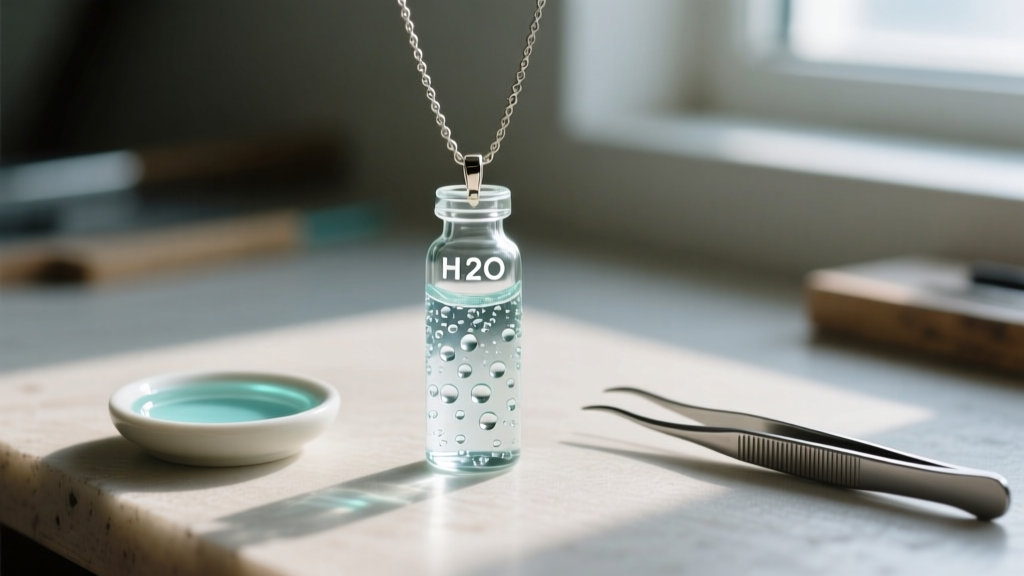
Whether it holds water from a meaningful ocean shore, a kinetic liquid center, or a simple decorative aqua-tint, an H2O necklace is a striking piece of jewelry. However, liquid-filled pendants present a unique set of engineering challenges that standard solid-metal jewelry does not. By 2026, the market has seen a massive influx of artisan and mass-produced water vial necklaces, but the failure rates regarding seal integrity and liquid clarity remain stubbornly high.
If your favorite liquid pendant has suddenly turned cloudy, started leaking onto your shirt, or developed mysterious green specks inside the glass, do not throw it away. As jewelry repair specialists, we see these exact issues daily. Below is your comprehensive, expert-level troubleshooting guide to diagnosing and repairing the most common H2O necklace failures.
Diagnosing Internal Condensation and Cloudiness
The most frequent complaint we receive is that the water inside the pendant has turned milky or developed tiny condensation droplets on the interior glass walls. This ruins the optical clarity of the piece and is usually caused by one of two factors: temperature differentials or adhesive outgassing.
The Science of Outgassing
Many manufacturers seal the glass vial's cap using cheap, two-part epoxies or UV resins that are not fully cured. Over time, these adhesives release volatile organic compounds (VOCs) into the sealed environment—a process known as outgassing. These microscopic chemical vapors bond with the water molecules, creating a permanent cloudy suspension.
- The DIY Fix: Carefully unscrew or pry off the bail cap. Empty the vial and rinse the interior with 99% isopropyl alcohol to strip the chemical film. Let it dry completely.
- The Pro Upgrade: Instead of refilling with water, fill the vial with optical-grade mineral oil. Mineral oil has a refractive index (RI) of roughly 1.46, which closely matches borosilicate glass (RI 1.47). This makes the glass walls nearly invisible, creating a stunning optical effect while completely eliminating the risk of water-based cloudiness or evaporation.
Temperature Shock and Micro-Condensation
If you wear your H2O necklace against your skin and then step into a cold, air-conditioned environment, the rapid temperature drop causes the moisture inside to condense on the glass. According to Jewelers of America, repeated thermal cycling can also weaken the adhesive seals over time. To prevent this, store your pendant in a temperature-stable environment when not in use, and consider adding a micro-drop of anti-fog surfactant to distilled water refills.
Troubleshooting Micro-Leaks and Evaporation
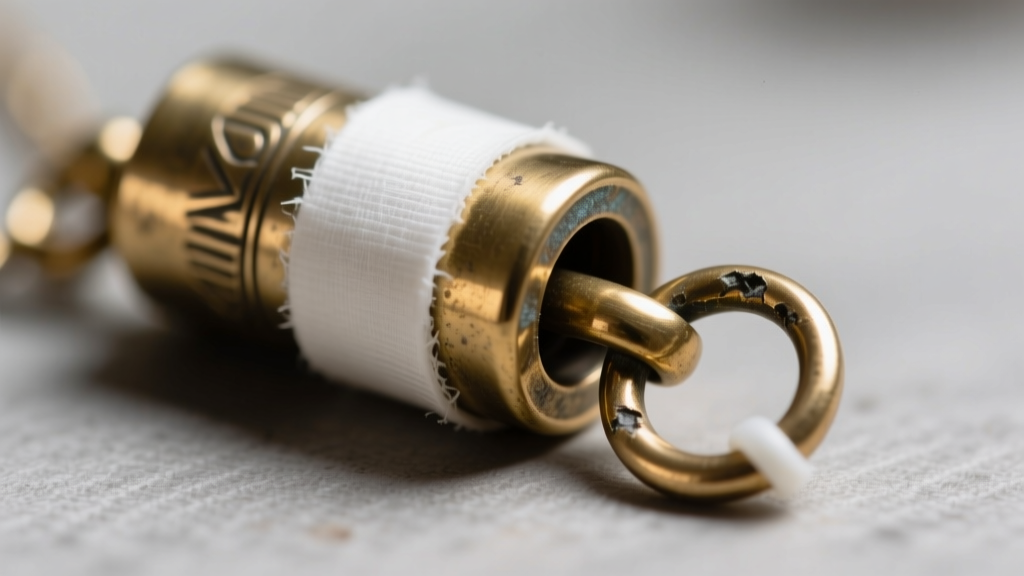
If the liquid level in your H2O necklace is dropping, or you notice water spotting on your clothing, you have a micro-leak. This is almost always a failure of the sealing mechanism at the neck of the vial.
Identifying the Seal Type
Most liquid pendants use one of three sealing methods: a cork stopper, a rubber O-ring, or a friction-fit metal cap. Corks dry out and shrink within 6 to 12 months. Standard rubber O-rings (often made of cheap Buna-N nitrile) suffer from compression set, meaning they lose their elasticity and fail to maintain a watertight barrier.
How to Execute a Permanent Leak Repair
- Remove the old seal: Use a dental pick or fine tweezers to extract the degraded O-ring or cork.
- Upgrade the material: Source a replacement O-ring made from Viton (FKM fluorocarbon). Viton is highly resistant to UV degradation, temperature extremes, and chemical breakdown, making it the gold standard for jewelry seals.
- Apply PTFE Tape: If your pendant uses a threaded screw-top cap, wrap the male threads with a single layer of white PTFE (Teflon) plumber's tape. This fills microscopic machining gaps in the metal.
- Final Seal: Apply a microscopic bead of jeweler's epoxy around the exterior seam where the cap meets the glass. Wipe away excess immediately with a cotton swab dipped in alcohol.
The Biological Threat: Algae and Bacterial Growth
Have you noticed tiny green or brown specks forming inside your water-filled pendant? You are witnessing biological growth. This happens when manufacturers or DIYers use tap water, spring water, or unsterilized ocean water. These liquids contain microscopic algae spores and bacteria that thrive when exposed to sunlight and ambient heat.
Expert Warning: Never use tap water in an H2O necklace. The dissolved minerals (calcium, magnesium) will leave hard, white scale deposits on the interior glass that are nearly impossible to scrub out without specialized ultrasonic tools.
The Sterilization Protocol: To fix a biological outbreak, you must empty the vial and soak it in a 10% bleach solution for 24 hours to kill the spores. Rinse thoroughly with sterile distilled water. If you are using real ocean water for sentimental reasons, you must first boil it, pass it through a 0.2-micron syringe filter, and expose it to a UV-C sterilization light for 30 minutes before sealing it inside the pendant.
Hardware Corrosion: When the Casing Fails
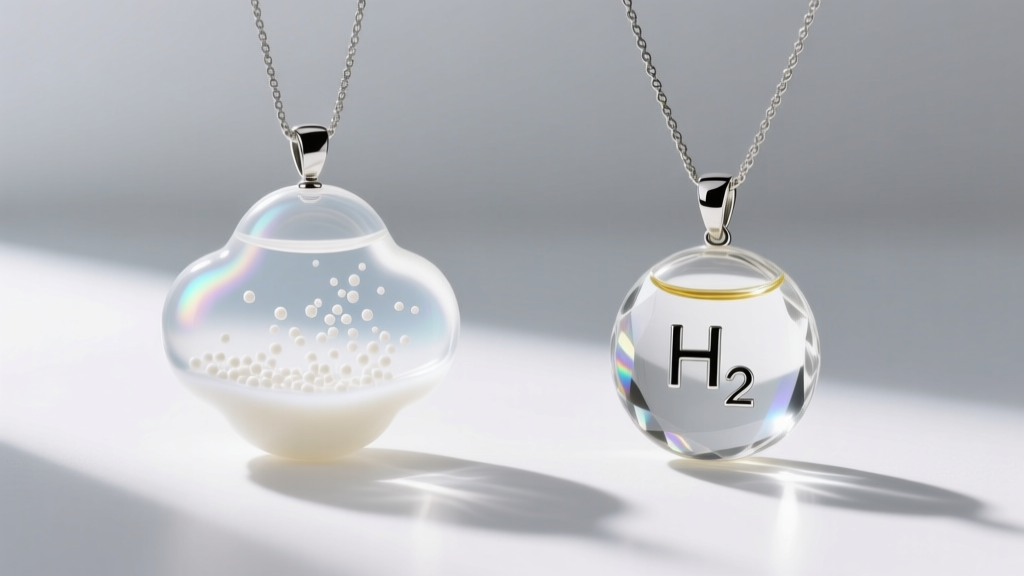
The liquid inside isn't the only thing that can fail; the hardware holding it is equally vulnerable. Because H2O necklaces are constantly exposed to moisture (both internally and from the wearer's sweat), base metals will rapidly corrode, leading to structural failure and skin irritation.
Understanding Galvanic Corrosion
Many budget H2O necklaces feature a brass or copper cap that has been lightly plated with silver or gold. Once the plating wears off from friction against your skin, the exposed brass reacts with moisture and oxygen, creating verdigris (green corrosion). This corrosion can actually eat into the glass neck of the vial, causing it to crack.
When sourcing or repairing an H2O necklace, always inspect the findings. According to metal standards outlined by Rio Grande Jewelry Supply, you should only trust the following metals for liquid-containing jewelry:
- 316L Surgical Stainless Steel: Contains molybdenum, which drastically increases resistance to chloride corrosion (sweat and saltwater).
- Solid 14k or 18k Gold: Highly inert and will not react with internal or external moisture.
- Niobium or Titanium: Excellent for hypoallergenic requirements and completely rust-proof.
Troubleshooting Matrix: Symptoms vs. Solutions
Use this quick-reference table to diagnose your specific H2O necklace issue and apply the correct repair methodology.
| Symptom | Root Cause | DIY Fix | Pro Upgrade |
|---|---|---|---|
| Internal Condensation | Thermal shock / Temperature shifts | Store at room temp; add anti-fog drop | Replace water with optical mineral oil |
| Milky Cloudiness | Adhesive outgassing / Mineral scale | Rinse with 99% isopropyl alcohol | Re-seal with UV-curing optical resin |
| Evaporation / Leaks | Compression set on rubber O-ring | Wrap cap threads in PTFE tape | Install Viton (FKM) fluorocarbon O-ring |
| Green / Brown Specks | Algae spores from unsterilized water | Bleach soak; refill with boiled distilled | UV-C sterilize; use 0.2-micron filtration |
| Green Skin / Cracked Glass | Brass hardware galvanic corrosion | Coat exterior hardware in clear nail polish | Machine a new cap from 316L stainless steel |
Preventative Maintenance for 2026 and Beyond
The key to maintaining an H2O necklace is proactive care rather than reactive repair. Avoid wearing liquid-filled pendants in saunas, hot tubs, or during intense workouts, as extreme heat expands the trapped air inside the vial, putting immense hydrostatic pressure on the seals. When cleaning the exterior glass, avoid harsh chemical jewelry dips; instead, use a microfiber cloth and a gentle, ammonia-free glass cleaner. By understanding the material science behind your jewelry, you can ensure your H2O necklace remains a crystal-clear, leak-free keepsake for decades to come.


