Hagstone Necklace Guide: Folklore, Sourcing, and Styling
Discover the magic of the hagstone necklace. Learn how to identify genuine water-pierced stones, choose the right cord, and style this ancient amulet.

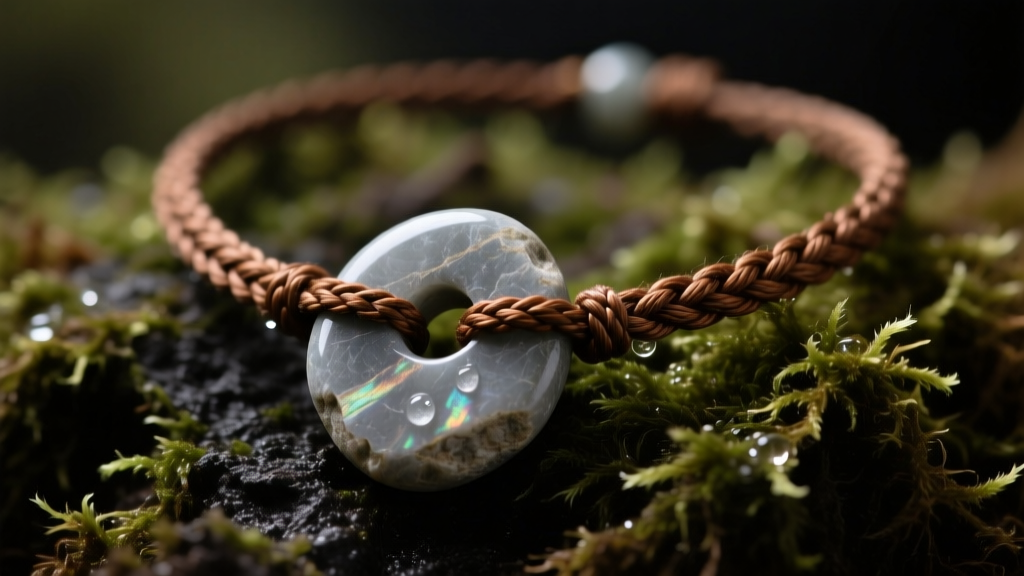
A hagstone necklace is more than just a piece of earthy, bohemian jewelry; it is a wearable artifact of geological patience and ancient folklore. Characterized by a naturally occurring hole pierced through the center by moving water, these stones have been revered for centuries as protective amulets. For beginners looking to embrace organic, nature-inspired jewelry, the hagstone offers a deeply personal and historically rich alternative to mass-produced pendants.
This comprehensive guide will walk you through the geology and folklore of hagstones, teach you how to spot a genuine water-worn specimen versus a machine-drilled fake, and provide expert advice on stringing, knotting, and styling your necklace for everyday wear.
The Geology and Folklore of the Hagstone
Known regionally as adder stones, witch stones, or holey stones, hagstones are typically formed from flint, chert, or sandstone. The hole is not created by human hands, but by the relentless friction of sand, pebbles, and water currents over hundreds or thousands of years. According to the GIA Gem Encyclopedia, flint and chert possess a Mohs hardness of 6.5 to 7, meaning it takes immense, sustained hydrological force to erode a cavity through such dense, cryptocrystalline quartz.
In Celtic and British folklore, these stones were highly prized. As documented by historians at Folklore Thursday, hagstones were believed to offer protection against the "evil eye," malevolent spirits, and nightmares. Looking through the natural aperture was said to grant the viewer the ability to see through fae illusions or spot hidden witches. Today, while we may not be warding off spirits, wearing a hagstone necklace remains a powerful way to stay grounded and connected to the natural world.
Natural vs. Drilled: How to Spot a Genuine Hagstone
Because genuine hagstones are relatively rare, the market is unfortunately flooded with machine-drilled imitations. Learning to distinguish between the two is the most critical skill for any beginner collector. Natural water erosion leaves distinct geological signatures that rotary drill bits cannot replicate.
| Feature | Genuine Natural Hagstone | Machine-Drilled Imitation |
|---|---|---|
| Hole Shape | Asymmetrical, undulating, often hourglass-shaped | Perfectly cylindrical and uniform |
| Inner Walls | Smooth, polished, with random natural pitting | Parallel striations (scratch marks) from drill bits |
| Entry/Exit Edges | Beveled, rounded, or featuring a "lip" where water exited | Sharp, crisp 90-degree angles; occasional chipping |
| Stone Placement | Hole is often off-center, following the stone's weakest vein | Hole is usually dead-center for symmetrical jewelry making |
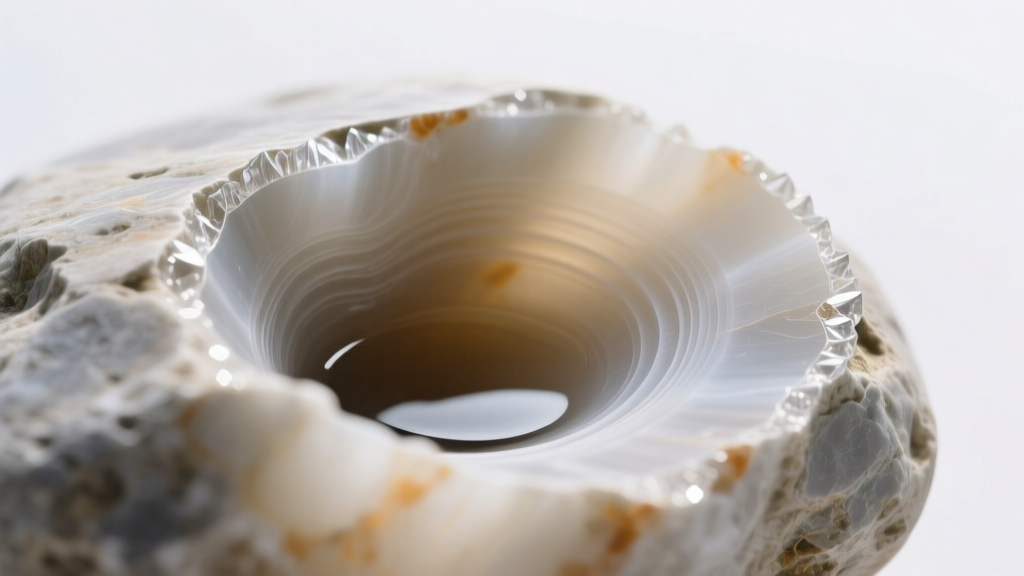
Pro Tip: Run a piece of un-waxed dental floss or a thin cotton thread through the hole. If it catches on uniform, spiral grooves inside the cavity, the stone was likely drilled with a rotary tool. Genuine water-worn holes will feel entirely smooth and glass-like to the touch.
Choosing the Right Cord and Hardware
A hagstone’s rustic, organic aesthetic is easily ruined by pairing it with a shiny, mass-produced metal chain. To honor the stone’s natural origins, opt for flexible, earthy cordage. Because hagstones can be surprisingly dense (a 2-inch flint stone can easily weigh 40-60 grams), your cord must have high tensile strength.
Top Cord Materials for Hagstones
- Waxed Cotton or Irish Linen (1.0mm - 1.5mm): The gold standard for hagstones. The wax coating provides water resistance and prevents the fibers from fraying against the stone's inner walls. A 1.5mm thickness offers excellent structural support for heavier flint pieces.
- Braided Leather (1.5mm - 2.0mm): Offers a rugged, masculine aesthetic. However, leather degrades when exposed to sweat and water, so it is best for occasional wear rather than daily use.
- Hemp Cord (1.0mm): Highly eco-friendly and historically accurate to the stone's folklore roots. Hemp is incredibly strong but can feel abrasive against the neck until it is broken in.
- Griffin Silk Beading Cord (Size 18 / 1.2mm): Best reserved for lighter sandstone or jasper hagstones. Silk offers a refined, elegant drape but lacks the abrasion resistance needed for heavy, sharp-edged flint.
Assembly: The Adjustable Sliding Knot
Using metal clasps on a hagstone necklace disrupts its organic flow. Instead, jewelry makers rely on the adjustable sliding square knot (a macrame technique). This allows the heavy stone to sit at varying lengths—from a 16-inch choker length to a 24-inch torso length—without requiring hardware.
- Measure and Cut: Cut approximately 40 inches of 1.5mm waxed cotton cord.
- Thread the Stone: Pass both ends of the cord through the hagstone’s hole so the stone rests in the middle.
- Create the Loop: Bring the two ends together behind the stone, overlapping them by about 4 inches to form the back of the necklace loop.
- Tie the Sliding Knot: Take a separate 10-inch piece of matching cord. Wrap it tightly around the overlapping base cords 5 to 6 times, feeding the end back through the loop to lock it. Pull tight.
- Finish the Ends: Tie small overhand knots at the very ends of the base cords so the sliding knot cannot slip off entirely.
Styling Your Hagstone Necklace
Because hagstones are inherently earthy and textural, they require thoughtful styling to integrate into a modern wardrobe. The key is to treat the stone as a grounding statement piece rather than a delicate accessory.
Neckline Pairings
- The Crew Neck / Boat Neck: A shorter, 16-to-18-inch hagstone necklace worn over a solid-colored linen crew neck creates a striking focal point. The smooth curve of the neckline frames the irregular shape of the stone perfectly.
- The Deep V-Neck: For a longer, 22-to-24-inch drop, allow the hagstone to rest in the negative space of a V-neck sweater or wrap dress. This elongates the torso and draws the eye downward.
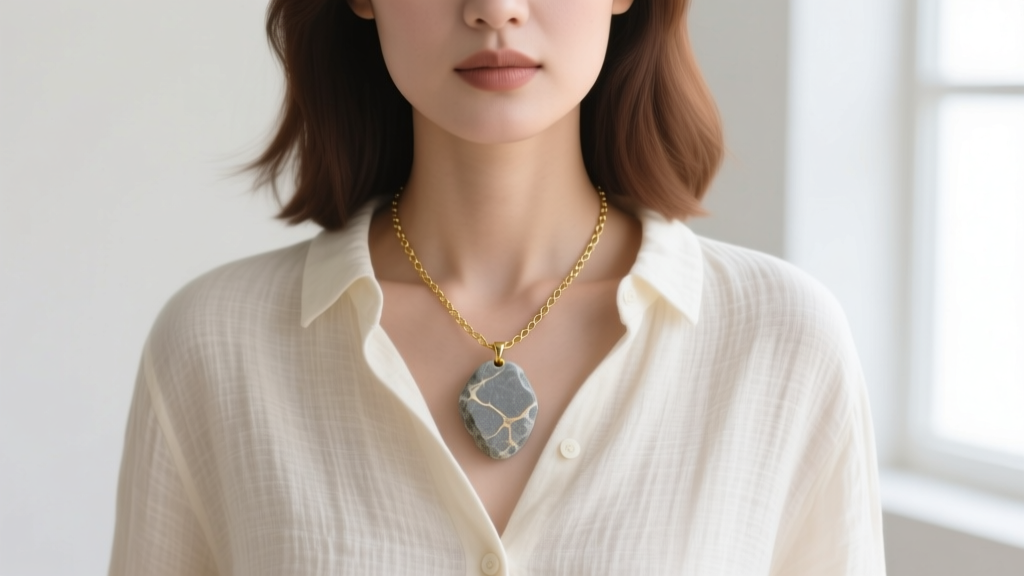
- Layering with Metals: While the hagstone should be on a cord, you can layer it with a delicate 14k or 18k gold paperclip chain (18 inches). The contrast between the raw, matte stone and the refined, polished gold creates a highly curated, modern-boho aesthetic.
Cleansing and Energetic Care
"Stones born of water and earth carry the memory of the landscape. To wear a hagstone is to wear a fragment of the river's enduring patience."
From a metaphysical standpoint, hagstones are considered powerful grounding tools. Because they are naturally porous (especially sandstone varieties), they can absorb oils, dirt, and environmental energy. Cleanse your stone physically by gently scrubbing it with a soft-bristled brush and mild castile soap. Avoid ultrasonic cleaners or harsh chemicals, which can strip the natural patina of the stone and degrade your waxed cord. Energetically, many practitioners recommend leaving the necklace on a windowsill during a full moon or burying it in dry soil overnight to reset its grounding properties.
Final Thoughts for Beginners
Building a hagstone necklace is an exercise in appreciating imperfection. No two stones are alike, and the very flaws that define them are what make them beautiful. By learning to identify genuine water-worn specimens, selecting the appropriate heavy-duty cordage, and mastering the sliding knot, you can create a deeply meaningful, durable piece of jewelry that connects you to both ancient folklore and the enduring power of the natural world.


