Hamsa Hand With Evil Eye Necklace: Budget & Value Buying Guide
Discover how to assess the true value of a hamsa hand with evil eye necklace. Compare materials, pricing tiers, and avoid overpaying.

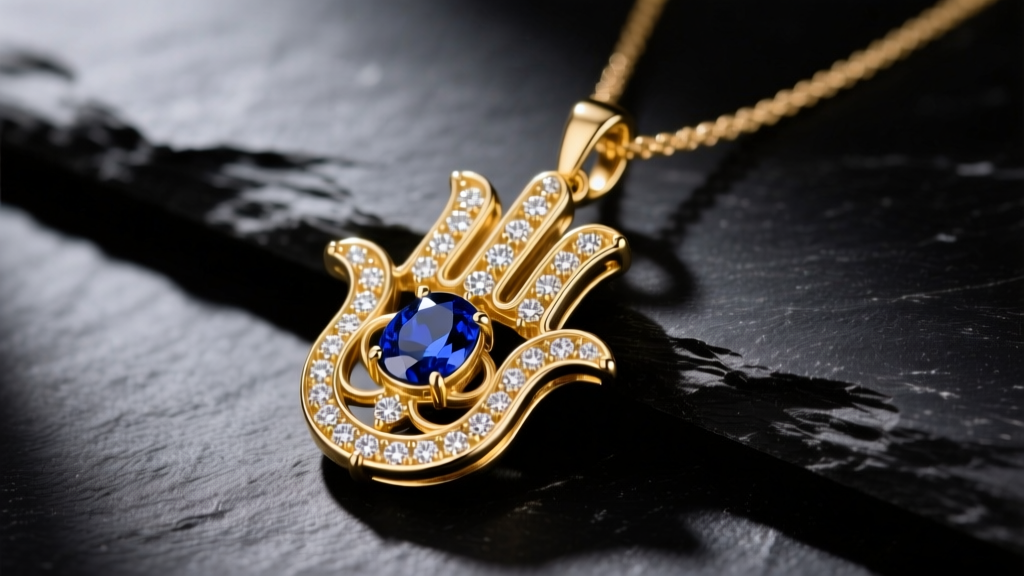
The dual-amulet design of a hamsa hand with evil eye necklace is one of the most culturally rich and visually striking motifs in modern jewelry. Combining the Middle Eastern symbol of protection (the Hamsa) with the ancient Mediterranean talisman against the evil eye, this pendant is a global bestseller. However, its massive popularity has created a highly saturated market. Today, you can find this exact design listed for $12 on fast-fashion sites and $4,500 in high-end boutiques.
How do you determine the actual value? As a jewelry buyer, you must look past the symbolic premium and evaluate the metallurgical reality, the craftsmanship of the eye centerpiece, and the structural integrity of the chain. This guide breaks down the budget and value assessment of hamsa and evil eye necklaces, giving you the exact frameworks needed to avoid overpaying for disguised costume jewelry.
The Symbolic Premium: Why Prices Vary So Wildly
When shopping for amulet jewelry, buyers often pay a "symbolic tax." Brands know that consumers purchase these pieces for their spiritual and protective significance, which can sometimes cloud objective value assessment. A mass-produced brass pendant coated in 0.1 microns of gold can be marketed with the same mystical storytelling as a solid 14k gold piece crafted by a third-generation artisan in Istanbul's Grand Bazaar.
To strip away the marketing fluff, you must evaluate a hamsa hand with evil eye necklace across three strict pillars: metal purity and weight, centerpiece material, and hardware longevity. Let us break down exactly what you are paying for at every price tier.
Material Breakdown: What You Are Actually Paying For
The base metal of the hamsa hand dictates 70% of the necklace's intrinsic value and lifespan. The market is generally divided into three tiers, each with specific failure modes and pricing benchmarks.
Base Metals and Plated Alloys (The $15 - $40 Tier)
At the lowest end, pendants are cast from zinc alloy, brass, or stainless steel, then flash-plated with a microscopic layer of gold or silver. Failure mode: The plating will wear off within 3 to 6 months of daily wear, exposing the base metal which can cause skin discoloration or allergic reactions (especially if nickel is present). These hold zero resale or intrinsic value.
Demi-Fine: Sterling Silver and Vermeil (The $60 - $250 Tier)
This is the sweet spot for most buyers. Look for a solid 925 sterling silver base. If you prefer gold, the Federal Trade Commission Jewelry Guides strictly define "gold vermeil" as a sterling silver base plated with at least 2.5 microns of 10k, 14k, or 18k gold. Many brands deceptively sell "gold-plated" jewelry (which can be as thin as 0.1 microns over brass) at vermeil prices. Always demand the micron thickness and base metal stamp.
Fine Jewelry: Solid Gold (The $450 - $2,000+ Tier)
For a piece you intend to wear daily and eventually pass down, solid 14k or 18k gold is mandatory. On the Vickers hardness scale, 14k gold (~140 HV) is notably more resistant to scratching and bending than 18k gold (~125 HV). Because hamsa pendants often feature protruding fingers that can snag on clothing, 14k gold offers superior structural durability for this specific shape.
| Material Tier | Metal Base | Expected Price Range | Lifespan & Value Retention |
|---|---|---|---|
| Costume | Brass/Zinc Alloy | $15 - $40 | 3-6 months; zero intrinsic value |
| Demi-Fine (Silver) | 925 Sterling Silver | $60 - $120 | Decades (requires anti-tarnish care) |
| Demi-Fine (Vermeil) | 925 Silver + 2.5µm Gold | $90 - $250 | 2-5 years before replating needed |
| Fine Jewelry | Solid 14k / 18k Gold | $450 - $2,000+ | Lifetime; retains melt & scrap value |

The Evil Eye Centerpiece: Glass vs. Enamel vs. Gemstone
The "eye" nestled in the palm of the hamsa hand is the focal point of the design, and its material composition drastically alters the price and aesthetic longevity. Do not assume all blue centers are created equal.
- Epoxy Resin (Avoid): Often found in sub-$50 necklaces. Resin is poured into a mold and cured. It lacks depth, looks plasticky, and will inevitably yellow when exposed to UV light and skin oils over 12-18 months.
- Cold Enamel (Proceed with Caution): This is essentially colored epoxy painted into the metal recesses. While it offers vibrant colors, it is highly prone to chipping if the pendant is dropped on a hard surface.
- Vitreous Enamel (High Value): True enamel is powdered glass fused to the metal at temperatures exceeding 1400°F. It is incredibly durable, scratch-resistant, and possesses a luminous, glassy depth that cold enamel cannot replicate. This is a hallmark of high-end craftsmanship.
- Lampwork Glass (Traditional): Hand-formed glass beads, often sourced from specialized artisans in Turkey or Italy. According to historical jewelry archives documented by the GIA Gem Encyclopedia, traditional glass amulets carry cultural authenticity and unique swirl patterns that mass-produced items lack.
- Precious Gemstones (Premium): In luxury tiers, the evil eye is constructed using a cabochon of Lapis Lazuli, Turquoise, or a Sapphire surrounded by micro-pavé diamonds. This pushes the price well past the $1,500 mark.
Chain Quality: The Hidden Cost Multiplier
A common retail trick is to pair a high-quality solid gold hamsa pendant with a cheap, hollow, or flash-plated chain to keep the overall bundle price attractive. The chain is the weakest link in any necklace.
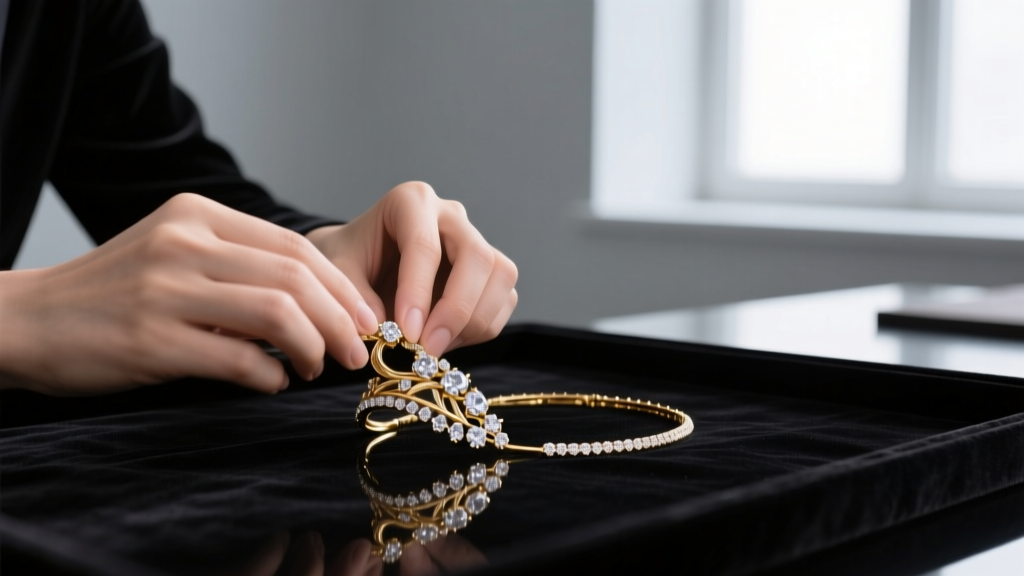
When assessing value, inspect the chain's construction and hardware:
- Jump Ring Integrity: The jump ring connecting the hamsa to the chain must be soldered closed or made of a thick enough gauge (at least 18-gauge) to prevent the pendant from slipping off. Thin, unsoldered jump rings will pull apart under the weight of a solid metal amulet.
- Clasp Stamping: A high-quality lobster clasp should bear a hallmark (e.g., "925" or "14k"). If the clasp is unstamped while the pendant is stamped, you are likely dealing with a mismatched, lower-quality chain.
- Chain Style: Delicate cable or box chains (1.0mm to 1.5mm) are standard. Avoid "hollow" rope chains, which are prone to crushing and are nearly impossible for jewelers to repair if they snap.
Red Flags: How to Spot Overpriced Costume Jewelry
Even armed with material knowledge, certain marketing tactics can trick buyers into overpaying. Watch out for these specific red flags when evaluating a hamsa hand with evil eye necklace:
The "Turkish Silver" Trap: Some vendors market "Turkish Silver" (often called Ayar Silver) as a premium exotic metal. In reality, this is frequently an alloy containing as little as 40% silver, mixed with zinc, copper, and sometimes cadmium. It is significantly cheaper than standard 925 sterling silver and can cause severe skin reactions. Always demand standard 925 hallmarks verified by a recognized Assay Office or equivalent authority.
Another major red flag is the "glued-in" eye. In fine and demi-fine jewelry, the glass or gemstone eye should be bezel-set or prong-set into the metal palm. If you can see a visible line of adhesive around the edge of the eye, or if the eye rattles slightly, you are looking at mass-produced costume jewelry, regardless of the price tag.
Final Verdict: Maximizing Your Budget
To get the absolute best value when purchasing a hamsa hand with evil eye necklace, target the demi-fine tier ($90 - $200). Seek out a 925 sterling silver base with a minimum 2.5-micron gold vermeil finish (or solid rhodium-plated silver). Ensure the evil eye is made of kiln-fired vitreous enamel or genuine lampwork glass, and verify that the chain features a stamped clasp and a soldered jump ring. By focusing on these tangible, metallurgical facts rather than the spiritual marketing, you secure a beautiful, durable talisman that respects both your budget and your intelligence.


