Hamsa Hand of Fatima Necklace Buying Guide: What to Look For
Discover what to look for when buying a hamsa hand of fatima necklace. Learn about metal grades, gemstone inlays, chain pairings, and meaning.

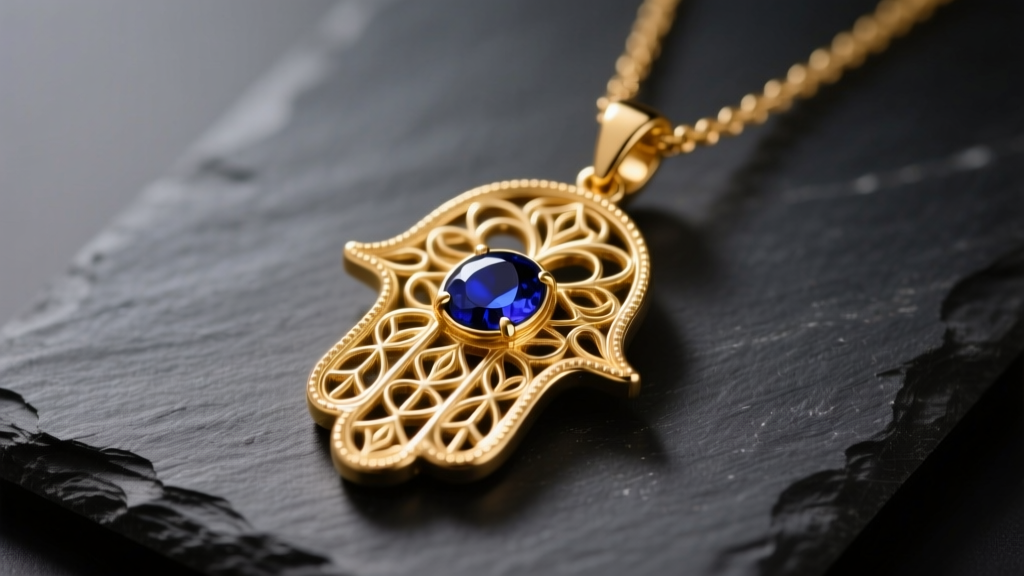
The Enduring Appeal of the Hamsa Hand of Fatima
The Hamsa, universally recognized as the Hand of Fatima in Islamic tradition and the Hand of Miriam in Jewish culture, transcends mere aesthetic appeal. As a protective amulet and a symbol of blessings, it has become a staple in fine jewelry collections worldwide. However, the surge in popularity has flooded the market with everything from exquisite, heirloom-quality pieces to mass-produced, poorly crafted trinkets. When shopping for a hamsa hand of fatima necklace, understanding the nuances of metal purity, gemstone durability, and structural integrity is essential. This comprehensive buying guide will equip you with the technical knowledge needed to evaluate craftsmanship, ensuring your investment is both spiritually meaningful and built to last a lifetime.
Decoding the Symbolism: Orientation and Design Elements
Before evaluating the metallurgy, it is crucial to understand the design semantics of the Hamsa. The orientation of the hand dictates its specific energetic purpose. An upward-facing Hamsa is traditionally worn as a shield against the evil eye, jealousy, and negative energy. Conversely, a downward-facing Hamsa is an invitation for abundance, fertility, and grace to flow into the wearer's life.
Beyond orientation, pay close attention to the symmetry of the fingers. Traditional Middle Eastern and North African artisans craft the Hamsa with perfect bilateral symmetry, meaning the thumb and pinky finger are identical in size and shape. Many modern, Westernized interpretations use a realistic anatomical hand profile. While neither is inherently wrong, traditional symmetrical designs often indicate a closer adherence to historical artisan techniques and are generally favored by collectors of authentic cultural jewelry.
Metal Purity and Material Grades: What to Actually Buy
The longevity of your hamsa hand of fatima necklace depends entirely on the base metal. According to the World Gold Council, understanding karatage is the first step in assessing value and durability.
Solid Gold: 14k vs. 18k
For everyday wear, 14k gold (58.5% pure gold) is the optimal choice. The higher alloy content (usually a mix of silver, copper, and zinc) provides superior tensile strength, preventing the delicate fingers of the Hamsa from bending or snapping. 18k gold (75% pure) offers a richer, warmer hue but is significantly softer. If you choose 18k, ensure the pendant has a slightly thicker profile to compensate for the metal's malleability.
Sterling Silver and the Rhodium Factor
If opting for sterling silver, verify the "925" stamp. However, raw 925 silver tarnishes rapidly when exposed to sulfur and humidity. High-quality manufacturers plate their silver Hamsa pendants with rhodium—a precious metal in the platinum family. Rhodium plating should be at least 0.75 microns thick to provide a lasting, tarnish-resistant barrier that mimics the brilliant white sheen of platinum.
The Vermeil Distinction
Beware of the term "gold plated." Standard gold plating can be applied to any base metal (like brass or copper) and is often less than 0.5 microns thick, wearing off in months. The Federal Trade Commission (FTC) Jewelry Guides strictly define "Gold Vermeil" as a sterling silver base coated with a minimum of 2.5 microns of at least 10k gold. Always look for the vermeil designation if you want the look of gold with the intrinsic value and hypoallergenic properties of silver.
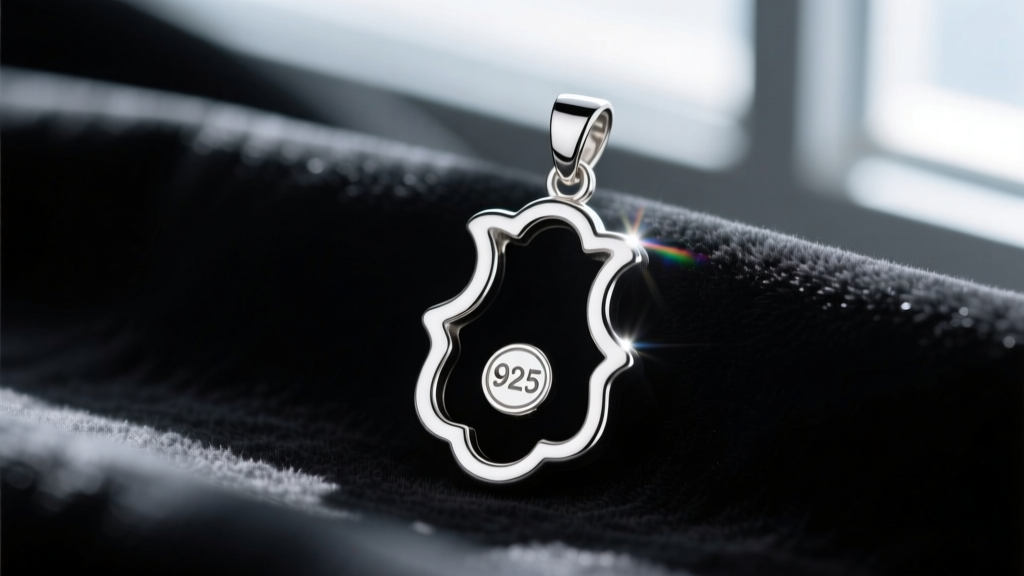
Gemstone Inlays and the Evil Eye Centerpiece
Many Hamsa designs incorporate an "Evil Eye" (Nazar) or a central gemstone in the palm. The Gemological Institute of America (GIA) emphasizes that the hardness of this center stone, measured on the Mohs scale, dictates the pendant's lifespan.
| Center Material | Mohs Hardness | Durability Rating | Setting Recommendation |
|---|---|---|---|
| Blue Sapphire | 9.0 | Exceptional | Prong or Bezel |
| Chalcedony / Agate | 6.5 - 7.0 | Very Good | Bezel Preferred |
| Turquoise | 5.0 - 6.0 | Fair (Porous) | Bezel (Sealed) |
| Enamel / Glass | 5.0 - 5.5 | Fair (Brittle) | Flush / Channel |
| Cubic Zirconia | 8.0 - 8.5 | Good (Prone to Chipping) | Micro-Pave Bezel |
When examining the central stone, inspect the setting. A bezel setting—where a thin rim of metal completely encircles the stone's girdle—is vastly superior to prong settings for Hamsa pendants. Because the pendant rests against the chest and is subject to friction and accidental impacts, prongs can easily snag on knitwear and lift, causing the center stone to dislodge. Furthermore, if the Hamsa features micro-pavé diamonds along the fingers, use a jeweler's loupe to ensure the beads holding the diamonds are smooth and uniform, not rough or flattened.
Sizing, Proportion, and Chain Pairing Mechanics
A common mistake buyers make is ignoring the physical dimensions and weight of the pendant in relation to the chain. Hamsa pendants generally fall into two categories: delicate layering pieces (12mm to 18mm) and statement pieces (25mm to 40mm).
Matching the Bail to the Chain
The bail—the loop that connects the pendant to the chain—is a critical failure point. For statement Hamsas weighing over 4 grams, avoid hidden bails (which are often soldered weakly to the back) or thin wire loop bails. Instead, look for a robust, integrated bail or a heavy-duty soldered jump ring with an internal diameter of at least 3mm.
Chain Gauge and Clasp Selection
The chain must support the pendant's weight without overpowering it. A 14k gold Hamsa weighing 3.5 grams pairs perfectly with a 1.0mm to 1.2mm box chain or a 1.2mm rope chain. These weaves offer high tensile strength and resist kinking. Avoid delicate 0.5mm cable chains for anything heavier than 2 grams, as the continuous friction of the bail will eventually saw through the chain links. Finally, insist on a lobster claw clasp rather than a spring ring clasp; lobster clasps feature a stronger internal spring mechanism and are far less likely to pop open accidentally.

Red Flags: Identifying Poor Craftsmanship
When evaluating a hamsa hand of fatima necklace, either in person or via high-resolution macro photography online, look out for these specific manufacturing flaws:
- Hollow-Back Construction: While hollowing out the back of a large pendant saves gold weight and reduces cost, it makes the piece highly susceptible to denting. If you press firmly on the palm and it yields, the metal is too thin for daily wear.
- Glued Gemstones: Some mass-produced pendants use industrial epoxy to secure the center evil eye stone rather than a metal bezel. Over time, exposure to body heat, perfumes, and ultrasonic cleaners will dissolve the adhesive, resulting in a lost stone.
- Poor Enamel Filling: If the Hamsa features colored enamel detailing, check the borders. High-quality vitreous or cold enamel should be perfectly flush with the metal walls. If the enamel is domed above the metal walls or contains visible air bubbles, it will chip rapidly against clothing.
- Asymmetrical Finger Casting: In symmetrical designs, uneven finger lengths or poorly filed seams between the fingers indicate a low-quality rubber mold was used in the casting process.
Final Thoughts on Your Investment
A hamsa hand of fatima necklace is more than an accessory; it is a talisman carrying centuries of cultural heritage. By prioritizing solid 14k gold or heavily rhodium-plated sterling silver, demanding bezel-set center stones, and carefully matching the pendant weight to a structurally sound chain, you ensure your piece remains a flawless, protective companion for decades. Always request a detailed specification sheet from the jeweler, and never hesitate to ask about the micron thickness of plating or the origin of the center gemstone before finalizing your purchase.


