How to Clean and Maintain Your Gold Hawaii Necklace
Learn expert techniques to clean, protect, and store your gold and enamel Hawaii necklace without damaging the delicate inlay or scrollwork.

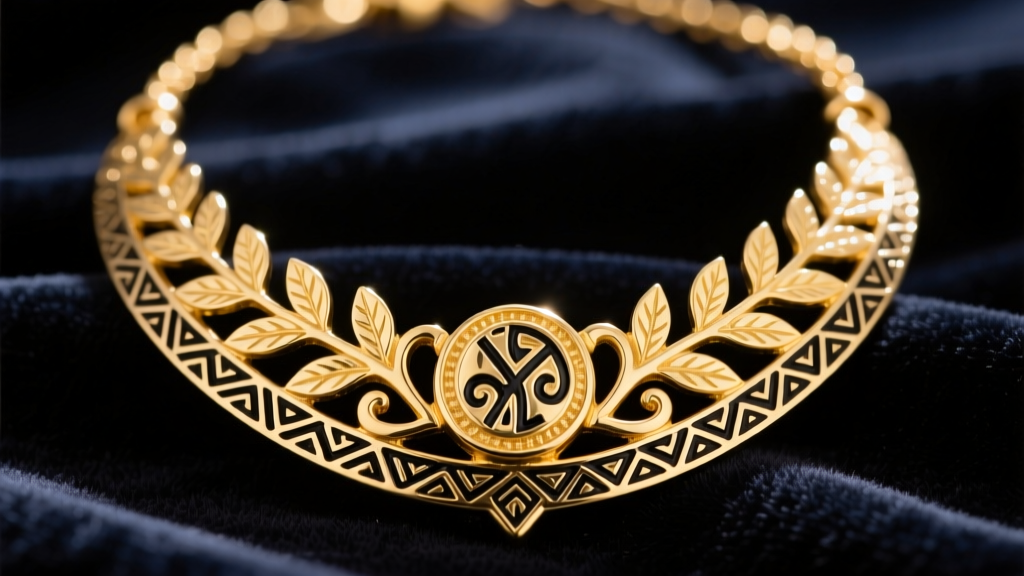
A traditional Hawaii necklace is more than just a piece of jewelry; it is a wearable heirloom that carries deep cultural significance, familial history, and exquisite craftsmanship. Characterized by intricate hand-engraved scrollwork—often featuring the Maile leaf or Plumeria flower—and striking black enamel inlay, these necklaces require a highly specialized approach to maintenance. Unlike standard gold chains, the delicate vitreous or cold enamel fillings and the deep crevices of the engraving make cleaning a Hawaii necklace a meticulous process.
Whether you have inherited a vintage 14k yellow gold name necklace or purchased a modern 18k gold island-inspired pendant, improper cleaning can lead to catastrophic damage, including shattered enamel, dulled gold, and weakened clasps. In this comprehensive guide, we break down the exact materials used in Hawaiian heirloom jewelry and provide a professional, step-by-step maintenance protocol to ensure your piece remains pristine for generations.
Understanding the Anatomy of a Hawaii Necklace
Before applying any cleaning solution, it is critical to understand what your jewelry is actually made of. According to the Federal Trade Commission (FTC) guidelines on precious metals, Hawaiian heirloom jewelry is predominantly crafted in 14k or 18k yellow gold. This means the gold is alloyed with metals like copper, silver, and zinc to provide the durability needed for deep hand-engraving.
The Enamel Factor
The signature black lettering and motif fills are achieved using enamel. Vintage pieces (pre-1980s) typically utilize vitreous enamel, which is essentially powdered glass fired at high temperatures to fuse with the gold. Modern iterations may use cold enamel (a two-part epoxy resin). Vitreous enamel is highly durable but extremely brittle; it can chip or crack under thermal shock or high-frequency vibrations. Cold enamel is more flexible but susceptible to chemical degradation from harsh solvents and alcohols.
The Step-by-Step Cleaning Protocol
To safely remove sebum, dead skin cells, and environmental dust from the deep scrollwork of your Hawaii necklace, you must use a gentle, non-abrasive approach. The Gemological Institute of America (GIA) consistently recommends mild surfactants for cleaning complex gold jewelry.
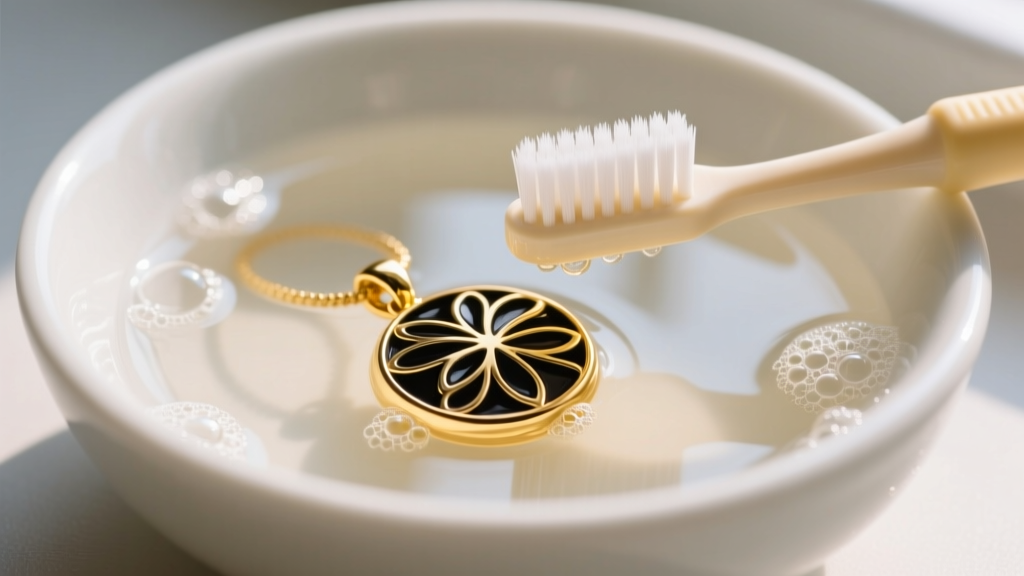
Step 1: Prepare the Solution
Mix three drops of a mild, phosphate-free dish soap (such as original Dawn) into one cup of distilled water. Avoid tap water, as the dissolved minerals and chlorine can leave microscopic hard water spots on the high-polish gold surfaces.
Step 2: The Soak
Submerge the necklace in the lukewarm solution for exactly 5 to 10 minutes. This allows the surfactant to break down the oils trapped in the engraved Maile leaf patterns. Never use hot water, as extreme temperature shifts can cause thermal shock, leading to micro-fractures in vitreous enamel.
Step 3: Agitation
Using an extra-soft baby toothbrush (with a bristle hardness rating of under 0.15mm), gently brush the engraved areas. Always brush in the direction of the scrollwork, never in aggressive circular motions, to prevent lifting the edges of the enamel inlay.
Step 4: Rinsing and Drying
Rinse the necklace under a gentle stream of lukewarm distilled water. Pat dry immediately with a lint-free microfiber cloth. Do not air dry, as water pooling in the deep engravings can leave residual spots.
The Danger Zone: What Destroys Hawaiian Enamel
Many well-intentioned owners ruin their Hawaii necklace by applying generic jewelry cleaning hacks. The table below outlines the specific hazards associated with common cleaning methods.
| Cleaning Method | Verdict | Scientific Reason for Damage |
|---|---|---|
| Ultrasonic Cleaners | NEVER USE | High-frequency sound waves create cavitation bubbles. When these collapse against brittle enamel, the resulting micro-jets shatter the glass-like inlay. |
| Steam Cleaners | NEVER USE | The sudden blast of 212°F (100°C) steam causes rapid thermal expansion, popping the enamel right out of the gold channels. |
| Baking Soda Paste | AVOID | Baking soda has a Mohs hardness of 2.5. While softer than gold, it will create microscopic scratches that dull the mirror finish over time. |
| Toothpaste | AVOID | Contains hydrated silica abrasives designed to strip plaque, which will aggressively scour the gold and cloud the black enamel. |
| Mild Dish Soap & Distilled Water | SAFE | Neutral pH surfactants lift oils without chemically reacting with the gold alloys or the enamel binders. |
Caring for Organic Island Accents: Koa Wood and Shell
Not every Hawaii necklace is made entirely of metal. Contemporary and surf-style designs frequently incorporate organic Hawaiian materials like Koa wood beads, Puka shells, or Black Coral. These materials are highly porous and require an entirely different maintenance regimen.
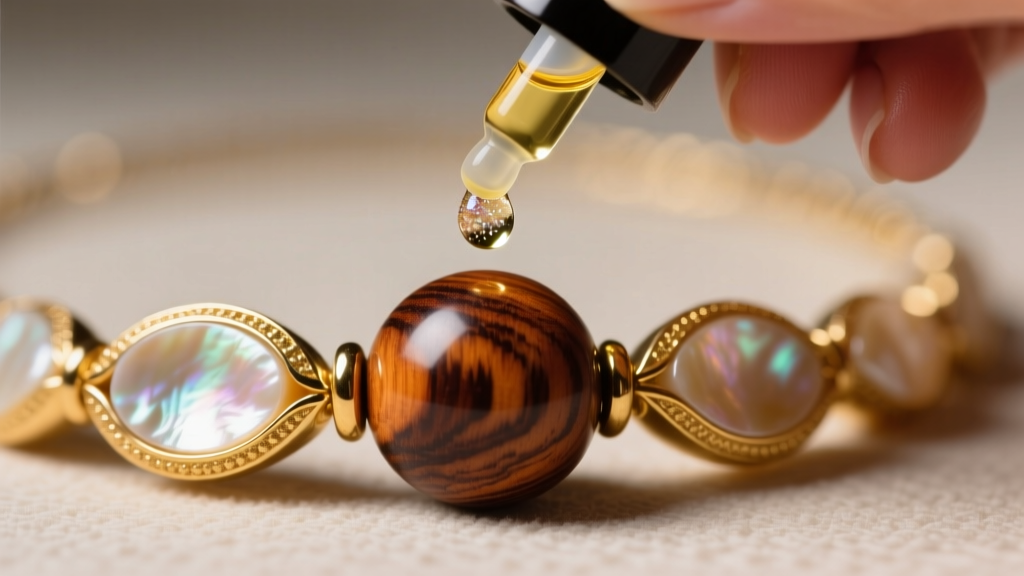
Maintaining Koa Wood
Koa wood is prized for its rich, chatoyant grain. However, it dries out and cracks when exposed to low humidity or prolonged UV exposure. Once every six months, apply a single drop of food-grade mineral oil to a soft cloth and buff the wood beads. Never submerge Koa wood in water, as the wood fibers will swell and subsequently warp upon drying.
Shell and Coral Precautions
Puka shells and precious corals are composed of calcium carbonate. This makes them highly reactive to acids. Even the natural acidity of human sweat can slowly etch the surface of a shell pendant over years of continuous wear. Wipe these organic elements with a damp, neutral-pH cloth after wearing them in humid or sweaty conditions.
Environmental Hazards: Sunscreen, Salt, and Chlorine
Wearing a Hawaii necklace in its namesake environment presents unique chemical hazards. Understanding these interactions is key to preventing irreversible damage.
- Chemical Sunscreens: Active ingredients like avobenzone and octocrylene can degrade cold enamel resins over time, causing the black lettering to turn a hazy gray. Apply your sunscreen and allow it to fully absorb for 20 minutes before putting on your necklace.
- Salt Water: While pure gold is impervious to salt, the copper and zinc alloys in 14k gold can oxidize when exposed to dried sea salt, leading to a dull, reddish film on the surface.
- Chlorine (Pools and Hot Tubs): Chlorine is the ultimate enemy of karat gold. It attacks the alloyed metals, causing a phenomenon known as stress corrosion cracking. This can cause the delicate prongs holding your clasp or the thin jump rings to snap without warning.
Expert Tip: Always adhere to the "Last On, First Off" rule. Your Hawaii necklace should be the last thing you put on after applying cosmetics, perfumes, and hairsprays, and the first thing you take off when returning home.
Proper Storage for Longevity
How you store your necklace when it is not being worn is just as important as how you clean it. The deep engravings of a Hawaii necklace can easily become tangled with other chains, leading to severe scratching.
Store the necklace individually in a soft, flannel-lined jewelry box or a zip-seal anti-tarnish bag. For maximum protection, include a 3M anti-tarnish strip in the storage bag. These strips absorb airborne sulfur compounds and hydrogen sulfide, which are the primary culprits behind the tarnishing of the copper alloys present in 14k yellow gold. By following these meticulous care protocols, your Hawaii necklace will retain its striking contrast and cultural beauty for a lifetime.


