How to Choose and Layer a Circle Pendant Necklace Diamond
Learn how to choose, grade, and layer a circle pendant necklace diamond. Step-by-step styling tips, carat guides, and chain pairing advice.

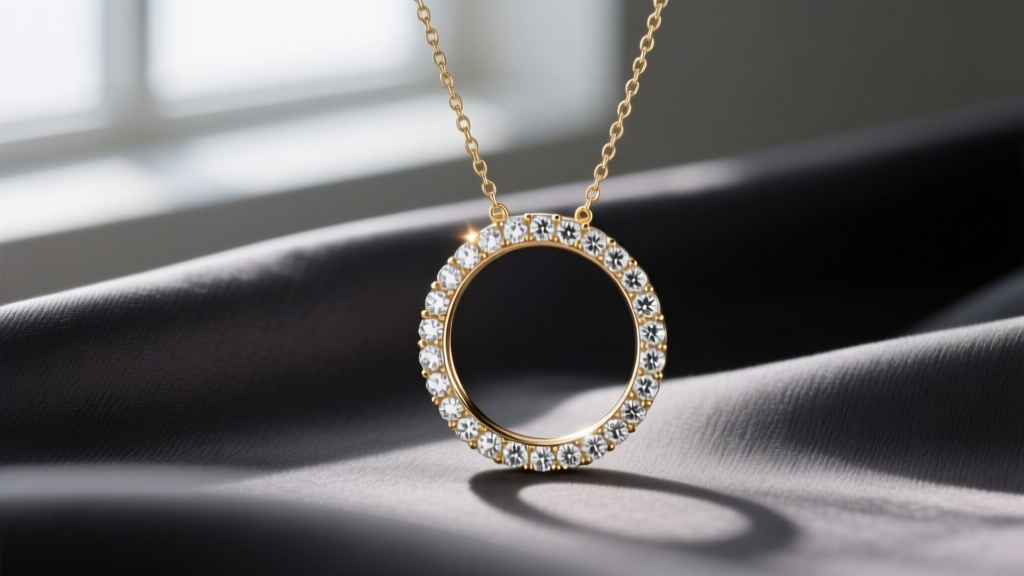
The circle pendant necklace diamond is a cornerstone of modern fine jewelry, symbolizing eternity, unity, and timeless elegance. However, selecting the perfect piece and styling it correctly requires more than just picking a shiny object from a display case. Whether you are investing in a pave eternity circle, an open minimalist hoop, or a halo-style pendant, understanding the nuances of diamond grading, chain mechanics, and layering geometry is essential. In this comprehensive step-by-step guide, we break down exactly how to evaluate, wear, and maintain your diamond circle pendant to ensure it remains a staple in your wardrobe for decades.
Step 1: Decoding Diamond Quality in Circle Motifs
Not all circle pendants are created equal, and the diamond requirements change drastically depending on the specific design. According to the Gemological Institute of America (GIA), evaluating melee diamonds (stones under 0.18 carats) requires a different threshold than evaluating a single solitaire center stone. When you buy a circle pendant necklace diamond, you are usually looking at one of three configurations, each with its own minimum grading requirements to ensure maximum brilliance without overpaying for invisible perfection.
| Pendant Style | Diamond Type | Minimum Clarity | Minimum Color | Estimated Price Range (14k Gold) |
|---|---|---|---|---|
| Pave Eternity Circle | Melee (0.01-0.05ct each) | SI1 - SI2 | G - H | $450 - $1,200 |
| Open Circle with Bezel | Solitaire (0.25-1.00ct) | VS2 - SI1 | F - G | $900 - $3,500+ |
| Halo Circle | Center + Melee Halo | VS1 (Center) | G (Center) | $1,500 - $5,000+ |
Why Melee Diamonds Can Be Lower Clarity
In a pave circle pendant, the diamonds are typically 1.0mm to 1.5mm in diameter. At this size, inclusions characteristic of SI1 or SI2 clarity grades are entirely invisible to the naked eye. Prioritizing a higher color grade (G-H) over clarity ensures the circle doesn't look yellowish against white gold or platinum, which is a common failure mode in lower-tier commercial jewelry.
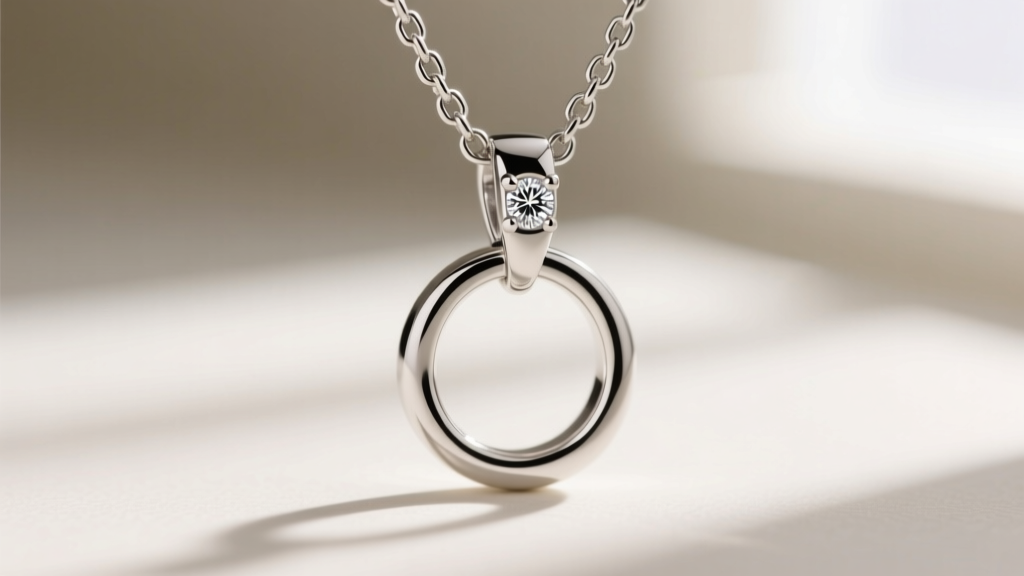
Step 2: Selecting the Chain and Bail Mechanism
The most frequent point of failure in any pendant necklace is the bail—the loop that connects the pendant to the chain. A diamond circle pendant can weigh anywhere from 1.5 grams (delicate open circle) to over 6 grams (heavy pave eternity circle). Matching the chain gauge and bail type to the pendant's weight is critical for longevity.
- Hidden Bails: Ideal for open circle pendants. The chain threads directly through a hollowed-out section of the diamond circle, creating a seamless 'floating' illusion. This requires a chain no thicker than 1.2mm.
- Standard Loop Bails: Best for heavier pave circles. Ensure the bail is lined with platinum or 18k gold to prevent friction wear from the chain.
- Chain Selection: Opt for a 1.0mm to 1.5mm box chain or a sturdy cable chain. Avoid rope chains or serpentine chains, as their intricate links are prone to catching on the diamond prongs and stretching under the pendulum motion of a heavy circle pendant.
Step 3: Mapping the Pendant to Your Neckline
A circle pendant necklace diamond is incredibly versatile, but its visual impact changes based on the geometry of your clothing. The goal is to either harmonize with the neckline or provide a deliberate, structured contrast.
The V-Neck and Plunge Strategy
When wearing a V-neck or wrap dress, choose a circle pendant that rests exactly one inch above the vertex of the V. A 16-inch chain usually achieves this. The circular shape softens the sharp angles of the V-neck, creating a balanced focal point. If the pendant drops into the fabric fold, it will catch on the material and cause the bail to wear prematurely.
The Crew Neck Contrast
For high crew necks and turtlenecks, opt for a larger, bolder circle pendant (15mm to 20mm in diameter) on an 18-inch chain. The pendant should sit clearly on the fabric. In this scenario, a yellow gold circle pendant with a high-contrast diamond pave works beautifully against dark fabrics like navy or charcoal, acting as a standalone statement piece rather than a subtle accent.
Step 4: The 2026 Layering Blueprint
Layering remains a dominant trend, but stacking a circle pendant necklace diamond requires strict adherence to spatial geometry to prevent tangling and visual clutter. The golden rule of necklace stacking is the Two-Inch Separation Rule. Each subsequent chain must be exactly two inches longer than the last.
"When layering mixed metals in 2026, anchor the stack with your diamond circle pendant in the middle. The diamonds act as a neutral bridge, allowing you to seamlessly mix a 14k yellow gold paperclip chain with a white gold choker without the combination looking disjointed."
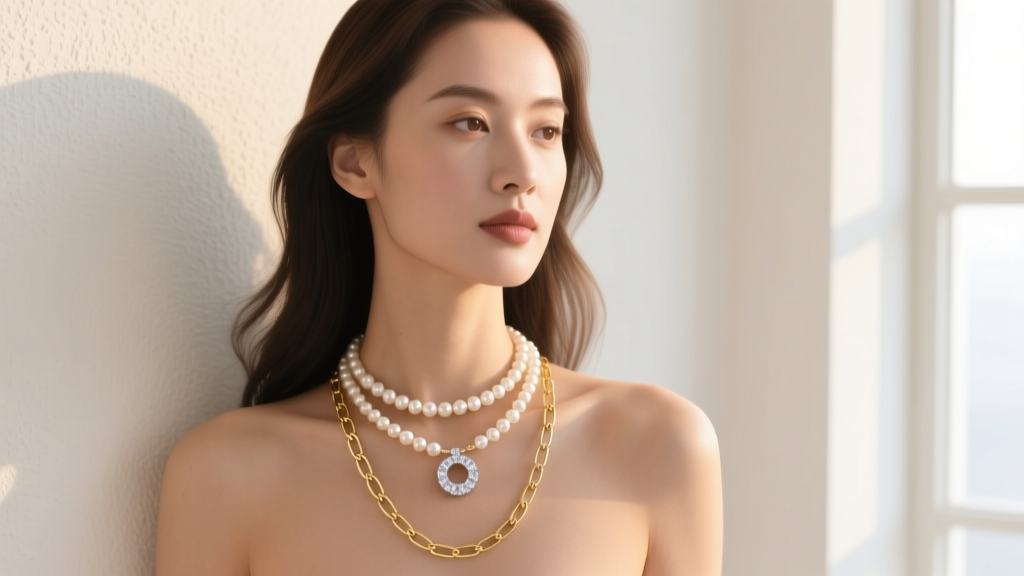
The Perfect 3-Piece Stack
- 14-Inch Base: A simple pearl choker or a 1.5mm herringbone chain. This sits flush against the collarbone and frames the face.
- 16-Inch Anchor: Your circle pendant necklace diamond. The circular motif draws the eye to the center of the chest. Ensure the pendant is no larger than 12mm in diameter, or it will overwhelm the lower layers.
- 18-Inch Finisher: A textured chain, such as a gold paperclip or Saturn beaded chain, with no pendant. This adds vertical length and balances the visual weight of the circle pendant above it.
Step 5: Maintenance and Prong Troubleshooting
Circle pendants, particularly those featuring pave or halo settings, are highly susceptible to diamond loss if not maintained correctly. The continuous circular shape means the pendant spins on the chain, causing the prongs to rub against clothing, scarves, and hair. According to the Jewelers of America, regular professional inspections are non-negotiable for pave settings.
Real-World Troubleshooting
- The 'Snag' Test: Run a piece of silk fabric or a microfiber cloth over the face of your circle pendant. If it catches, a prong has lifted. Stop wearing it immediately and take it to a jeweler for a prong re-tipping. Ignoring this will result in a lost melee diamond within days.
- Ultrasonic Cleaning Warnings: While ultrasonic cleaners are great for solid gold, they can vibrate small melee diamonds right out of their shared-prong settings. Furthermore, if your circle pendant contains fracture-filled diamonds or certain clarity enhancements, the high-frequency vibrations and heat can shatter the stone or cloud the filler. Stick to a soft-bristled brush, warm water, and mild dish soap for weekly at-home cleaning.
- Bail Friction: Check the inside of the bail loop every six months. If you see a deep groove worn into the metal by the chain, the bail needs to be reinforced or replaced before it snaps.
Mastering the selection and styling of a circle pendant necklace diamond elevates it from a simple accessory to a masterclass in personal curation. By respecting the nuances of diamond grading, prioritizing structural integrity in your chain choice, and applying precise layering geometry, you ensure your pendant remains a brilliant, enduring focal point in your jewelry collection.


