Hawaiian Necklace of Flowers: Jewelry Value & Cost Guide
Assess the true value of a Hawaiian necklace of flowers. Compare fine jewelry, preserved resin, and fresh leis in our expert budget and material guide.

The Spectrum of the Hawaiian Necklace of Flowers
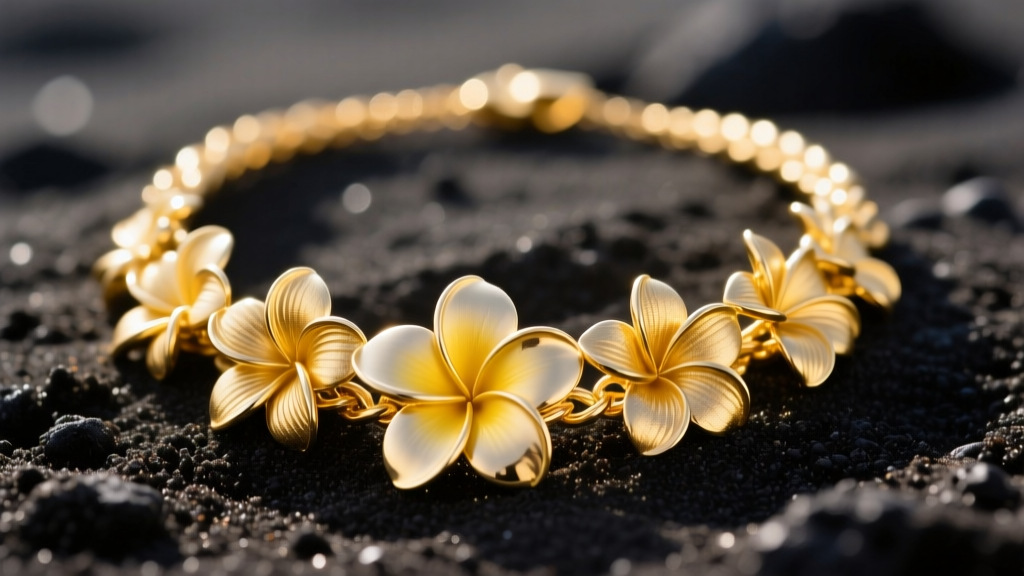
When evaluating a hawaiian necklace of flowers, buyers are often caught between cultural tradition and permanent fine jewelry. The traditional fresh lei—often crafted from pikake, orchids, or plumeria—is a beautiful but perishable symbol of aloha, typically costing between $35 and $150 depending on the season and flower rarity. However, as of 2026, the jewelry market has seen a massive surge in demand for permanent, wearable interpretations of these floral necklaces. According to the Hawaii Tourism Authority, the gifting of floral necklaces is deeply rooted in Polynesian history, representing respect, love, and spiritual connection. Translating this ephemeral tradition into permanent jewelry requires navigating a complex market of fine metals, preserved botanicals, and mass-produced tourist souvenirs. To make an informed budget and value assessment, you must understand the material grades, failure modes, and true market pricing of these floral necklaces.
Material Grades and Pricing Tiers
The value of a floral-themed Hawaiian necklace is entirely dictated by its material composition and structural integrity. Below is a comprehensive breakdown of the current market tiers, helping you allocate your budget effectively.
| Category | Material Composition | Average Price Range | Longevity | Value Retention |
|---|---|---|---|---|
| Tourist Souvenir | Zinc alloy, cold epoxy, plastic | $15 - $45 | 1-3 Years | Negligible |
| Preserved Botanical | Real orchids/plumeria, UV bio-resin, sterling silver caps | $80 - $250 | 5-10 Years | Low (Sentimental) |
| Fine Vermeil | Heavy 18k gold vermeil over solid sterling silver, vitreous enamel | $180 - $450 | 10-20 Years | Moderate |
| Solid Gold Lei | 14k solid yellow or rose gold, interlocking floral links | $1,200 - $4,500+ | Lifetime | High (Intrinsic metal value) |
The Metallurgy of Fine Floral Leis
When investing in the $1,200+ tier for a solid gold hawaiian necklace of flowers, the karat weight is a critical value factor. While 18k gold (75% pure gold) offers a richer yellow hue, it is metallurgically too soft for the delicate, high-relief petals of plumeria and orchid designs. The Gemological Institute of America (GIA) notes that higher gold purity increases malleability. For intricate floral leis that feature interlocking links and thin petal edges, 14k gold (58.5% pure gold) is the superior choice. The higher copper and zinc alloy content in 14k gold provides the tensile strength necessary to prevent the petals from bending, warping, or snapping under the weight of the necklace.
Preserved Botanical vs. Fine Metal: A Value Breakdown
For buyers with a mid-range budget ($80–$300), the choice usually falls between preserved real-flower resin jewelry and enamel-over-metal designs. Both offer distinct aesthetic values, but their long-term durability varies wildly based on manufacturing techniques.
UV-Resistant Resin and Eco-Preservation
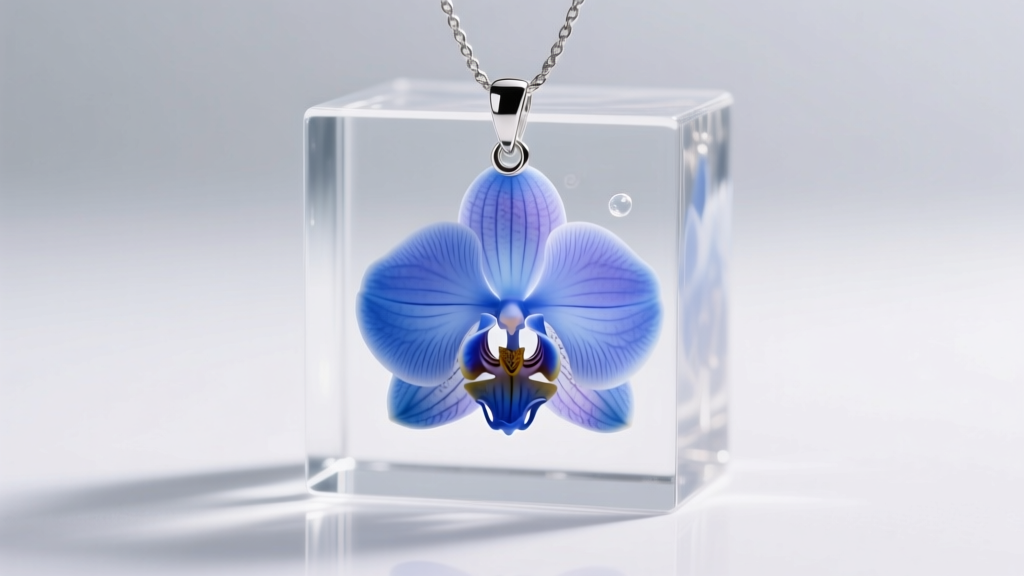
Preserved orchid and plumeria pendants encapsulate real Hawaiian flowers in clear resin. The primary failure mode for budget resin jewelry is photo-oxidation—the yellowing and clouding of the resin when exposed to UV light. High-end eco-jewelers now utilize aerospace-grade polyurethane bio-resins infused with HALS (Hindered Amine Light Stabilizers). When assessing value, always ask the jeweler if their resin contains UV inhibitors. A $150 preserved orchid pendant with HALS will remain crystal clear for a decade, whereas a $40 cheap epoxy cast will turn amber and brittle within two summers.
Vitreous Enamel vs. Cold Enamel
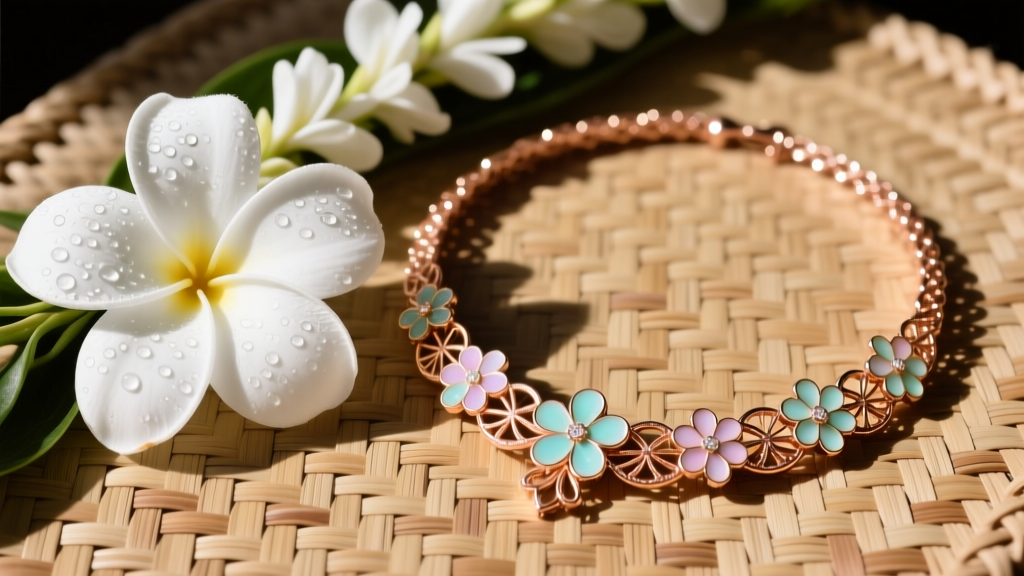
If you prefer a metal floral necklace with vibrant colors, you must distinguish between vitreous enamel and cold enamel. Vitreous enamel is powdered glass fused to metal at 1,400°F, creating a scratch-resistant, gem-like finish that will never fade. Cold enamel is merely a tinted epoxy resin painted into metal recesses; it chips easily and degrades under sunlight. A vitreous enamel hibiscus or orchid pendant on a gold vermeil chain represents excellent value at the $250 mark, offering the visual pop of a fresh flower with the permanence of fine jewelry.
How to Spot Overpriced Tourist Traps
The tourist markets in Honolulu and Maui are flooded with mass-imported floral necklaces marketed as 'Hawaiian Silver' or 'Island Alloys.' To protect your budget, you must be aware of deceptive marketing tactics.
- The 'Tibetan Silver' Trap: Necklaces stamped with vague terms like 'Tibetan Silver' or 'Hawaiian Silver' contain zero actual silver. They are typically zinc, nickel, and lead alloys that will rapidly tarnish, turn your skin green, and potentially cause severe contact dermatitis.
- Missing FTC Hallmarks: According to the FTC Jewelry Guides, any metal sold in the United States as 'silver' or 'gold' must bear a quality stamp (e.g., 925, 14k) alongside a registered manufacturer's trademark. If the floral clasp or pendant lacks a '925' stamp, it is not sterling silver, regardless of the vendor's claims.
- Hollow-Cast Gold: Some high-priced tourist shops sell large, voluminous 14k gold plumeria leis that are surprisingly lightweight. These are often hollow-cast or resin-filled to save on gold weight. While they contain real gold, their structural integrity is poor, and they cannot be easily repaired if crushed. Always ask if the floral links are solid cast or hollow electroformed.
Expert Appraisal Tip: When evaluating a vintage or second-hand Hawaiian gold floral lei, use a jeweler's loupe to inspect the petal edges. If the edges show sharp, precise detailing without microscopic pitting, the piece was likely cast using high-quality vulcanized rubber molds rather than cheap sand-casting methods, indicating a much higher baseline value.
Final Verdict: Where to Allocate Your Budget
Assessing the value of a hawaiian necklace of flowers requires aligning your budget with your intended use. If you are purchasing for a single wedding or graduation event, a $75 fresh pikake or orchid lei remains the most culturally authentic and cost-effective choice. However, if you are seeking a permanent keepsake, bypass the $20-$50 tourist traps entirely. For budgets under $200, invest in a 925 sterling silver single-flower pendant or a botanically preserved orchid encapsulated in UV-stabilized resin. For budgets exceeding $1,500, demand 14k solid gold with structural, solid-cast links. By prioritizing material transparency, UV-resistant chemistry, and proper metallurgical hardness, you ensure that your floral necklace retains both its beauty and its financial value for generations to come.


