How to Clean a YuGiOh Millennium Puzzle Necklace
Learn expert techniques to clean, polish, and maintain your YuGiOh Millennium Puzzle necklace without damaging the plating or resin eye.

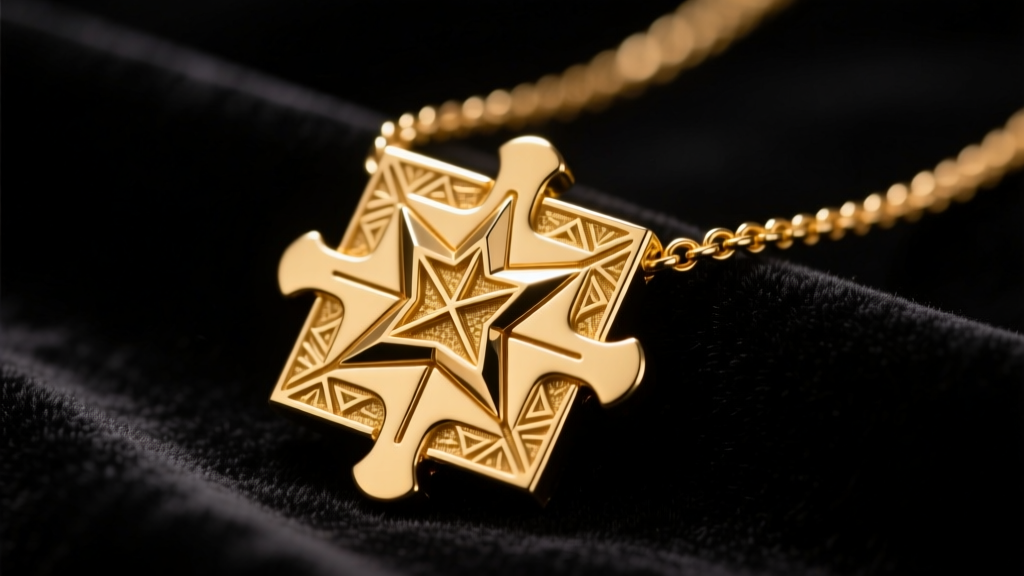
The YuGiOh Millennium Puzzle necklace is more than just a piece of anime merchandise; for many collectors and fans, it is a wearable artifact of nostalgia. However, because these pendants range from mass-produced zinc alloy replicas to high-end, custom-cast sterling silver pieces, a one-size-fits-all approach to jewelry maintenance will quickly ruin your investment. Whether your pendant features delicate gold electroplating, a PVD-coated stainless steel body, or a fragile resin Eye of Anubis, understanding the metallurgy and material science behind your specific piece is critical for long-term preservation.
Decoding Your Puzzle: Material Composition and Vulnerabilities
Before applying any cleaning solution, you must identify the base metal and the finishing technique used on your YuGiOh Millennium Puzzle necklace. According to the Federal Trade Commission's Jewelry Guides, the terminology around gold plating and metal alloys is strictly regulated, yet the anime merchandise market frequently blurs these lines. Here is a breakdown of the most common materials used in these replicas and their specific failure modes.
| Material Type | Common Price Range | Finish / Coating | Primary Failure Mode |
|---|---|---|---|
| Zinc Alloy (Zamak) | $15 - $35 | Flash Gold Plating / Paint | Flaking, rapid oxidation, pitting |
| Solid Brass | $40 - $80 | Uncoated or Lacquered | Verdigris (green tarnish), scratching |
| 316L Stainless Steel | $50 - $120 | PVD Gold Coating | Micro-scratches, coating wear at friction points |
| 925 Sterling Silver | $150 - $400+ | Solid Gold Vermeil or Bare | Silver sulfide tarnish, deep gouging |
As noted by experts at Jewelers of America, plated jewelry requires drastically different care than solid metals. Flash-plated zinc alloys, which make up the majority of budget-friendly anime convention purchases, have a gold layer measured in mere microns. Aggressive polishing will strip this layer entirely, exposing the dull, grayish base metal beneath.
The Hazards: What to Keep Away from Your Pendant
Many collectors inadvertently destroy their YuGiOh Millennium Puzzle necklace by applying traditional silver or gold cleaning methods to modern replica alloys. Avoid the following at all costs:
- Ultrasonic Cleaners: The high-frequency cavitation bubbles can easily shatter the resin or glass cabochon eye, and will strip electroplated finishes from zinc alloys in seconds.
- Abrasive Toothpaste: Baking soda and whitening toothpastes contain silica and calcium carbonate. With a Mohs hardness of 5 to 7, these particles will leave permanent micro-scratches on soft brass and gold plating (which sit around 2.5 to 3 on the Mohs scale).
- Chlorine and Bleach: Swimming pools and household cleaners contain chlorine, which reacts violently with copper and zinc alloys, causing irreversible structural pitting and a permanent dark brown tarnish.
Step-by-Step Cleaning Protocols
Proper maintenance requires matching the cleaning agent to the specific metallurgy of your piece. Follow the protocol that matches your necklace's material.
For Gold-Plated Zinc Alloy and Brass Replicas
Your goal here is to remove skin oils and environmental dust without disturbing the microscopic gold layer.
- Mix a few drops of pH-neutral dish soap (like Dawn) into a bowl of lukewarm distilled water. Avoid tap water, as the dissolved minerals can leave hard water spots on the gold finish.
- Submerge the pendant for exactly 3 to 5 minutes to loosen sebum and dead skin cells trapped in the puzzle's hieroglyphic crevices.
- Use a baby hairbrush (which has ultra-soft bristles) to gently agitate the grooves. Never use a standard toothbrush, as the nylon bristles are too stiff and will cause swirl marks.
- Rinse briefly under a gentle stream of distilled water and immediately pat dry with a lint-free microfiber cloth. Air drying will result in water spots.

For Solid 316L Stainless Steel and Sterling Silver
High-end replicas crafted from stainless steel or sterling silver can withstand more robust cleaning methods. Stainless steel is highly resistant to corrosion, while sterling silver requires active tarnish removal.
- Stainless Steel: You can safely use a mild jewelry polishing cloth infused with red jeweler's rouge. Rub the cloth in straight lines rather than circles to maintain a uniform finish. If the piece is heavily soiled, an isopropyl alcohol wipe (70% or higher) will safely cut through grease without harming the PVD coating or the bare steel.
- Sterling Silver: If your silver puzzle has developed black silver sulfide tarnish, use an aluminum foil and baking soda ion-exchange bath. Line a glass bowl with aluminum foil (shiny side up), add one tablespoon of baking soda, and pour in boiling water. Submerge the silver necklace for 60 seconds. The electrochemical reaction transfers the sulfur from the silver to the aluminum, restoring the bright white metal instantly without removing any silver mass.
Preserving the Eye of Anubis: Resin and Enamel Care
The focal point of any YuGiOh Millennium Puzzle necklace is the Eye of Anubis. In 90% of replicas, this is made from cast epoxy resin or a soft vitreous enamel. Both materials are highly susceptible to chemical degradation.
Never apply alcohol, acetone, or commercial silver dip solutions near the eye. Alcohol will cause epoxy resin to cloud and craze (develop tiny surface cracks) over time, while acetone will melt it entirely. If the eye becomes smudged with fingerprints, simply breathe on it to create a light condensation fog, and wipe it gently with a clean, dry optical microfiber cloth—the same kind used for prescription eyeglasses or camera lenses. If your replica features painted enamel details, inspect the paint lines under a magnifying loupe; if you see chipping, apply a microscopic drop of clear, UV-curing resin to seal the area and prevent further flaking.
Chain Maintenance and Clasp Troubleshooting
The chain and clasp are the most common points of mechanical failure on anime replica necklaces. Budget pieces typically use thin, hollow-curb chains with small spring-ring clasps, while premium versions use solid rope or box chains with lobster clasps.
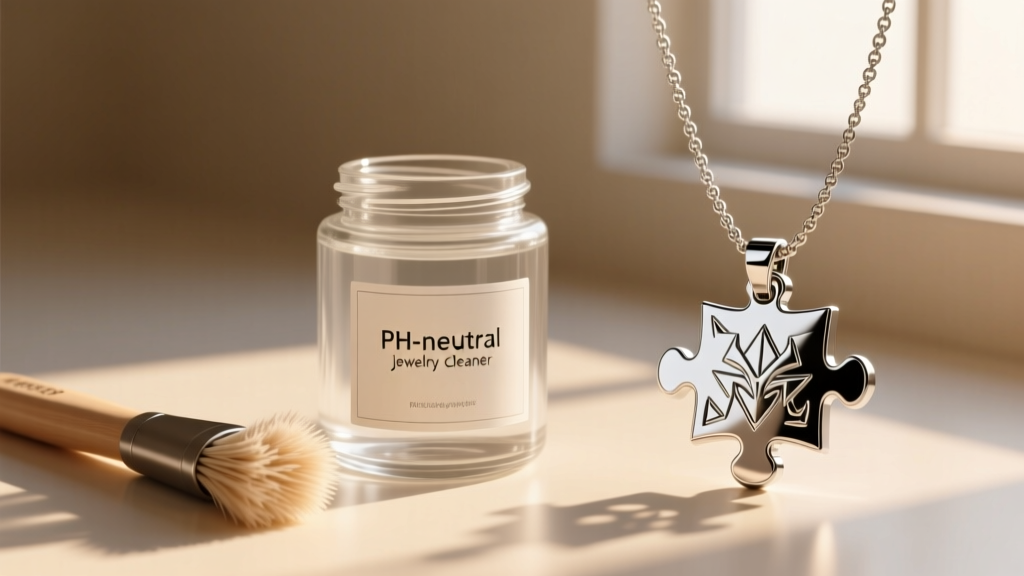
De-Tangling and Jump Ring Inspection
Hollow chains are notorious for kinking. If your chain tangles, do not pull. Lay it flat on a hard surface, apply a single drop of baby oil or mineral oil to the knot, and use two sewing needles to gently tease the links apart. Once untangled, clean the oil off with the dish soap method mentioned above.
Furthermore, inspect the jump rings (the small circular rings connecting the chain to the puzzle pendant). Mass-produced necklaces often use open jump rings that are simply pinched shut rather than soldered. Over time, the friction of the pendant pulling against the ring will cause the gap to widen, leading to a lost pendant. Use two pairs of flat-nose jewelry pliers to twist the jump ring closed tightly, ensuring the cut ends meet perfectly flush. If you own a premium piece, take it to a local jeweler to have the jump ring laser-welded or soldered shut for permanent security.
Fixing Stiff Lobster Clasps
If your lobster clasp becomes stiff or fails to snap back into place, it is usually due to a buildup of pocket lint or skin oils inside the spring mechanism. Dip a cotton swab in 90% isopropyl alcohol and swab the inside of the clasp lever. Work the lever back and forth a dozen times to dislodge the debris. Once dry, apply a microscopic dab of synthetic watch oil (like Moebius 9010) to the hinge pin to restore smooth operation. Avoid using WD-40, as it leaves a sticky residue that will attract more dust over time.
Archival Storage for Collectors
How you store your YuGiOh Millennium Puzzle necklace when it is not being worn is just as important as how you clean it. Zinc alloys and brass are highly reactive to humidity and atmospheric sulfur.
Store the necklace in an airtight, zip-seal polyethylene bag along with a 3M Anti-Tarnish strip or a silica gel desiccant packet. This creates a micro-climate that neutralizes airborne sulfur compounds and drops the relative humidity below 30%, effectively halting the oxidation process. Never store the necklace in a cardboard box or wrap it in newspaper, as the acidic breakdown of wood pulp paper releases gases that will rapidly tarnish base metals and degrade resin components. By combining gentle, material-specific cleaning with archival storage practices, your Millennium Puzzle will remain in pristine, convention-ready condition for decades.


