Heart and Angel Wing Necklace: Repair and Care Guide
Learn how to fix broken chains, prevent tarnish, and properly style your heart and angel wing necklace with our expert troubleshooting guide.

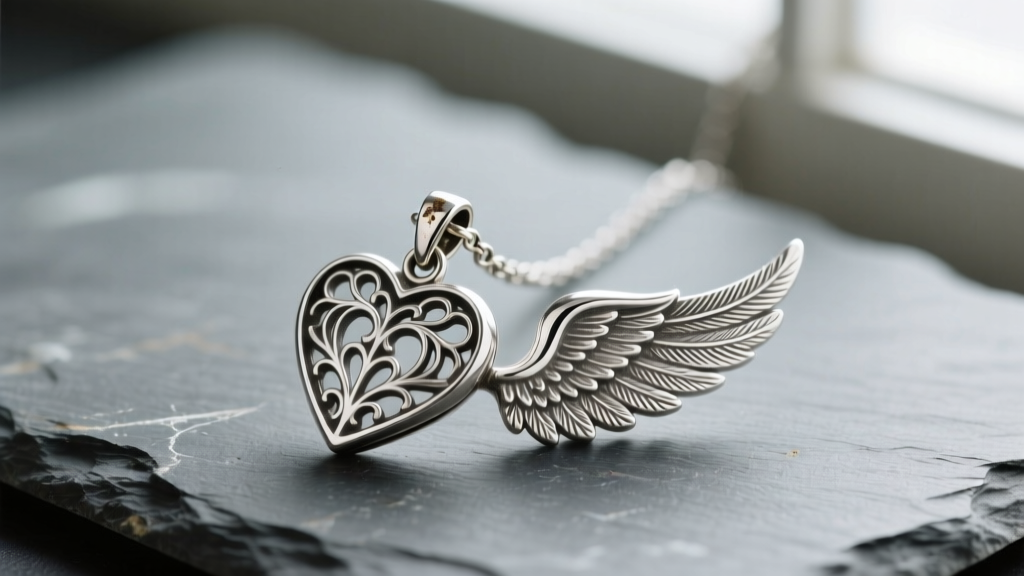
The Anatomy of a Heart and Angel Wing Pendant
The heart and angel wing necklace is a beloved sentimental staple, but its intricate geometry makes it uniquely vulnerable to structural failures. Unlike simple solitaire pendants, this motif features horizontal wing spans that act as levers, placing disproportionate kinetic stress on the bail (the loop connecting the pendant to the chain) and the primary jump ring. While jewelry manufacturing techniques have advanced in 2026, mass-market cast pendants in this style still frequently suffer from weak connection points, micro-pave stone loss, and chain tangling. Understanding the specific failure modes of this design is the first step toward preserving your piece for a lifetime.
Common Chain & Clasp Failures (And How to Fix Them)
The most frequent complaint with angel wing pendants is the chain breaking or the pendant detaching entirely. This is rarely a defect in the chain itself, but rather a failure of the hardware connecting the heavy cast pendant to the flexible chain.
1. The Jump Ring Split
Most commercial necklaces use a 20-gauge (0.81mm) unsoldered jump ring. A solid cast silver or gold wing pendant typically weighs between 4 and 7 grams. The wide wings catch on clothing, creating lateral leverage that slowly pries a 20g unsoldered ring open. The Fix: Take your necklace to a local bench jeweler and ask them to replace the factory ring with an 18-gauge (1.02mm) or 16-gauge (1.29mm) soldered jump ring. A soldered ring has no seam to pry open and will withstand significantly higher lateral force.
2. Lobster Clasp Spring Failure
If your clasp feels stiff or fails to snap shut, the internal steel spring has likely corroded due to trapped lotion, sweat, or perfume. According to the Jewelers of America, cosmetics are the leading cause of mechanical clasp failure. The Fix: Soak the clasp in a small cup of warm water with a drop of mild dish soap, then use a soft baby toothbrush to gently scrub the trigger mechanism. If the spring is permanently seized, swap the clasp for a solid stainless steel or 14k gold replacement, or upgrade to a magnetic neodymium clasp for effortless wear.
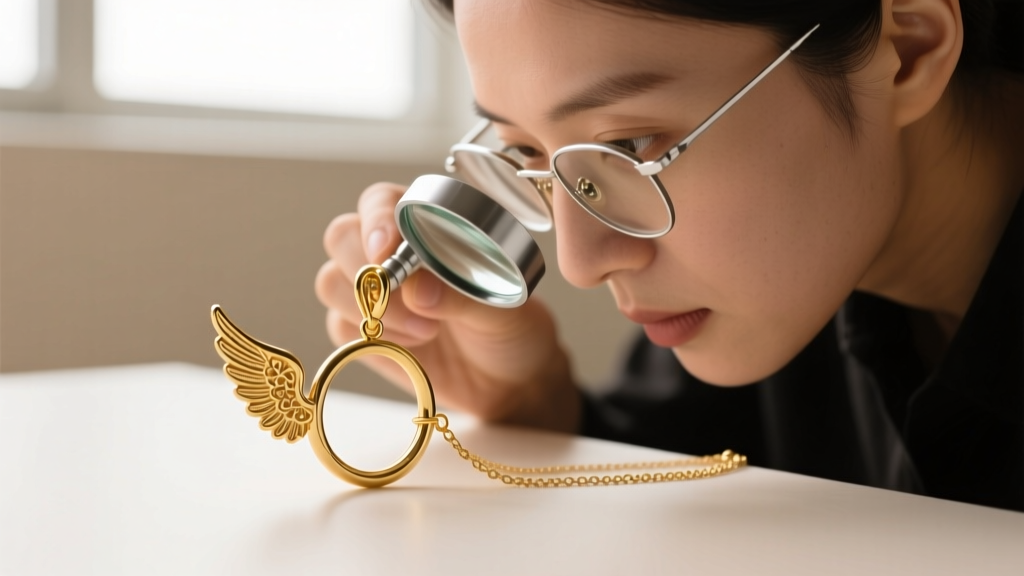
Tarnish, Metal Fatigue, and Cleaning Micro-Pave
Angel wings are frequently adorned with micro-pave cubic zirconia or delicate filigree. This creates a major troubleshooting hurdle when it comes to cleaning and tarnish removal.
The Danger of Liquid Silver Dips
If your necklace is 925 sterling silver, it will tarnish due to the 7.5% copper alloy reacting with environmental sulfur. Never use liquid silver dip solutions on a heart and angel wing pendant. These dips contain thiourea, a harsh chemical that strips rhodium plating and degrades the epoxy resin used to secure micro-pave stones in the wings. Instead, use a jeweler's rouge polishing cloth for the bare metal, and clean the stones with warm water, mild soap, and a soft brush.
| Material Grade | Tarnish Resistance | Solderability | Best For |
|---|---|---|---|
| 925 Sterling Silver | Low (Requires polishing) | Excellent | Everyday wear, easy DIY repair |
| 14k Gold Vermeil | Medium (Wears over time) | Poor (Melts plating) | Occasional wear, low friction |
| 316L Stainless Steel | High (Impervious) | Impossible (Laser only) | High moisture, budget-friendly |
| Solid 14k Gold | High (Does not tarnish) | Excellent | Heirloom pieces, lifetime wear |
For deep cleaning or inspecting hairline fractures in the wing filigree, the Gemological Institute of America (GIA) recommends professional ultrasonic cleaning—but only if your pendant features prong-set stones rather than glue-set pave. Ultrasonic vibrations will instantly shake loose epoxy-bound stones.
Styling Friction: When the Pendant Flips or Tangles
A unique troubleshooting issue specific to the heart and angel wing motif is the "pendant flip." Because the wings extend horizontally, the pendant is top-heavy and wide. If paired with a highly flexible chain (like a snake or herringbone chain), the pendant will constantly rotate upside down or slide off-center.
Solving the Flip with Chain Selection
To counteract the horizontal leverage of the wings, you need a chain that provides structural rigidity. The Fix: Re-string your pendant onto a 1.2mm to 1.5mm box chain or a wheat chain. The interlocking square links of a box chain add just enough weight and stiffness to keep the pendant lying flat against the sternum. Additionally, adding a small silicone pendant stabilizer bead to the back of the chain (near the clasp) acts as a counterweight, preventing the clasp from migrating to the front of your neck.
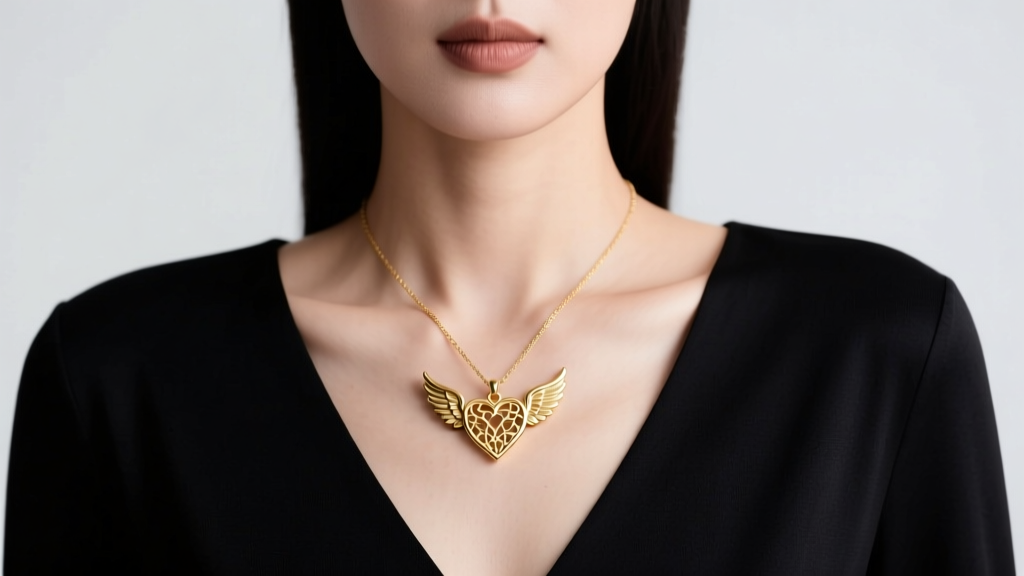
Professional vs. DIY Repairs: A Decision Matrix
Knowing when to reach for your own jewelry pliers and when to visit a professional bench jeweler will save you from irreversible damage. Use this matrix to decide your next step:
- DIY Safe: Polishing bare silver with a microfiber rouge cloth; replacing a standard lobster clasp using chain-nose pliers; untangling a cable chain using a drop of baby oil and two sewing needles.
- Pro Jeweler Required: Re-tipping worn prongs holding the center heart cabochon; laser welding a cracked wing filigree (especially on stainless steel or titanium); re-plating worn gold vermeil; resizing a chain by soldering links.
Conclusion
A heart and angel wing necklace is a complex piece of wearable art that requires specific care to maintain its structural integrity. By upgrading your jump rings to soldered 16-gauge wire, avoiding harsh chemical dips that destroy pave settings, and pairing the pendant with a rigid box chain to prevent flipping, you can solve the most common frustrations associated with this design. Treat the connection points with care, and your sentimental piece will remain secure and beautifully styled for years to come.


