Heart Chain Necklace Gold: The Ultimate Buying Guide
Discover expert tips for buying a heart chain necklace in gold. Compare karats, chain styles, and construction methods to find your perfect piece.

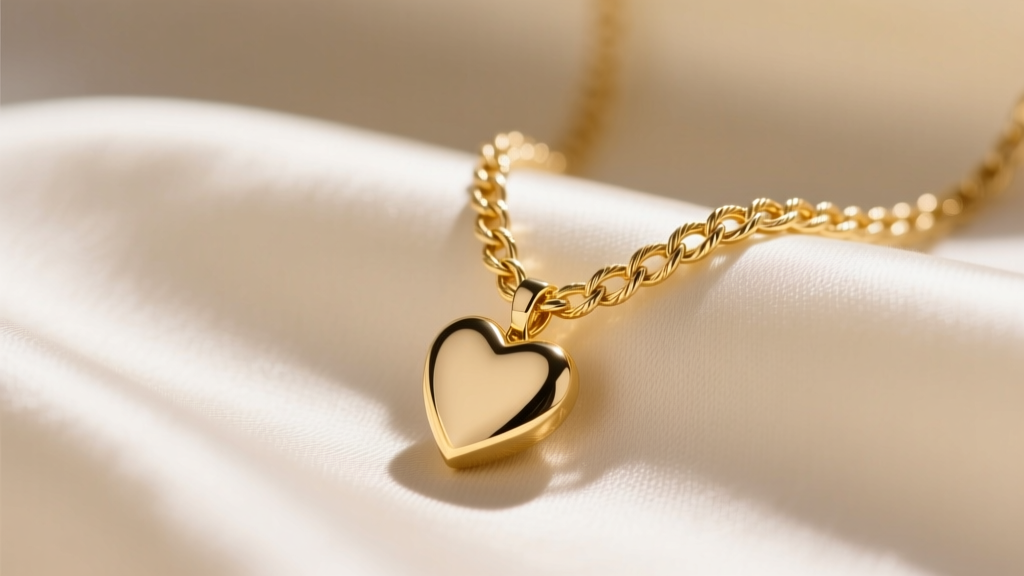
The Anatomy of a Timeless Gold Heart Necklace
The search for the perfect heart chain necklace gold design often leads buyers down a rabbit hole of varying karats, misleading product descriptions, and fragile constructions. As we move through 2026, the jewelry market has seen a massive surge in demand for sentimental, everyday-wear motifs, but not all heart pendants are created equal. Whether you are investing in a solid 18-karat heirloom or a delicate 14-karat daily layering piece, understanding the metallurgical and structural nuances of gold jewelry is critical. This comprehensive buying guide strips away the marketing fluff and focuses on the exact specifications, weight metrics, and construction methods you need to evaluate before making a purchase.
Decoding Gold Purity and Alloy Compositions
Gold in its purest form (24-karat) is far too soft to hold the intricate shape of a heart pendant or endure the friction of a daily-wear chain. Therefore, gold is alloyed with other metals to increase durability and alter color. According to the Gemological Institute of America (GIA), the karat system dictates the ratio of pure gold to alloy metals. Understanding these ratios is your first line of defense against overpaying for inferior metals.
| Karat | Purity % | Common Alloys | Durability | Best Use Case |
|---|---|---|---|---|
| 10K (417) | 41.7% | Copper, Zinc, Nickel | Very High | Budget-friendly, highly active lifestyles |
| 14K (585) | 58.5% | Silver, Copper, Zinc | High | Everyday wear, optimal balance of color and strength |
| 18K (750) | 75.0% | Silver, Copper, Palladium | Moderate | Heirloom pieces, rich color, sensitive skin |
| 22K (916) | 91.6% | Silver, Copper | Low | Ceremonial jewelry, not recommended for chains |
For a heart pendant that will be worn daily, 14-karat gold is the undisputed industry standard. It offers enough pure gold to maintain a warm, luxurious hue while retaining the tensile strength required to prevent the bail (the loop connecting the pendant to the chain) from bending or snapping. If you have nickel sensitivities, 18K is generally safer, as high-quality 18K alloys often substitute nickel with palladium or higher silver content, whereas 10K and some 14K white gold alloys rely heavily on nickel for their silvery appearance.
Chain Architecture: Matching Links to the Heart Motif
A common mistake buyers make is pairing a delicate heart pendant with an incompatible chain. The chain must support the pendant's weight without overwhelming its visual footprint or becoming a tangled mess. Here is a breakdown of the most reliable chain styles for heart necklaces:
- Box Chains (Venetian): Featuring interlocking square links, box chains are exceptionally strong and resist kinking. A 0.9mm to 1.2mm box chain is the ideal pairing for small to medium heart pendants (10mm - 18mm). They lay flat against the collarbone and slide easily through standard pendant bails.
- Cable Chains: The classic oval-link design. While beautiful, standard cable chains under 1.0mm are prone to stretching and snapping if the heart pendant is too heavy. Opt for a 1.5mm cable chain if your heart pendant is a solid cast piece weighing over 3 grams.
- Rope Chains: These twisted links offer brilliant light reflection, but their textured surface can easily catch on the edges of a heart bail, causing premature wear on the jump ring. Use rope chains only for heavier, statement-sized heart pendants.
- Snake Chains: Avoid these for daily-wear pendants. The tightly wound, smooth surface of a snake chain is notorious for trapping fine hairs and kinking irreparably if bent at a sharp angle.
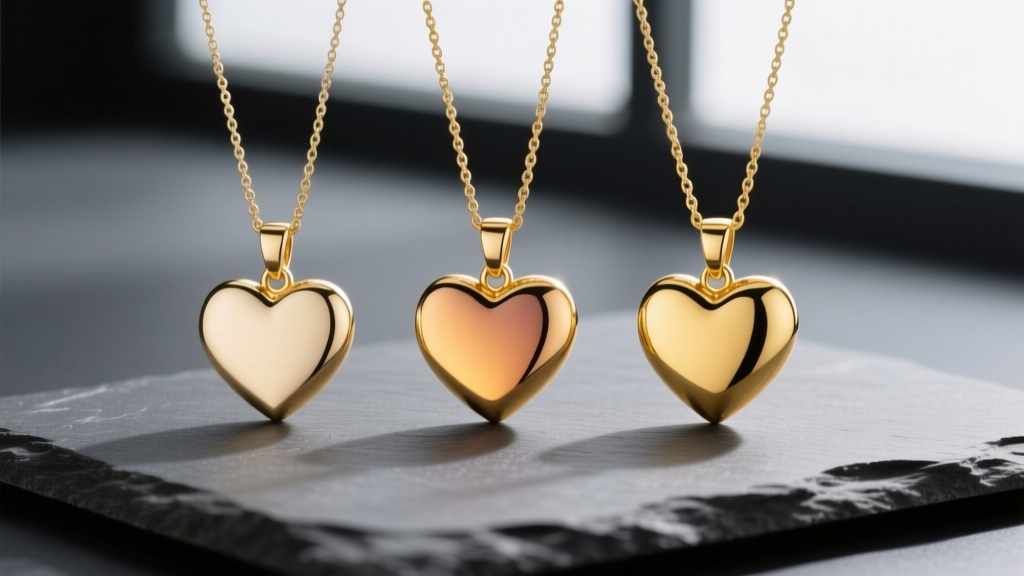
Solid Cast vs. Hollow Stamped: The Weight Test
Not all gold heart pendants are solid. To reduce manufacturing costs and offer lower price points, many mass-market jewelers utilize electroforming or hollow-stamping techniques. While a hollow 20mm heart pendant might look identical to a solid one on a screen, the real-world performance is vastly different.
How to Identify Hollow Construction
A hollow heart pendant is essentially a thin shell of gold. If you tap it lightly against your fingernail, it will produce a high-pitched, metallic 'ping' rather than a dull, dense thud. More importantly, hollow pendants are highly susceptible to denting. A simple bump against a steering wheel or a heavy door can crush the face of a hollow heart, and because the metal is paper-thin, it cannot be buffed or hammered back into shape by a jeweler.
The Metric to Watch: A solid cast 14K gold heart pendant measuring 15mm across should weigh between 1.8 and 2.5 grams. If the product listing shows a weight of 0.6 grams for a 15mm pendant, it is undeniably hollow or heavily electroformed. Always demand the exact gram weight from the seller before purchasing.
Bail Mechanics and Clasp Security
The bail is the unsung hero of any pendant necklace. It dictates how the heart hangs and how much friction it endures. There are two primary bail types used in heart necklaces:
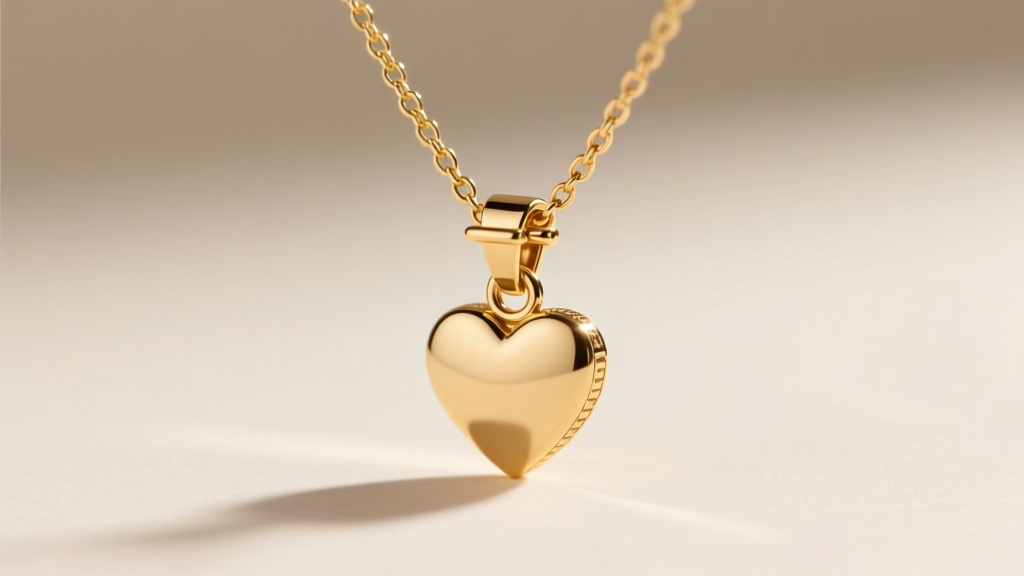
- The Standard Loop Bail: A small metal loop soldered to the top cleft of the heart. This is the most versatile option, allowing you to swap chains easily. Ensure the solder joint is smooth and shows no signs of porosity (tiny pits or bubbles in the metal).
- The Hidden (Drilled) Bail: A hole drilled horizontally through the top lobes of the heart, allowing the chain to pass directly through. This creates a seamless, modern look where the heart appears to float on the chain. However, this limits your chain thickness; usually, only chains under 1.0mm can pass through a hidden bail.
Regarding clasps, always insist on a lobster clasp over a spring-ring clasp. Spring rings are notoriously difficult to operate with one hand and feature a tiny internal spring that frequently fails. A well-cast lobster clasp provides a secure, mechanical lock that will keep your gold heart safe.
Hallmarks, Stamps, and FTC Compliance
In the United States, the Federal Trade Commission (FTC) Jewelry Guides strictly regulate how gold content is stamped and marketed. A legitimate gold heart necklace must bear a quality mark (such as 14K, 585, 18K, or 750). However, a quality mark alone is not enough.
The FTC mandates that any piece stamped with a karat weight must also bear a registered Maker's Mark (a trademark or symbol identifying the manufacturer). This ensures accountability. If you are examining a heart necklace under a jeweler's loupe and see '14K' but no accompanying maker's mark, the piece may have been stamped illegally or imported without adhering to domestic assay standards. Furthermore, be highly skeptical of terms like 'gold-filled' or 'heavy gold electroplate' (HGE). While these are legal terms, they denote a base metal core (usually brass) with a microscopic layer of gold on the surface. Over time, the friction from the chain will wear through this layer, exposing the base metal and turning your skin green.
2026 Pricing Framework: What You Should Actually Pay
Pricing for a solid gold heart chain necklace is intrinsically tied to the daily spot price of gold, multiplied by the gram weight of the piece, plus a manufacturing premium. As a baseline for 2026:
- Delicate 14K Solid Heart (1.5g - 2.5g) on a 16-inch 1.0mm Box Chain: Expect to pay between $350 and $550. Anything significantly cheaper is likely hollow, plated, or under-karated.
- Medium 18K Solid Heart (3.0g - 4.5g) on an 18-inch 1.2mm Cable Chain: Expect to pay between $700 and $1,100, reflecting the higher pure gold content and increased chain weight.
- Pave Diamond Accents: If the heart features melee diamonds, add $200 to $600 to the base price depending on the total carat weight (usually 0.05ct to 0.25ctw for standard commercial pieces).
Final Buying Checklist
Before finalizing your purchase, run the necklace through this quick diagnostic checklist:
- Is the karat weight clearly stated (14K or 18K) alongside a Maker's Mark?
- Is the exact gram weight provided, confirming it is a solid cast piece?
- Is the chain style compatible with the pendant's bail (e.g., box chain for standard loop bails)?
- Does the necklace feature a secure lobster clasp with a sturdy jump ring?
- Is the retailer transparent about the alloy composition, especially if you have metal allergies?
By prioritizing structural integrity, precise metallurgical data, and secure hardware over superficial marketing, you ensure that your gold heart necklace remains a pristine, enduring symbol of sentimentality for decades to come.


