Heart of the Ocean Necklace: Gemstone & Metal Materials Guide
Compare sapphire, tanzanite, and topaz for your Heart of the Ocean necklace. Expert guide on gemstones, metals, and chain gauges.

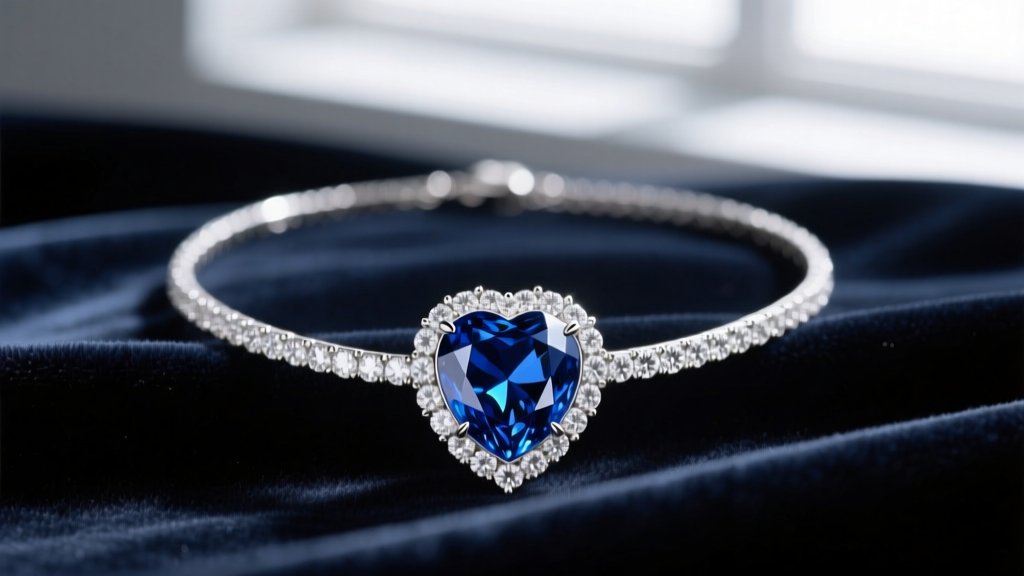
The Legacy and the Materials
Since its iconic debut in the 1997 film Titanic, the 'Heart of the Ocean' necklace has remained one of the most requested pendant styles in the world. While the original movie prop featured a tanzanite center stone and the real-life Harry Winston recreation utilized a rare 15-carat blue diamond, modern replicas and fine jewelry homages span a vast spectrum of materials. For buyers and collectors in 2026, understanding the gemological and metallurgical properties of these materials is critical. A poorly chosen center stone can chip at the vulnerable top cleft, while an inadequate chain gauge will inevitably snap under the weight of a heavy halo setting. This guide breaks down the exact material specifications, failure modes, and pricing tiers for the Heart of the Ocean necklace.
The Center Stone: Sapphire vs. Tanzanite vs. Topaz
The defining feature of this pendant is the deep blue, heart-shaped center stone. The three most common gemstones used to replicate this look are blue sapphire, tanzanite, and London blue topaz. Each possesses vastly different physical properties that dictate its suitability for daily wear.
Blue Sapphire (Corundum)
Sapphire is the premier choice for a Heart of the Ocean necklace intended for frequent wear. As a variety of corundum, it ranks 9 on the Mohs scale of hardness, making it exceptionally resistant to scratching. According to the Gemological Institute of America (GIA), sapphire also has excellent toughness and lacks cleavage planes, meaning it is highly resistant to chipping if knocked against a hard surface. For a heart-shaped cut, which inherently features a sharp, fragile cleft at the top of the stone, this structural integrity is non-negotiable. Expect to pay a premium for unheated Ceylon sapphires, though standard heat-treated Australian or Thai sapphires offer a more accessible price point without sacrificing durability.
Tanzanite (Zoisite)
Tanzanite offers a mesmerizing violet-blue hue that closely mimics the original movie prop. However, it ranks only 6.5 on the Mohs scale and possesses one direction of perfect cleavage. This means a sharp blow to the stone—especially at the pointed cleft of the heart shape—can cause it to split entirely in half. Tanzanite is strictly an 'occasion wear' gemstone. It requires a protective V-prong setting at the cleft and should never be worn during physical activities. Furthermore, tanzanite exhibits strong trichroism, meaning it can show blue, violet, and burgundy depending on the viewing angle, a property that adds visual depth but requires precise cutting to maximize the blue face-up color.
London Blue Topaz
For budget-conscious buyers, London blue topaz provides a deep, inky blue color with high clarity. Ranking 8 on the Mohs scale, it is harder than tanzanite but still possesses perfect basal cleavage, making it susceptible to chipping from hard impacts. It is an excellent choice for fashion jewelry, though its refractive index (1.61-1.64) lacks the intense brilliance and fire of a well-cut sapphire.
| Gemstone | Mohs Hardness | Cleavage / Toughness | Refractive Index | Avg. Price per Carat |
|---|---|---|---|---|
| Blue Sapphire | 9.0 | None / Excellent | 1.76 - 1.78 | $400 - $2,500+ |
| Tanzanite | 6.5 | Perfect / Poor | 1.69 - 1.70 | $200 - $600 |
| London Blue Topaz | 8.0 | Perfect / Fair | 1.61 - 1.64 | $20 - $60 |
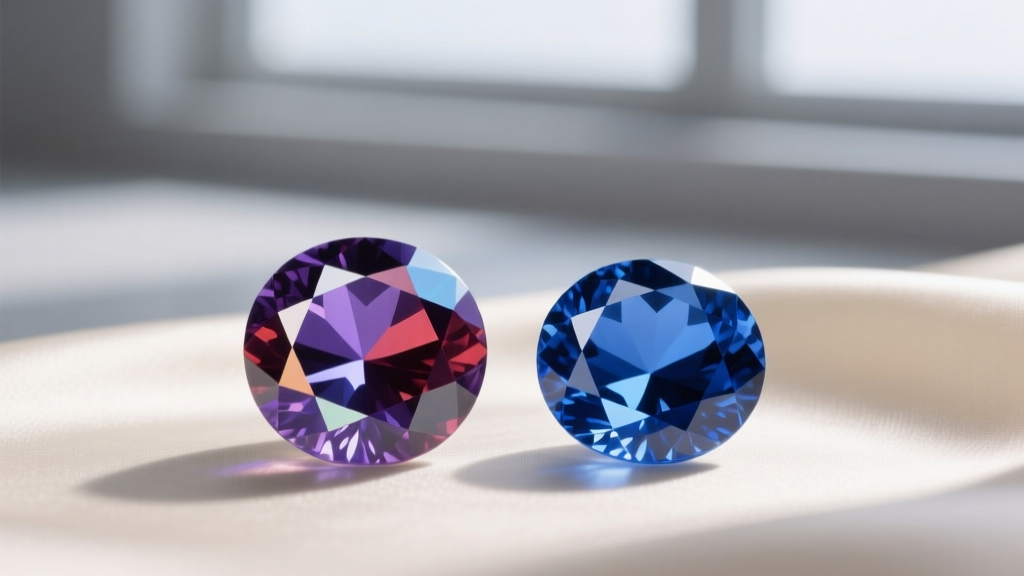
Metal Alloys: Platinum vs. White Gold vs. Silver
The halo of white diamonds (or cubic zirconia) and the structural basket holding the heavy center stone require a metal that can withstand decades of tension and environmental exposure.
950 Platinum
Platinum is the undisputed king of secure gemstone settings. An alloy of 95% platinum and 5% ruthenium or iridium, it is incredibly dense and heavy. Unlike gold, platinum does not lose metal mass when scratched; it merely displaces. More importantly, platinum prongs do not suffer from metal fatigue as quickly as gold alloys, making them vastly superior for securing heavy heart-shaped pendants. It is naturally white and will never require rhodium plating.
18K White Gold
18K white gold (75% pure gold alloyed with nickel, palladium, or silver) is a popular, slightly more affordable alternative to platinum. However, it is naturally a faint yellowish-grey and must be electroplated with rhodium to achieve a bright white finish. This rhodium layer wears off over 12 to 24 months, requiring periodic re-dipping. Furthermore, white gold prongs are more prone to snapping under heavy stress due to the crystalline structure of the gold alloy, making it a less ideal choice for oversized center stones.
Sterling Silver (925)
Sterling silver is highly malleable and prone to tarnishing when exposed to sulfur and moisture. In the context of a Heart of the Ocean necklace, silver is a high-risk material. Silver prongs can easily bend backward if the pendant catches on clothing, leading to catastrophic stone loss. It should only be used for lightweight, budget-friendly replicas featuring cubic zirconia or glass.
Chain Gauge and Structural Integrity
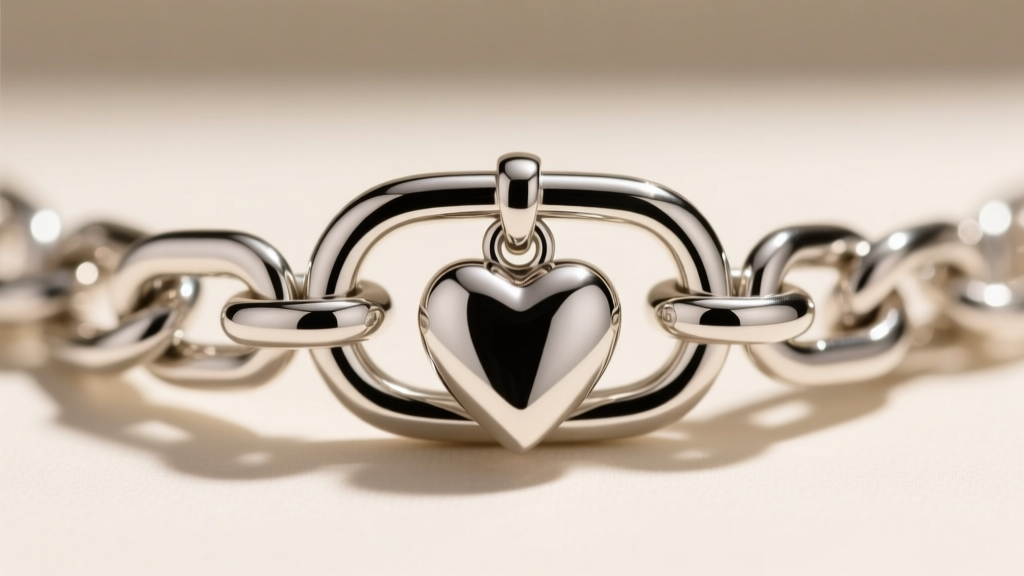
A common failure point in replica necklaces is the chain. The Heart of the Ocean pendant, particularly when set with a diamond halo, can easily weigh between 8 and 15 grams. Standard 0.8mm or 1.0mm chains will inevitably stretch, kink, or snap under this load.
- Box Chains (1.5mm - 2.5mm): The ideal choice. The interlocking square links distribute weight evenly and resist kinking. A 2.0mm solid 18K white gold or platinum box chain provides the necessary tensile strength for a heavy pendant.
- Wheat Chains (2.0mm+): Offer a beautiful braided texture and excellent flexibility, but the intricate links can trap skin oils and lotions, requiring frequent ultrasonic cleaning.
- Clasp Mechanics: Never use a standard spring-ring clasp for a pendant of this weight. The internal spring mechanism will fail. Always opt for a heavy-duty lobster clasp with a reinforced soldered jump ring.
2026 Buying Framework & Price Tiers
When commissioning or purchasing a Heart of the Ocean necklace, align your material choices with your intended wear frequency and budget. Use this decision matrix to guide your purchase:
Tier 1: The Heirloom Investment ($4,500 - $15,000+)
Materials: Natural, heat-treated or unheated Blue Sapphire (3.00ct - 8.00ct) set in 950 Platinum with a natural diamond halo (VS clarity, G-H color). Paired with a 2.0mm solid platinum box chain and a double-lock security clasp.
Best For: Daily wear, generational heirlooms, and high-net-worth collectors.
Tier 2: The Occasion Masterpiece ($1,200 - $3,500)
Materials: AAA-grade Tanzanite (5.00ct - 10.00ct) set in 18K White Gold with a lab-grown diamond halo. Paired with a 1.8mm white gold box chain.
Best For: Formal events, galas, and occasional evening wear. Requires careful storage and V-prong protection at the stone's cleft.
Tier 3: The Fashion Replica ($150 - $600)
Materials: London Blue Topaz or high-grade Cubic Zirconia set in rhodium-plated Sterling Silver. Paired with a 2.5mm silver box chain.
Best For: Cosplay, costume parties, and trend-driven fashion. Expect to replace the rhodium plating every few years and monitor the silver prongs for bending.
Final Verdict
The 'Heart of the Ocean' necklace is more than a pop-culture artifact; it is a complex piece of structural jewelry engineering. By prioritizing a sapphire center stone for durability, selecting platinum for prong security, and pairing it with a heavy-gauge box chain, you ensure that the piece remains as timeless and resilient as the legend that inspired it. Always request a loupe inspection of the top cleft prongs before purchasing, as this is the most critical point of failure in any heart-shaped pendant.


