Heart of the Ocean Titanic Necklace: A Gemological Deep Dive
Explore the gemology and metallurgy behind the Heart of the Ocean Titanic necklace, from sapphire grades to secure heart-cut prong settings.

The Cinematic Illusion: Prop vs. High Jewelry Reality
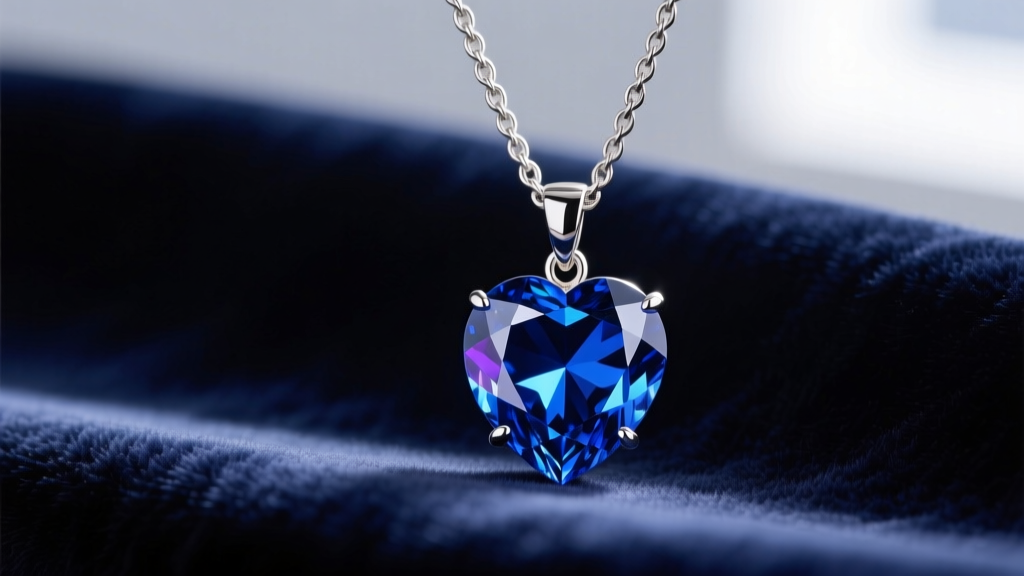
When James Cameron’s 1997 epic premiered, the ‘Heart of the Ocean’ instantly became one of the most recognized jewelry silhouettes in cinematic history. However, the actual necklace used on screen was a high-end prop featuring a heart-shaped blue cubic zirconia or synthetic spinel set in a white metal alloy. To satisfy the intense public fascination, the luxury house Asprey & Garrard was later commissioned to create a genuine high-jewelry version featuring a staggering 171-carat Ceylon sapphire surrounded by 103 white diamonds. Meanwhile, Celine Dion famously wore a completely different iteration to the 1998 Academy Awards: a 15-carat heart-shaped blue diamond crafted by Harry Winston.
For collectors, jewelers, and enthusiasts in 2026, replicating or purchasing a high-caliber heart of the ocean titanic necklace requires moving past the movie magic and understanding the rigorous gemological and metallurgical specifications required to execute a flawless heart-cut pendant. This guide dissects the technical realities of sourcing, setting, and suspending a heavy, vulnerable heart-cut gemstone.
Center Stone Gemology: Achieving the Deep Blue
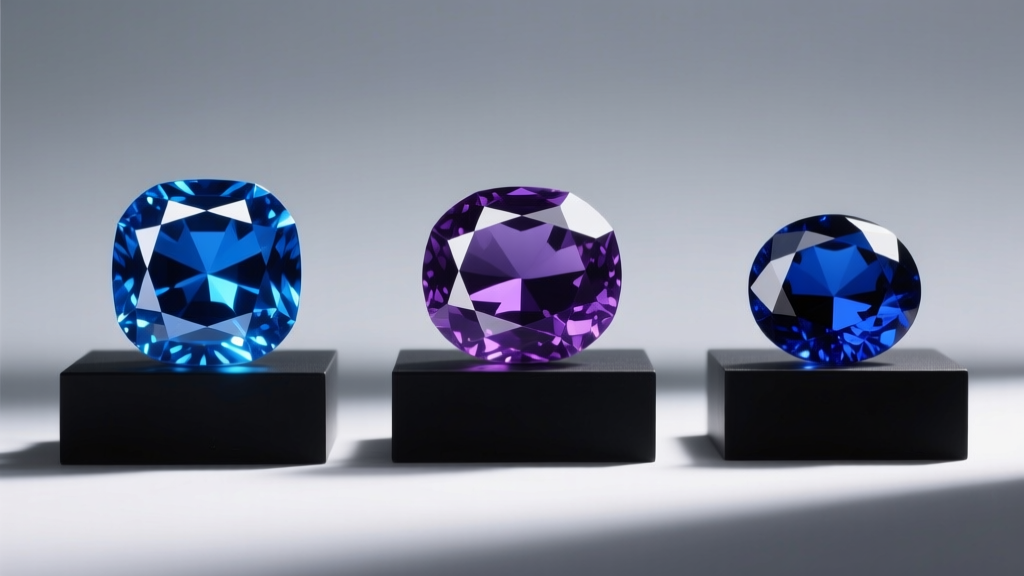
The defining characteristic of this iconic pendant is its saturated, velvety blue hue. In the natural gemstone market, achieving this specific color profile narrows the field to three primary candidates: Ceylon Sapphire, Tanzanite, and Cobalt Spinel. Each possesses distinct optical and physical properties that dictate its suitability for a heavy, everyday-wear pendant.
Ceylon Sapphire (Corundum)
The Asprey & Garrard original utilized a Ceylon sapphire. According to the Gemological Institute of America (GIA), the most prized sapphires exhibit a velvety, medium-to-medium-dark blue, often termed ‘cornflower’ or ‘royal’ blue. Sapphires are dichroic, meaning they display slightly different colors when viewed from different crystal angles. To maximize the face-up blue, the lapidary must orient the cut perpendicular to the c-axis of the crystal. With a Mohs hardness of 9 and no distinct cleavage, sapphire is the only natural blue stone durable enough to withstand decades of wear in an exposed heart cut without severe abrasion.
Tanzanite (Zoisite)
Often used in commercial replicas due to its lower price point, tanzanite is strongly trichroic, showing blue, violet, and burgundy depending on the viewing angle. While a AAAA-grade tanzanite can mimic the deep blue of the movie prop, its Mohs hardness of 6.5 and perfect cleavage in one direction make it highly susceptible to chipping, particularly at the sharp points of a heart cut.
Cobalt Spinel
The ultimate technical alternative for 2026 buyers. Cobalt-doped spinel offers an electric, highly saturated blue that rivals the finest sapphires. With a Mohs hardness of 8 and an isometric crystal structure (meaning it is singly refractive and lacks pleochroism), it offers exceptional brilliance and durability, often at a fraction of the cost of a comparable sapphire.
| Gemstone | Mohs Hardness | Refractive Index | Specific Gravity | 2026 Price Range (High Grade / ct) |
|---|---|---|---|---|
| Ceylon Sapphire | 9.0 | 1.762 - 1.770 | 4.00 | $4,500 - $12,000+ |
| Cobalt Spinel | 8.0 | 1.712 - 1.736 | 3.60 | $2,500 - $6,000 |
| Tanzanite | 6.5 | 1.690 - 1.700 | 3.35 | $450 - $950 |
Structural Integrity: The Crucial V-Prong Setting
The heart brilliant cut is notoriously difficult to secure. The geometry of a heart features two highly vulnerable stress points: the top cleft (the dip between the lobes) and the bottom point. Standard round prongs leave these sharp extremities exposed to impact, virtually guaranteeing a chip over time.
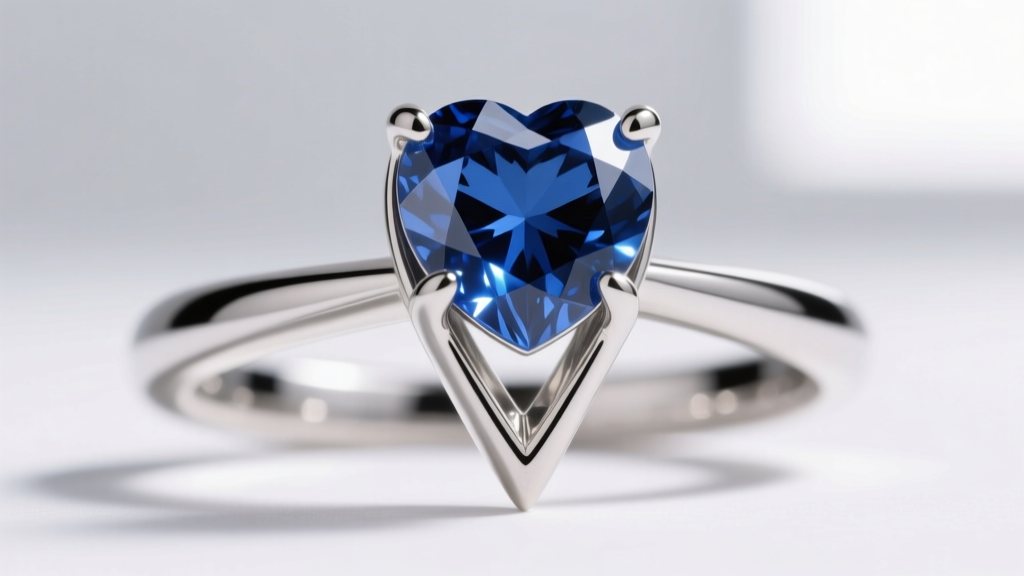
Master jewelers mandate the use of V-prongs at both the cleft and the point. A V-prong wraps the sharp corner in a continuous triangle of metal, distributing impact force away from the gemstone’s crystalline edges. For a stone over 5 carats, the prong wire must be at least 1.4mm thick before shaping.
‘A heart-cut gemstone without a V-prong at the cleft is not a piece of jewelry; it is a temporary arrangement waiting for a kinetic failure.’ — Master Bench Jeweler Adage
Metal Alloy Selection
When setting a high-value center stone meant to replicate the heart of the ocean titanic necklace, metal choice is critical. 18k White Gold (75% gold alloyed with palladium or nickel) is frequently used but requires rhodium plating to appear stark white. Over 3 to 5 years, this plating wears off, revealing a slightly yellowish underlying alloy. Platinum (Pt950/Ru), alloyed with 5% ruthenium for hardness, is the superior technical choice. It is naturally white, possesses a higher density (21.45 g/cm³ vs 15.5 g/cm³ for 18k gold), and work-hardens when scratched, meaning it displaces rather than loses metal mass over decades of wear.
Chain Metallurgy and Tensile Requirements
A 10-carat sapphire set in a heavy platinum halo mounting can easily exceed 20 grams. Suspending this mass requires a chain engineered for high tensile strength and dynamic load resistance. Standard cable or curb chains rely on single soldered links; if the solder fails or the wire fatigues, the pendant is lost.
- Wheat (Espiga) Chains: Composed of interlocking, braided oval links. The friction between the woven links distributes tension across multiple points, making it exceptionally resistant to snapping. Minimum recommended wire gauge: 1.2mm (approx. 16 gauge).
- Box Chains: Square links interlocked at 90-degree angles. Highly durable, but if a single link bends, the structural integrity of the adjacent links is compromised. Minimum width: 1.5mm.
- Clasp Mechanics: A standard spring-ring clasp is a critical failure point for heavy pendants. The internal spring mechanism frequently fails under dynamic loading (e.g., the necklace catching on a garment). A forged, locking lobster clasp with a secondary figure-eight safety catch is mandatory for any pendant exceeding 15 grams.
Evaluating Cut Quality and Symmetry
Beyond the material, the lapidary execution defines the pendant’s visual impact. When sourcing a heart-cut stone for a custom replica, demand a gemological assessment of the following parameters:
The Symmetry Mandate
A heart cut must possess perfect bilateral symmetry. If one lobe is higher or wider than the other, the optical return is severely compromised, and the stone will appear warped when set. The cleft should be deep enough to clearly define the two lobes but not so deep that it creates a ‘bow-tie’ extinction effect (a dark shadow across the center of the stone).
Depth and Table Percentages
According to the GIA Gem Encyclopedia, fancy shapes require precise proportions to maximize brilliance. For heart brilliants, aim for a depth percentage between 55% and 63%, and a table percentage between 53% and 60%. Stones cut too shallow (under 50% depth) will suffer from ‘windowing,’ where light leaks out the bottom, making the center of the ocean appear washed out and lifeless.
Conclusion: Engineering an Icon
Recreating the heart of the ocean titanic necklace is not merely an exercise in aesthetic mimicry; it is a rigorous test of jewelry engineering. By prioritizing a naturally durable center stone like Ceylon sapphire or cobalt spinel, enforcing V-prong security in a platinum mounting, and calculating the tensile requirements of the suspension chain, collectors can own a piece that honors the cinematic legacy while surviving the physical realities of the real world.


