Heart of the Sea Necklace: A Beginner's Buying Guide
Discover everything about the Heart of the Sea necklace. Learn about gemstone types, chain lengths, pricing tiers, and how to spot quality replicas.

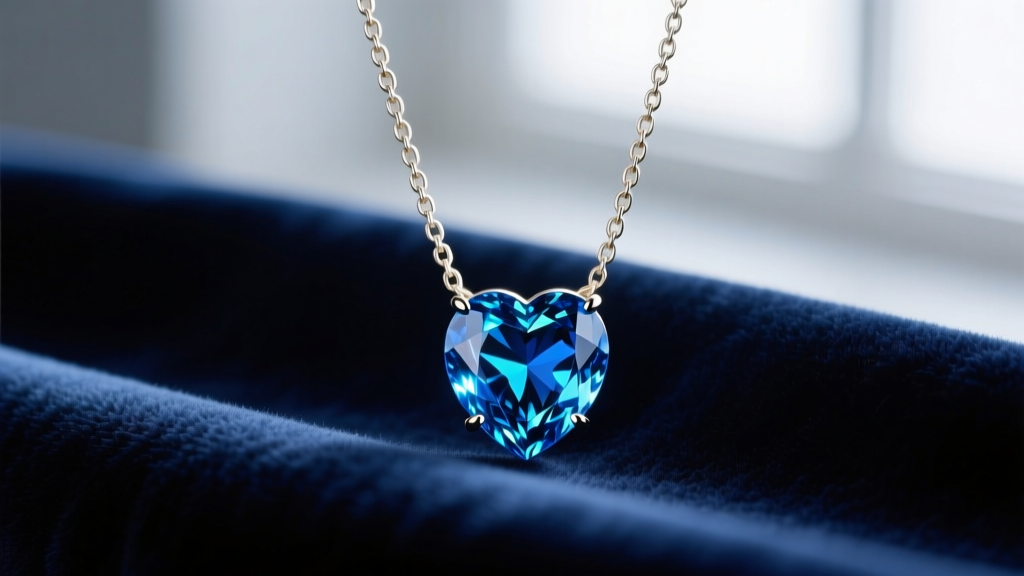
The Legacy of the Heart of the Sea
When most people hear the term "heart of the sea necklace," their minds immediately drift to the iconic 1997 film Titanic. In the movie, the fictional Heart of the Sea was a massive blue diamond surrounded by a halo of white diamonds. In reality, the original prop was a blue sapphire heart, and jeweler Harry Winston later created a 15-carat blue diamond replica valued at over $20 million. Today, the term has evolved into a broader jewelry category representing ocean-inspired, deep-blue heart pendants. Whether you are looking for a high-end sapphire heirloom or a budget-friendly London blue topaz replica, understanding the metallurgy, gemology, and structural requirements of these pieces is critical before you buy.
Decoding the Gemstones: Sapphire vs. Tanzanite vs. Topaz
The most common mistake beginners make when shopping for a Heart of the Sea necklace is assuming all blue gemstones offer the same durability and value. The deep oceanic blue can be achieved through several distinct minerals, each with unique structural properties and price points.
| Gemstone | Mohs Hardness | Avg. Price (Per Carat) | Durability & Wearability |
|---|---|---|---|
| Blue Sapphire | 9.0 | $1,500 - $8,000+ | Excellent for daily wear; highly scratch-resistant. |
| Tanzanite | 6.5 - 7.0 | $400 - $900 | Fair; prone to chipping if struck. Requires protective settings. |
| London Blue Topaz | 8.0 | $20 - $60 | Good; features perfect cleavage, meaning hard impacts can split the stone. |
| Lab-Created Spinel | 8.0 | $10 - $30 | Very good; excellent budget alternative with high clarity and deep color. |
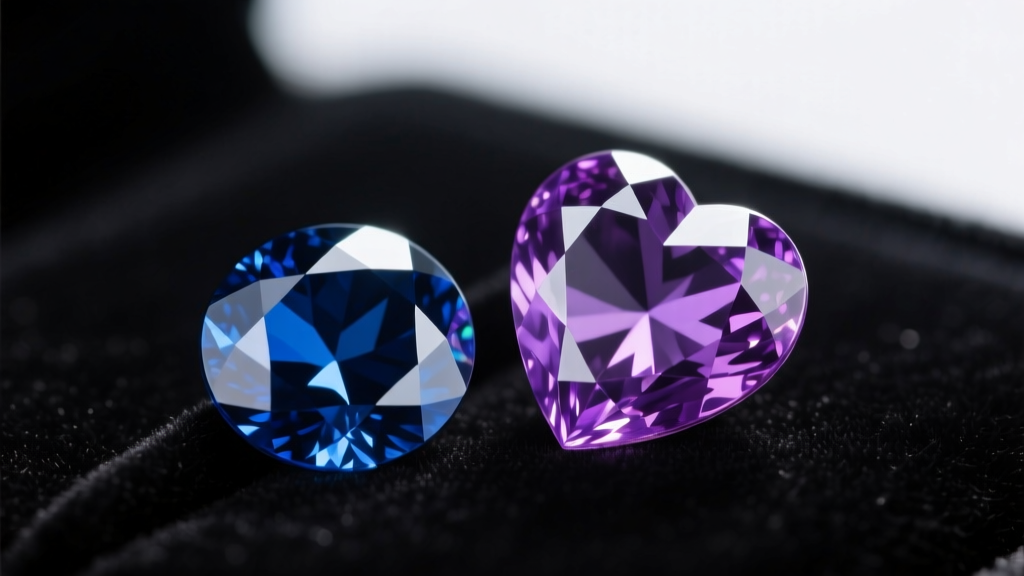
According to the Gemological Institute of America (GIA), blue sapphires owe their color to trace amounts of iron and titanium. When buying a sapphire Heart of the Sea pendant, always ask if the stone has been heat-treated. Heat treatment is standard and accepted in the industry to improve color and clarity, but untreated Ceylon sapphires command a massive premium. If you opt for Tanzanite, be aware of its strong pleochroism—it will show different colors (blue, violet, and burgundy) when viewed from different angles. The GIA Tanzanite Guide notes that cutters must orient the stone carefully to maximize the desirable violet-blue face-up color.
Chain Selection: Matching the Pendant to the Metal
A heavy heart pendant will quickly destroy an inadequate chain. The physics of a pendant swinging on a necklace creates kinetic stress on the chain's weakest points: the clasp and the links immediately adjacent to the bail.
Chain Styles and Thickness
- Box Chains (1.2mm - 1.5mm): The gold standard for heart pendants. The interlocking square links distribute weight evenly and resist kinking. A 1.5mm 14k white gold box chain can safely support a pendant weighing up to 15 grams.
- Wheat Chains (1.5mm - 2.0mm): Woven oval links that offer a luxurious, textured look. Excellent tensile strength, but the intricate links can trap skin oils and require ultrasonic cleaning.
- Snake Chains (Avoid): While they look sleek and modern, snake chains are notorious for kinking irreparably if bent or slept in. Never use a snake chain for a heavy, solid gemstone heart.
Metal Grades and Alloys
For a piece meant to mimic the icy, oceanic aesthetic of the Heart of the Sea, white metals are mandatory. Platinum (PT950) is the ultimate choice for heirloom pieces; it is hypoallergenic, naturally white, and develops a desirable patina over time rather than wearing away. 14k or 18k White Gold is the most popular mid-tier option, but remember that white gold is alloyed with nickel or palladium and plated with rhodium. You will need to budget for re-rhodium plating every 12 to 18 months to maintain the bright white finish. For budget buyers, Sterling Silver (925) is acceptable, but ensure it features a thick rhodium flash to delay inevitable tarnishing.
Sizing, Proportions, and Bail Mechanics
Beginners often focus solely on carat weight, but physical millimeter dimensions dictate how the necklace actually looks on the body. A 2-carat heart sapphire will measure roughly 8mm x 8mm, while a 2-carat London blue topaz might be cut deeper, measuring closer to 7mm x 7mm.
Pro Tip: Always measure the inner diameter of the pendant's bail (the loop that connects the gem to the chain). If you are using a 1.5mm box chain, the bail's inner diameter must be at least 3.5mm. A tight fit causes metal-on-metal friction, which will eventually saw through the chain or wear down the bail's soldering point.
For everyday wear, a pendant measuring between 12mm and 18mm in height (excluding the bail) provides the most elegant proportion. Anything larger than 25mm transitions from a refined necklace into costume jewelry territory, often looking bottom-heavy and pulling the collar of your shirt forward.
How to Avoid Counterfeits and Overpriced Replicas
The secondary market and online auction sites are flooded with counterfeit Heart of the Sea necklaces. Glass, synthetic spinel, and blue-doped cubic zirconia are frequently passed off as natural sapphire or tanzanite. Here is your actionable checklist for verifying authenticity:
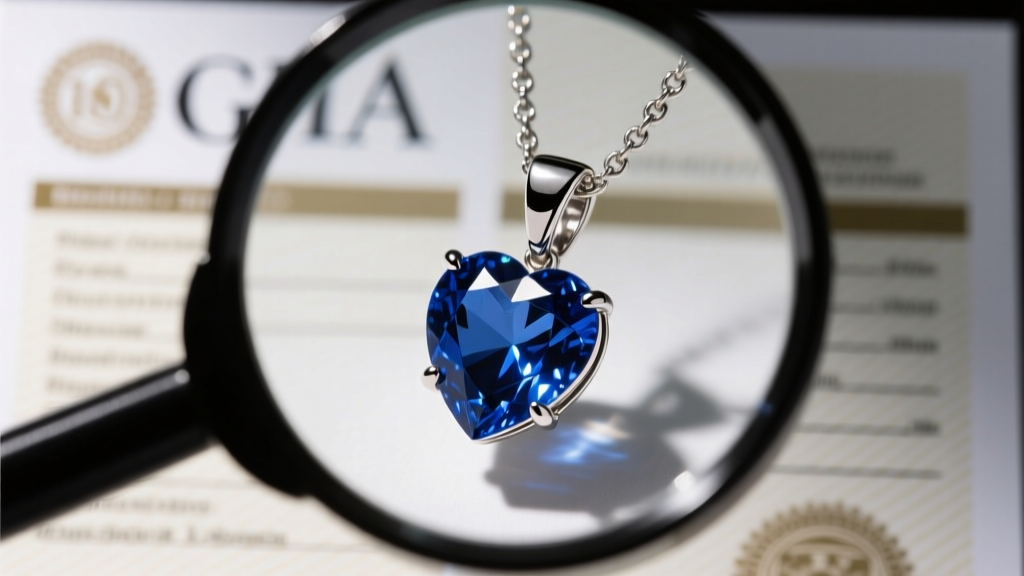
- Demand Certification: Any natural sapphire or tanzanite pendant priced over $1,000 must come with a report from a tier-one laboratory like the GIA, AGS, or Gubelin. Certificates from in-house "store labs" are essentially worthless for resale or insurance purposes.
- The Loupe Test: Using a 10x jeweler's loupe, inspect the interior of the stone. Natural sapphires will often show microscopic silk (rutile needles) or color zoning. Glass will show perfectly round gas bubbles, while synthetic spinel will exhibit curved striae.
- Thermal Conductivity: Reputable jewelers use diamond/moissanite testers that also measure thermal conductivity. Sapphire conducts heat differently than glass or CZ. If a seller refuses to let you test the stone, walk away.
- Check the Prongs: High-end gems are set in high-end metals. If a seller claims the stone is a natural, unheated sapphire but it is set in stamped "925" silver with thin, uneven prongs, it is almost certainly a synthetic or glass stone.
Styling Your Oceanic Centerpiece
The deep blue of a Heart of the Sea pendant acts as a striking contrast to most skin tones and wardrobe palettes. To maximize its visual impact, pair the necklace with V-necklines, scoop necks, or open-collared silk blouses. The downward point of the heart pendant naturally follows the geometry of a V-neck, elongating the neck and drawing the eye to the décolletage.
If you prefer the layered necklace trend, treat your heart pendant as the anchor piece. Wear it on an 18-inch chain, and layer it above a 16-inch delicate gold chain featuring a small, minimalist geometric charm (like a tiny gold disc or a single seed pearl). Keep the top chain significantly thinner and simpler so it frames the blue heart without competing for attention. Avoid layering it with other colored gemstones, as the intense saturation of a blue sapphire or tanzanite will easily clash with emeralds or rubies.


