2026 Squash Necklace Value Assessment & Pricing Guide
Assess the true value of a squash necklace in 2026. Learn to authenticate Navajo silver, grade turquoise, and avoid overpriced imports.

The 2026 Market for Authentic Squash Necklaces
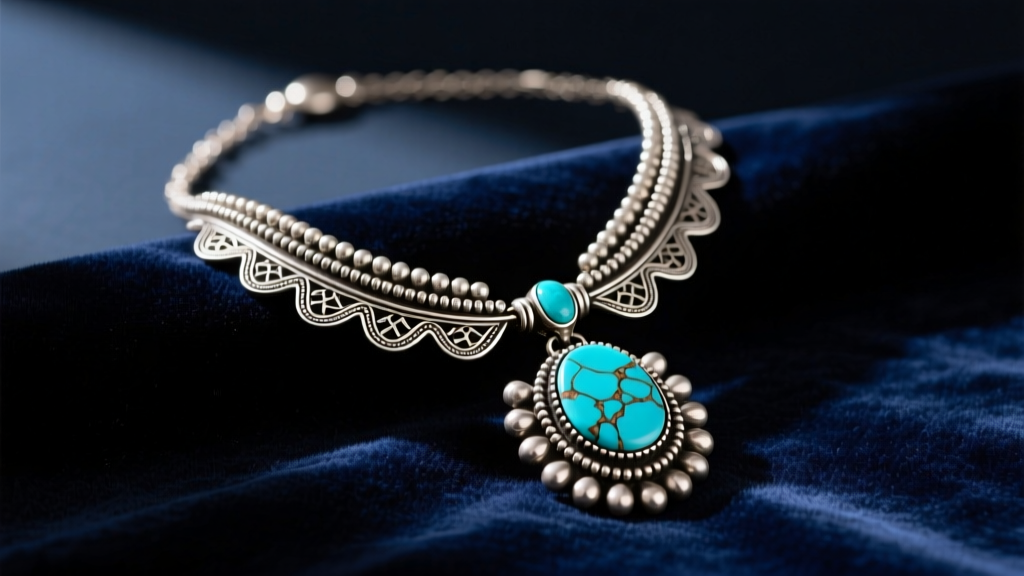
The squash necklace—more accurately known as the squash blossom necklace—is one of the most iconic and culturally significant pieces of Southwestern jewelry. Rooted in the silversmithing traditions of the Diné (Navajo), Zuni, and Santo Domingo peoples, these striking pieces feature a central crescent pendant (the Naja) flanked by double strands of silver beads and pomegranate-style blossoms. As of 2026, the resurgence of heritage Southwestern aesthetics in high fashion has driven demand to an all-time high. However, this popularity has also flooded the market with overseas replicas, cast-silver imitations, and dyed howlite masquerading as natural turquoise. Conducting a rigorous budget and value assessment is no longer optional; it is essential for any serious collector or investor.
Whether you are evaluating a vintage mid-century piece or commissioning a contemporary work from a living master, understanding the metallurgical, gemological, and historical markers of value will protect your investment. According to the Indian Arts and Crafts Board, the misrepresentation of imported jewelry as Native American-made is a persistent issue, making hallmark verification and material authentication your first line of defense.
Historical Context: The Misnomer of the Blossom
To accurately assess value, one must understand the anatomy and history of the piece. The term squash blossom is actually a historical misnomer. The silver bead pendants were originally inspired by Spanish-Mexican pomegranate motifs, which the Navajo adapted in the late 19th century. The central Naja pendant has even older roots, tracing back to Moorish symbols brought to Spain and subsequently to the Americas by conquistadors, where it was used as a protective talisman on horse bridles.
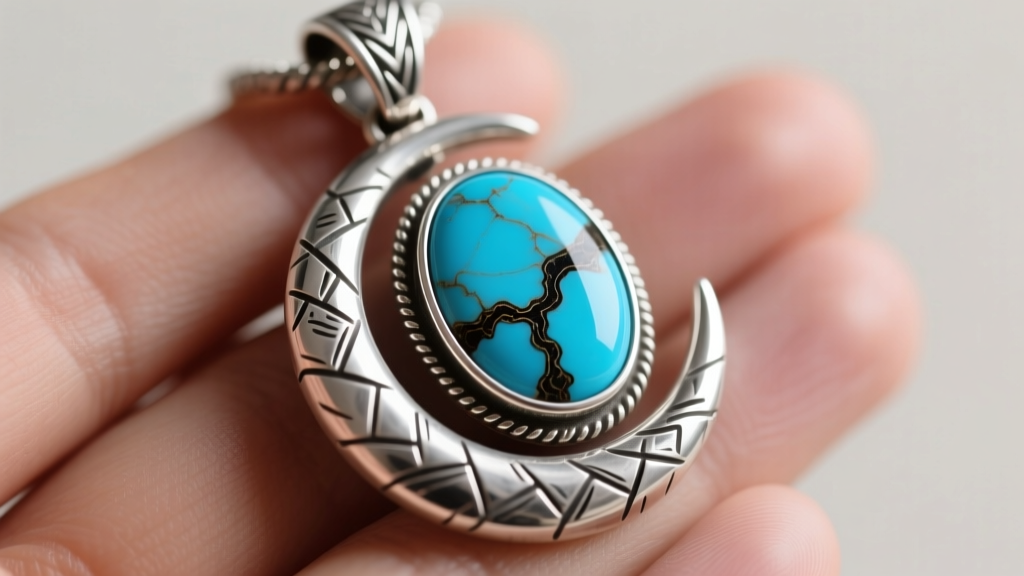
Collectors pay a premium for pieces that respect these traditional proportions. A high-value Naja should exhibit symmetrical, elegant curves, often featuring a single turquoise cabochon at its center or top loop. The squash blossoms themselves should be evenly spaced and hand-formed, not cast from a single mold. Mass-produced imports often feature stiff, uniform blossoms that lack the subtle asymmetrical charm of hand-hammered silver.
Metallurgical Value: Coin Silver vs. Sterling Silver
The silver content is a primary driver of a squash necklace's valuation. In the 2026 collector's market, the distinction between coin silver and sterling silver is critical for dating and pricing a piece.
Coin Silver (Pre-1930s)
Early Navajo silversmiths melted down US silver coins to create their jewelry. Coin silver typically has a purity of around 90% (900), compared to the 92.5% (925) of modern sterling. Because it is slightly softer and contains trace amounts of copper and other metals from the coins, coin silver develops a rich, dark, and complex patina over decades. Vintage coin silver squash necklaces are exceedingly rare and command museum-tier prices, often starting at $4,500 and climbing well past $15,000 for documented masterworks.
Sterling Silver (Post-1950s)
By the mid-20th century, commercial sterling silver sheet and wire became the standard. A genuine contemporary or mid-century sterling squash necklace should be stamped 925 or Sterling. When assessing weight, a full-sized, authentic adult squash necklace typically weighs between 85 and 150 grams. If a piece feels unusually light (under 50 grams), it is likely hollow-cast or features thin, modern electroplated silver over a base metal core—a major red flag for value.
Turquoise Valuation: The Matrix and the Mine
Turquoise is the soul of the squash necklace, and its origin and treatment dictate massive price variances. The Gemological Institute of America (GIA) notes that turquoise is highly porous and frequently treated, but the type of treatment drastically alters the financial value. Natural, untreated turquoise with a striking matrix (the host rock veining) is the gold standard.
| Turquoise Mine / Type | Characteristics | Value Impact (2026) |
|---|---|---|
| Bisbee (Natural) | Deep blue with smoky lavender/brown web matrix | Premium (Adds $1,000+ to value) |
| Kingman (Natural) | Vivid sky to deep blue, distinct black pyrite matrix | High (Highly sought by collectors) |
| Sleeping Beauty | Clear, robin's egg blue, little to no matrix | High (Mine closed, prices soaring) |
| Stabilized (Epoxy) | Enhanced hardness, color locked, common in Zuni pieces | Moderate (Acceptable, but not premium) |
| Block / Dyed Howlite | Uniform color, plastic-like feel, no natural matrix | Zero (Considered fake/costume) |
When inspecting the stones on a squash necklace, use a 10x jeweler's loupe. If the matrix lines look like they are sitting on top of the stone, or if the color is bleeding into the silver bezel, you are likely looking at dyed howlite or block turquoise. Genuine high-grade turquoise will have deep, integrated matrix patterns that feel like natural topography.
2026 Pricing Tiers: What Should You Actually Pay?
Navigating the budget landscape requires categorizing the necklace into one of four distinct market tiers. Use this framework to negotiate and assess fair market value.
- Tier 1: Import and Fashion Replicas ($40 - $180)
These pieces are mass-produced overseas, often in countries like India or China. They feature cast silver (or silver plate), glued-in synthetic stones, and lack any artist hallmark. While fine for temporary costume wear, they hold zero resale value and are a poor long-term investment. - Tier 2: Authentic Contemporary Artisans ($450 - $1,800)
Crafted by verified Native American silversmiths using genuine 925 sterling silver and stabilized or natural turquoise. These pieces are hallmarked, come with a certificate of authenticity, and represent excellent value for daily wear and cultural appreciation. - Tier 3: Vintage Mid-Century ($2,000 - $6,500)
Pieces dating from the 1940s to the 1970s. These feature heavier gauge silver, traditional hand-stamped motifs (like rainbirds or geometric borders), and natural, un-stabilized turquoise that has developed a beautiful color shift from decades of skin oils and wear. - Tier 4: Master and Museum Grade ($8,000 - $25,000+)
Historic pieces by legendary silversmiths like Fred Peshlakai, Atsidi Sani, or early Charles Loloma. These are documented, often feature coin silver, and are traded among high-end collectors and institutions like the Smithsonian National Museum of the American Indian.
Authentication Red Flags and Failure Modes
Even experienced buyers can be deceived by sophisticated fakes. When conducting your value assessment, actively look for these specific failure modes and anachronisms:
1. The Anachronistic Bezel
If a seller claims a squash necklace is from the 1920s or 1930s, examine the silver bezel holding the turquoise. Early Navajo smiths used simple, shallow, hand-filed bezels. If you see a high, serrated Tiffany-style bezel, the piece is either heavily modified or entirely modern. Serrated bezels did not become common in Southwestern jewelry until the late 1960s and 1970s.
2. Epoxy Bleed and Glue
Authentic Native American silversmithing relies on tight, mechanical bezel settings. The silver is pushed over the stone using a bezel pusher and burnished. If you see cloudy residue, glue, or epoxy seeping out from the edges of the Naja's turquoise cabochon, the stone was likely glued in—a hallmark of cheap import manufacturing or a botched repair that severely diminishes the piece's value.
3. The Hallmark Mismatch
Electro-stamped, deep, and perfectly crisp hallmarks on the back of the Naja or clasp are often a sign of modern mass production. Vintage hallmarks were struck by hand with a steel die, resulting in slight variations in depth, alignment, and clarity. Furthermore, ensure the hallmark matches the style of the piece; a modern laser-engraved signature on a piece with heavy, oxidized vintage patina is a clear indicator of tampering.
Preservation and Patina Maintenance
Once you have acquired a genuine squash necklace, preserving its value requires specific care. Never use commercial silver dips or ultrasonic cleaners. These harsh chemicals will strip the decades-old oxidation from the stampwork, destroying the contrast that gives vintage silver its visual depth, and they can easily fracture natural turquoise or dissolve the matrix.
Instead, use a soft, untreated microfiber cloth to gently buff the high-relief areas of the silver, leaving the dark patina in the recessed stampwork intact. Store the necklace flat in an anti-tarnish bag with a silica gel packet to prevent moisture-induced degradation of the turquoise. By respecting the material integrity and historical context of the squash necklace, you ensure that this remarkable piece of Southwestern heritage retains both its financial and cultural value for generations to come.