Heart and Sword Necklace Styling: 2026 Trend Guide
Discover how to style the heart and sword necklace in 2026. Explore material grades, chain pairings, and neo-romantic trend analysis for this bold motif.

The Neo-Romantic Revival: Why the Motif is Dominating 2026
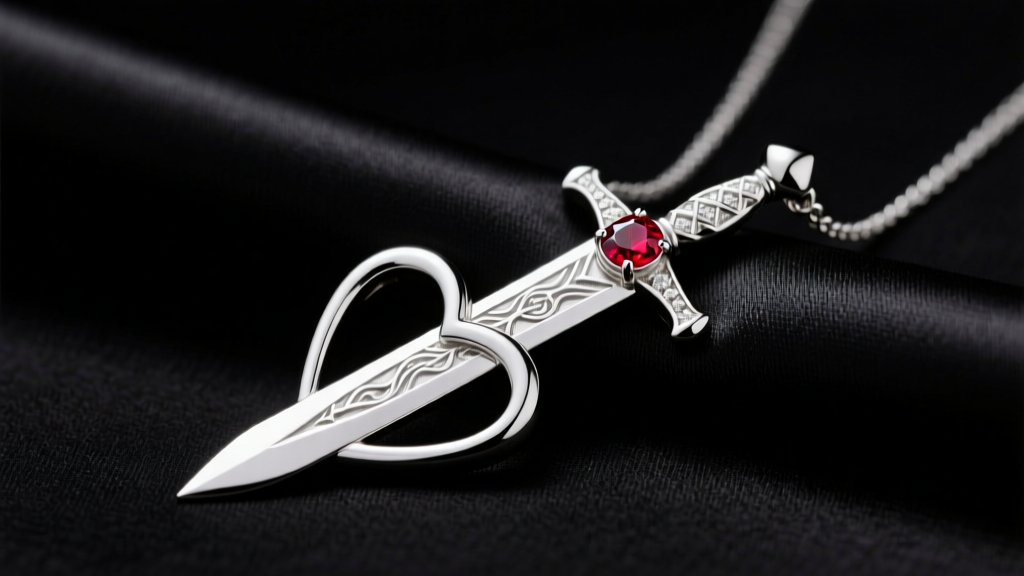
The heart and sword necklace is no longer confined to vintage tattoo parlors or antique mourning jewelry cabinets. In 2026, this striking motif has been reclaimed by the neo-romantic and dark coquette movements, evolving into a sophisticated symbol of resilience, guarded vulnerability, and emotional armor. As a style analyst tracking the intersection of heritage motifs and contemporary fashion, I have watched the heart and sword pendant transition from a niche subculture staple to a mainstream luxury statement.
According to recent trend forecasts from the Business of Fashion, modern consumers are gravitating toward jewelry that tells a story of emotional boundary-setting. The sword represents protection and autonomy, while the heart signifies emotional depth and connection. Designers are moving away from the cartoonish, blood-dripping flash art of the 1990s, opting instead for elegant fencing foils, ornate Renaissance rapiers, or minimalist geometric intersections. The result is a versatile talisman that bridges the gap between streetwear edge and high-fashion elegance.
"The heart and sword is the ultimate paradox in jewelry design—it marries the inherent vulnerability of the heart with the impenetrable boundary of the blade."
Material Breakdown: Choosing the Right Metal Grade
The structural integrity of a sword pendant is critical. A poorly cast sword tip will snap off under daily wear, and a weak bail will warp under the weight of an elongated drop. When investing in a heart and sword necklace, the metal grade dictates both the longevity and the aesthetic weight of the piece.
316L Surgical Stainless Steel
This is the workhorse for heavier, streetwear-inspired pieces. With high tensile strength and a density that supports substantial broadsword pendants (often weighing 18 to 25 grams), 316L steel resists tarnish, water damage, and skin discoloration. It is the ideal choice for oversized, gothic-leaning designs that require a rigid, unyielding blade.
925 Sterling Silver
Sterling silver is ideal for intricate, oxidized finishes. The dark patina accentuates the engraved fullers (the grooves running down the sword blade) and the filigree on the heart's bezel. However, silver is a relatively soft metal. Ensure the sword tip is slightly blunted or seamlessly integrated into the heart's lower curve to prevent it from catching on delicate fabrics or scratching the wearer's skin.
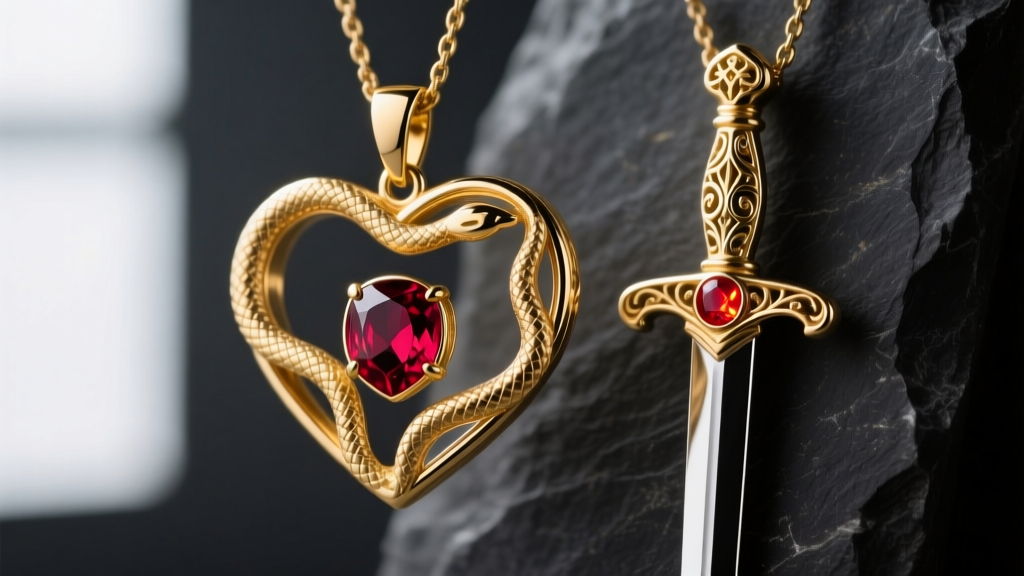
18k Gold Vermeil
For luxury iterations, ensure the piece meets the standard of at least 2.5 microns of gold plated over a sterling silver base, as outlined by the Gemological Institute of America (GIA). Anything less will wear off quickly on the high-friction edges of the sword hilt and the bail loop, leaving a patchy, uneven finish.
The Anatomy of the Pendant: Technical Details to Inspect
Before purchasing, evaluate the micro-construction of the pendant. The intersection where the sword pierces or rests upon the heart is a structural weak point in poorly manufactured jewelry.
- The Bail: Avoid standard, thin wire loops. Look for a reinforced tube bail or a heavy-duty integrated jump ring. The vertical drop of a sword creates a pendulum effect, which can easily snap a thin wire bail over time.
- The Blade Edge: High-end jewelers will leave the blade edges slightly softened but visually sharp. If the edges are razor-sharp, they will inevitably slice through silk or fine cotton necklines.
- Stone Settings: Many 2026 designs feature a central cabochon ruby or garnet where the sword intersects the heart. Ensure these are bezel-set rather than prong-set. Prongs on the center of a torso-worn pendant are highly prone to snagging on sweaters and scarves.
Proportions and Chain Pairings: A Technical Framework
A common styling failure is pairing a heavy, elongated sword pendant with an inadequate chain. This causes the clasp to slide to the front of the neck and the bail to wear down prematurely due to uneven weight distribution. Use this framework to match your chain to the pendant's drop length and weight.
| Pendant Drop Length | Ideal Chain Style | Chain Gauge / Width | Best Neckline Pairing |
|---|---|---|---|
| 15mm - 20mm (Petite) | Cable or Box Chain | 1.0mm - 1.5mm | Delicate Scoop or Crew Neck |
| 25mm - 35mm (Medium) | Curb or Figaro Chain | 2.0mm - 3.0mm | Plunging V-Neck or Open Blazer |
| 40mm+ (Statement) | Rope or Cuban Chain | 4.0mm - 6.0mm | Heavy Knit Turtleneck or Bare Chest |
Pro Tip: If you are wearing a medium-to-large sword pendant on a longer chain (20 inches or more), consider adding a small metal counterweight bead near the clasp at the back of the neck. This prevents the heavy pendant from pulling the clasp forward.
Neckline Architecture: Styling the Pierced Heart
The strict verticality of the sword demands specific neckline considerations to maximize its visual impact without compromising the garment.
The Plunging V-Neck
This is the ultimate pairing for the heart and sword necklace. The V-shape of the garment mirrors the downward thrust of the sword, creating a continuous, elongating visual line that draws the eye to the sternum. Opt for an 18-to-20-inch chain so the heart rests precisely in the negative space of the neckline.
The Asymmetrical or One-Shoulder Top
This creates deliberate visual tension. The rigid, bilateral symmetry of the heart and sword contrasts beautifully with the unbalanced hemline of an asymmetrical garment. It anchors the look, providing a central focal point amidst the chaotic draping of the fabric.
The Heavy Knit Turtleneck
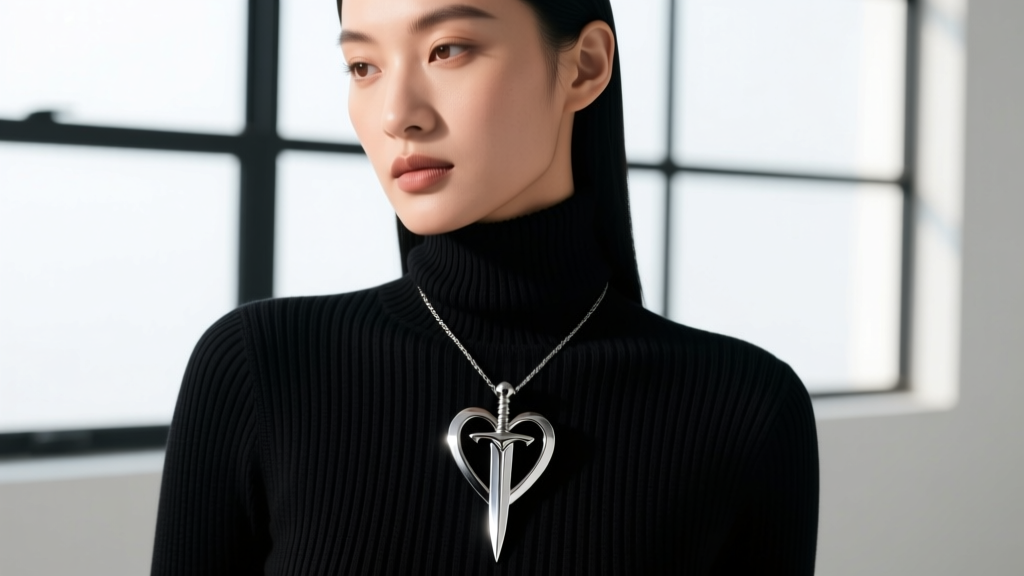
Styling this motif over a heavy winter knit requires a longer drop (22 to 24 inches). A shorter chain will cause the sword tip to catch in the ribbed weave of the sweater, potentially damaging both the yarn and the jewelry. Ensure the pendant has a smooth, highly polished bail to glide effortlessly over the textured fabric.
Authenticity, Pricing, and Sourcing in 2026
Navigating the current market requires an understanding of manufacturing tiers and their corresponding price points. The heart and sword motif is widely produced, but quality varies drastically.
- Fast Fashion / Zinc Alloy ($15 - $40): Avoid these pieces. They are typically cast with brittle pot metals that cannot support the lever-action stress of a long sword pendant. The nickel content often causes contact dermatitis, and the plating will oxidize within weeks.
- Mid-Tier Artisan & Sterling ($75 - $250): The sweet spot for trend-focused styling. Look for 925 hallmarks, solid jump rings, and oxidized detailing that highlights the sword's crossguard and the heart's anatomical curves.
- Fine Jewelry & Solid Gold ($900 - $3,500+): Investment pieces featuring pavé diamond accents on the sword hilt or ethically sourced rubies set within the heart. These are designed for daily wear, resist structural fatigue, and hold intrinsic melt value.
Final Verdict on the 2026 Motif
The heart and sword necklace has successfully shed its purely rebellious connotations to become a masterclass in stylistic juxtaposition. Whether rendered in heavy, oxidized steel for a grunge-inspired layering look, or cast in delicate 18k gold for a subtle nod to neo-romanticism, this motif offers a rare combination of narrative depth and structural elegance. By paying close attention to metal grades, bail construction, and chain gauge, you can secure a piece that will serve as a cornerstone of your jewelry wardrobe for years to come.