Heart With Wings Necklace Troubleshooting: Fix Breaks & Tarnish
Repair your heart with wings necklace with expert tips. Learn to fix fragile wing joints, clean intricate feathers, and prevent chain tangling.

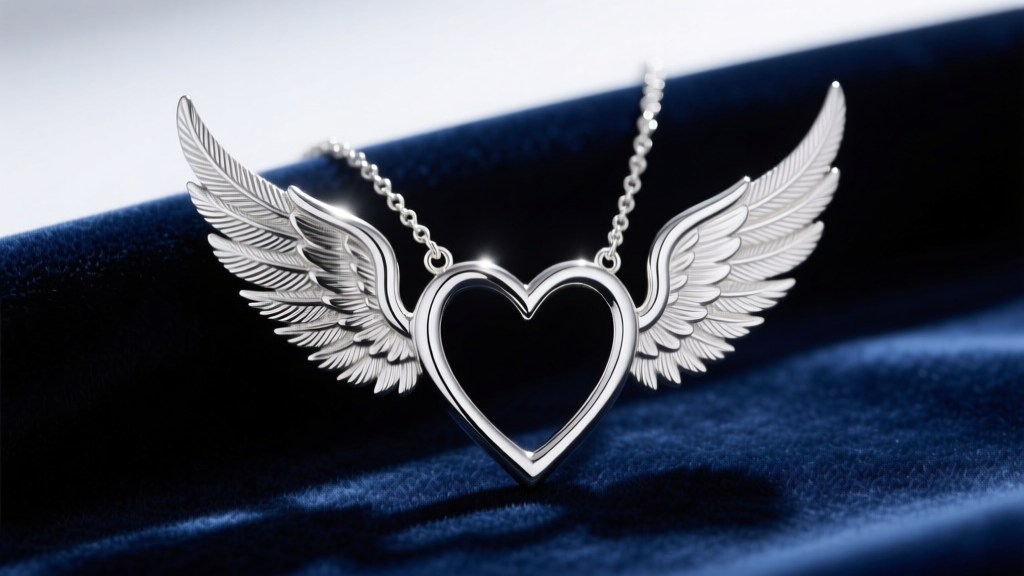
The heart with wings necklace is a timeless symbol of love, freedom, and remembrance. However, from a structural and metallurgical perspective, this specific pendant design is notoriously prone to damage. The delicate wing tips act as natural snag points, the intricate feather crevices trap tarnish-causing oils, and the top-heavy design often leads to severe chain tangling. If your favorite piece is damaged, dull, or constantly knotted, you are not alone. This expert troubleshooting guide breaks down the exact failure modes of winged heart pendants and provides actionable, professional-grade solutions to restore and protect your jewelry.
The Anatomy of a Heart With Wings Pendant (and Its Weak Points)
To effectively troubleshoot your necklace, you must first understand how it was manufactured. Most commercial heart with wings pendants are produced using one of two methods: die-striking or casting. Die-struck pieces are stamped from sheets of metal under immense pressure, resulting in dense, durable wings with sharp, defined edges. Cast pieces, however, are formed by pouring molten metal into a mold. Casting is cheaper and allows for deeper 3D feather textures, but it introduces microscopic porosity. This porosity makes cast wings significantly more brittle, meaning a wing tip that is less than 1.2mm thick will easily snap if caught on a sweater.
Furthermore, the bail (the loop that connects the pendant to the chain) is a primary failure point. Because the wings add horizontal width and weight, the pendant swings and twists more than a standard teardrop or circular charm, placing immense lateral stress on the bail connection.
Troubleshooting Structural Failures: Broken Wings & Bails
When your necklace breaks, the repair method depends entirely on the nature of the fracture and the materials involved.
Soldering Thin Wing Tips and Fractures
If a wing tip has snapped off, do not attempt to glue it back together with jeweler's epoxy or superglue; the bond will fail within days due to the microscopic surface area. Instead, the piece requires laser welding. Unlike traditional torch soldering, which requires flux and broad heat application that can melt delicate 0.8mm wing tips or shatter nearby pave-set cubic zirconia stones, laser welding uses a concentrated light beam to fuse metal at a microscopic level without heating the surrounding area. According to technical repair standards outlined by Ganoksin, laser welding is the only safe method for repairing thin, cast sterling silver or gold-filled wing extremities. Expect to pay between $45 and $85 for a professional laser weld.
Reattaching a Loose or Fallen Bail
Mass-market winged heart pendants often use epoxy-glued bails to save on manufacturing costs. Body heat, perfumes, and lotions break down this adhesive within 6 to 12 months. If your bail has fallen off, have a jeweler drill a microscopic hole through the top center of the heart and solder a proper cast sterling silver or 14k gold-filled jump ring bail. This permanent mechanical connection will outlast the lifespan of the chain itself.
The Tarnish Trap: Cleaning Intricate Feather Details
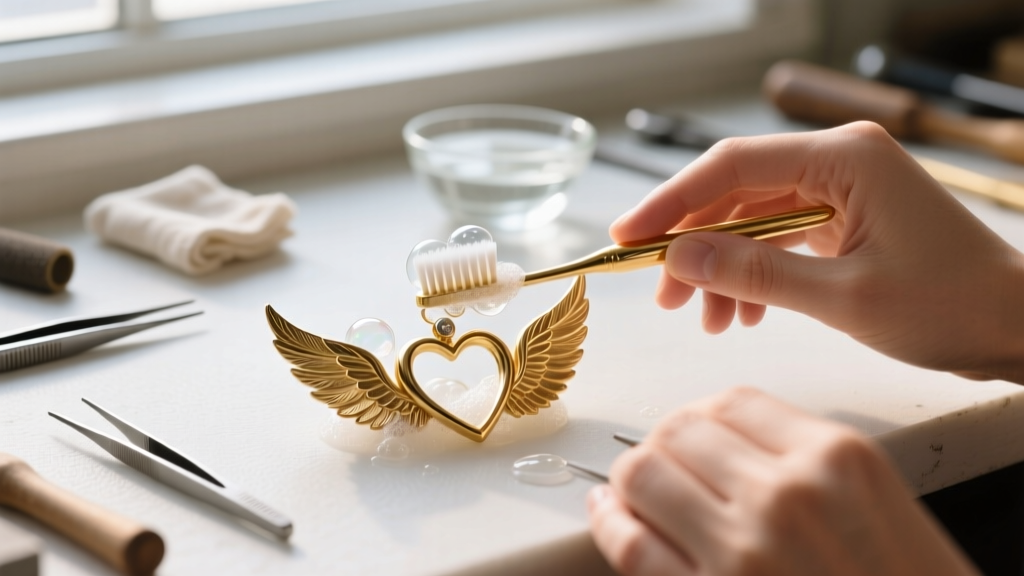
The deep grooves carved into the wings to simulate feathers are magnets for dead skin cells, sebum, and sulfur compounds. When these accumulate, they accelerate oxidation, turning the crevices black and making the pendant look dirty. However, you must avoid commercial "dip" cleaners (like Tarn-X). These chemicals contain thiourea, which strips the intentional dark oxidation (antiquing) from the feather crevices, leaving the pendant looking flat, cheap, and overly bright.
Material-Specific Cleaning Protocols
The Jewelers of America recommends tailoring your cleaning approach to the specific base metal of your pendant. Refer to the troubleshooting matrix below to identify your material and apply the correct fix:
| Material Grade | Tarnish Rate | Recommended Cleaning Method | Risk to Feather Details |
|---|---|---|---|
| 925 Sterling Silver | High (Weeks) | Mild dish soap, warm water, and a soft baby toothbrush. | High if using chemical dips or abrasive polishing cloths inside crevices. |
| 14k Gold Vermeil | Low (Months) | Microfiber cloth and specialized non-abrasive gold polishing liquid. | Medium; aggressive brushing can wear off the gold layer at the feather peaks. |
| Brass/Zinc Alloys | Very High (Days) | Ketchup or lemon juice application for 5 minutes, followed by a thorough rinse. | High; acids can pit porous castings if left on too long. |
Expert Note on Vermeil: The FTC Jewelry Guides mandate that true vermeil must have a minimum 2.5-micron gold layer over sterling silver. If your "gold" winged heart tarnishes rapidly and turns your skin green, it is likely gold-plated brass (under 0.5 microns) and requires a professional re-plating service rather than aggressive home cleaning.
Solving the Tangling Problem: Chain & Pendant Pairing
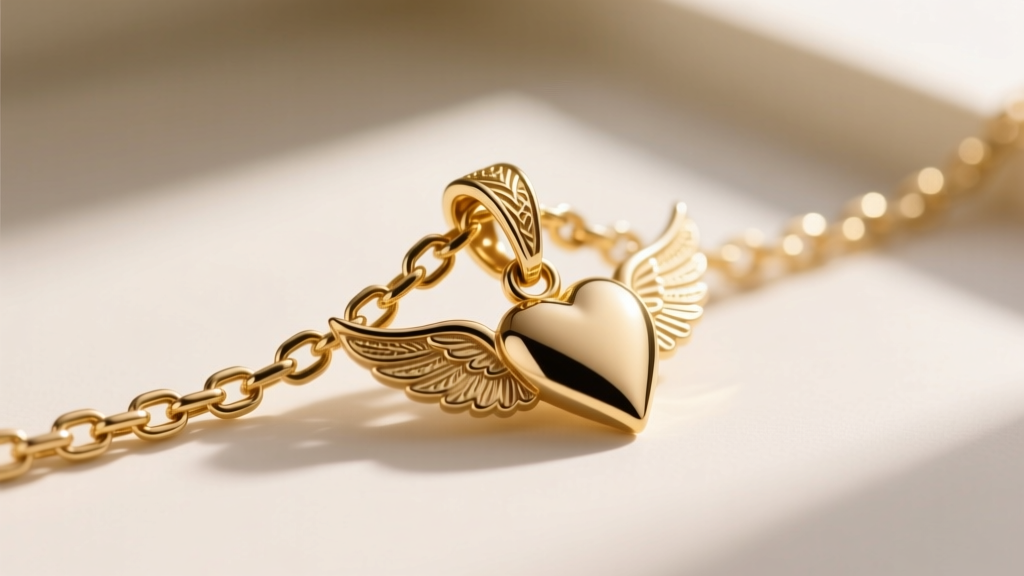
Nothing is more frustrating than unclasping your necklace only to find the chain hopelessly knotted around the wings. This is known in the industry as the "wing snag effect." Because the wings extend horizontally, the sharp tips easily slip through the open links of certain chains and catch when the necklace shifts against your collarbone.
Chains to Avoid
- Snake Chains: The smooth, continuous surface of a snake chain easily slides through the bail, but when it bends, the links separate slightly, allowing wing tips to wedge inside and kink the chain permanently.
- Fine Cable Chains: The open, oval links of a standard cable chain act as perfect traps for the sharp points of die-struck wings.
- Herringbone Chains: These lay flat but are highly susceptible to kinking when the heavy, wide wings pull them off-axis.
The Best Chain Pairings for Winged Hearts
To solve the tangling issue, you need a chain with flush, closed links that cannot be penetrated by the wing tips. A Box Chain or a Wheat (Spiga) Chain in a 1.2mm to 1.5mm thickness provides the necessary structural rigidity. The geometric, closed links of a box chain physically prevent the wing tips from slipping inside, while the woven, directional pattern of a wheat chain naturally repels snags. Additionally, upgrading to a slightly larger, thicker bail will keep the pendant sitting flatter against the chest, reducing the lateral swinging that initiates tangles.
When to DIY vs. When to See a Professional Jeweler
Knowing your limits will save you from destroying a sentimental piece. Use this decision framework to determine your next step:
- DIY Safe: Routine cleaning with mild soap and a baby toothbrush, polishing flat surfaces with a treated jeweler's cloth, and swapping out a damaged chain for a tangle-resistant box chain.
- Professional Required: Reattaching a snapped wing tip (requires laser welding), fixing a cracked bail loop, removing deep scratches from the heart's face, or reapplying rhodium plating to white gold or silver pieces to restore their bright white luster.
"Never attempt to bend a warped wing back into shape with pliers at home. Cast metals suffer from work-hardening; bending them back and forth even once or twice will cause the metal to snap cleanly at the stress point. Always have a jeweler anneal the metal with heat before reshaping."
Summary Checklist for Longevity
To ensure your heart with wings necklace remains a lasting keepsake rather than a source of frustration, implement these three rules:
- Upgrade the Chain: Ditch the fragile cable chain for a 1.2mm box chain to eliminate the wing snag effect.
- Ditch the Dip: Clean intricate feather details manually with a soft brush to preserve the contrasting antiquing.
- Store Flat: Never toss a winged pendant into a communal jewelry box. The wings will inevitably tangle with other chains and snap. Store it flat in an individual anti-tarnish ziplock bag.
By understanding the structural vulnerabilities of the winged heart design and applying these targeted troubleshooting techniques, you can keep your necklace looking pristine and structurally sound for decades to come.


