Is a Hello Kitty Bead Necklace Worth It? 2026 Value Guide
Assess the true value of a Hello Kitty bead necklace in 2026. We compare Sanrio authentic materials, pricing tiers, and investment potential.
The Anatomy of a Hello Kitty Bead Necklace
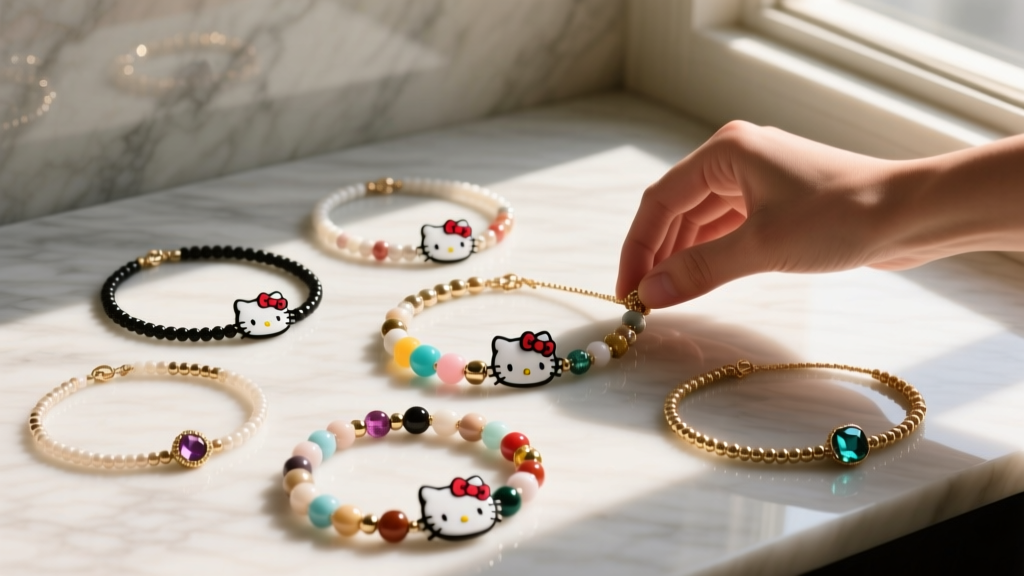
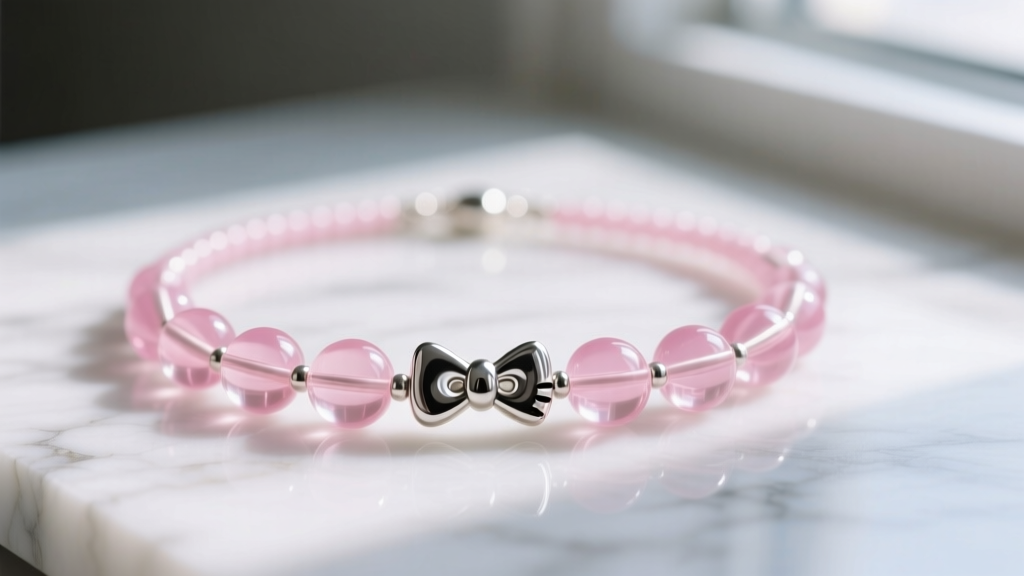
When evaluating the true market value of a Hello Kitty bead necklace in 2026, collectors and casual buyers alike must look far beyond the iconic bow. The Sanrio licensing empire has produced thousands of jewelry iterations over the last five decades, but the beaded necklace category remains uniquely complex. To accurately assess budget and value, we must first deconstruct the physical anatomy of these pieces, examining the stringing materials, bead dimensions, and hardware that dictate both longevity and price.
The foundation of any beaded necklace is its stringing material. Budget-friendly, mass-market Hello Kitty bead necklaces typically utilize a 0.8mm elastic polyurethane cord. While this offers easy slip-on wearability, polyurethane is highly susceptible to degradation from UV exposure and the natural sebum (skin oils) produced by the wearer. From a value perspective, elastic-strung necklaces have a functional lifespan of roughly 14 to 18 months before the polymer chains break down, leading to catastrophic stretching or snapping.
Conversely, premium and high-end collaborative pieces employ a 49-strand, nylon-coated stainless steel beading wire, usually measuring 0.45mm in diameter. This aerospace-grade stringing material offers immense tensile strength and resists kinking, ensuring the necklace retains its structural integrity for decades. When assessing a vintage or secondhand Hello Kitty bead necklace, identifying the stringing medium is your first critical indicator of its original retail tier and current structural value.
Hardware and Clasp Mechanics
The clasp mechanism is another vital value metric. Entry-level necklaces often feature base-metal magnetic clasps or cheap spring-ring clasps cast from zinc alloy. These are prone to oxidation, causing the metal to turn the wearer's skin green due to the copper content reacting with sweat. High-value pieces utilize 12mm or 14mm lobster claw clasps stamped with a '925' hallmark, indicating solid sterling silver. Some ultra-premium iterations even feature custom-cast bow-shaped toggles or magnetic clasps encased in 14k gold vermeil, significantly elevating the intrinsic metal value of the piece.
Material Breakdown: Acrylic vs. Crystal vs. Enamel
The beads themselves represent the core aesthetic and financial value of the necklace. In the Sanrio jewelry ecosystem, materials generally fall into three distinct categories, each with vastly different production costs and visual outcomes.
Injection-Molded Acrylic and Resin
The most common material in fast-fashion Hello Kitty bead necklaces is injection-molded acrylic. These beads are lightweight, inexpensive to produce, and can be dyed in any Pantone shade. However, acrylic ranks very low on the Mohs hardness scale (around 2.0 to 2.5), meaning it will easily scratch when stored with other jewelry. From an investment standpoint, acrylic bead necklaces hold virtually zero resale value unless they are part of a highly specific, sealed vintage 1990s Sanrio blind-box set.
Lead-Free Crystal and Glass
Mid-tier to high-tier necklaces utilize faceted glass or precision-cut crystal. Since Swarovski's pivot away from loose component sales, many licensed Sanrio partners have transitioned to advanced lead-free crystal formulas that maintain a high refractive index (approximately 1.52). These beads catch and disperse light beautifully, offering a luxurious sparkle that acrylic cannot replicate. The presence of precision-cut crystal beads instantly elevates the wholesale cost of the necklace, justifying a higher retail price point and ensuring better long-term aesthetic retention.
Enamel over Sterling Silver
The gold standard for character bead jewelry is cold enamel (epoxy resin) or kiln-fired vitreous enamel applied over a 925 sterling silver bead base. Vitreous enamel is essentially powdered glass melted onto metal at extreme temperatures, resulting in a scratch-resistant, glass-like finish that will not fade or yellow over time. A Hello Kitty bead necklace featuring vitreous enamel details on silver beads represents the pinnacle of the brand's jewelry craftsmanship and commands the highest prices on the secondary collector market.
Pricing Tiers: What Should You Actually Pay?
Understanding the market segmentation is crucial for budget assessment. Whether you are buying new from a boutique or hunting for deals online, use this 2026 pricing matrix to ensure you are not overpaying for inferior materials.
| Market Tier | Primary Materials | Typical Price Range | Value Assessment |
|---|---|---|---|
| Fast Fashion / Unlicensed | Acrylic beads, elastic cord, zinc alloy clasps | $5 - $18 | Poor long-term value; high risk of breakage and skin irritation. |
| Licensed Sanrio Basic | Colored glass beads, nylon wire, stainless steel clasps | $25 - $45 | Fair value; excellent for daily wear but lacks intrinsic metal worth. |
| Premium Licensed | 925 Sterling silver beads, vitreous enamel, lobster clasps | $65 - $140 | Good value; retains structural integrity and holds moderate resale value. |
| High-End Collaboration | 14k Gold vermeil, VS-clarity crystals, custom hardware | $180 - $450+ | Excellent collector value; often appreciates if kept in original packaging. |
When negotiating or purchasing, always cross-reference the asking price with the materials listed above. Paying $120 for a necklace strung on elastic cord with acrylic beads is a poor financial decision, regardless of the authenticity of the Sanrio licensing.
Authenticity and the Counterfeit Trap
The secondary market is flooded with counterfeit Hello Kitty bead necklaces, particularly those mimicking the premium sterling silver and enamel tiers. According to the Federal Trade Commission's Jewelry Guides, it is illegal to misrepresent the metal content or origin of a jewelry piece, yet overseas manufacturers frequently bypass these regulations.
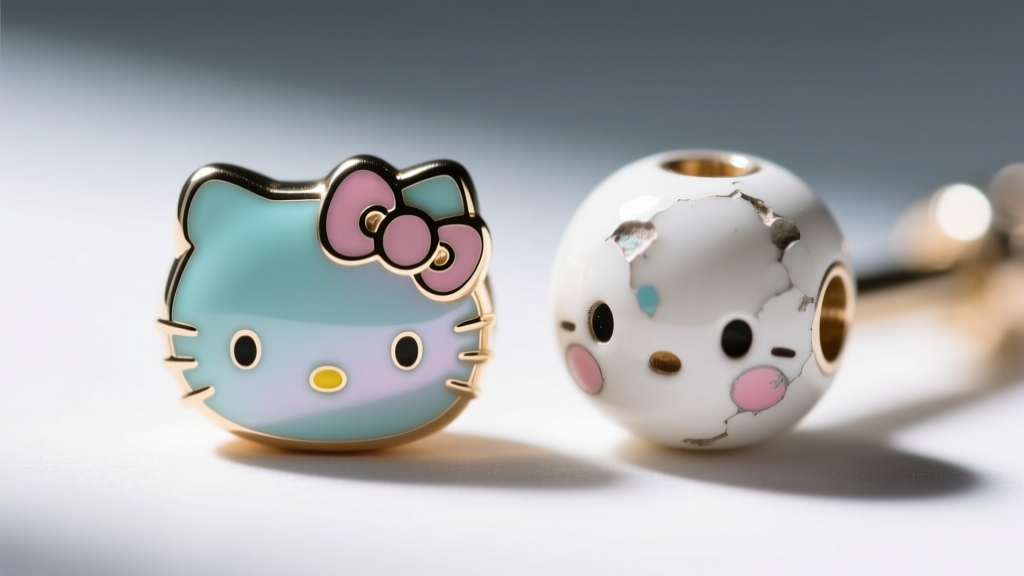
To authenticate a premium Hello Kitty bead necklace, examine the clasp and the largest metal bead for hallmarks. Genuine pieces will feature a crisp, laser-engraved '925' stamp alongside the © Sanrio copyright symbol. Counterfeiters often use a technique called 'Tibetan Silver' casting, which contains absolutely no silver and is instead a toxic mix of zinc, copper, and sometimes lead. Furthermore, inspect the enamel work on the Hello Kitty face. Authentic Sanrio manufacturing requires the facial features (the eyes and the iconic yellow nose) to be perfectly symmetrical and aligned within the bead's curvature. Fakes frequently exhibit bleeding enamel, misaligned eyes, and a bow that lacks the precise geometric proportions mandated by Sanrio's official style guides.
High-End Collaborations: Pandora and Swarovski
For buyers with a higher budget seeking true investment pieces, high-end brand collaborations offer the best intersection of luxury and pop-culture nostalgia. While Pandora is famous for its interchangeable charm bracelets, their limited-edition Hello Kitty beaded necklace sets—featuring Murano glass beads and oxidized sterling silver spacers—have become highly sought-after grail items in the collector community. Because these pieces were produced in limited production runs, their value on platforms like eBay and specialized vintage jewelry forums often exceeds their original retail price by 150% to 300%.
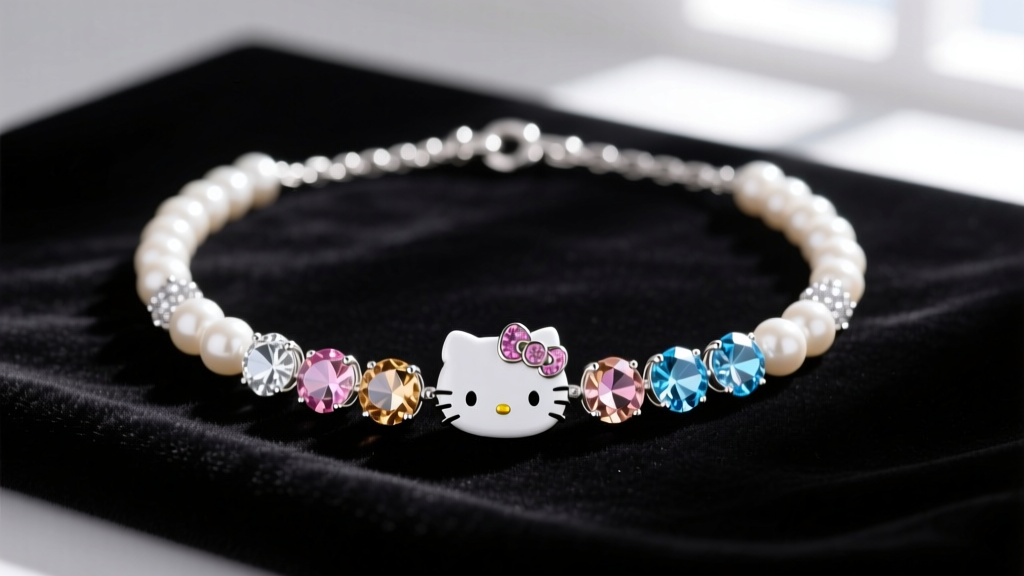
Similarly, collaborations involving precision-cut crystal brands elevate the bead necklace from a mere accessory to a display-worthy objet d'art. These pieces often feature beads with a refractive index that rivals fine diamond simulants, set against rhodium-plated hardware to prevent tarnishing. If you are allocating a budget over $200, strictly target these limited-run collaborative releases rather than standard boutique inventory.
Durability and Long-Term Wear Assessment
A critical component of value assessment is evaluating how the necklace will withstand daily wear. Hello Kitty bead necklaces are often purchased by younger demographics or those who wear them in high-friction environments. The primary failure mode for beaded necklaces is not the beads themselves, but the stringing material and the clasp jump rings.
If you are purchasing a premium wire-strung necklace, inspect the crimp beads (the small metal tubes that secure the wire to the clasp). High-value pieces use sterling silver or gold-filled crimp beads that are crushed and folded using a specialized crimping plier, creating a secure, rounded lock. Low-value pieces simply flatten the crimp bead with flat-nose pliers, leaving sharp metal edges that will eventually slice through the nylon coating of the beading wire, leading to a sudden loss of all beads.
Furthermore, consider the environmental factors. If you live in a high-humidity climate or frequently wear your jewelry in chlorinated pools, avoid necklaces with oxidized silver accents or copper-based alloys, as the chemical reactions will rapidly degrade the finish. Stick to rhodium-plated sterling silver or solid 14k gold hardware to ensure your investment survives the elements.
Resale Value and the Collector Market
Unlike fine diamond or gold jewelry, which holds intrinsic melt value, the value of a Hello Kitty bead necklace is entirely driven by brand equity, rarity, and condition. According to data from Sanrio Official and secondary market aggregators, the highest resale premiums are commanded by 'New Old Stock' (NOS) pieces from the late 1990s and early 2000s Y2K era, provided they are still in their original, unopened blister packaging.
If you are buying to wear, expect a 30% to 50% depreciation the moment you remove the tags, similar to driving a new car off the lot. However, if you are buying as a speculative investment, focus exclusively on limited-edition anniversary releases (such as the 50th-anniversary collections) and ensure you archive the original receipt, the authenticity card, and the specialized packaging. Proper provenance is the difference between a $40 thrift store find and a $400 collector's grail.
Final Verdict: Budgeting for Your Beaded Charm
Ultimately, the value of a Hello Kitty bead necklace is highly subjective and entirely dependent on your end goal. If you are seeking a fun, disposable accessory for a themed event or a festival, a $15 acrylic bead necklace on an elastic cord perfectly fulfills its purpose without breaking the bank. However, if you view your jewelry as a long-term wardrobe staple or a potential collector's asset, you must adjust your budget to the $75 to $150 range to secure 925 sterling silver, vitreous enamel, and 49-strand wire construction.
By understanding the metallurgy of the clasps, the polymer science of the stringing cords, and the strict licensing hallmarks of authentic Sanrio merchandise, you can confidently navigate the market. Avoid the counterfeit traps, demand proper material transparency, and invest in the structural integrity that ensures your favorite feline companion stays securely around your neck for years to come.


