How to Layer Gold Necklaces: A Technical Guide to Weaves & Lengths
Master how to layer gold necklaces with our technical guide. Learn exact length increments, chain weaves, karat durability, and anti-tangle mechanics.

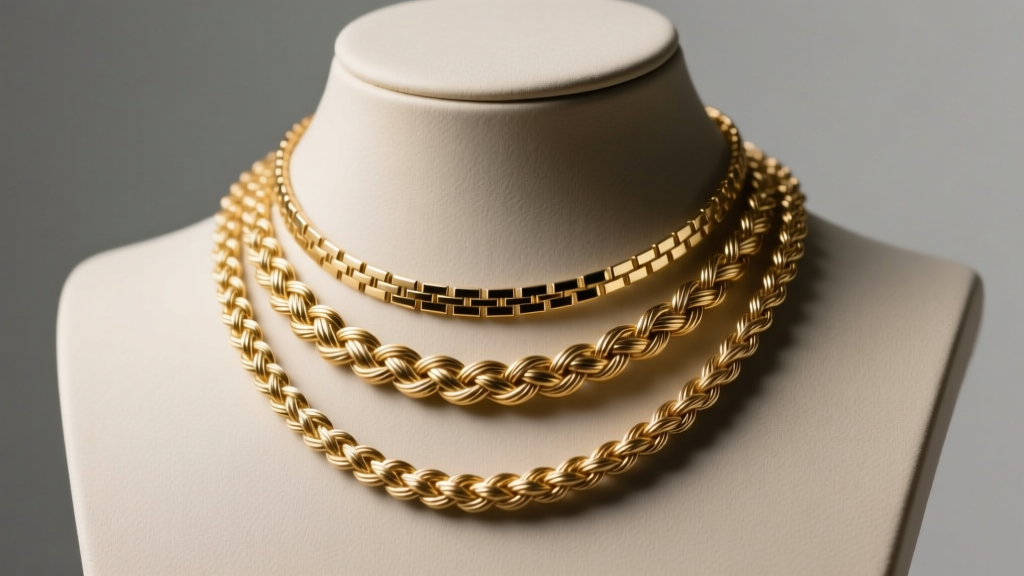
Most styling guides treat necklace layering as a purely aesthetic exercise, focusing on color and pendant size. However, as jewelry engineers and metallurgists know, learning how to layer gold necklaces properly is fundamentally an exercise in physics, geometry, and material science. When multiple gold chains occupy the same anatomical real estate, they introduce complex friction vectors, tension loads, and micro-abrasion risks. In 2026, with the rise of precision CNC-milled chain links and advanced alloy formulations, understanding the mechanical realities of your jewelry stack is essential for both longevity and comfort.
This expert deep dive bypasses superficial styling tips to examine the structural mechanics of layering gold chains. We will cover link articulation limits, the mathematical delta of length increments, Vickers hardness scales across different karats, and the tension tolerances of modern clasp engineering.
The Physics of Tangling: Chain Geometry and Friction
Tangling is not a random occurrence; it is a predictable result of mismatched chain geometries. Every chain weave has a specific 'articulation limit'—the degree to which individual links can pivot on their axes. When you layer a highly articulated chain with a rigid one, the smaller, more flexible links act as wedges, slipping into the gaps of the larger chain and creating mechanical locks.
- Cable and Rope Chains: These feature high articulation and rounded profiles. A 1.5mm cable chain layered with a 2.5mm rope chain will almost invariably tangle because the small cable links slip into the twisted grooves of the rope weave.
- Box and Wheat Chains: These possess a semi-rigid, geometric structure. Their flattened or interlocked surfaces create high friction against other chains, preventing them from sliding into one another's gaps.
- Herringbone and Snake Chains: These are essentially fluid metal ribbons with near-zero articulation. They should only ever be layered as the base (shortest) chain, as any chain resting on top of them will slide down and pool at the sternum.
Expert Framework: To prevent tangling, pair chains with vastly different profiles (e.g., a flat 3.0mm herringbone with a round 1.5mm box chain) or ensure that the link thickness delta is at least 1.0mm. Never layer two round-profile chains of similar gauge (e.g., a 2.0mm cable with a 2.5mm rope).
The 2-Inch Delta: Precision Length Increments
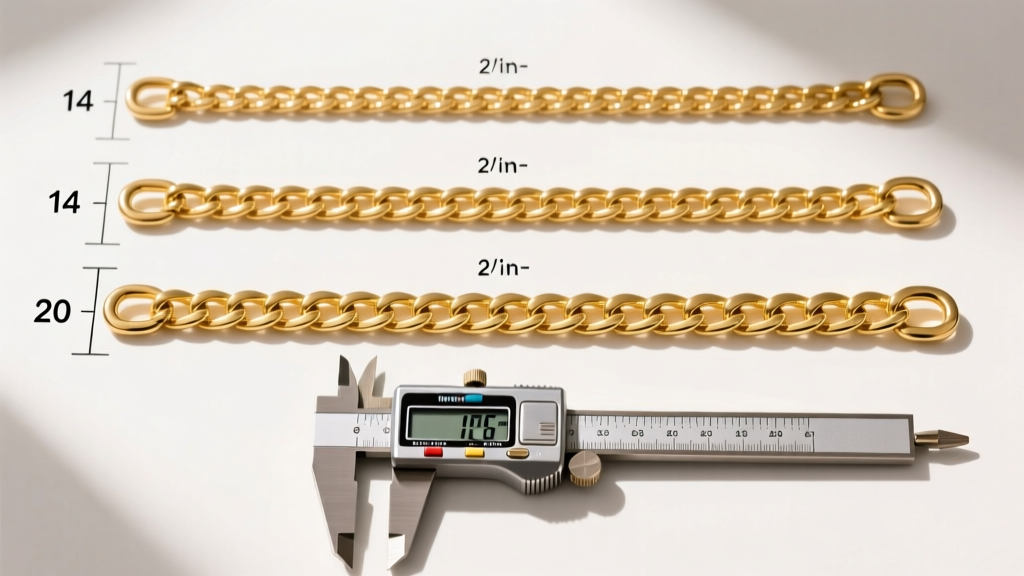
A common mistake is layering chains with only a 1-inch length difference (e.g., 15 inches and 16 inches). The human neck and upper chest are not cylindrical; they are conical. The circumference of the torso increases by approximately 0.75 to 1.2 inches for every vertical inch of drop from the collarbone, depending on the individual's anatomy.
If your chains only have a 1-inch length delta, the increasing circumference of the chest forces the chains to converge and overlap at the center of the sternum, creating a high-friction knotting zone. According to ergonomic jewelry design principles, maintaining a strict minimum 2-inch delta ensures the chains rest on entirely different anatomical planes, eliminating physical contact during normal movement.
The Standard Layering Matrix
| Layer Position | Length (Inches) | Anatomical Resting Point | Ideal Chain Weight (Grams) |
|---|---|---|---|
| Base (Choker) | 14" | Mid-Neck | 2.5g - 4.0g |
| Primary | 16" | Collarbone | 5.0g - 8.0g |
| Secondary | 18" | Base of Neck / Upper Chest | 8.0g - 12.0g |
| Tertiary | 20" - 22" | Mid-Chest / Sternum | 12.0g - 18.0g (with pendant) |
Metallurgy of Layering: Karat Hardness and Wear
Gold-on-gold friction is a primary cause of premature chain degradation. Pure 24-karat gold is exceptionally soft, but alloying it with metals like copper, silver, and zinc alters its crystalline structure and its position on the Vickers Hardness (HV) scale. When you layer chains of different karats, the harder metal will act as a microscopic abrasive against the softer metal.
According to metallurgical data published by the Gemological Institute of America (GIA), the hardness disparity between common jewelry alloys is significant. If you layer a 14k gold chain (which contains more zinc and copper) over an 18k gold chain, the 14k chain will slowly micro-machine the 18k chain at the contact points. Over three to five years of daily wear, this can result in a 0.05mm to 0.10mm loss of material thickness on the softer links, severely compromising their tensile strength.
Karat Hardness Comparison for Layered Stacks
| Karat | Pure Gold Content | Average Vickers Hardness (HV) | Layering Recommendation |
|---|---|---|---|
| 24k | 99.9% | 25 - 30 HV | Never layer; too soft for friction. |
| 22k | 91.6% | 50 - 70 HV | Use only as a static, pendant-free base. |
| 18k | 75.0% | 120 - 140 HV | Excellent for primary layers; high luster. |
| 14k | 58.3% | 150 - 170 HV | Best for bottom/tertiary layers enduring high movement. |
| 10k | 41.7% | 180 - 200+ HV | Highly durable, but will aggressively wear down 18k/22k chains. |
For a cohesive, long-lasting stack, it is highly recommended to keep all layered chains within the same karat family to ensure uniform wear rates. If mixing is necessary, place the higher-karat (softer) chains closer to the skin where movement is restricted, and the lower-karat (harder) chains on the outside.
Clasp Engineering and Tension Tolerances
The clasp is the structural bottleneck of any necklace. When layering, the cumulative weight of the gold, combined with the kinetic energy generated by walking and moving, places dynamic tension on the clasp mechanisms. The World Gold Council notes that improper clasp selection is the leading cause of gold chain loss.
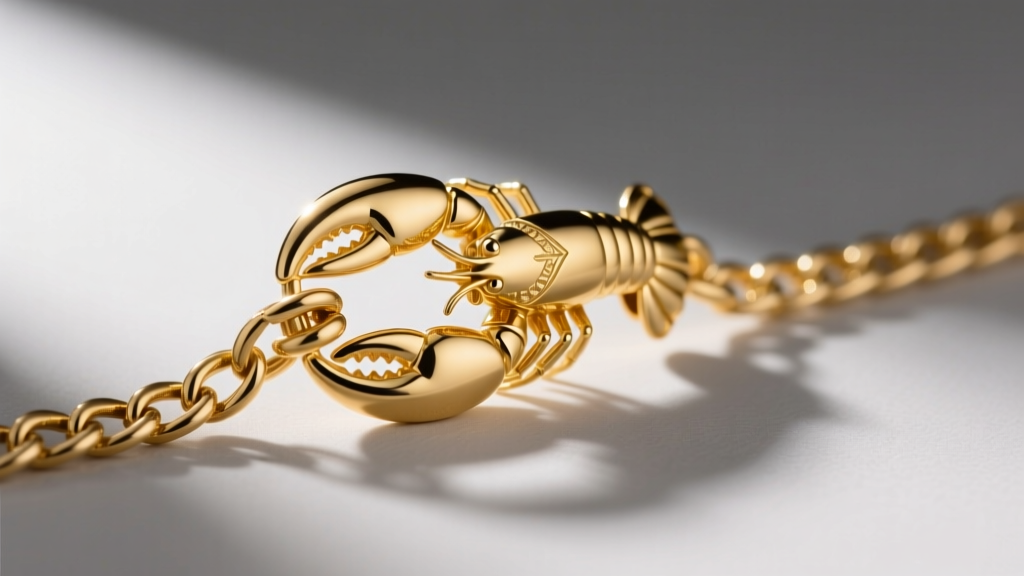
Standard spring-ring clasps (typically 4mm or 5mm in diameter) rely on a single, thin internal coil spring. These mechanisms routinely fail or deform when subjected to dynamic loads exceeding 15 to 20 Newtons. In a layered stack, a heavy 20-inch chain catching on a sweater can easily generate 25 Newtons of sudden force, snapping the spring ring open.
The Solution: Upgrade all chains in your layered stack to feature 9mm, 11mm, or 14mm lobster clasps. High-quality lobster clasps utilize a dual-spring internal mechanism and a solid lever arm, capable of withstanding up to 45 to 60 Newtons of tension before mechanical failure. For chains exceeding 20 grams, consider magnetic barrel clasps utilizing N42-grade or higher Neodymium magnets, which offer a sheer-force holding capacity of over 80 Newtons while eliminating the mechanical wear of spring-loaded levers.
Weight Distribution: The Gram-to-Length Ratio
Adding pendants to a layered stack fundamentally alters the chain's center of gravity and introduces localized stress points. A common error is hanging a heavy cast pendant (e.g., 8 grams) on a lightweight, hollow-core chain (e.g., 3 grams total weight).
This creates a severe imbalance. The pendant acts as a pendulum, generating lateral torque that stresses the jump ring connecting the clasp and the individual links resting at the nape of the neck. To maintain structural integrity, adhere to the 30% Rule: the weight of the pendant (including the bail) should never exceed 30% of the total weight of the chain. If you wish to layer a 10-gram medallion, it must be suspended from a solid gold chain weighing at least 33 grams, typically requiring a 3.0mm to 4.0mm gauge Cuban link or Figaro weave.
Maintenance: Ultrasonic Cleaning for Layered Gold
Layered gold necklaces accumulate sebum, dead skin cells, and environmental dust at an accelerated rate due to the friction between the chains. This debris acts as a grinding paste, exacerbating link wear. While wiping chains with a microfiber cloth removes surface oils, it cannot dislodge debris trapped inside complex weaves like the Rope or Byzantine chains.
For deep maintenance, utilize an ultrasonic jewelry cleaner operating at a frequency of 40 kHz to 45 kHz. Use a mild, non-ionic surfactant solution heated to exactly 104°F (40°C). Warning: Never place gold chains featuring fracture-filled gemstones, emeralds, or opals into an ultrasonic bath, as the cavitation bubbles will shatter the stones or strip the oils from fracture fillings. For solid gold chains without delicate gems, a 3-minute ultrasonic cycle every 60 days will restore the factory luster and remove the microscopic abrasives that cause long-term mechanical degradation.