Crafting a Necklace of Prayer Beads 5e: Troubleshooting & Sourcing
Troubleshoot your real-world necklace of prayer beads 5e replica. Learn wire gauges, bead materials, and clasp fixes for durable fantasy cosplay jewelry.
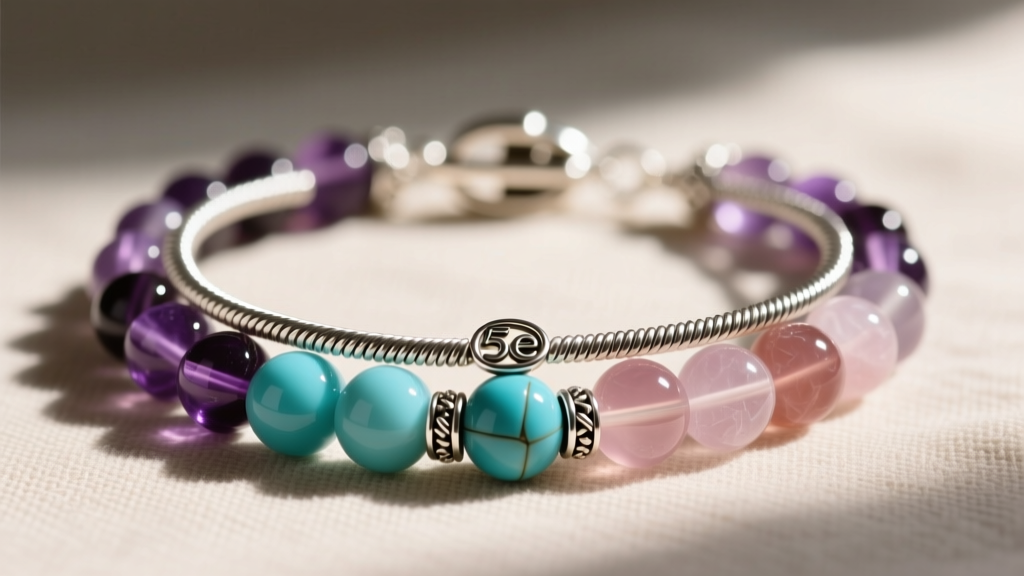
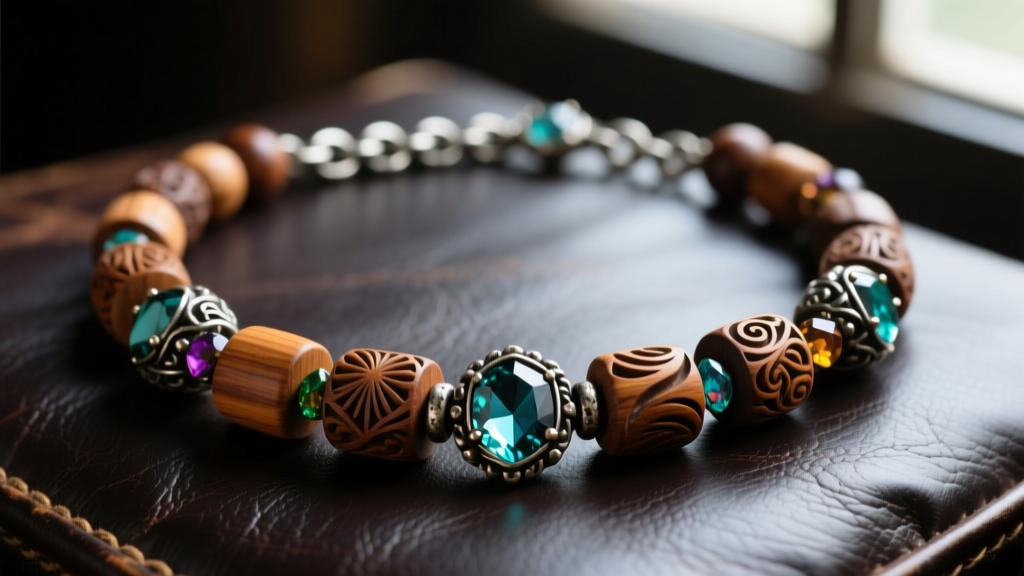
The Challenge of Translating 5e Fantasy to Real-World Jewelry
The necklace of prayer beads 5e is one of the most iconic and highly sought-after magic items in Dungeons & Dragons. In the game, it contains 1d4+2 beads, each imbued with powerful spells like Bless, Cure Wounds, or Greater Restoration. For dedicated cosplayers, LARPers, and fantasy jewelry enthusiasts, translating this legendary artifact into a tangible, wearable piece is a rite of passage. However, crafting a real-world replica introduces severe structural and aesthetic challenges that standard jewelry tutorials rarely address.
Unlike a standard pendant necklace, a prayer bead necklace features multiple heavy, asymmetrical focal points. When you string three to six large gemstone or carved wooden beads onto a single chain or cord, you create a pendulum effect. The dynamic weight distribution leads to rapid chain fatigue, wire loop failure, and severe cord abrasion. In this comprehensive troubleshooting guide, we will break down the exact metallurgy, wire gauges, and material science required to build a durable, accurate, and convention-ready replica that survives the rigors of daily wear and active LARP environments.
Wire Gauge Failures & The Reaming Solution
The most common point of failure in amateur fantasy jewelry is the wire loop connecting the heavy beads to the main chain. Most crafters default to 22-gauge or 24-gauge wire because it is easy to bend. This is a critical mistake. A single 20mm polished gemstone bead can weigh between 15 and 25 grams. When subjected to the kinetic energy of walking or running, a simple loop made of 22-gauge wire will easily pull open, resulting in a lost bead and a ruined necklace.
Upgrading to 18-Gauge and 19-Gauge Wire
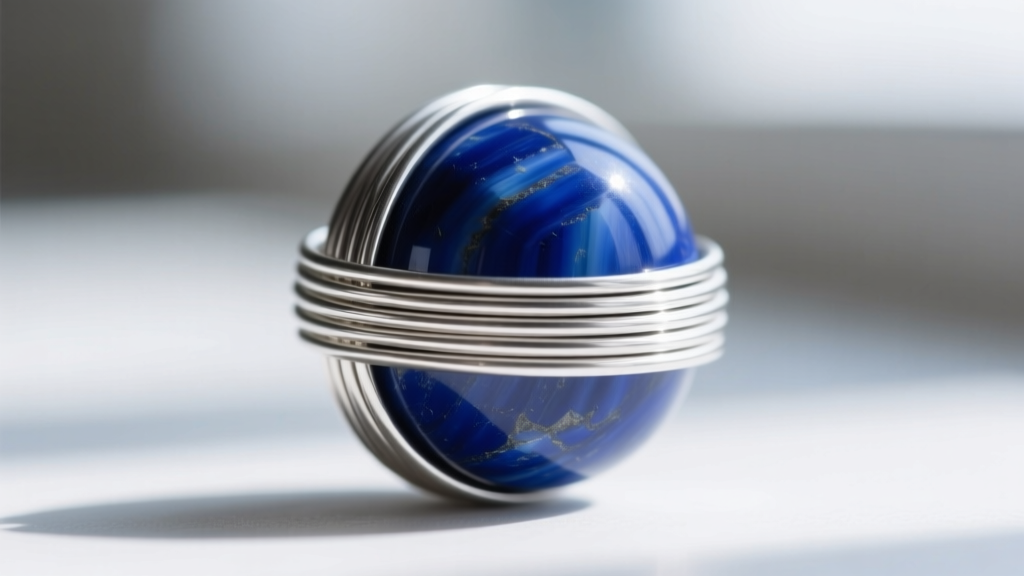
To ensure structural integrity, you must use 18-gauge or 19-gauge half-hard wire. According to the Rio Grande Wire Hardness Guide, half-hard wire offers the perfect balance of malleability for wrapping and tensile strength to resist pulling open under stress. Sterling silver, copper, or tarnish-resistant brass are ideal choices. For wrapped loops, 19-gauge wire provides a flush, professional finish that mimics high-end fantasy armory.
The Bead Hole Bottleneck
Here is where most makers hit a wall: standard commercial gemstone beads are drilled with 0.8mm holes. An 18-gauge wire has a diameter of 1.02mm, meaning it simply will not fit through the stone. To troubleshoot this, you must invest in a diamond-tipped bead reamer. As detailed by Fire Mountain Gems, using a rotary tool with a diamond reamer bit under a steady drip of water allows you to safely widen the bead hole to 1.1mm without fracturing the stone. Always wear a respirator when reaming to avoid inhaling toxic silica dust.
Gemstone Mapping & Durability Troubleshooting
Matching the 5e spell effects to real-world gemstones is an exercise in color theory and material hardness. However, some stones that look perfect are entirely unsuitable for a heavy, swinging necklace due to their Mohs hardness scale rating and cleavage planes.
| 5e Spell Bead | Color Profile | Ideal Real-World Material | Durability Warning & Fix |
|---|---|---|---|
| Bless | Silver / White | White Agate or Opalite | Avoid Moonstone; its perfect cleavage makes it prone to splitting if beads strike together. |
| Cure Wounds | Deep Red / Pink | Carnelian or Rose Quartz | Carnelian (Mohs 7) is highly durable. Avoid soft dyed coral which degrades with skin oils. |
| Greater Restoration | Gold / Yellow | Tiger's Eye or Citrine | Tiger's Eye is fibrous and nearly unbreakable, perfect for heavy LARP combat environments. |
| Smiting | Dark / Black | Black Onyx or Matte Obsidian | Obsidian chips easily on impact. Black Onyx is dyed agate and offers superior shock resistance. |
| Wind Walk | Translucent / Blue | Frosted Aquamarine or Kyanite | Kyanite has variable hardness; seal with a micro-crystalline wax to prevent fraying. |
2026 LARP Safety Standards and Resin Cores
As of 2026, many major LARP conventions have implemented strict safety rules regarding heavy, swinging jewelry to prevent accidental strikes during combat scenarios. If your necklace of prayer beads 5e replica features six massive 25mm stone beads, it may be flagged as a hazard. The modern troubleshooting workaround is to use resin-cored gemstone veneers or hollow electroformed beads. These provide the exact visual weight and arcane aesthetic of solid stone while reducing the overall necklace weight by up to 70%, ensuring compliance with modern safety guidelines without sacrificing visual authenticity.
Solving the Clasp & Cord Abrasion Nightmare
If you are stringing your prayer beads on a leather cord, silk, or hemp, you will quickly encounter the abrasion problem. Heavy beads act like saws against organic cords, eventually snapping the necklace at the weakest friction point. Furthermore, standard lobster clasps are inadequate for the torque generated by an asymmetrical bead layout.
Why Toggle Clasps are Mandatory
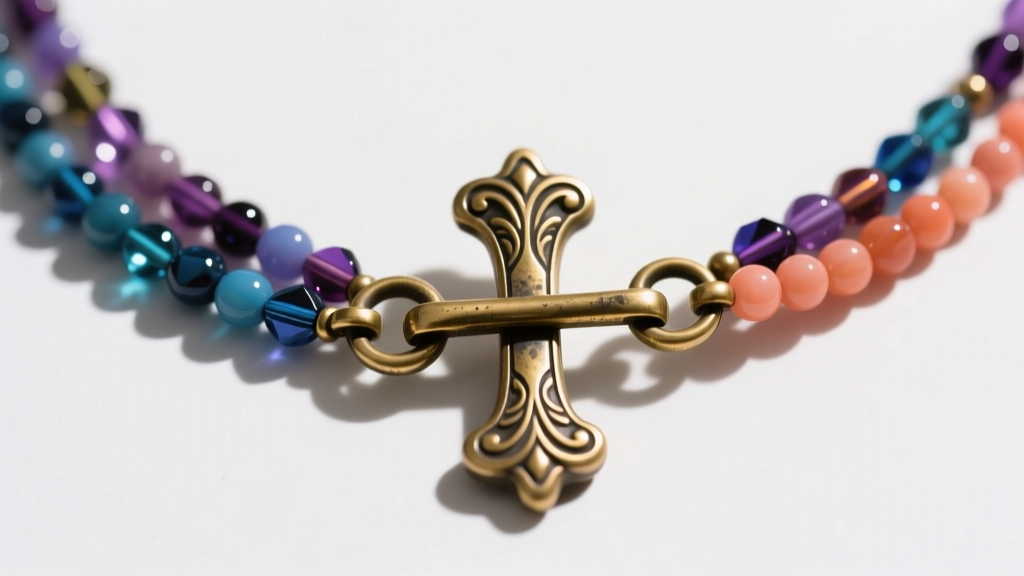
For a necklace featuring heavy, spaced-out beads, you must use an 18mm to 22mm antique brass or oxidized silver toggle clasp. Toggle clasps distribute tension horizontally across the T-bar, preventing the localized stress that causes jump rings to warp and lobster clasp springs to fail. Ensure the ring portion of the toggle is soldered closed; never rely on split rings for heavy fantasy jewelry.
Internal Cord Protection
To prevent the beads from sawing through your cord, line the inside of the bead holes with French wire (bullion)
Final Assembly & Wear-Testing Protocols
Before debuting your necklace of prayer beads 5e at a convention or gaming table, it must pass a rigorous stress test. Follow this final troubleshooting checklist:
- The Drop Test: Hold the necklace by the clasp and drop the beads onto a padded surface from a height of 12 inches. Inspect all wire wraps for shifting.
- The Snag Test: Run the necklace over a piece of knit fabric. If any wire ends catch the fabric, use a cup bur to file the wire ends flush and apply a microscopic drop of jewelry adhesive to the wrap.
- The Balance Check: Lay the necklace flat. If the beads cluster entirely at the bottom, consider adding smaller 4mm spacer beads or integrating a subtle counterweight at the back of the neck (near the clasp) to maintain the proper drape and keep the spell beads centered on the chest.
By respecting the physics of heavy jewelry and applying professional metalsmithing techniques, you can craft a legendary artifact that looks like it was pulled straight from a dragon's hoard, yet engineered to survive the real world. For more official item statistics and lore, always refer back to the D&D Beyond magic item database to ensure your bead count and color mapping remain faithful to the source material.


