How to Clean and Care for an Authentic Squash Blossom Necklace
Learn how to safely clean, polish, and store your authentic squash blossom necklace without damaging the porous turquoise or silver patina.

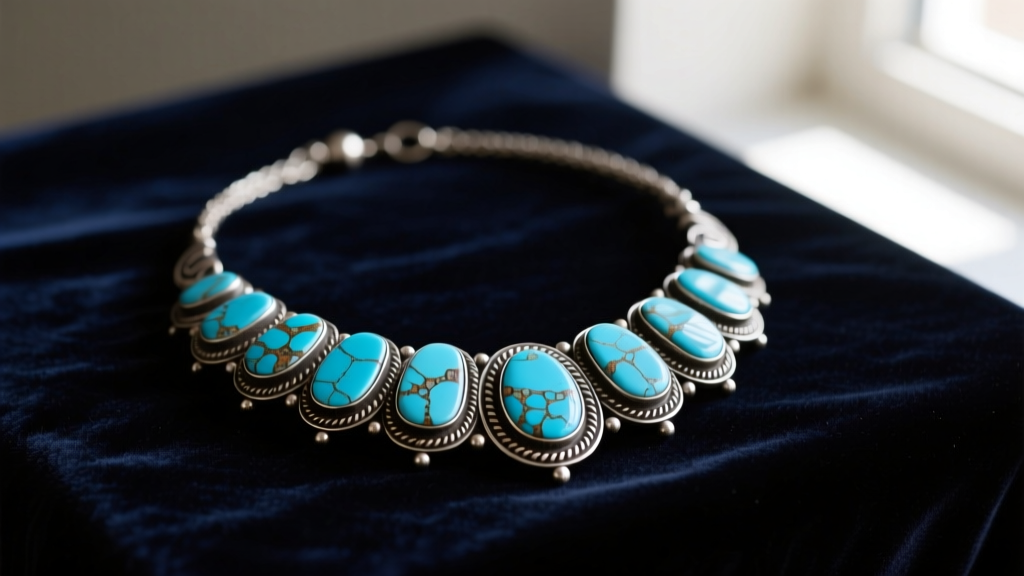
The Legacy and Vulnerability of Native American Silverwork
Owning an authentic squash blossom necklace is akin to possessing a wearable piece of Southwestern history. Originating from Navajo, Zuni, and Santo Domingo silversmiths in the late 19th and early 20th centuries, these masterpieces are highly sought after by collectors and enthusiasts alike. Depending on the age, the specific silversmith (such as Fred Peshlakai or Tommy Singer), and the quality of the turquoise (like Lander Blue or Bisbee), an authentic squash blossom necklace can range in value from $2,500 to well over $30,000. However, the very materials that give these pieces their breathtaking character—porous natural turquoise and hand-stamped silver—are incredibly vulnerable to standard jewelry cleaning methods. According to the Indian Arts and Crafts Association, improper cleaning is the leading cause of irreversible damage to vintage Native American jewelry. This guide will teach you how to maintain your investment while respecting the integrity of its historic materials.
Material Science: Why Standard Cleaners Fail
To properly care for your necklace, you must first understand the chemistry of its components. The beads and the central Naja (the crescent-shaped pendant) are typically crafted from either modern .925 sterling silver or historic 'coin silver.' Coin silver, created by melting down pre-1930s US coins, has a lower silver content (usually .800 to .900) and a distinct, softer patina that takes decades to develop.
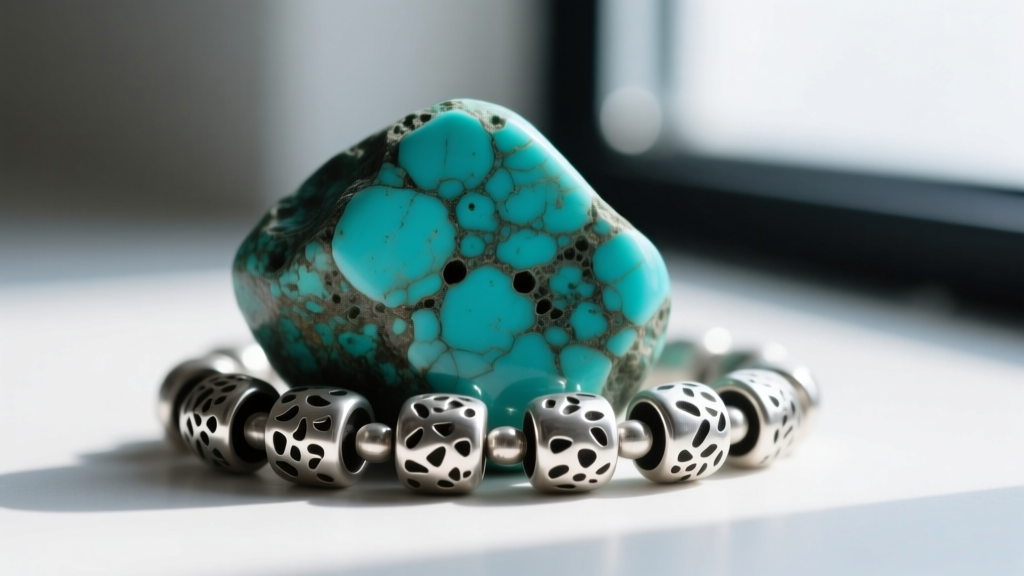
The stones, most commonly turquoise, present a much greater cleaning challenge. Turquoise is a hydrous phosphate of copper and aluminum, ranking between 5 and 6 on the Mohs hardness scale. More importantly, natural turquoise is highly porous. It acts like a microscopic sponge, readily absorbing oils, lotions, perfumes, and harsh chemicals. If exposed to liquid silver dips or ammonia-based cleaners, the stone's internal matrix can permanently discolor, turning from a vibrant sky blue to a dull, muddy green. The Gemological Institute of America (GIA) explicitly warns against using ultrasonic cleaners on turquoise, as the high-frequency cavitation bubbles can cause micro-fractures within the stone, eventually leading to cracking or crumbling.
The Patina Debate: What to Keep and What to Remove
Before you begin polishing, you must understand the concept of 'patina.' In the world of antique Native American jewelry, patina is the dark oxidation that naturally accumulates in the recesses of hand-stamped and repoussé silverwork. Collectors and museum curators highly prize this dark contrast because it highlights the silversmith's intricate tooling. When you clean an authentic squash blossom necklace, your goal is to remove surface tarnish and skin oils from the high points of the silver while deliberately leaving the dark oxidation in the deep crevices intact. Stripping a vintage piece to a brilliant, mirror-like shine can actually decrease its monetary and historical value by erasing the visual evidence of its age and craftsmanship.
The Step-by-Step Dry Cleaning Protocol
Forget liquid soaks and polishing pastes. The safest and most effective way to clean your necklace is through a meticulous dry-cleaning method. Gather the following tools: a soft horsehair detailing brush, a bamboo skewer, a jeweler's impregnated polishing cloth (such as a Sunshine Polishing Cloth), and a clean, dry microfiber towel.
- Dry Dusting: Lay the necklace flat on a soft, lint-free surface. Use the horsehair brush to gently sweep away dust, dead skin cells, and debris from the silver beads, the squash blossom petals, and the stone bezels. The soft bristles will reach into the stampwork without scratching the silver.
- Crevices and Bezels: Take your bamboo skewer and gently run the wooden tip along the edges where the silver bezel meets the turquoise cabochon. Bamboo is softer than both silver and turquoise, allowing you to dislodge trapped grime without scratching the stone or lifting the delicate silver bezel wire. Never use metal picks or toothpicks, which can snap and gouge the stone.
- Targeted Silver Polishing: Using a corner of your treated polishing cloth, gently rub the high, flat surfaces of the silver beads and the Naja pendant. Work slowly and deliberately, avoiding any contact with the turquoise stones. The mild abrasive and anti-tarnish chemicals in the cloth will lift surface sulfur oxidation while leaving the deep-stamped patina untouched.
- Stone Wiping: Finally, take your dry microfiber towel and gently buff the surface of the turquoise stones. This removes natural skin oils and sebum that have accumulated from wear, restoring the stone's natural matte or polished luster without introducing moisture.
The Chemical Danger Zone
Many well-meaning owners ruin their heirloom jewelry by turning to household hacks or commercial silver dips. Below is a breakdown of common cleaning agents and why they must be kept far away from your authentic squash blossom necklace.
| Cleaning Agent | Effect on Silver | Effect on Turquoise | Verdict |
|---|---|---|---|
| Commercial Silver Dip (Thiourea) | Strips all patina, leaves a chalky residue in crevices. | Penetrates pores, permanently alters stone color and matrix. | NEVER USE |
| Ultrasonic Cleaners | Safe for plain silver, but can loosen glued settings. | High-frequency vibrations cause internal micro-fractures. | NEVER USE |
| Baking Soda & Aluminum Foil | Highly abrasive, scratches high-polish areas. | Alkaline reaction damages the stone's surface and stabilizing resins. | AVOID |
| Mild Dish Soap (e.g., Dawn) | Safe if dried immediately and thoroughly. | Safe for heavily stabilized stones, risky for natural turquoise. | USE WITH CAUTION |
Long-Term Storage and Tarnish Prevention
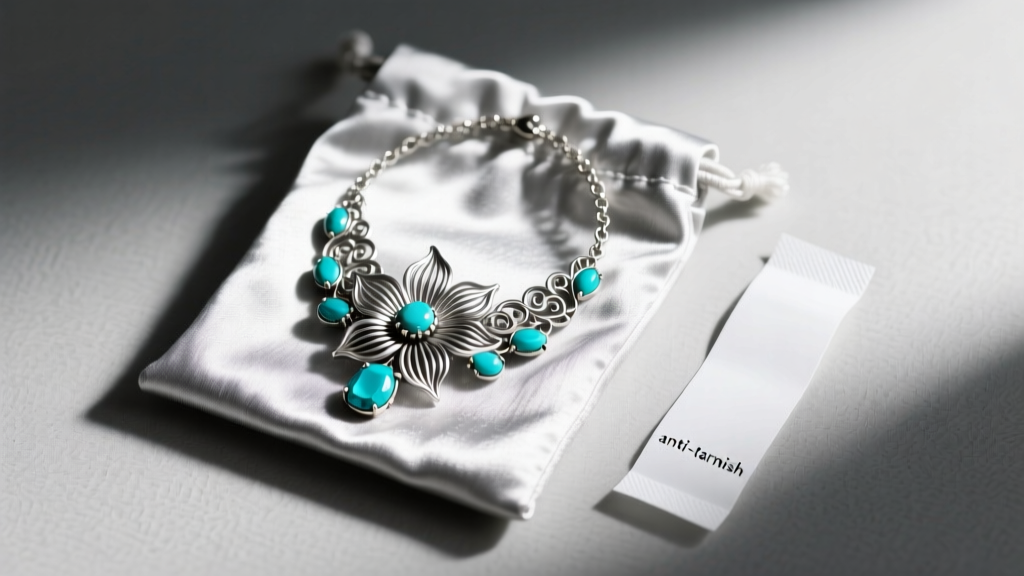
Proper storage is just as critical as the cleaning process. Silver tarnishes when it reacts with sulfur compounds in the air. To minimize the need for frequent polishing, store your necklace in a specialized environment. The gold standard for Native American jewelry storage is a Pacific Silver Cloth pouch. These pouches are made from 100% cotton flannel embedded with microscopic silver particles and zinc. The embedded metals act as a sacrificial anode, absorbing sulfur and moisture before they can reach your necklace.
Additionally, toss a 3M anti-tarnish strip into the storage bag. These strips absorb airborne sulfides and can protect the silver for up to six months in an enclosed space. Avoid storing your necklace in standard plastic ziplock bags, particularly those made of PVC, as the manufacturing process of certain plastics releases sulfur gases that will rapidly accelerate tarnishing. Finally, never store the necklace hanging by its delicate silver chain or silk cord; the weight of the heavy Naja and blossom beads can stretch the cord or warp the silver links over time. Always store it laid flat or gently coiled in a wide, supportive arc.
When to Seek Professional Restoration
While routine maintenance can be done at home, structural issues require a professional. If you notice a turquoise cabochon rattling in its bezel, a crack in the silver blossom petals, or fraying on the traditional stringing material, stop wearing the piece immediately. The Smithsonian National Museum of the American Indian advises that antique Native American jewelry should only be repaired by lapidaries who specialize in traditional techniques, such as hand-crimping bezels without the use of modern soldering acids that could damage the adjacent stones. A master silversmith can restring the beads on modern, high-tensile jewelry wire while maintaining the authentic drape and historical accuracy of the original piece.
By treating your authentic squash blossom necklace with the respect and specialized care it deserves, you ensure that its vibrant turquoise and storied silver will continue to captivate for generations to come.


