Herringbone Necklace Silver Care: Cleaning & Kink Prevention
Learn how to safely clean, store, and maintain your herringbone necklace silver chain to prevent kinks, remove tarnish, and preserve its fluid drape.

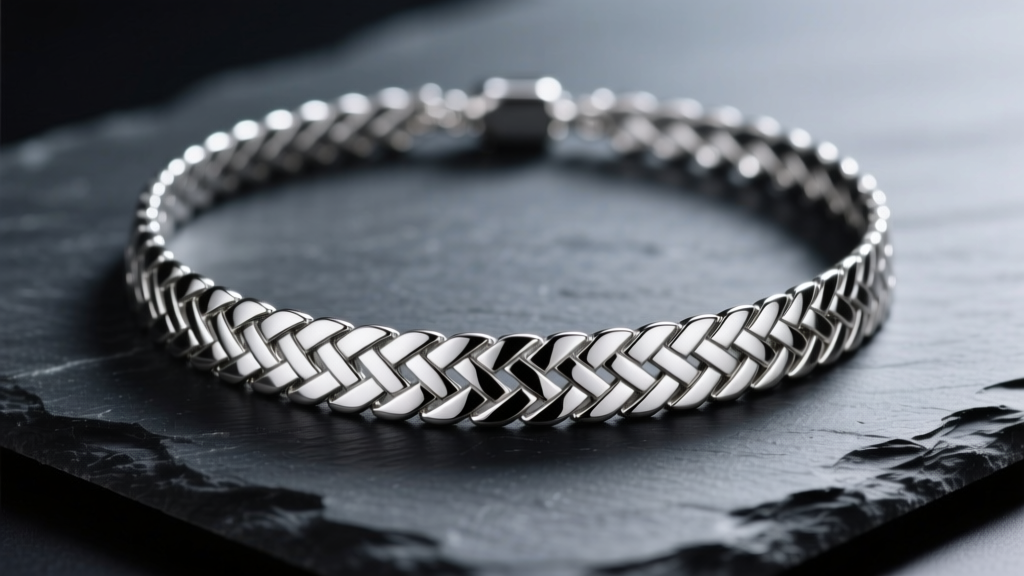
The Unique Anatomy of a Silver Herringbone Chain
The herringbone necklace silver chain is celebrated for its liquid-metal drape and mirror-like reflectivity. Unlike traditional cable or curb chains that rely on interlocking oval links, the herringbone weave is constructed from flat, short, V-shaped links that are laid parallel to one another at a slight angle. This structural design creates a seamless, ribbon-like surface that catches the light beautifully, but it also introduces a critical mechanical vulnerability: an almost complete lack of torsional resistance.
Because the links are flush against one another without a central structural core, the chain possesses high tensile strength (it can withstand pulling) but extremely low bending tolerance. If a herringbone chain is folded, twisted, or slept in, the flat links are forced out of their planar alignment. This results in a permanent "kink" that work-hardens the sterling silver, making it brittle and prone to snapping if bent back aggressively. Understanding this metallurgical reality is the first step in mastering the care and maintenance of this specific jewelry style.
The Chemistry of Silver Tarnish (and What to Avoid)
Authentic herringbone necklaces are typically crafted from 925 sterling silver, an alloy consisting of 92.5% pure silver and 7.5% copper. According to The London Assay Office, this copper addition is essential for structural hardness, as pure silver is too soft for jewelry. However, copper is highly reactive to sulfur compounds in the atmosphere.
When copper reacts with hydrogen sulfide in the air, it forms silver sulfide (Ag2S), which manifests as the dull, yellowish-brown or black film we know as tarnish. The flat, dense surface area of a herringbone chain means tarnish can quickly dull its signature mirror finish. To protect your chain, you must avoid the following environmental accelerants:
- Chlorine and Saltwater: Causes irreversible pitting and whitening of the copper alloy.
- Latex and Rubber: Emits sulfur gases that will rapidly blacken the silver links.
- Wool and Certain Cosmetics: Contain sulfur compounds and abrasive micro-particles that scratch the flat links.
Cleaning Agents That Will Destroy Your Chain
As of 2026, while advanced anti-tarnish nanocoatings are emerging in the jewelry sector, traditional 925 sterling silver still requires careful manual maintenance. Never use the following products on a herringbone chain:
- Ultrasonic Cleaners: The high-frequency cavitation bubbles can violently vibrate the flush links, causing them to lift, separate, or micro-kink.
- Thiourea-Based Silver Dips: These harsh chemical baths strip away tarnish instantly but also strip the natural oxidized patina that provides contrast in the link joints, leaving the chain looking flat and artificially white while weakening the solder points.
- Baking Soda and Aluminum Foil Baths: While chemically effective at reversing silver sulfide, the electrolytic reaction can leave a microscopic residue in the tight seams of the herringbone weave, leading to future corrosion.
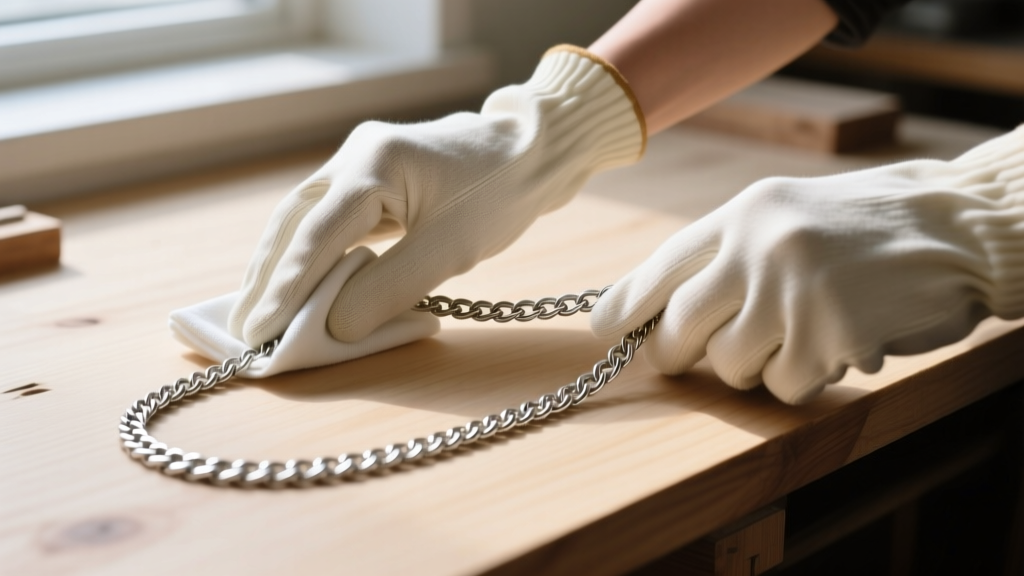
Step-by-Step Safe Cleaning Protocol
To safely restore the brilliance of your herringbone necklace silver chain without compromising the delicate link alignment, follow this expert-approved, low-friction cleaning methodology. The Gemological Institute of America (GIA) recommends gentle, non-abrasive approaches for all sterling silver care, which is doubly important for flat-weave chains.
1. The Distilled Water Soak
Fill a shallow glass dish with lukewarm distilled water (tap water contains chlorine and minerals that can spot the silver). Add three drops of phosphate-free, mild dish soap. Gently lay the necklace completely flat in the solution. Let it soak for exactly 3 to 5 minutes to loosen surface oils and sebum. Do not agitate or swish the water.
2. Directional Wiping (The Golden Rule)
Remove the chain and lay it flat on a clean, lint-free microfiber towel. Using a second clean microfiber cloth or a dedicated silver polishing cloth (impregnated with mild jeweler's rouge), wipe the chain strictly along the longitudinal grain. Never scrub in circles or across the width of the chain, as this can catch the edges of the V-links and lift them. Apply minimal pressure; let the polishing agents do the work.
3. The Air-Dry Finish
Use a hairdryer on the "cool" setting to blow away any trapped moisture between the flush links. Leaving a herringbone chain to air-dry naturally can result in hard water spots settling into the microscopic seams, dulling the reflection.
The Kink Factor: Prevention and Storage Frameworks
Improper storage is responsible for over 80% of all herringbone chain damage. Because the chain behaves more like a metallic ribbon than a traditional link chain, gravity and coiling are its worst enemies. Hanging a herringbone necklace places continuous tensile stress on the links nearest to the clasp, eventually causing the chain to stretch, warp, and kink under its own weight.
Storage Method Comparison Matrix
| Storage Method | Kink Risk Level | Tarnish Exposure | Expert Verdict |
|---|---|---|---|
| Hanging on a Jewelry Tree | Extreme (High) | High (Air circulation) | Avoid. Gravity will stretch the neck of the chain and induce micro-kinks over time. |
| Coiled in a Standard Box | High | Medium | Avoid. Coiling forces the flat links to torque against their natural planar axis. |
| Flat in a Soft Pouch | Medium | Low | Acceptable. Only if the pouch is laid flat in a drawer and not crushed by other items. |
| Flat in a Rigid Velvet Tray | Zero (None) | Zero (If sealed) | Ideal. Supports the entire length of the chain, preventing torsional stress. |
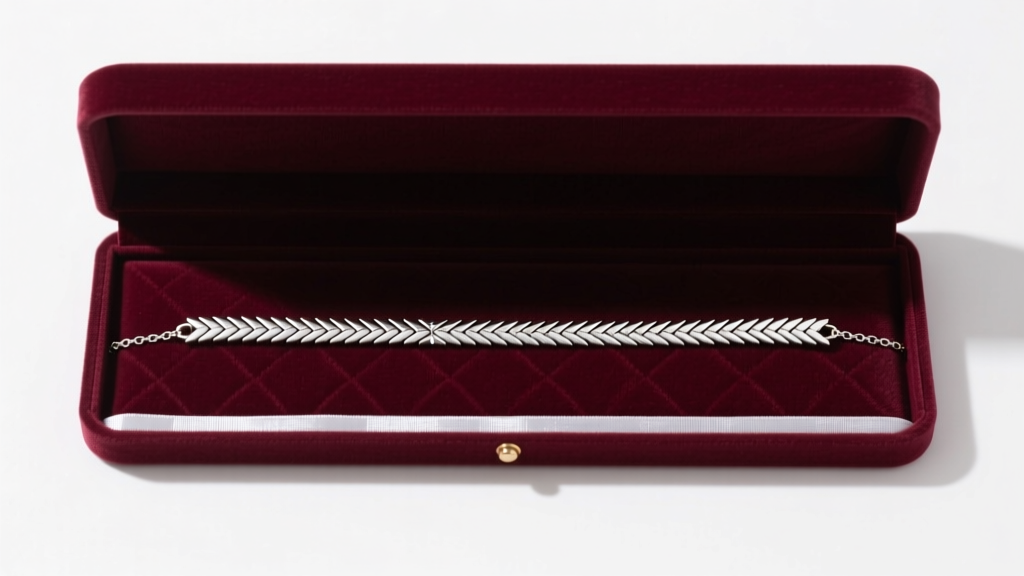
For optimal preservation, store your herringbone necklace completely flat in a rigid, velvet-lined tray. Place a 3M anti-tarnish strip or a piece of activated charcoal cloth inside the tray to absorb atmospheric sulfur compounds before they can react with the copper alloy.
Troubleshooting: What to Do If Your Chain Kinks or Snags
Despite your best efforts, a herringbone chain may occasionally suffer a kink if caught on clothing or bent during travel. The immediate reaction for most people is to pull the chain taut to "pop" the kink out. Never do this. Pulling a kinked herringbone chain will work-harden the bent links, causing them to snap instantly.
The Spudger Method for Minor Kinks
If you discover a minor bend, lay the chain on a hard, perfectly flat surface like a glass table or a marble countertop. Using two smooth, flat-edged plastic tools (such as guitar picks or plastic spudgers), gently massage the kinked area from the outside edges toward the center. You are attempting to coax the V-links back into their horizontal plane without applying downward crushing force.
When to Seek Professional Intervention
If the kink is sharp (an angle greater than 45 degrees) or if the links have begun to separate and snag on fabric, home repair is no longer viable. A professional bench jeweler must intervene. The jeweler will typically use a specialized miniature rolling mill to apply perfectly even, calibrated pressure across the width of the chain, flattening the links back into their original factory alignment without stressing the solder joints. Expect to pay between $35 and $75 for this specialized service, depending on the severity of the damage and the width of the chain.
Conclusion
A herringbone necklace silver chain is an investment in fluid, liquid-metal elegance. By respecting the unique mechanical limitations of the flat V-link weave, avoiding harsh chemical dips, and committing to strictly flat storage, you can preserve the mirror-like drape of your sterling silver piece for decades. Treat the chain not as a standard rope, but as a delicate metallic ribbon, and it will remain a flawless staple in your jewelry wardrobe.


