The Herringbone Silver Necklace: 2026 Style & Trend Guide
Discover 2026 trends for the herringbone silver necklace. Learn about silver alloys, width matrices, kink prevention, and liquid-metal styling.

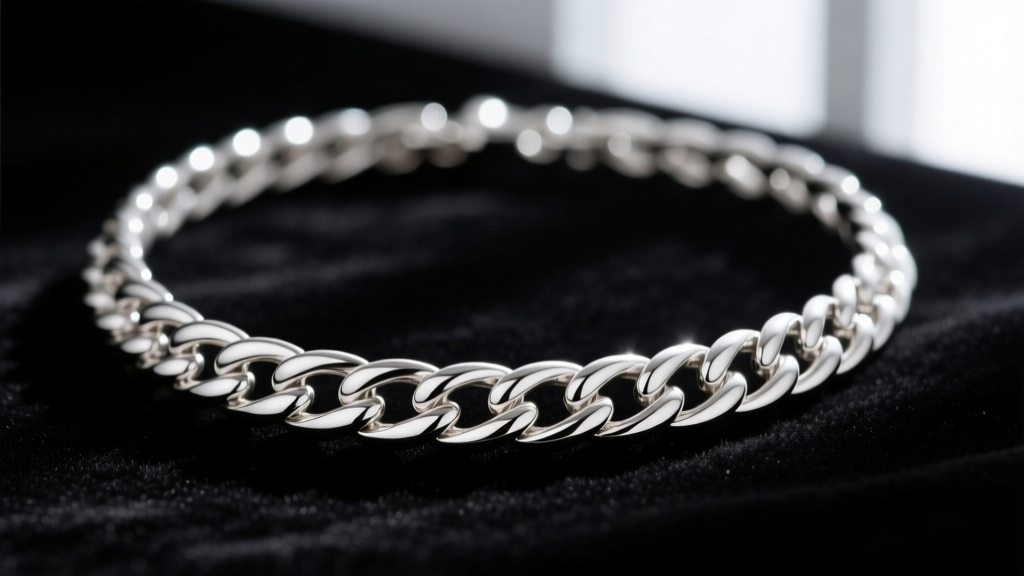
The Liquid Metal Phenomenon
The herringbone silver necklace remains one of the most visually striking achievements in jewelry manufacturing. Often described by jewelers and stylists as 'liquid metal,' this specific chain style offers a seamless, highly reflective surface that mimics the drape of heavy silk or polished mercury. As we navigate the jewelry landscape of 2026, the herringbone has evolved from a delicate, vintage-inspired staple into a bold, gender-fluid statement piece that dominates both high-fashion runways and everyday minimalist wardrobes.
However, the very engineering that gives the herringbone its unparalleled fluid drape also introduces unique structural vulnerabilities. Understanding the metallurgy, manufacturing techniques, and failure modes of this chain is essential for both collectors and everyday wearers. This comprehensive guide breaks down the anatomy of the herringbone silver necklace, providing actionable frameworks for styling, maintenance, and purchasing in the modern market.
Anatomy and Manufacturing: Beyond the Basic Chain
To appreciate the herringbone, one must understand how it diverges from traditional chain-making. Unlike cable, curb, or Figaro chains—which rely on individual interlocking jump rings—the herringbone is a multi-strand, flat-woven chain. The links are arranged in a parallel, V-shaped pattern, slanting in the same direction to create a continuous, flat ribbon of metal.
The manufacturing process is highly specialized. It begins with a thick silver tube or wire that is drawn down, flattened, and then precisely cut. In 2026, premium herringbone chains undergo 'diamond cutting,' a process where a diamond-tipped tool shaves microscopic facets into the surface of the silver. This creates thousands of tiny, angled mirrors that catch ambient light, giving the silver an illusion of being paved with micro-diamonds. According to data from The Silver Institute, the demand for diamond-cut flat chains has surged, driven by consumers seeking maximum brilliance without the cost of gemstone settings.
Metallurgy in 2026: 925 Sterling vs. Argentium 950
The flat, expansive surface area of a herringbone chain acts as a canvas for the metal's finish, but it also acts as a magnet for tarnish. Standard 925 sterling silver contains 92.5% pure silver and 7.5% copper. While copper provides necessary tensile strength, it reacts with sulfur and moisture in the air, creating silver sulfide (tarnish). On a rounded cable chain, minor tarnish might hide in the shadows of the links; on a flat herringbone, it manifests as a dull, yellowish-brown film across the entire surface.
This has led to a massive shift toward Argentium 950 silver in the 2026 market. Argentium replaces a portion of the copper with germanium, which forms a transparent, self-healing oxide layer that drastically slows tarnishing. For a herringbone necklace—where maintaining a pristine, mirror-like finish is paramount—upgrading to Argentium 950 or Britannia 958 silver is a highly recommended investment. The Gemological Institute of America (GIA) notes that while higher-purity silvers are softer, the flat-woven structure of a herringbone chain naturally compensates for this by distributing tension across multiple parallel strands rather than single points of contact.
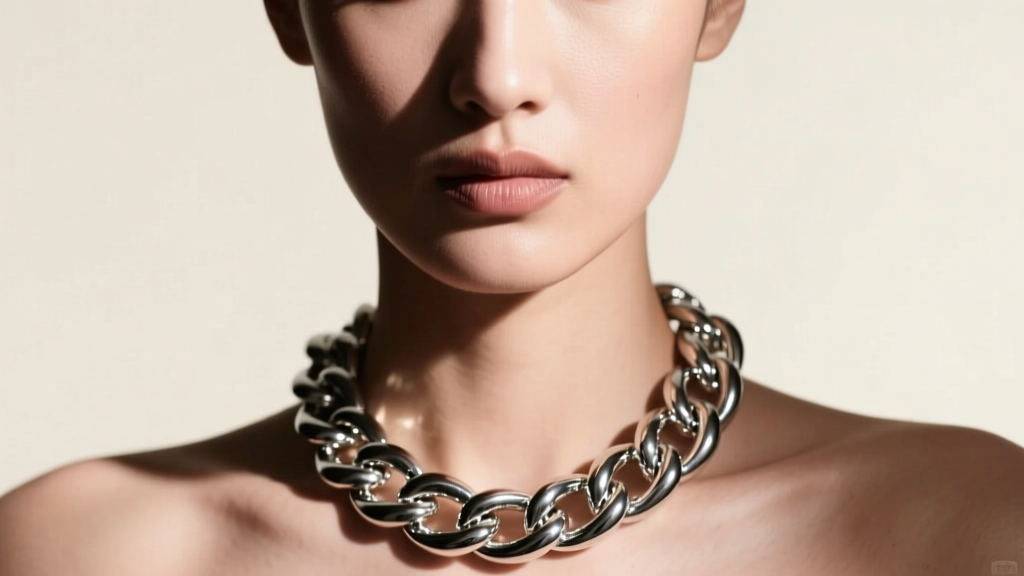
The Kink Factor: Engineering and Failure Modes
The undisputed Achilles heel of the herringbone silver necklace is its susceptibility to kinking. Because the links are flattened and woven laterally, the chain possesses incredible flexibility along its vertical axis (allowing it to drape beautifully) but almost zero tolerance for lateral torsion (twisting).
When a herringbone chain is twisted or folded sharply, the V-links buckle out of alignment. Once a kink forms, the structural integrity of that specific section is permanently compromised. The metal work-hardens at the bend, making it brittle. Attempting to 'massage' or roll a kink out with your fingers often results in snapping the links entirely. If a kink occurs, the only reliable repair is professional laser soldering, which is notoriously difficult on flat-woven chains due to the heat conductivity of silver and the proximity of the links.
Prevention Protocol: Never sleep, shower, or exercise in a herringbone chain. When removing it, lay it flat immediately or roll it loosely around a soft, cylindrical jewelry insert. Never store it in a tangled pile or hang it on a standard hook where it can twist under its own weight.
Width & Weight Matrix: Choosing Your Gauge
The visual impact and durability of a herringbone chain are dictated by its width and corresponding gram weight. Below is the 2026 buying matrix to help you select the right gauge for your specific styling needs.
| Width (mm) | Avg. Weight (18') | Drape & Feel | Best Use Case |
|---|---|---|---|
| 2.0mm - 3.0mm | 8g - 14g | Highly fluid, delicate, prone to tangling | Layering base, pendant pairing, subtle everyday wear |
| 4.0mm - 5.5mm | 18g - 28g | Balanced drape, noticeable presence, moderate durability | Standalone statement piece, business-casual styling |
| 6.0mm - 8.0mm | 35g - 55g | Heavy, structured, acts as 'fluid armor' | High-fashion editorial, worn over heavy fabrics or turtlenecks |
| 10.0mm+ | 70g+ | Rigid at the edges, highly reflective, bold | Gender-fluid streetwear, avant-garde layering, red carpet |
Neckline Pairing Framework
Because the herringbone chain sits completely flat against the skin, it interacts with clothing necklines differently than rounded chains. Here is the definitive styling framework for 2026:
- The Turtleneck / High Crew: Requires a minimum width of 6mm. Thinner chains will visually disappear against the heavy ribbing of knitwear. An 18-inch, 8mm herringbone worn over a black turtleneck creates a striking, architectural contrast.
- The Deep V-Neck: Opt for a 4mm to 5mm chain at a 20-inch or 22-inch length. The goal is to allow the silver chain to run parallel to the fabric's V-shape, elongating the neck and drawing the eye downward without competing with the garment's structure.
- The Scoop or Boat Neck: A 16-inch choker length in a 3mm width sits perfectly above the collarbone, framing the face and highlighting the clavicle without overlapping the shirt's hem.
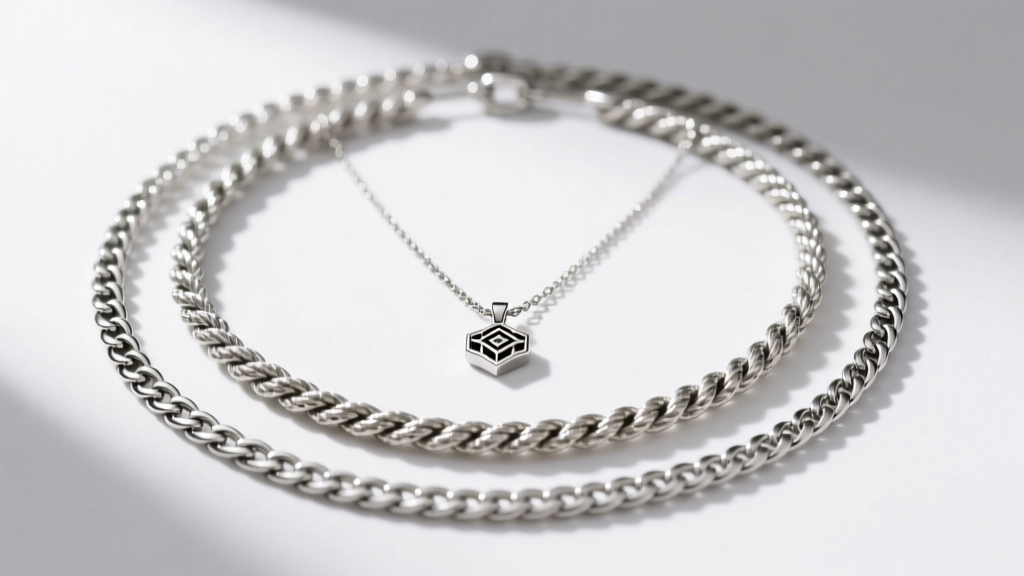
2026 Trend Analysis: Fluid Armor and Mixed Alloys
The prevailing trend for the herringbone silver necklace in 2026 is the concept of 'Fluid Armor.' Designers are moving away from the ultra-delicate, 1980s-style 2mm chains and are instead embracing chunky, 8mm-to-12mm widths that drape like metallic scarves. This shift aligns with the broader industry movement toward gender-neutral, substantial jewelry that conveys permanence and weight.
Another major trend is mixed-alloy layering. Stylists are pairing the mirror-finish of a 4mm silver herringbone with the matte, oxidized texture of a blackened silver rope chain, or weaving a yellow gold herringbone through a sterling silver curb. The flat surface of the herringbone acts as a reflective backdrop that amplifies the textures of the chains layered beneath or above it. When layering, always ensure the herringbone is the shortest chain in the stack to prevent it from twisting around the longer, heavier pendants below it.
Strict Care and Storage Protocol
Maintaining the mirror finish of a herringbone silver necklace requires a departure from standard jewelry cleaning methods. Never use ultrasonic cleaners. The high-frequency vibrations can trap moisture between the tightly woven flat links, leading to hidden oxidation that is nearly impossible to polish out. Furthermore, liquid silver dips often contain harsh acids that can strip the diamond-cut facets, leaving the chain looking matte and scratched.
Instead, rely on a high-quality, anti-tarnish microfiber polishing cloth. After every wear, gently wipe the chain down to remove skin oils and environmental sulfur. For storage, utilize a zip-lock bag with an activated charcoal or 3M anti-tarnish strip, laying the chain perfectly flat inside a soft pouch. By respecting the unique engineering of the herringbone weave, you ensure that its liquid-metal brilliance remains intact for decades.


