Hidden Spy Camera Necklace: Tech Specs & Style 2026
Explore the technical specs, materials, and optics of the modern hidden spy camera necklace. An expert guide to wearable surveillance in 2026.

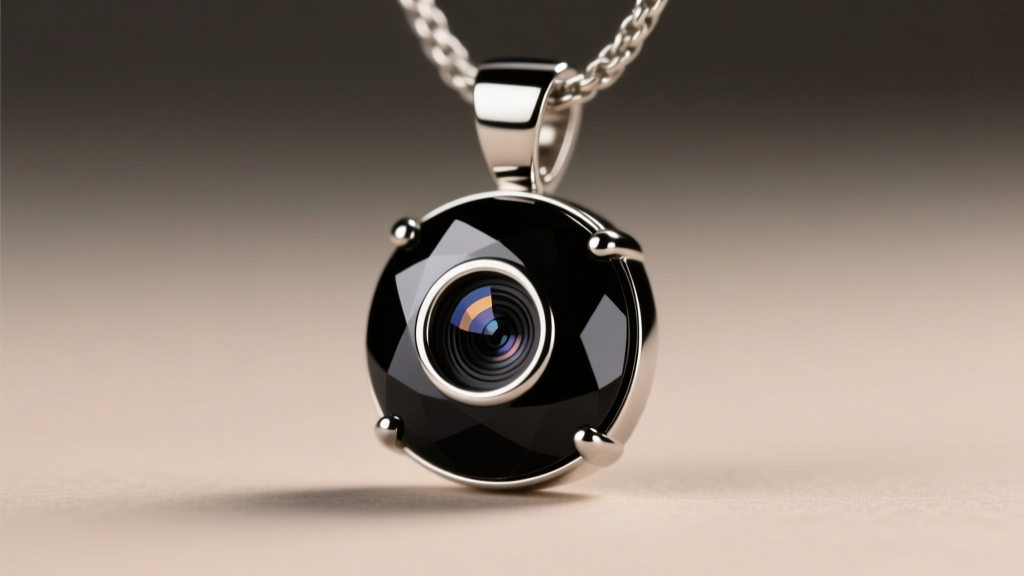
The evolution of covert wearable technology has completely transformed the landscape of personal security and investigative journalism. Gone are the days of clunky, plastic novelties that screamed 'gadget.' Today, a high-end hidden spy camera necklace is a masterclass in micro-engineering, blending precision optics with fine jewelry aesthetics. As we navigate 2026, the integration of advanced CMOS sensors, aerospace-grade materials, and high-efficiency video codecs means that wearable surveillance is no longer just about capturing a blurry image—it is about securing broadcast-quality, legally admissible footage without compromising personal style. This expert deep dive dissects the technical anatomy, material science, and optical limitations of modern camera pendants, providing you with a rigorous framework for evaluating wearable tech.
Optical Architecture and Sensor Limitations
The most critical component of any hidden spy camera necklace is the image sensor. Due to the strict volumetric constraints of a pendant chassis (typically measuring under 45mm x 20mm x 10mm), manufacturers cannot utilize the 1-inch sensors found in premium compact cameras. Instead, the industry standard for pro-grade wearable tech relies on 1/2.8-inch or 1/3-inch Sony STARVIS CMOS sensors. These back-illuminated sensors excel in low-light environments, which is crucial for indoor covert recording.
The Field of View (FOV) Problem
A common marketing trap in the wearable surveillance industry is the promotion of ultra-wide 140° to 170° fisheye lenses. While a wide FOV is excellent for a ceiling-mounted security camera, it is highly detrimental to a chest-mounted pendant. A 140° lens on a necklace will capture the wearer's chin, moving arms, and the immediate floor, resulting in severe barrel distortion at the edges and wasting pixel density on irrelevant data. For a necklace resting on the sternum, the optimal FOV is between 75° and 90°. This narrower, more natural focal length mimics the human eye's central vision, ensures the subject's face remains in sharp focus at a standard conversational distance (3 to 6 feet), and eliminates the 'fisheye' warp that immediately flags footage as being shot on a covert body camera.
Material Science and Thermal Throttling
Video encoding is an intensely thermal process. Compressing 1080p or 4K video using H.265 (HEVC) codecs generates significant heat. In a sealed, water-resistant pendant enclosure, this heat has nowhere to go. If the chassis is constructed from cheap zinc alloys or ABS plastics, the device will suffer from thermal throttling within 8 to 12 minutes of continuous 4K recording, leading to dropped frames, corrupted MP4 files, or an automatic safety shutdown.
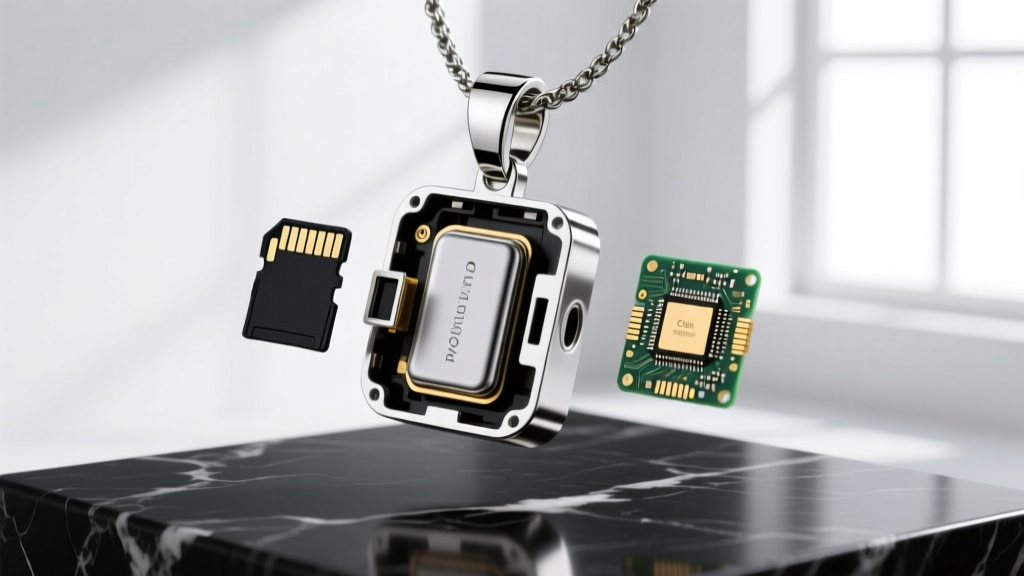
To combat this, premium hidden spy camera necklaces utilize 316L surgical stainless steel or anodized 6061-T6 aluminum. These metals not only provide a premium, hypoallergenic jewelry finish but also act as passive heatsinks, drawing thermal energy away from the system-on-chip (SoC) and dissipating it across the surface area of the pendant. When shopping for a device, always verify the chassis material; a heavy, cold-to-the-touch metal pendant is a strong indicator of proper thermal management engineering.
| Specification | Entry-Level (Novelty) | Pro-Grade (Investigative) |
|---|---|---|
| Chassis Material | Zinc Alloy / ABS Plastic | 316L Stainless Steel / 6061 Aluminum |
| Sensor Type | 1/4' Generic CMOS | 1/2.8' Sony STARVIS |
| Field of View | 140° (Fisheye Distortion) | 85° (Natural Perspective) |
| Video Codec | H.264 (High Bitrate/Bloat) | H.265 HEVC (High Efficiency) |
| Thermal Management | None (Throttles in 10 mins) | Passive Metal Heatsink |
Power Density and Battery Chemistry
Battery life is the ultimate bottleneck in wearable surveillance. A standard pendant can physically accommodate a lithium-polymer (Li-Po) battery ranging from 400mAh to 1200mAh. Unlike lithium-ion cylindrical cells, Li-Po pouches can be custom-shaped to fit the irregular internal cavities of a jewelry pendant. However, recording 4K video at 30fps with active H.265 encoding draws approximately 3.5W to 4.5W of power. With a 3.7V 1000mAh battery (3.7Wh), the absolute theoretical maximum runtime for 4K is under one hour. For extended operations, professionals drop the resolution to 1080p at 60fps, which reduces the power draw to roughly 1.5W, extending the operational window to 2.5 or 3 hours.
- Charging Mechanisms: Avoid micro-USB ports that require rubber flaps, as they compromise the jewelry aesthetic and water resistance. Look for magnetic pogo-pin charging contacts recessed into the backplate.
- Power Bank Compatibility: High-end models feature pass-through charging, allowing the pendant to be wired to a concealed 10,000mAh power bank in a jacket pocket via a micro-magnetic cable for 12+ hour operations.
Chain Ergonomics and Weight Distribution
A pro-grade camera pendant packed with a 1000mAh battery, a glass lens assembly, and a steel chassis will typically weigh between 45 and 65 grams. This is significantly heavier than a standard decorative pendant. Suspending this weight on a thin, decorative cable chain will result in neck fatigue, chain snapping, and excessive pendant sway, which ruins video stabilization.
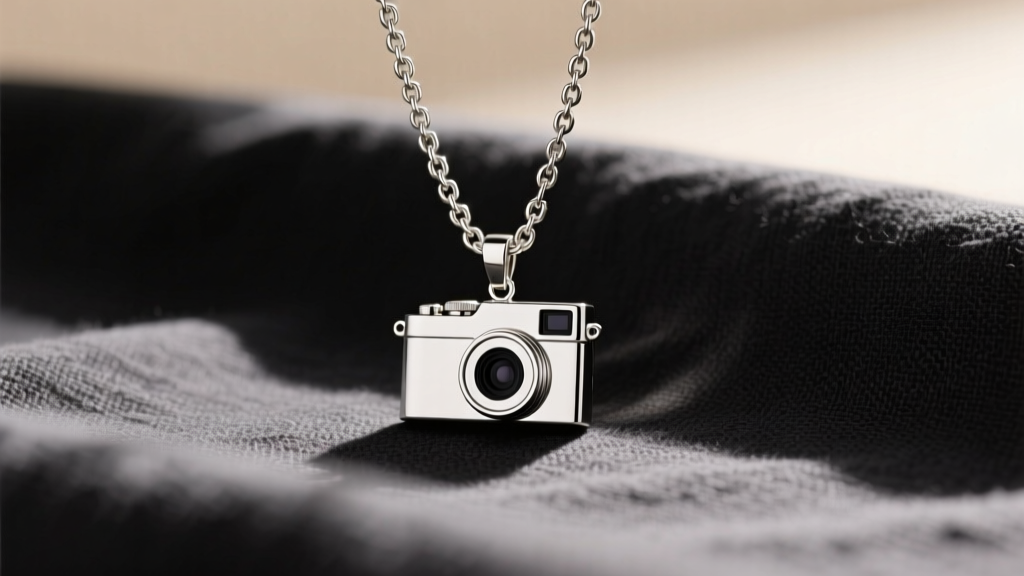
The correct pairing for a surveillance pendant is a 2.0mm to 3.0mm box chain or wheat chain crafted from solid 316L stainless steel. These chain styles offer high tensile strength, resist kinking, and possess enough visual weight to look like intentional, masculine or minimalist unisex fashion statements rather than cheap accessories. Furthermore, the clasp must be a heavy-duty lobster claw with a secondary safety catch to prevent catastrophic drops if the chain is snagged during a physical altercation or crowd movement.
Legal Frameworks and Covert Recording
Owning a hidden spy camera necklace comes with profound legal responsibilities. The legality of covert recording hinges entirely on the 'expectation of privacy' doctrine and local wiretapping laws. While recording video in public spaces (parks, streets, public plazas) is generally protected under the First Amendment in the United States, capturing audio is a different legal battlefield.
'The distinction between visual surveillance and audio interception is where most amateur investigators face severe felony charges. Always disable audio recording features when operating in two-party consent jurisdictions unless explicit consent is obtained.'
According to Nolo's legal guide on recording consent, states like California, Florida, and Illinois require all parties to consent to audio recording. Furthermore, the Electronic Frontier Foundation (EFF) frequently highlights the dangers of deploying covert recording devices in spaces where individuals have a reasonable expectation of privacy, such as restrooms, changing rooms, or private medical offices. Always consult local statutes before deploying a covert necklace in a professional or private setting.
The 2026 Buyer's Matrix
When evaluating a hidden spy camera necklace for personal security, journalism, or private investigation, use this technical checklist to separate professional tools from e-waste:
- Verify the Codec: Ensure the device uses H.265 encoding. H.264 will fill your microSD card twice as fast and generate excess heat.
- Demand Metal Construction: Reject plastic or lightweight alloy pendants. You need the thermal mass of steel or aluminum to prevent SoC throttling.
- Check the FOV Specs: Ignore 140° marketing claims. Seek out an 85° lens for usable, undistorted chest-level footage.
- Inspect the Chain: Ensure the included chain is at least 2mm thick with a locking lobster clasp to support the 50g+ payload.
- Test the IR Filter: If the device claims night vision, ensure it utilizes a 940nm infrared LED array (which is completely invisible to the human eye) rather than an 850nm array (which emits a faint, noticeable red glow).
By prioritizing optical physics, thermal dynamics, and structural integrity over gimmick features, you can secure a wearable surveillance tool that performs flawlessly when the stakes are highest.


