Material Guide: Choosing the Best Hieroglyphics Necklace
Discover which metals best preserve the intricate details of a hieroglyphics necklace. Compare gold, silver, and bronze for durability and wear.

The Architecture of Ancient Symbols in Modern Jewelry
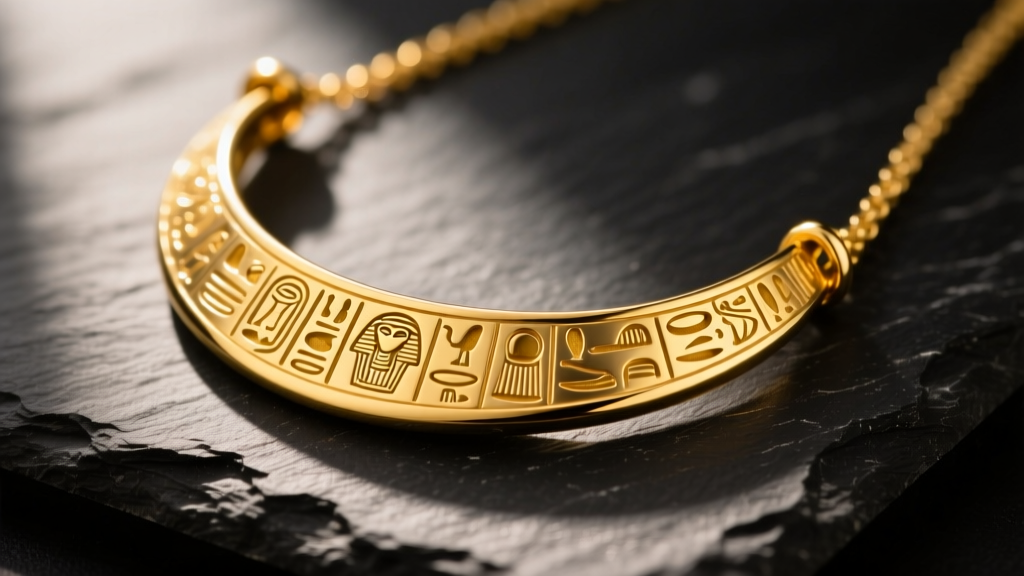
When investing in a hieroglyphics necklace, whether it features a custom cartouche spelling your name, the protective Eye of Horus, or the eternal Ankh, the artistic focus is almost entirely on the intricate symbolism. However, as jewelry specialists, we must look past the initial aesthetic and evaluate the structural integrity of the piece. Ancient Egyptian artisans primarily worked with high-karat gold, electrum, and copper alloys, as noted by the British Museum. Today, the metallurgical landscape is vastly different. The primary challenge with any hieroglyphics necklace is detail retention. The deep grooves, sharp angles, and delicate curves of ancient script are highly susceptible to friction, polishing, and environmental tarnishing. Choosing the wrong metal can result in a phenomenon known as 'ghosting,' where the surface wear erodes the shallow recesses of the symbols, rendering the text illegible over time. In this comprehensive 2026 material guide, we break down the exact properties, hardness scales, and failure modes of the most popular metals used for Egyptian-inspired pendants.
The Detail Retention Factor: Why Hardness Matters
To understand why some hieroglyphics necklaces last generations while others blur within a few years, we must look at the Vickers Hardness (HV) scale. This metric measures a metal's resistance to deformation and surface abrasion. When you wear a pendant daily, it experiences micro-abrasions from clothing, skin oils, and accidental impacts. Softer metals will slowly 'flow' at the microscopic level, rounding off the sharp edges of carved hieroglyphs. According to the Gemological Institute of America (GIA), the alloying process dramatically alters these properties. Pure 24k gold is exceptionally soft (approx. 25 HV), making it entirely unsuitable for detailed script. By alloying gold with copper, silver, or zinc, jewelers increase the hardness, but they must balance this with the metal's ability to capture fine details during the casting or CNC milling process.
Comprehensive Material Breakdown
14k vs. 18k Gold: The Cartouche Standard
Gold remains the premier choice for a luxury hieroglyphics necklace, but the karat weight dictates its longevity. 18k Gold (75% pure) offers a rich, buttery yellow hue that closely mimics historical artifacts. It sits around 120-130 HV. While beautiful, 18k gold is prone to surface scratching, and if the hieroglyphs are laser-etched rather than deeply cast, the contrast will fade within 3 to 5 years of daily wear. 14k Gold (58.3% pure), with a hardness of 140-160 HV, is the superior choice for daily-wear cartouches. The increased copper and zinc content provides the structural rigidity needed to keep the sharp corners of the glyphs crisp. Pricing for a solid 14k gold custom cartouche typically ranges from $850 to $2,200, depending on the weight and the complexity of the translation.
Sterling Silver and the Oxidation Advantage
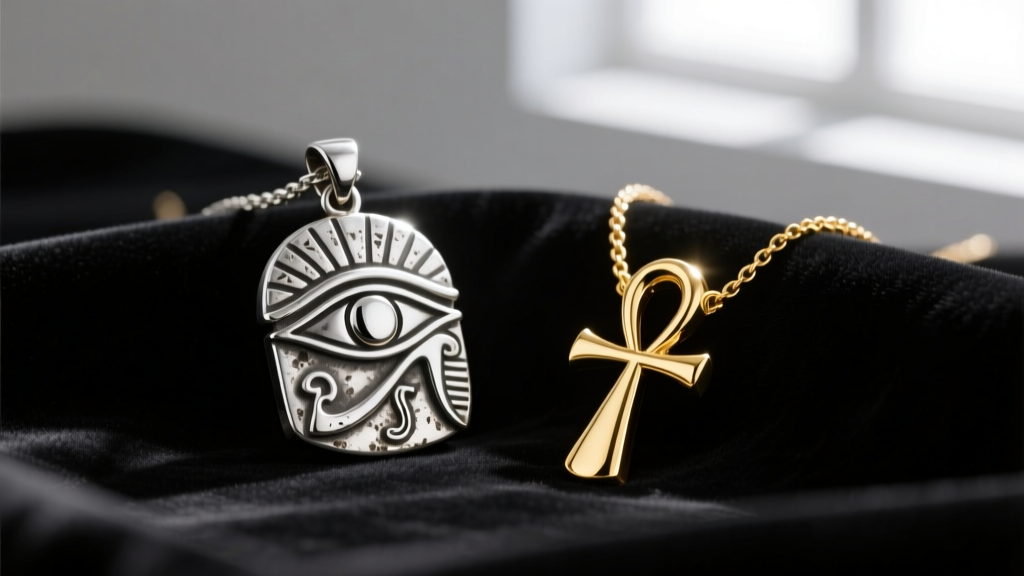
Sterling silver (92.5% silver, 7.5% copper) is the most accessible option, generally priced between $120 and $350. However, with a Vickers hardness of just 60-70 HV, it is highly malleable. The secret to a successful sterling silver hieroglyphics necklace lies in intentional oxidation. Silversmiths often apply a liver of sulfur treatment to darken the recessed areas of the glyphs, creating high contrast against the polished surface. Pro-Tip: If you choose silver, ensure the pendant is cast with deep, V-cut grooves rather than shallow U-cut laser engravings. Deep grooves protect the oxidized patina from being rubbed away by your skin and clothing.
Bronze and Brass: Historical Authenticity
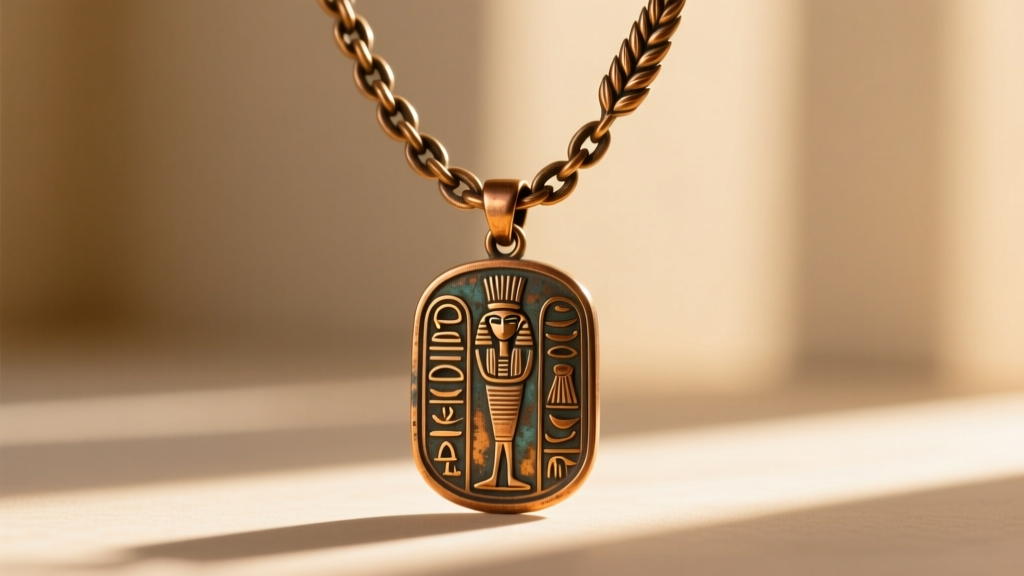
For those seeking an authentic, archaeological aesthetic, bronze (copper and tin) and brass (copper and zinc) are exceptional choices. These alloys possess a hardness of 100-150 HV, making them surprisingly durable. More importantly, bronze develops a natural patina over time. Unlike silver tarnish, which can look dirty, bronze patina adds an antique, earthen quality that enhances the historical weight of Egyptian symbols. The primary drawback is skin reactivity; the copper content can cause green discoloration on the chest if the wearer's skin pH is highly acidic. Many modern jewelers solve this by applying a micro-thin layer of clear ceramic nano-coating to the back of the pendant.
Engraving Techniques: Laser vs. CNC vs. Hand-Chasing
The material you choose must align with the manufacturing technique used to carve the hieroglyphs.
- Laser Etching: Best for hard metals like stainless steel or titanium. It burns the surface but lacks depth. Avoid laser-etched soft metals like silver, as the shallow marks will disappear quickly.
- CNC Milling: The 2026 industry standard for custom gold and silver cartouches. A computer-guided drill bit carves deep, precise V-grooves, ensuring the hieroglyphs remain legible for decades.
- Hand-Chasing / Casting: Traditional lost-wax casting captures organic, slightly rounded edges. Ideal for bronze and brass pieces meant to look like ancient relics.
Metal Properties & Detail Longevity Chart
| Metal Alloy | Vickers Hardness (HV) | Detail Retention | Maintenance Level | Avg. Price Range |
|---|---|---|---|---|
| 14k Yellow Gold | 140 - 160 | Excellent (Deep CNC) | Low | $850 - $2,200 |
| 18k Yellow Gold | 120 - 130 | Good (Prone to micro-scratches) | Medium | $1,400 - $3,500 |
| Sterling Silver (925) | 60 - 70 | Fair (Requires deep V-cuts) | High (Polishing/Oxidation) | $120 - $350 |
| Jeweler's Bronze | 110 - 140 | Very Good (Patina enhances) | Medium (Skin reactivity) | $80 - $250 |
| 316L Stainless Steel | 200 - 220 | Excellent (Laser etched) | Very Low | $40 - $120 |
Skin Reactivity and Patina Management
When wearing a solid bronze or brass hieroglyphics necklace, the copper content reacts with the salts and acids in your sweat, producing copper chloride. This results in the infamous 'green skin' effect. While harmless, it is aesthetically displeasing. If you have highly acidic skin, opt for Argentium silver (which contains germanium for extreme tarnish resistance) or stick to 14k gold. If you are committed to the historical look of bronze, remove the necklace before swimming, exercising, or showering, and periodically wipe the back of the pendant with a mild soap solution to halt aggressive oxidation.
Chain Pairing: Gauges and Weights
A common failure point in Egyptian-style jewelry is the chain snapping under the weight of a solid metal cartouche. Hieroglyphic pendants, especially those cast in solid silver or bronze, are denser and heavier than standard stamped charms. You must match the chain gauge to the pendant's bail size and weight.
The Gauge Rule: Never use a chain thinner than 1.5mm for a solid cast pendant. For heavy bronze or 14k gold cartouches exceeding 15 grams, a 3.0mm to 4.0mm Wheat or Rope chain is mandatory to prevent bail warping and chain fatigue.
Furthermore, ensure the metal of the chain matches the hardness of the pendant. Pairing a soft 18k gold chain with a heavy, hard bronze pendant will result in the bronze bail grinding through the gold links over time due to galvanic friction and hardness disparities.
Final Verdict: Which Metal Should You Choose?
The ideal material for your hieroglyphics necklace depends entirely on your wearing habits and budget. For an heirloom-quality piece meant to be worn daily without fear of detail loss, 14k Yellow Gold remains the undisputed champion, offering the perfect balance of historical richness and modern metallurgical strength. For those on a budget who appreciate high-contrast, moody aesthetics, oxidized Sterling Silver with deep CNC-milled grooves provides exceptional value. Finally, for historical purists who want their jewelry to age and tell a story alongside them, a Jeweler's Bronze cartouche on a heavy wheat chain is an unparalleled choice that bridges the gap between ancient artistry and modern wearability.


