Horseshoe Charm Necklace Guide: Metals, Bails, and Chain Gauges
Explore the technical anatomy of a horseshoe charm necklace. We analyze metal grades, bail construction, chain gauges, and casting methods for lasting wear.

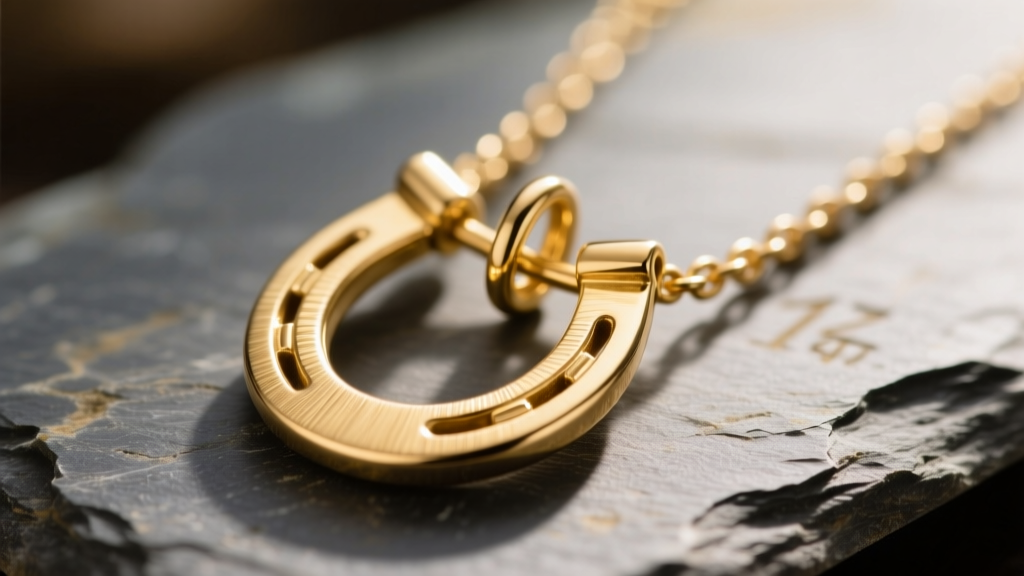
The Metallurgy of Luck: Choosing the Right Alloy
When evaluating a horseshoe charm necklace, the untrained eye focuses on the silhouette, but a jewelry technician looks directly at the alloy composition and structural integrity. The horseshoe shape, with its elongated U-curve and protruding nail-head terminals, presents unique stress points that demand specific metallurgical properties.
925 Sterling Silver and Tarnish Mitigation
Sterling silver remains the most accessible entry point, but its standard composition (92.5% silver, 7.5% copper) makes it highly susceptible to oxidation. The copper content reacts with sulfur in the air and the acidity in human sweat. For a horseshoe pendant that rests against the sternum—a high-perspiration zone—raw sterling silver will develop a blackened patina within months. To combat this, premium manufacturers apply a micro-thin layer of rhodium plating or an electrophoretic e-coating. According to the Silver Institute, rhodium not only prevents tarnish but increases the surface hardness, protecting the delicate nail-head details from micro-scratches.
316L Surgical Stainless Steel
For daily-wear, budget-conscious buyers, 316L stainless steel is the superior technical choice over base metals or silver-plated brass. The "L" stands for low carbon, and the alloy includes 2-3% molybdenum, which drastically increases resistance to pitting and chloride corrosion. With a Vickers hardness (HV) of roughly 150-200, 316L is significantly harder than sterling silver (which sits around 60-70 HV). This means the heels of the horseshoe will resist bending if caught on clothing, a common failure mode for softer alloys.
14k vs. 18k Solid Gold
If your horseshoe charm necklace features pavé-set diamonds along the U-curve, 14k gold (58.3% pure gold) is the mandatory choice. The higher alloy content (typically copper, zinc, and silver) provides the necessary tensile strength to keep the micro-prongs secure. Conversely, 18k gold (75% pure gold) offers a richer, warmer hue and superior hypoallergenic properties, but its softer nature (approx. 120 HV) makes it less ideal for heavily gem-set horseshoes, as the prongs will wear down faster under friction.
Gold Vermeil vs. Flash Plating
Many budget-friendly horseshoe charms are marketed as "gold," but are actually gold-plated brass or silver. It is vital to distinguish between flash plating and true vermeil. Flash plating involves a microscopic layer of gold (often less than 0.5 microns) that will wear through to the base metal within weeks of daily friction. True gold vermeil, regulated by industry standards, requires a sterling silver base and a minimum gold thickness of 2.5 microns. However, because the horseshoe shape naturally swings and rubs against the sternum and clothing, even 2.5-micron vermeil will eventually wear at the high-contact points, specifically the bottom curve and the nail terminals. For a lifetime piece, solid alloys are always recommended over plated alternatives.
Bail Engineering: The Highest Friction Point
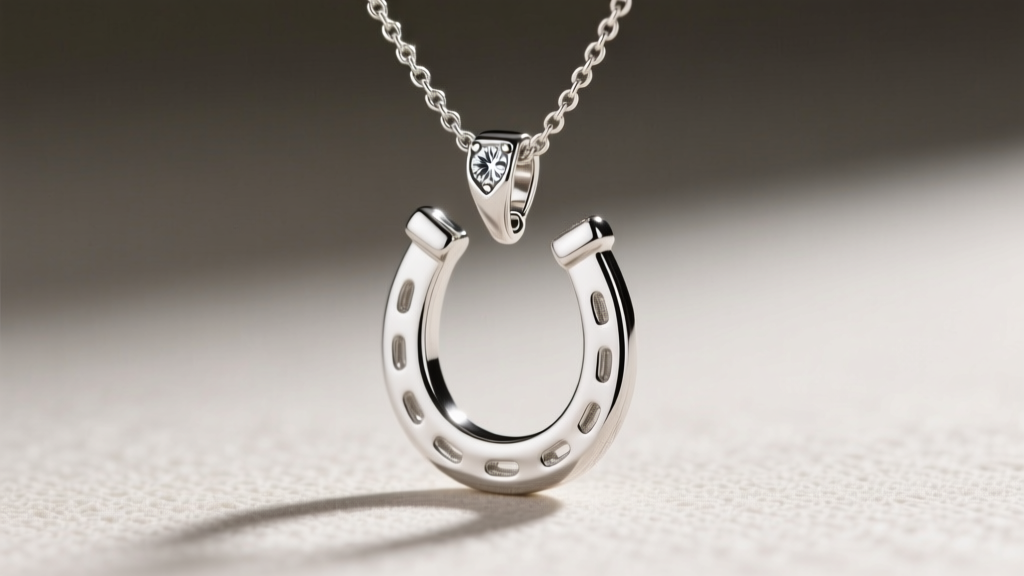
The bail—the loop that connects the charm to the chain—is the most critical mechanical joint on any pendant necklace. Because the horseshoe shape is naturally bottom-heavy, the center of gravity pulls the bail downward, creating concentrated friction against the interior of the chain links.
Cast-in-Place vs. Soldered Bails
Mass-produced horseshoe charms often feature cast-in-place bails, meaning the loop is formed in the wax mold and cast simultaneously with the pendant. While cost-effective, this creates a weak point where the bail meets the charm, as cast metal can be porous. High-end jewelers utilize soldered bails. A separately cast or die-struck bail is laser-welded or soldered onto the top center of the horseshoe. This ensures a dense, void-free connection capable of supporting heavier solid gold pieces without snapping.
Hidden (European) Bails
A hidden bail is soldered to the back of the pendant, allowing the chain to pass through seamlessly so the horseshoe appears to float. While aesthetically brilliant, hidden bails restrict your chain options. They typically accommodate a maximum chain width of 1.5mm to 2.0mm. Forcing a thicker rope chain through a hidden bail will cause severe abrasion to both the chain and the bail interior.
Chain Gauge and Drape Mechanics
Pairing the correct chain gauge with your horseshoe charm is not just a matter of visual proportion; it is a structural necessity. A chain that is too thin will snap under the dynamic load of a swinging pendant, while a chain that is too thick will overpower the charm and restrict its natural drape.
| Chain Style | Recommended Gauge (mm) | Tensile Strength | Best Horseshoe Weight Class |
|---|---|---|---|
| Cable Chain | 0.9mm - 1.2mm | Low to Moderate | Lightweight (1g - 4g) |
| Box Chain | 1.2mm - 1.8mm | Moderate | Medium (4g - 8g) |
| Wheat Chain | 1.5mm - 2.5mm | High | Heavy (8g - 15g) |
| Rope Chain | 2.5mm - 4.0mm | Very High | Solid/Bulky (15g+) |
For a standard 1-inch sterling silver horseshoe weighing approximately 6 grams, a 1.5mm wheat chain provides the optimal balance of tensile strength and fluid drape. The interlocking twisted links of a wheat chain distribute the friction caused by the bail more evenly than the sharp 90-degree interior edges of a box chain.
Casting Techniques: Lost-Wax vs. Die Striking
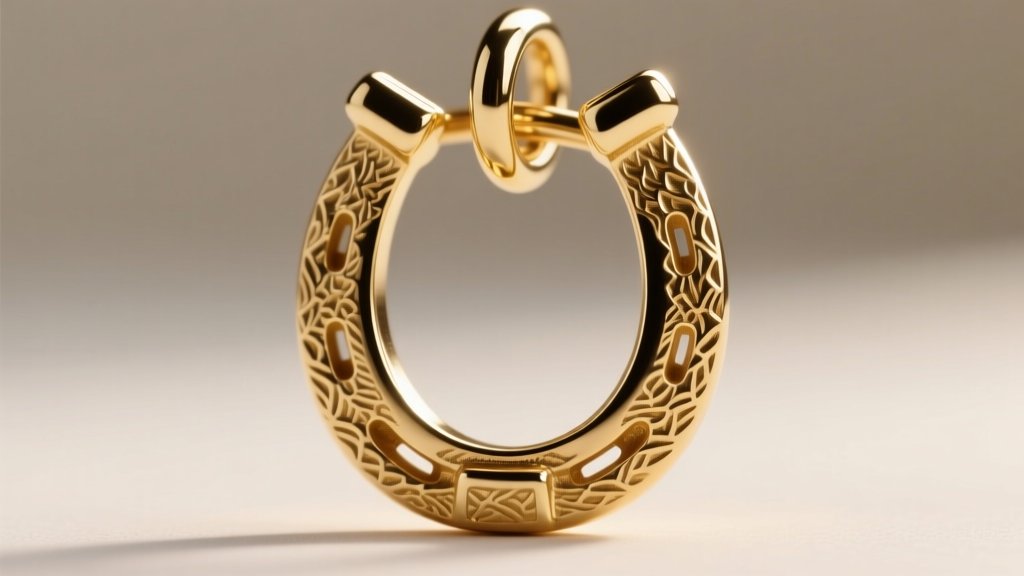
The manufacturing method fundamentally dictates the longevity of your horseshoe charm necklace. Understanding the difference between lost-wax casting and die striking is crucial for identifying high-quality pieces.
The Porosity Problem in Lost-Wax Casting
Lost-wax casting is the industry standard for intricate jewelry. A wax model is encased in investment plaster, burned out, and replaced with molten metal. However, if the cooling process is not strictly controlled, microscopic gas bubbles become trapped inside the metal, resulting in porosity. In a horseshoe charm, porosity often manifests near the thick, rounded heels of the U-shape where the metal mass is greatest. Over years of wear, these microscopic voids can propagate into visible cracks, especially if the charm is dropped or subjected to impact.
Density of Die Striking
Die striking involves forcing metal into a steel mold under immense pressure (often tens of thousands of pounds per square inch). This compresses the metal's grain structure, eliminating porosity and increasing the overall density and tensile strength. While die striking is generally limited to simpler, flatter designs, a classic, unadorned horseshoe silhouette is an ideal candidate. A die-struck horseshoe charm will be noticeably heavier for its size and vastly more resistant to denting than its cast counterpart.
Troubleshooting Common Failure Modes
Even the finest horseshoe charm necklace requires technical maintenance. Based on repair bench data, here are the most common failure points and how to address them:
- Bail Thinning: The constant metal-on-metal friction between the chain and the bail acts like a slow-motion saw. Have a jeweler inspect the bail thickness annually. If it has worn down by more than 30%, it requires a bail replacement or a protective inner lining of hard enamel.
- Pavé Stone Loss: If your horseshoe features gemstones, the U-curve design means the charm frequently flips upside down, dragging the stones against the skin and clothing. The Gemological Institute of America (GIA) notes that micro-prongs in pavé settings require professional tightening every 12 to 18 months to prevent catastrophic stone loss.
- Clasp Fatigue: A heavy horseshoe pendant puts continuous tension on the chain clasp. Upgrade standard spring-ring clasps to solid-core lobster clasps, which feature a heavier internal spring and a thicker wire gauge, preventing the clasp from stretching open under the pendant's dynamic weight.
"The longevity of a talismanic piece like a horseshoe charm relies entirely on the unseen engineering—the solder joints, the alloy hardness, and the friction tolerances of the bail. Aesthetics draw the eye, but metallurgy dictates the lifespan."
By prioritizing material grade, bail construction, and precise chain pairing, your horseshoe charm necklace will transition from a simple accessory into a structurally sound, multi-generational heirloom.


