Red Heart Necklace Gold: 2026 Trend & Styling Guide
Discover how to style the red heart necklace gold trend in 2026. Expert insights on materials, layering techniques, and neckline pairings.

The 2026 Resurgence: Romantic Revival vs. Quiet Luxury
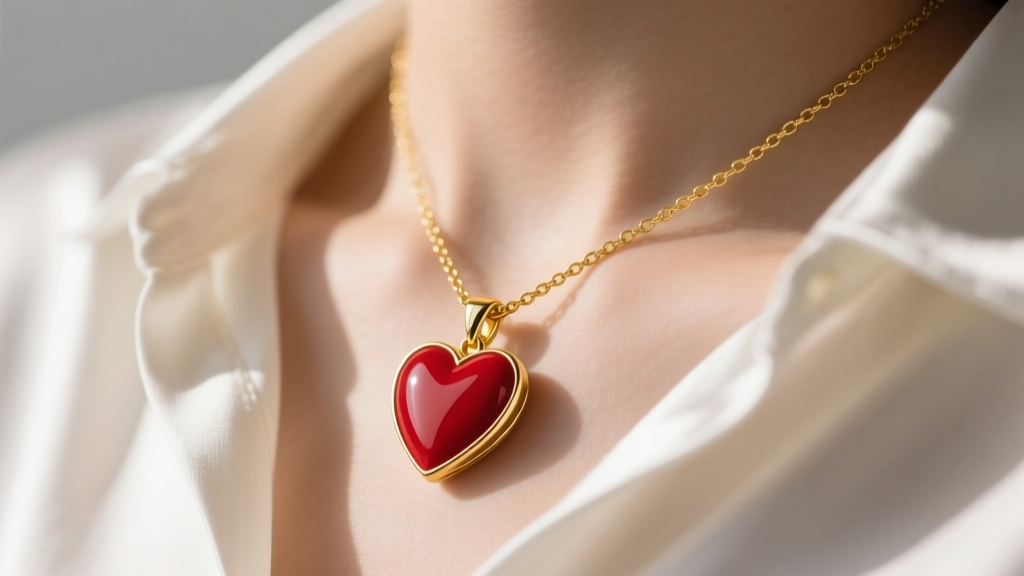
For the past few years, the jewelry industry has been heavily anchored by the 'quiet luxury' movement, favoring understated, minimalist staples. However, as we navigate the fashion landscape of 2026, a distinct counter-movement has taken center stage: Romantic Revival. At the very core of this trend is the iconic red heart necklace gold aesthetic. No longer relegated to juvenile Valentine's Day gifting, the gold and red heart motif has been elevated by heritage jewelers and indie designers alike into a sophisticated emblem of self-love, heritage, and bold personal expression. According to industry analysts at JCK Online, consumer demand for sentimental, color-blocked fine jewelry has surged by over 34% this year, with crimson and gold leading the charge. This guide breaks down the anatomy, styling protocols, and investment value of the 2026 red heart necklace gold trend.
Material Anatomy: How the 'Red' is Achieved
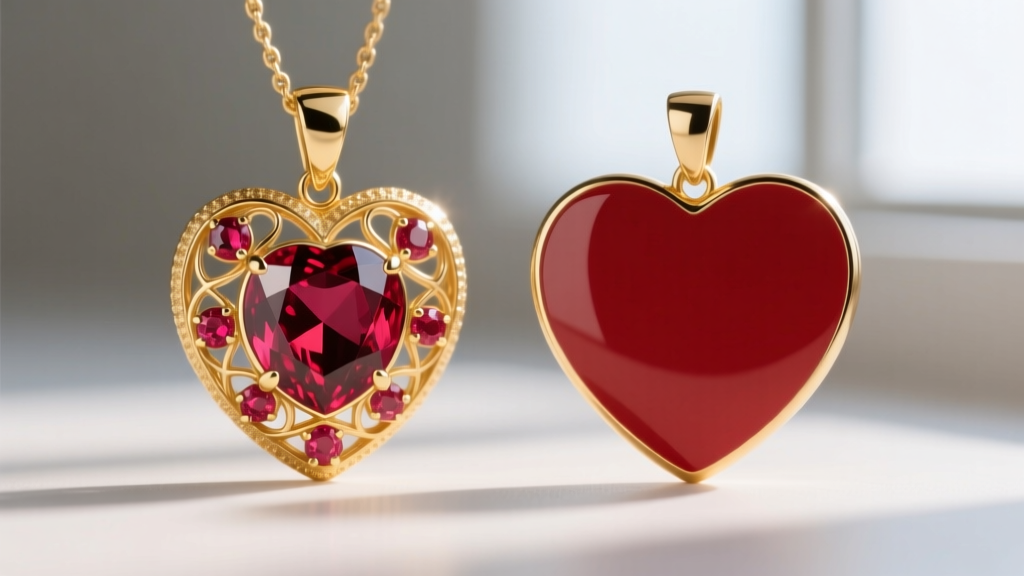
The visual impact of a red heart pendant relies entirely on the material used to achieve its crimson hue. In 2026, the market is sharply divided between traditional vitreous enamel, modern cold enamel, and precision-cut gemstone inlays. Understanding these differences is critical for evaluating quality and longevity.
Vitreous Enamel vs. Cold Enamel
Vitreous enamel (often utilized in the guilloché technique) is created by fusing powdered glass to a metal substrate at temperatures exceeding 1,400°F. The result is a translucent, glass-like finish that allows light to bounce off the textured gold beneath, creating a mesmerizing, multi-dimensional red. Vitreous enamel is highly resistant to UV fading and chemical degradation from perfumes or lotions. Conversely, 'cold enamel' is essentially an epoxy resin. While it offers a vibrant, opaque red at a fraction of the cost, cold enamel is prone to scratching, yellowing, and peeling after 3 to 5 years of daily wear. When investing in a premium red heart necklace gold piece, always verify that the manufacturer uses kiln-fired vitreous enamel.
Gold Purity and Color Theory
The warmth of the gold setting dramatically alters the perception of the red center. According to the Gemological Institute of America (GIA), 18k gold (75% pure gold) possesses a naturally deeper, richer yellow hue compared to 14k gold (58.5% pure gold). This buttery 18k tone provides a luxurious, high-contrast backdrop for deep ruby-red enamels. However, if your heart pendant features a gemstone held by delicate prongs, 14k gold is the superior choice. The higher alloy content in 14k gold provides the tensile strength necessary to secure stones like natural rubies or garnets against daily impacts.
Chain Gauge and Length Matrix for Heart Pendants
A common failure point in pendant necklaces is a chain that cannot support the weight of the charm. Heart pendants, particularly those crafted in solid gold with enamel or gemstones, carry a concentrated center of gravity. Selecting the correct chain gauge and style is non-negotiable for durability.
| Chain Style | Recommended Gauge | Tensile Strength | Best Pendant Weight | Ideal Length |
|---|---|---|---|---|
| Cable Chain | 1.2mm - 1.5mm | Moderate | Under 4 grams | 16 inches |
| Box Chain | 1.0mm - 1.3mm | High | 3 - 6 grams | 16 - 18 inches |
| Rope Chain | 1.5mm - 2.0mm | Very High | 5 - 10 grams | 18 - 20 inches |
| Snake Chain | 1.0mm - 1.2mm | Low (Kinks easily) | Under 3 grams | 16 inches |
Pro Tip: Avoid snake chains for heavy enamel hearts. The smooth, interlocking rings of a snake chain are highly susceptible to permanent kinking if the heavy heart pendant pulls it at an awkward angle while sleeping or moving.
The 2026 Layering Protocol and Neckline Pairings
Wearing a red heart necklace gold piece as a solitary statement is a classic choice, but the 2026 styling ethos heavily favors curated, textured layering. The goal is to frame the heart pendant without allowing it to become visually lost in a sea of competing metals.
The Rule of Thirds in Necklace Stacking
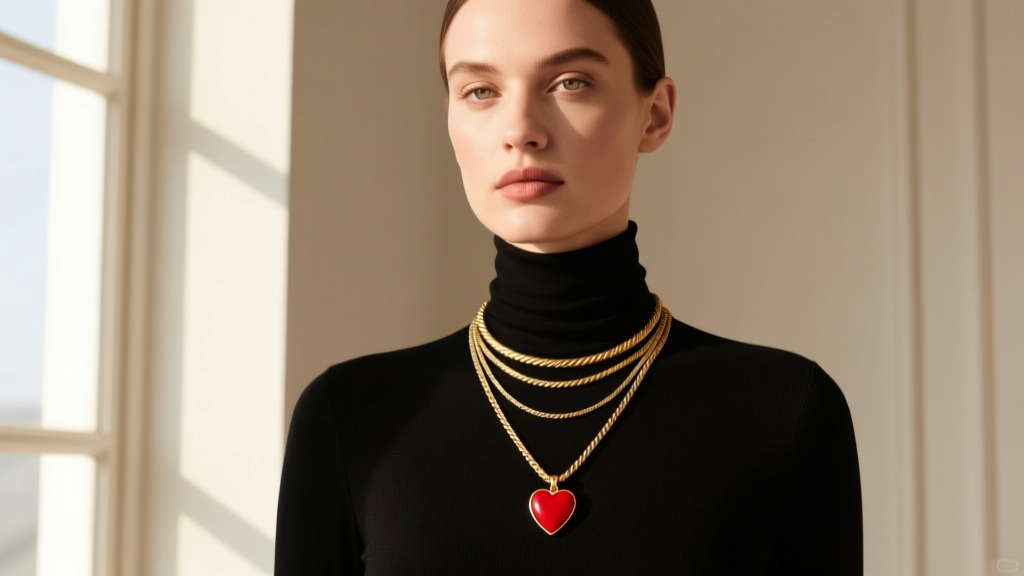
When layering, maintain a minimum 2-inch gap between chains to prevent tangling and visual clutter. If your red heart pendant sits at 16 inches, pair it with a 14-inch delicate gold choker (such as a 1.0mm bead chain) and an 18-inch textural chain (like a paperclip or wheat chain). This creates a cascading 'V' shape that naturally draws the eye down to the red heart centerpiece.
Neckline Compatibility Guide
- Sweetheart Necklines: The ultimate pairing. A 16-inch red heart pendant perfectly mirrors the curve of a sweetheart neckline, resting just above the fabric line for a romantic, cohesive look.
- Deep V-Necks: Opt for an 18-inch rope chain. The elongated drop of the V-neck requires the pendant to sit slightly lower to maintain proportional balance with the exposed skin.
- Crew Necks & Turtlenecks: When wearing high collars, the red heart necklace gold piece acts as a brooch-like focal point. Use a heavier 18k gold box chain (1.5mm) to ensure the necklace lays flat against the thicker fabric without bunching.
- Halter Tops: Avoid standard pendants, as they will compete with the neck strap. Instead, opt for a specialized 14-inch choker-style heart pendant that sits above the halter tie.
Market Tiers: Pricing and Investment Value
As the red heart necklace gold trend has matured, the market has stratified into distinct pricing tiers. Understanding where your purchase falls on this spectrum ensures you pay a fair market price for the materials and craftsmanship involved.
1. Fashion & Entry-Level ($45 - $120)
At this tier, you will find gold vermeil (sterling silver plated with 2.5 microns of gold) paired with cold epoxy enamel. These pieces are excellent for trend-testing or seasonal wear but should be removed before showering or swimming to prevent the vermeil from wearing away and the cold enamel from clouding.
2. Demi-Fine & Everyday Luxury ($180 - $450)
The sweet spot for modern consumers. Demi-fine pieces feature solid 14k gold and kiln-fired vitreous enamel or lab-created rubies. Brands in this space often utilize secure lobster clasps and 1.2mm cable chains. These necklaces are designed for daily wear and will not tarnish or degrade over time, making them excellent milestone gifts.
3. Fine & Heirloom ($850 - $3,500+)
The apex of the market. Heirloom pieces showcase 18k or 22k gold, artisanal guilloché engine-turning, and natural, unheated Burmese rubies. These necklaces often feature hidden details, such as diamond-set bail accents or engraved case-backs. They are purchased as generational investments and retain significant intrinsic value due to the precious metal and gemstone weight.
Final Styling Verdict
The red heart necklace gold phenomenon in 2026 is a testament to jewelry's cyclical nature, proving that true sentimentality never goes out of style—it only evolves. By prioritizing vitreous enamel over resin, selecting the correct chain gauge for your specific pendant weight, and mastering the 2-inch layering rule, you can transform this classic motif into a sophisticated, modern staple. Whether layered over a structured winter turtleneck or resting against the collarbone on a summer evening, the gold and crimson heart remains an unapologetic celebration of personal style and enduring elegance.
'The modern jewelry collector doesn't want to hide their sentimentality; they want to wear it boldly. A well-crafted red heart pendant is no longer a cliché; it is a masterclass in color theory and romantic expressionism.' — 2026 Global Jewelry Trend Report


